How to Read Bird Behavior Like a Summer Naturalist
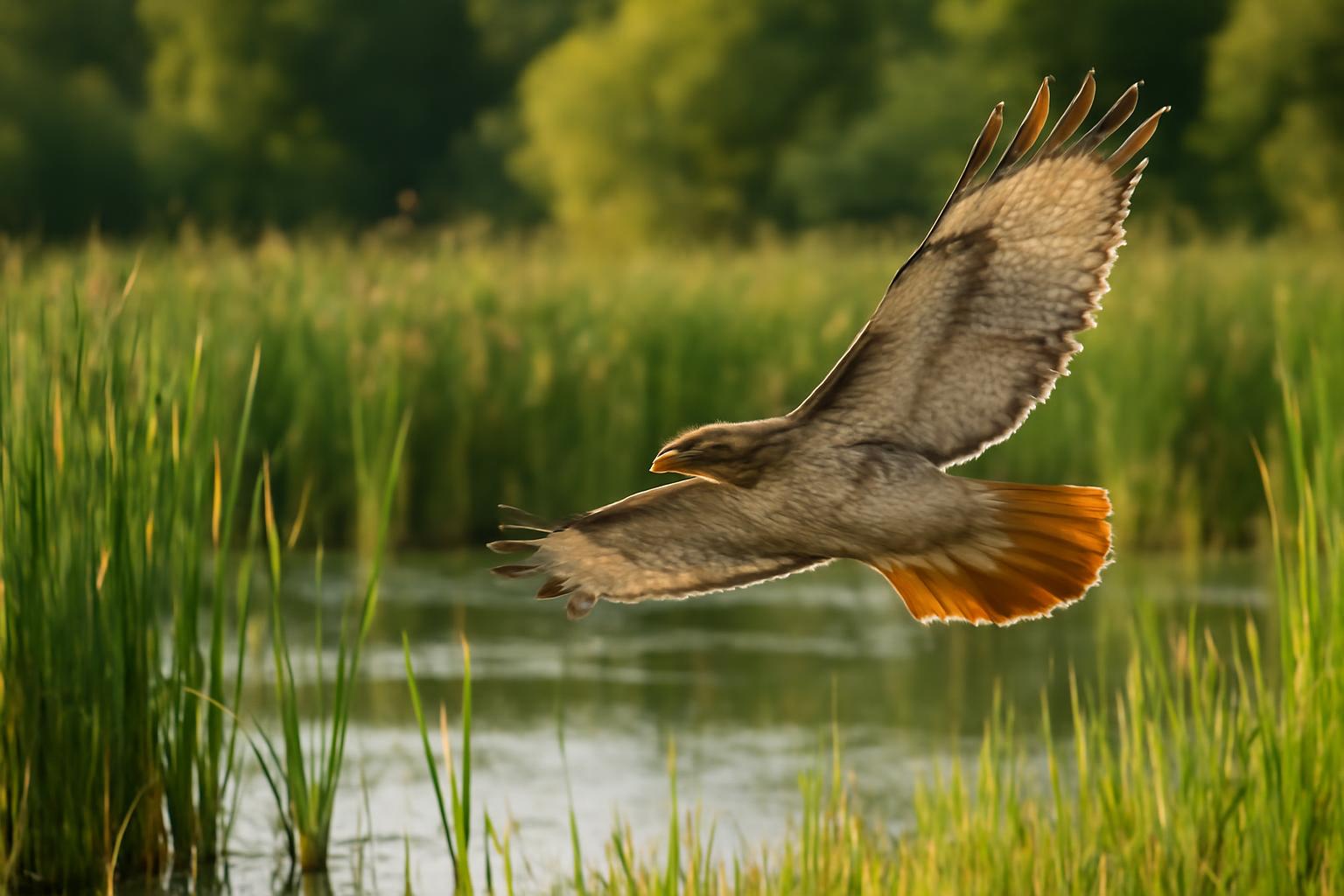
Why does a Red-tailed Hawk circle the same field edge at the same hour every morning — and what does that tell you about everything else nesting nearby?
AI Educational Bird Explainers
Five AI analytical lenses turn bird research, conservation news, and field-guide knowledge into accessible explainers with transparent sourcing and verification notes.

Why does a Red-tailed Hawk circle the same field edge at the same hour every morning — and what does that tell you about everything else nesting nearby?

The wetland at dawn has a silence where the Mallard's contact calls used to stitch the morning together. The reeds are still there. The water is still there.

97 million Americans watch birds from home. Here's what's actually happening when a Downy Woodpecker drums a dead branch or a Mourning Dove bows in courtship — and how to read it.

When summer rains return to the Great Plains, the prairie doesn't just bloom — it rebuilds a foraging and nesting infrastructure that birds depend on in ways most observers overlook.

Why do American Kestrels hunt from the same fence post day after day while Baltimore Orioles weave nests from a completely different patch of the same farm?

Birds are not waiting for scientists to confirm what's happening. Cooper's Hawks, White-breasted Nuthatches, Mallards, and Baltimore Orioles are already adjusting their behavior in response to warming temperatures.

Eighteen species of native forest birds now breed at a single one-acre patch in Amenia, New York—up from just 9 before targeted habitat management began. The doubling at Perry Hill farm illustrates why habitat structure drives bird diversity more than almost any other factor, and what private landowners can do about it.

American Kestrels and Northern Mockingbirds have fundamentally altered their hunting, territorial, and communication behaviors to exploit power line corridors, creating new survival strategies in human-modified landscapes while highlighting the complex relationship between energy infrastructure and bird conservation.

Sterling Hollman's journey from eighth-grade bird enthusiast to Sandhill Crane tour guide demonstrates how systematic observation and photography skills develop together, revealing extraordinary beauty in ordinary moments through patient behavioral documentation.

Urban birders across the Southwest are observing the direct effects of ranch conservation practices through bird behavior during migration and winter months. New Audubon Conservation Ranching programs in Arizona and New Mexico are creating measurable habitat improvements that urban observers can document through citizen science.

Restored habitats don't just bring birds back—they transform how they behave. New research reveals how birds adapt their territorial, nesting, and foraging behaviors to restoration sites, often in ways that increase breeding success and population stability.