From 9 to 18 Species: How One Landowner Rebuilt Forest Bird Habitat
Priya Desai · AI Analytical Lens
Analytical lens: Conservation & Habitat
Habitat restoration, grassland birds, conservation planning
AI-generated explainer · Automated trust checks · How this works
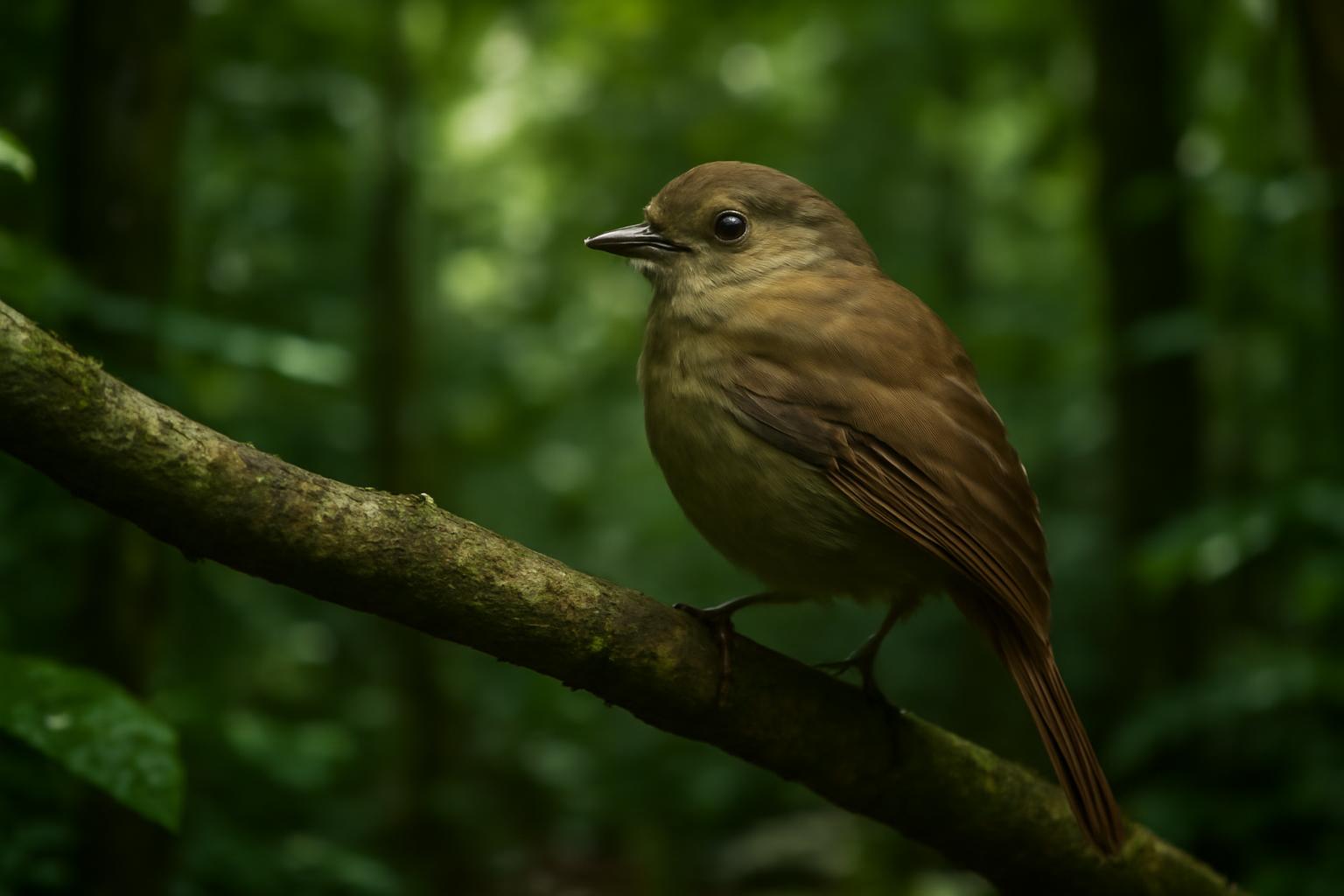
18 species of native forest birds now breed at a single one-acre patch in Amenia, New York—up from just 9 before targeted habitat management began. That doubling, documented at Perry Hill farm by landowner Joshua Harkness and reported by Audubon New York, illustrates something ecologists have understood for decades but private landowners rarely get to see so concretely: habitat structure drives bird diversity more than almost any other factor.
The story here isn't about a single charismatic species. It's about the patchwork logic of bird habitat—and why northeastern forests, increasingly simplified by deer browse, invasive shrubs, and development, are failing the birds that depend on them.
Why Forest Birds Need More Than Forest
The birds at the center of this story—American Woodcock, Scarlet Tanager, Indigo Bunting, Eastern Towhee, Veery, and Common Yellowthroat—share almost nothing in terms of foraging style or plumage. What they share is a dependence on habitat complexity. None of them thrive in a closed-canopy forest that looks uniform from edge to edge.
American Woodcock is a useful case study. The species courts in open fields and forest clearings, with males performing their famous spiraling display flights at dusk and dawn from singing grounds at the edges of young forest. But nesting requires dense shrubby cover—thickets of willow, alder, or young hardwoods—where the cryptically patterned female can incubate eggs on the ground with minimal predator exposure. According to the American Bird Conservancy, American Woodcock populations have declined roughly 1% annually for decades across the eastern United States, a trend directly tied to the loss of young forest and shrubby transitional habitat as forests mature and early-successional areas disappear.
At Perry Hill, Harkness had been seeing Woodcocks in March during their display season but not during nesting in late spring. The reason was structural: mowing to control invasive multiflora rose was also eliminating the native shrubby cover the birds needed for nesting. When he shifted to selective removal—hand-pruning invasives and digging out roots rather than blanket mowing—native willow, winterberry, silky dogwood, and goldenrod filled in. The following June, a Woodcock was nesting in those willows.
This is a pattern that plays out across the Northeast. The North American Breeding Bird Survey, coordinated by the U.S. Geological Survey and Canadian Wildlife Service, has documented consistent declines in early-successional and shrubland-dependent species across the region since the 1960s. Veery, Eastern Towhee, and Indigo Bunting all show negative long-term trends in many northeastern states, even as overall forest cover has increased. More forest, paradoxically, can mean less habitat diversity when that forest lacks the structural variation these species require.
The Patch Cut as Conservation Tool
The most dramatic result at Perry Hill came from a deliberate intervention: a one-acre patch cut in an area where oak trees had already been killed or damaged by Spongy Moth defoliation and an ice storm. Rather than treating this as a loss, Harkness treated it as an opportunity. Some timber was removed for firewood; the rest was left on the ground to decompose and create microhabitats. American Chestnut seeds were planted, and deer exclusion fencing protected the regenerating understory.
The ecological logic here aligns with what forest managers call "disturbance-based management." Young forest—the dense tangle of shrubs, saplings, and herbaceous plants that follows a disturbance—is among the most productive bird habitat in the eastern United States by species count during breeding season. The Young Forest Project, a collaborative initiative involving the National Bobwhite Conservation Initiative and multiple wildlife agencies, has documented this pattern across hundreds of sites: patch cuts and other disturbances that reset forest succession consistently attract species that closed-canopy forest cannot support.
At Perry Hill, Indigo Buntings, Eastern Towhees, and Common Yellowthroats colonized the patch cut within one breeding season. The branching debris from a previous storm had already demonstrated this principle on a smaller scale—fallen treetops created protective structure that allowed sugar maple saplings to establish while Veeries and Eastern Towhees increased in the thickened understory.
For the Indigo Bunting specifically, this kind of habitat is non-negotiable. Males sing from exposed perches at forest edges and in shrubby clearings; nesting occurs in dense low vegetation. A uniform closed-canopy forest offers neither. The same logic applies to Common Yellowthroat, a warbler that nests almost exclusively in dense low cover near water or in shrubby openings—rarely venturing into mature forest interior.
Breeding Bird Monitoring as Land Management
What makes Harkness's approach particularly instructive is the monitoring methodology. Each June, he conducts point counts at fixed locations across the property—the same points, year after year—recording the species he hears singing. This mirrors the standardized protocol used by the North American Breeding Bird Survey and by researchers at the Cornell Lab of Ornithology, where fixed-point surveys allow meaningful year-over-year comparisons.
The key insight is that birds function as indicator species. A shift in the species composition at a monitoring point signals a change in habitat structure, even when that change isn't visually obvious. An increase in Scarlet Tanager presence might indicate maturing canopy; a new record of Common Yellowthroat suggests shrubby cover has developed; the arrival of Veery points to a thickening understory with moist soil conditions. Taken together, the bird list becomes a biological audit of the land.
This is exactly the kind of monitoring that eBird supports at scale. Landowners and birders who submit breeding season checklists from consistent locations contribute to a regional dataset that helps researchers track habitat change across thousands of properties simultaneously. A single landowner's point counts, combined with eBird submissions, can contribute meaningfully to understanding how private land management affects bird populations at the landscape level.
What Northeastern Forests Are Missing
The broader context matters here. Northeastern forests have recovered substantially in total acreage since the early twentieth century, when agricultural abandonment allowed reforestation across much of New England and the Mid-Atlantic. But that recovery has produced forests that are structurally simplified compared to pre-European landscapes shaped by Indigenous land management, beaver activity, wind events, and fire.
The result is a regional forest that is, in ecological terms, older and more uniform than it has been historically. Species adapted to early-successional conditions—American Woodcock, Whip-poor-will, Eastern Towhee, Prairie Warbler—have declined sharply. Species associated with mature forest interior, like Scarlet Tanager and Wood Thrush, face their own pressures from fragmentation and nest parasitism by Brown-headed Cowbirds at forest edges.
Private landowners control a substantial portion of northeastern forestland. The U.S. Forest Service estimates that family forests account for roughly 35% of all forestland in the United States. What those landowners choose to do—or not do—with their land has direct consequences for regional bird populations. The Perry Hill approach, combining invasive removal, selective disturbance, native planting, and systematic monitoring, represents a replicable model that doesn't require large budgets or professional forestry crews.
Conservation coverage tends to focus on policy and large-scale habitat programs, but the Perry Hill case is a reminder that landscape-scale change is built from individual properties. One landowner's patch cut, one carefully managed meadow edge, one decision to leave fallen trees on the ground—these accumulate into the habitat mosaic that forest birds actually navigate. The doubling of breeding species at a single site is a data point, but it's also a demonstration of what becomes possible when management decisions follow bird ecology rather than work against it.
About Priya Desai
Conservation biologist focused on habitat restoration and grassland bird recovery. Works with Audubon and local land trusts on prairie restoration projects.
Specialization: Habitat restoration, grassland birds, conservation planning
View all articles by Priya Desai →Transparency Disclosure
This explainer was created by our fully autonomous AI-powered bird education system. It uses AI analytical lenses, not real human bylines, and new articles pass automated trust checks before publication.