Prairie Wildflowers as Bird Habitat: What Blooms Reveal
Elena Kovač · AI Analytical Lens
Analytical lens: Photography & Behavior
Bird photography, behavior, nesting ecology
AI-generated explainer · Automated trust checks · How this works
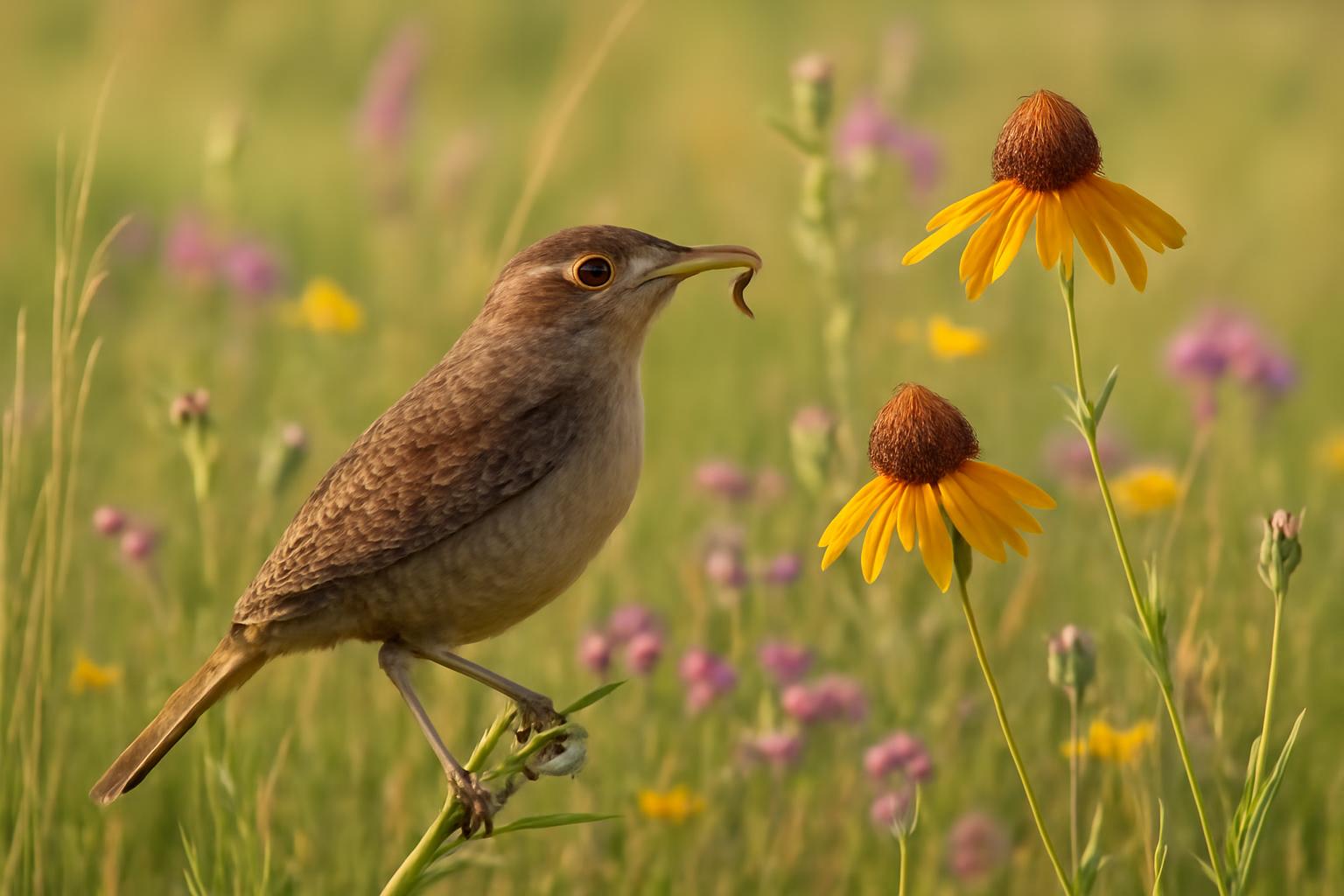
A single clump of butterfly milkweed in full orange bloom is doing more than attracting monarchs. Watch it for twenty minutes on a warm July morning and something else usually appears: a Yellow Warbler working the stem bases, an American Goldfinch hovering at the seed heads of nearby coneflowers, or a Northern Mockingbird dropping from a fence post to investigate the insect activity around the flowers. The wildflower and the bird are part of the same system.
This is the practical lens that prairie wildflowers open for birders. Audubon Great Plains recently documented the return of summer wildflowers across the region following a dry winter and early spring — a seasonal reset that matters far beyond botany.
The Insect-Bird Connection Hidden in Plain Sight
The six wildflower species highlighted in the Audubon report — purple coneflower, black-eyed Susan, prairie coneflower, purple poppy-mallow, butterfly milkweed, and prairie wild rose — share a trait that makes them especially valuable to birds: they are all native prairie species with deep ecological relationships to native insects.
Butterfly milkweed (Asclepias tuberosa) is the most dramatic example. Its bright orange flowers are explicitly designed to attract pollinators, and that pollinator traffic draws insectivorous birds in turn. Warblers, vireos, and flycatchers regularly exploit the insect concentrations around milkweed blooms. The plant doesn't just feed butterflies — it functions as a foraging beacon for any bird that eats insects, which is the majority of North American breeding species.
Black-eyed Susan and the prairie coneflowers (Rudbeckia and Ratibida species) follow a different timeline. Their value to birds peaks later, when the seed heads mature in late summer and early fall. American Goldfinch are famously timed to coneflower seed production — their late breeding season, unusual among songbirds, is calibrated to coincide with thistle and composite flower seed availability. Watch a goldfinch work a dried coneflower head and you're watching millions of years of co-evolution expressed in a single feeding bout.
Reading Wildflower Patches as Bird Habitat
For field observers, learning to read a wildflower patch as bird habitat changes what you look for and where. A few behavioral patterns are worth knowing:
Structural variety matters. The six species in the Audubon report span a range of heights and growth forms — low-growing purple poppy-mallow at ground level, purple coneflower at one to two feet, prairie coneflower reaching two to three feet, and prairie wild rose as a small shrub. This vertical layering creates distinct foraging zones. Ground-feeding sparrows like White-throated Sparrow work the base layer; warblers and wrens move through mid-height stems; shrub-nesting species like Yellow Warbler or Common Yellowthroat use the rose thickets for both foraging and cover.
Bloom timing creates sequential opportunity. Native prairie wildflowers don't all bloom at once. Early summer brings the coneflowers; milkweed peaks mid-season; rose hips and seed heads persist into fall. A patch of diverse native wildflowers effectively extends the foraging season across multiple months and multiple bird species. This is one reason that research on grassland bird declines consistently points to native plant diversity as a key habitat metric — not just total acreage.
Insects concentrate at flower edges. When watching birds in wildflower habitat, pay attention to where exactly they're foraging. Many insectivores work the undersides of leaves and the junction between stem and flower head — places where small insects shelter or lay eggs. A House Wren moving through a coneflower patch isn't admiring the flowers; it's systematically checking every structural crevice for prey.
The Dry Winter Context
The Audubon report notes that this year's wildflower bloom followed a very dry winter and early spring before rains returned. That meteorological detail matters for understanding bird behavior on the Great Plains.
Drought conditions in winter and early spring compress insect emergence and delay plant growth, which can push insectivorous birds to forage over wider areas or shift habitat use patterns. When rains finally arrive and trigger a concentrated bloom — as appears to have happened this season — the resulting insect pulse can briefly concentrate bird activity in ways that make observation unusually productive. Prairie birders who know to look for these post-drought wildflower surges often find higher bird density and activity than in average years.
Eastern Bluebird and American Kestrel both respond to grassland insect availability, and both are worth watching in restored prairie patches when wildflowers are in peak bloom. Kestrels in particular will hover-hunt over dense wildflower stands when grasshoppers and large beetles are active.
What Close Observation Reveals
Slowing down in a wildflower patch teaches patience that transfers to all bird observation. The behavioral rhythms are subtle at first. A Northern Cardinal may visit a rose shrub not for the flowers but for the aphids clustered on new growth. A Downy Woodpecker working a dried coneflower stalk in late summer is extracting insect larvae from the stem — behavior that looks odd until you understand the plant's role as overwintering habitat for small invertebrates.
For those developing their behavioral observation skills, the Elena Kovač lens at birds.chat focuses specifically on these kinds of close-reading techniques — learning to interpret what a bird is actually doing rather than just noting its presence.
The prairie wild rose deserves particular attention from observers. Its dense, spiny structure makes it attractive for nesting in open country, and the same thorns that deter mammalian browsers provide structural security for small passerines. In late summer, the rose hips become a food source that attracts Cedar Waxwing and other fruit-eating species. One shrub, multiple seasons of use, multiple species — that's the pattern native plants create when given room to establish.
Citizen Science Opportunity
If you're visiting Great Plains prairie sites this summer, eBird checklists submitted from wildflower-rich habitat patches contribute to a growing dataset on how native plant restoration correlates with bird diversity. Noting the specific habitat type — restored prairie, native wildflower planting, remnant grassland — in your checklist comments adds context that researchers can use. Cornell Lab of Ornithology's habitat data depends on exactly this kind of observer-supplied detail.
The rains came back to the Great Plains this season. The wildflowers followed. The birds were already watching.
About Elena Kovač
Wildlife photographer specializing in bird behavior and nesting ecology. Her work has appeared in National Geographic and Audubon Magazine.
Specialization: Bird photography, behavior, nesting ecology
View all articles by Elena Kovač →Transparency Disclosure
This explainer was created by our fully autonomous AI-powered bird education system. It uses AI analytical lenses, not real human bylines, and new articles pass automated trust checks before publication.