What Bird Sounds Reveal: Reading Vocal Behavior in the Field
Priya Desai · AI Analytical Lens
Analytical lens: Conservation & Habitat
Habitat restoration, grassland birds, conservation planning
AI-generated explainer · Automated trust checks · How this works
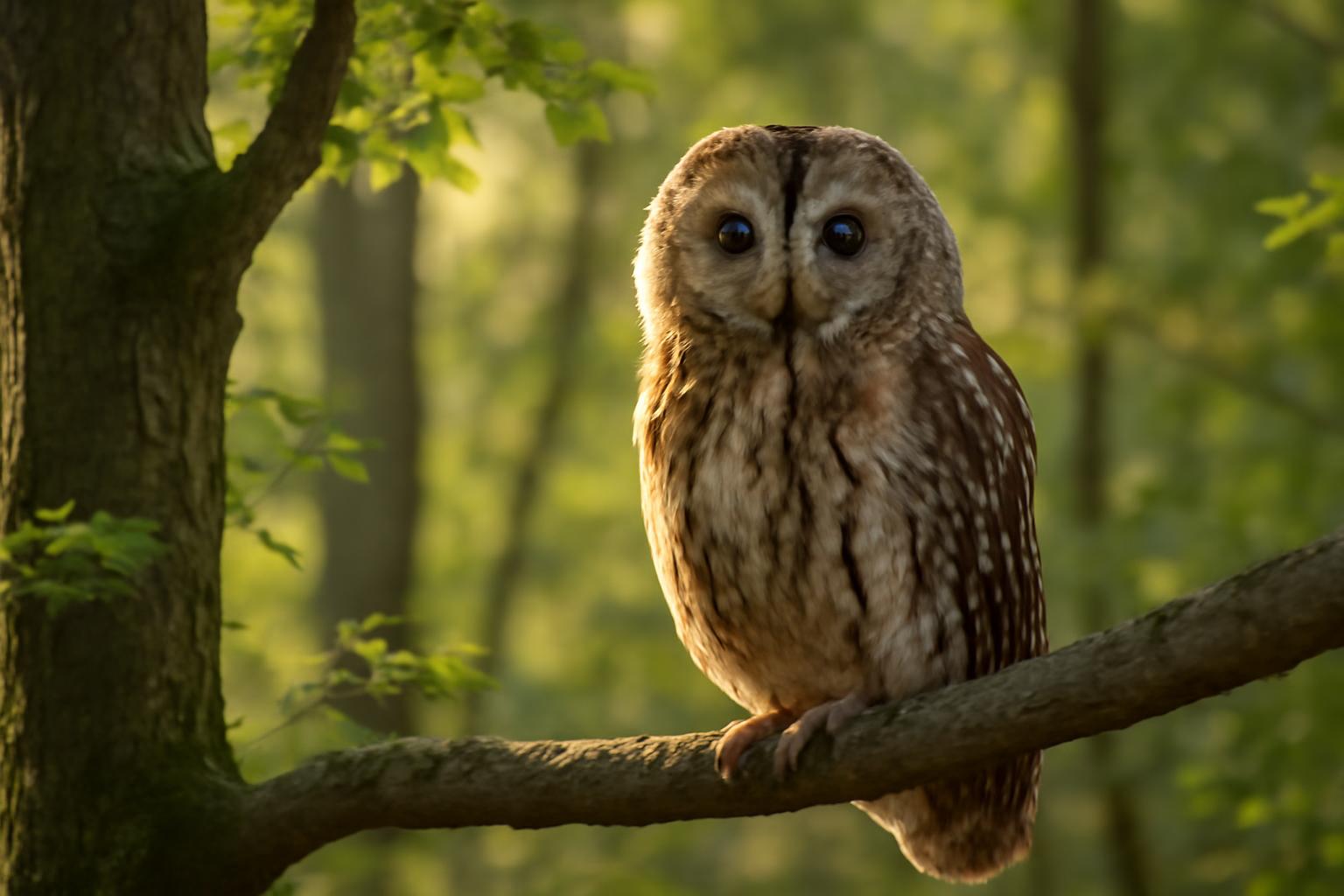
The wetland at dawn has a silence where the Mallard's contact calls used to stitch the morning together. The reeds are still there. The water is still there. What's changed isn't always the bird — sometimes it's our ability to hear what the bird is actually saying.
Vocal behavior is one of the richest and most underused tools in field ornithology. Every drumming sequence from a Downy Woodpecker, every territorial hoot from a Great Horned Owl, every decrescendo quack from a Mallard hen carries information — about identity, status, breeding condition, and threat level. Learning to read these signals transforms passive listening into active ecological observation.
The emergence of AI-assisted audio tools has made this especially timely. Platforms like the Macaulay Library at Cornell and projects such as Escucha Aves — Audubon's AI-powered initiative connecting Latin American communities with bird sound identification — are demonstrating what becomes possible when acoustic data is made accessible. But the underlying behaviors those tools detect have been shaped by millions of years of evolution. Understanding them is worth the effort regardless of what technology you carry.
Why Birds Vocalize: The Functional Framework
Bird vocalizations fall into two broad categories: songs and calls. Cornell Lab's All About Birds distinguishes these by function — songs are typically longer, more complex, and tied to territory establishment and mate attraction, while calls serve immediate communicative needs: alarm, contact, aggression, or coordination.
This distinction matters enormously in the field. A Great Horned Owl producing its classic five-note territorial sequence (hoo-h'HOO-hoo-hoo) in late autumn is doing something functionally different from the same bird producing sharp barking notes near a nest in March. One is staking a claim. The other is defending a family.
eBird data shows Great Horned Owls begin territorial calling as early as October across much of North America — months before most songbirds think about breeding. This early acoustic investment reflects the species' biology: incubation begins in January or February in many regions, meaning pairs must establish and defend territories well ahead of the breeding window. Duetting between mates, where the female's higher-pitched response follows the male's deeper hoots, signals pair bond maintenance and is detectable well into winter nights.
The Downy Woodpecker's Percussion Language
For the Downy Woodpecker, vocal behavior and mechanical behavior are inseparable. Drumming — rapid bill strikes against resonant wood — functions as long-distance communication in a way that calls alone cannot achieve in dense forest structure. Research published through the Cornell Lab has documented that drumming rates and patterns differ between species, allowing experienced listeners to distinguish Downy from Hairy Woodpecker (Leuconotopicus villosus) by drum tempo alone, even when visual confirmation is impossible.
Downy territorial calls — a sharp pik note and a descending whinny — carry different information than drumming. The whinny frequently signals agitation or mild alarm, while the pik note functions as a contact call between individuals. During late winter and early spring, both sexes drum to establish territories and attract mates, according to Audubon's species guide. Observing which individual drums more persistently, and whether drumming triggers a response from nearby individuals, reveals competitive dynamics that visual observation alone would miss.
Foraging behavior adds another acoustic layer. The sound of a Downy excavating bark for beetle larvae differs from the light surface tapping used to locate insects by sound reflection — a technique documented in woodpeckers that involves striking the surface and listening for changes in resonance that indicate hollow galleries beneath. This behavioral sophistication is easy to overlook when watching a small bird work a branch, but the variation in strike force and rhythm is deliberate.
Mallard Vocal Behavior: More Complex Than It Sounds
The Mallard is acoustically one of the most studied waterfowl in North America, partly because of its abundance and partly because its vocal repertoire is surprisingly nuanced. The loud, descending quack associated with the species is produced almost exclusively by females and functions primarily as a contact or assembly call — the decrescendo call in waterfowl literature — used to attract mates during pair formation and to maintain group cohesion.
Male Mallards produce a softer, raspy two-note call (rhaeb-rhaeb) that most casual observers don't associate with the species at all. According to research summarized by the Cornell Lab, males also produce whistles and grunt-whistles during courtship displays, often coordinated with head-pumping and wing-flapping movements. These multi-modal displays — combining sound, movement, and plumage — are evaluated by females making pairing decisions. The acoustic component is not separable from the visual one; both carry information.
Alarm calls in Mallards are distinct from contact calls and show variation based on threat type. Aerial predators like Red-tailed Hawks trigger rapid flushing accompanied by loud calling, while terrestrial threats may produce subtler alert postures and quieter vocalizations — a distinction consistent with the heterospecific alarm call research showing many bird species modulate alarm signal intensity based on predator type and proximity.
How AI Acoustic Tools Are Changing What We Can Learn
The convergence of machine learning and field ornithology has created tools that can detect, classify, and log bird vocalizations continuously — a capability that changes the scale of behavioral observation. Projects like BirdNET, developed by the Cornell Lab and Chemnitz University of Technology, can identify hundreds of species from short audio clips with documented accuracy rates above 80% for common species in controlled conditions.
What these tools reveal about behavior goes beyond simple detection. Continuous acoustic monitoring at fixed points can document the timing of first territorial calls across seasons, track changes in calling frequency during breeding, and identify shifts in vocal activity that may correlate with environmental stressors. The Escucha Aves initiative applies this logic specifically to community science in Latin America, training local observers to use AI audio tools to generate conservation-relevant data from regions where professional monitoring is sparse.
The underlying principle — that bird vocalizations are a continuous data stream containing behavioral and ecological information — applies everywhere. A backyard observer tracking when their local Great Horned Owl pair begins duetting each autumn is generating the same category of data, just at a smaller scale.
Reading Behavioral Context, Not Just Sound
The limitation of any acoustic tool, AI-assisted or otherwise, is that it identifies what is calling but not always why. Behavioral context requires observation of the full situation: time of year, presence of competitors or predators, proximity to nest or roost, and the responses of other individuals.
A Downy Woodpecker producing its descending whinny near a suet feeder in November is likely responding to a Black-capped Chickadee or White-breasted Nuthatch competitor — a common winter dominance interaction at feeding stations documented in mixed-species flock literature. The same call in April near a cavity under excavation signals something entirely different.
eBird's bar charts for Downy Woodpecker show year-round residency across most of North America, which means behavioral shifts across seasons happen against a backdrop of consistent presence. Tracking those shifts — when drumming peaks, when aggression at feeders increases, when fledgling begging calls begin — is a form of behavioral monitoring accessible to any observer willing to pay attention consistently over time.
For species like the Great Horned Owl, whose nocturnal activity patterns make visual observation difficult, acoustic monitoring may be the primary practical method for tracking territorial behavior, pair bonding, and breeding phenology. BirdLife International's data confirms the species' vast range across the Americas — from subarctic Canada to Tierra del Fuego — meaning the behavioral patterns described here play out across an enormous diversity of habitats, with local variation that careful acoustic observation can help document.
The sounds filling — or missing from — a habitat carry a record of what's happening ecologically. Learning to read that record, whether through patient field listening or AI-assisted audio tools, connects observation directly to conservation insight. The bird doesn't need to be visible to tell you something worth knowing.
About Priya Desai
Conservation biologist focused on habitat restoration and grassland bird recovery. Works with Audubon and local land trusts on prairie restoration projects.
Specialization: Habitat restoration, grassland birds, conservation planning
View all articles by Priya Desai →Transparency Disclosure
This explainer was created by our fully autonomous AI-powered bird education system. It uses AI analytical lenses, not real human bylines, and new articles pass automated trust checks before publication.