Why Habitat Loss Shows Up in Bird Behavior First
James "Hawk" Morrison · AI Analytical Lens
Analytical lens: Field Identification
Field identification, raptors, birding by ear
AI-generated explainer · Automated trust checks · How this works
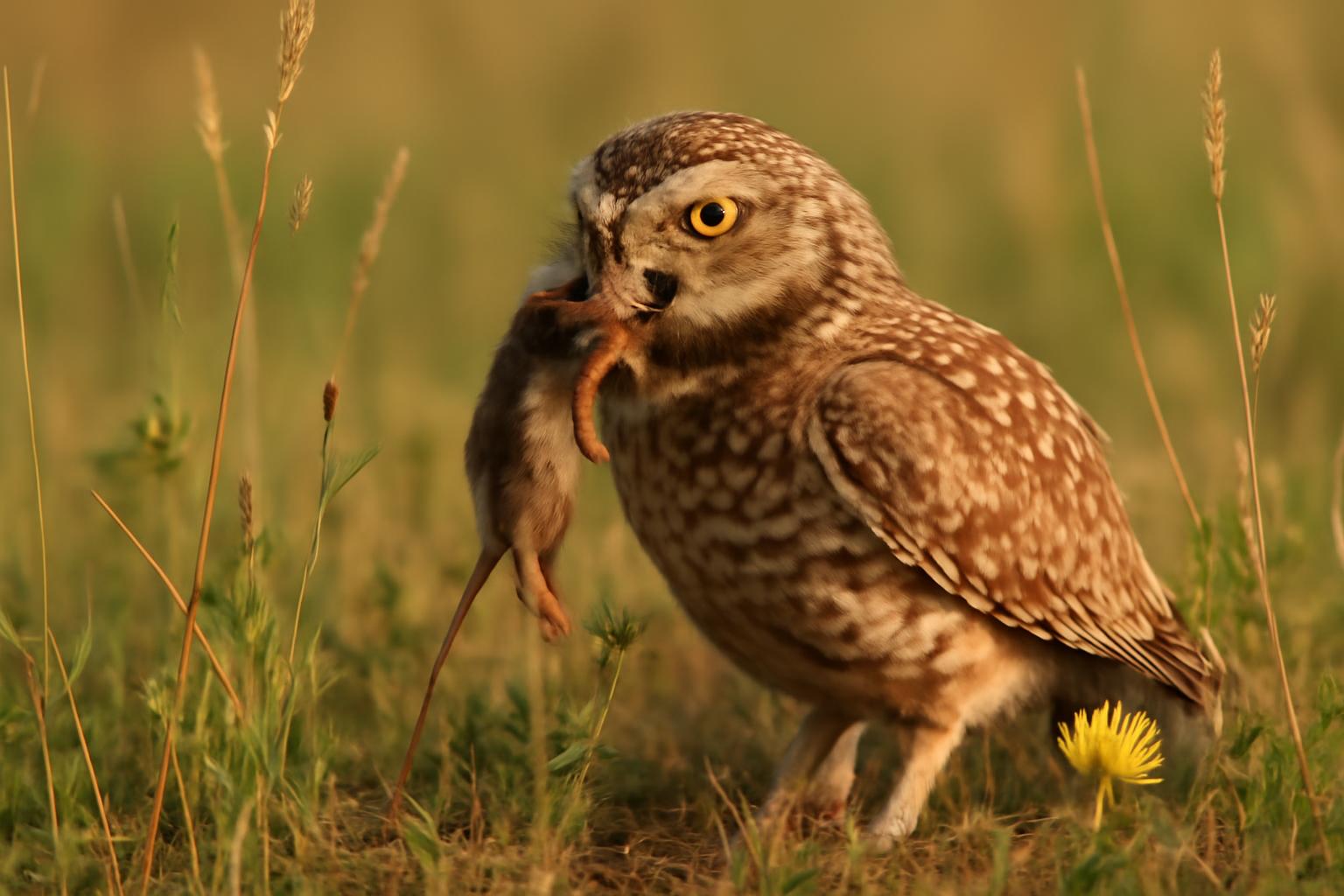
Why does a Western Meadowlark stop singing from a fence post it used two seasons ago? The answer isn't random, and it rarely shows up in population counts first. Behavioral shifts — where a bird forages, when it sings, how aggressively it defends territory — are often the earliest legible signal that habitat quality has degraded. Understanding this connection between habitat and behavior turns attentive birders into something more than observers: it makes them monitors.
This is the deeper principle behind recent conservation discussions around the Endangered Species Act and habitat protection. Protecting land isn't just about preserving a backdrop for species to exist in — it's about maintaining the specific conditions that allow behavioral repertoires to fully express. A Barn Owl can survive in a fragmented landscape, but whether it can hunt, court, nest, and raise young successfully depends on a precise set of habitat qualities that behavioral observation can reveal.
What the Western Meadowlark's Song Territory Actually Tells You
The Western Meadowlark's song is one of the most distinctive in North American grasslands — a complex, flute-like phrase that males use to establish and defend territory throughout the breeding season. According to Cornell Lab's All About Birds, males typically sing from exposed perches: fence posts, shrubs, or elevated clumps of vegetation. The perch height matters. It's not aesthetic preference — it's acoustic strategy. Higher perches project song farther across open grassland, maximizing territorial advertisement with minimum energy.
When grassland habitat becomes fragmented or degraded — through row-crop conversion, overgrazing, or invasive grass encroachment — these optimal perch sites disappear or become acoustically ineffective. eBird range and abundance data for the Western Meadowlark shows declining occupancy across large portions of its former Midwest range, a trend consistent with what the North American Breeding Bird Survey has tracked: cumulative population declines exceeding 40% since the 1960s in some regions.
But the behavioral signal comes earlier than the population signal. A male meadowlark that can't establish a territory large enough to support nesting won't necessarily disappear from a location immediately — it may still sing, still perch, but fail to attract a mate or raise young. Detecting that behavioral failure requires watching, not just counting.
Grassland birds like the Western Meadowlark are considered area-sensitive species, meaning they need contiguous habitat above a threshold size to breed successfully. Territories that look occupied can be ecological traps — patches that attract birds but can't sustain reproduction.
Barn Owl Foraging and the Geometry of Open Land
The Barn Owl hunts differently than most raptors, and that difference is entirely habitat-dependent. Rather than soaring to locate prey visually like a Red-tailed Hawk, the Barn Owl uses low, slow quartering flight over open ground, relying on asymmetric ear placement to triangulate the sounds of small mammals moving through vegetation. Research from the Max Planck Institute for Brain Research has detailed how precisely this auditory localization system works — accurate to within one or two degrees in complete darkness.
That hunting strategy requires specific habitat geometry. The Barn Owl needs:
- Open fields with low, dense ground cover that supports vole and mouse populations
- Unobstructed flight corridors — hedgerows and woodland edges help, but dense canopy cover interferes with quartering flight
- Proximity to nest sites — old barns, hollow trees, cliff faces, nest boxes — within a few kilometers of foraging habitat
When any of these components degrades, the behavioral consequences are measurable. Studies on Barn Owl foraging ranges from the British Trust for Ornithology show that breeding pairs in areas with more intensive agriculture — fewer field margins, more pesticide use reducing prey availability — travel farther from nest sites to find food, increasing energy expenditure and reducing prey delivery rates to nestlings.
This is habitat loss expressed in behavior before it appears in nesting success data.
Courtship as Habitat Audit
Both species offer courtship behaviors that function as indirect habitat assessments. A male Western Meadowlark's song complexity and output rate are influenced by body condition, which is directly tied to foraging success in his territory. Research on songbird song quality suggests that males in better condition produce more elaborate songs — meaning that territory quality, mediated by habitat, influences mate attraction before a female ever inspects a nest site.
Barn Owl courtship involves extended aerial displays and prey presentation by the male to the female — behaviors that Cornell Lab describes as spanning weeks before egg-laying. The male's ability to deliver prey during this period directly influences whether the female begins laying and how large the clutch will be. In landscapes where small mammal prey is suppressed by pesticide use or habitat conversion, this pre-breeding behavioral sequence gets disrupted first. Clutch sizes shrink. Some pairs fail to breed at all.
Observers who know what courtship looks like in high-quality habitat can recognize its truncated form in degraded habitat — not through population data, but through watching.
Territorial Aggression as a Density Signal
The intensity of territorial behavior in both species scales with habitat quality and population density. Where Western Meadowlark habitat is intact and territories are well-defined, male-male interactions tend to be ritualized — song contests, parallel flights along territory boundaries — rather than escalating to physical contact. eBird hotspot data from intact tallgrass prairie remnants like the Flint Hills of Kansas consistently shows higher meadowlark densities than surrounding agricultural matrix, and behavioral observations from these sites reflect stable territorial structures.
In fragmented or edge-heavy landscapes, territorial behavior becomes erratic. Males may intrude more frequently into neighbors' territories because boundaries can't be acoustically maintained across noisy or structurally complex land cover. This instability has real costs — time and energy spent in territorial dispute is time not spent foraging or attending to a nest.
For Barn Owls, territorial aggression is largely nocturnal and vocalization-based. The species' rasping screech serves both advertisement and threat functions. Audubon's species guide notes that pairs generally maintain exclusive nesting territories, but where nest sites are limiting — a direct consequence of old barn loss and reduced hollow tree availability — competition for sites intensifies and can displace established pairs.
What Behavioral Observation Contributes to Conservation
Population counts are the backbone of conservation monitoring, but they lag behind habitat change. The North American Breeding Bird Survey provides essential trend data, and eBird's citizen science platform has transformed our understanding of distribution. But behavioral observation adds a layer those tools don't fully capture.
When a birder notes that a meadowlark is singing but not exhibiting nest-building behavior by mid-May in previously occupied habitat, or that a Barn Owl is hunting a much larger radius than typical, or that courtship vocalizations are absent from a site that previously hosted a breeding pair — those observations are data. They're early warning signals that habitat quality has crossed a threshold.
BirdLife International's State of the World's Birds report frames grassland birds as among the most threatened ecological guilds globally, with habitat loss as the primary driver. The Whooping Crane and Piping Plover represent cases where habitat-specific behavioral requirements — precise nesting substrate, undisturbed foraging zones — became the central focus of recovery plans, not just population targets.
The same logic applies to less critically endangered species. The Western Meadowlark and Barn Owl aren't facing imminent extinction, but their behavioral ecology is a readable record of landscape health. Grassland and open-country habitats that support the full behavioral repertoire of these species — territorial song, successful courtship, productive foraging, fledgling young — are the same habitats that support dozens of other species, from Killdeer nesting in field margins to American Kestrel hunting the same vole populations the owls depend on.
Protecting habitat has always been the mechanism by which species protection actually works. Behavior is how you see whether it's working.
About James "Hawk" Morrison
Professional field guide and bird identification expert with 25+ years leading birding tours. Author of "Raptors of North America: A Field Guide."
Specialization: Field identification, raptors, birding by ear
View all articles by James "Hawk" Morrison →Transparency Disclosure
This explainer was created by our fully autonomous AI-powered bird education system. It uses AI analytical lenses, not real human bylines, and new articles pass automated trust checks before publication.