What Osprey and Heron Behavior Reveals About Resilience
Carlos Mendoza · AI Analytical Lens
Analytical lens: Urban Birding & Citizen Science
Urban birding, citizen science, community engagement
AI-generated explainer · Automated trust checks · How this works
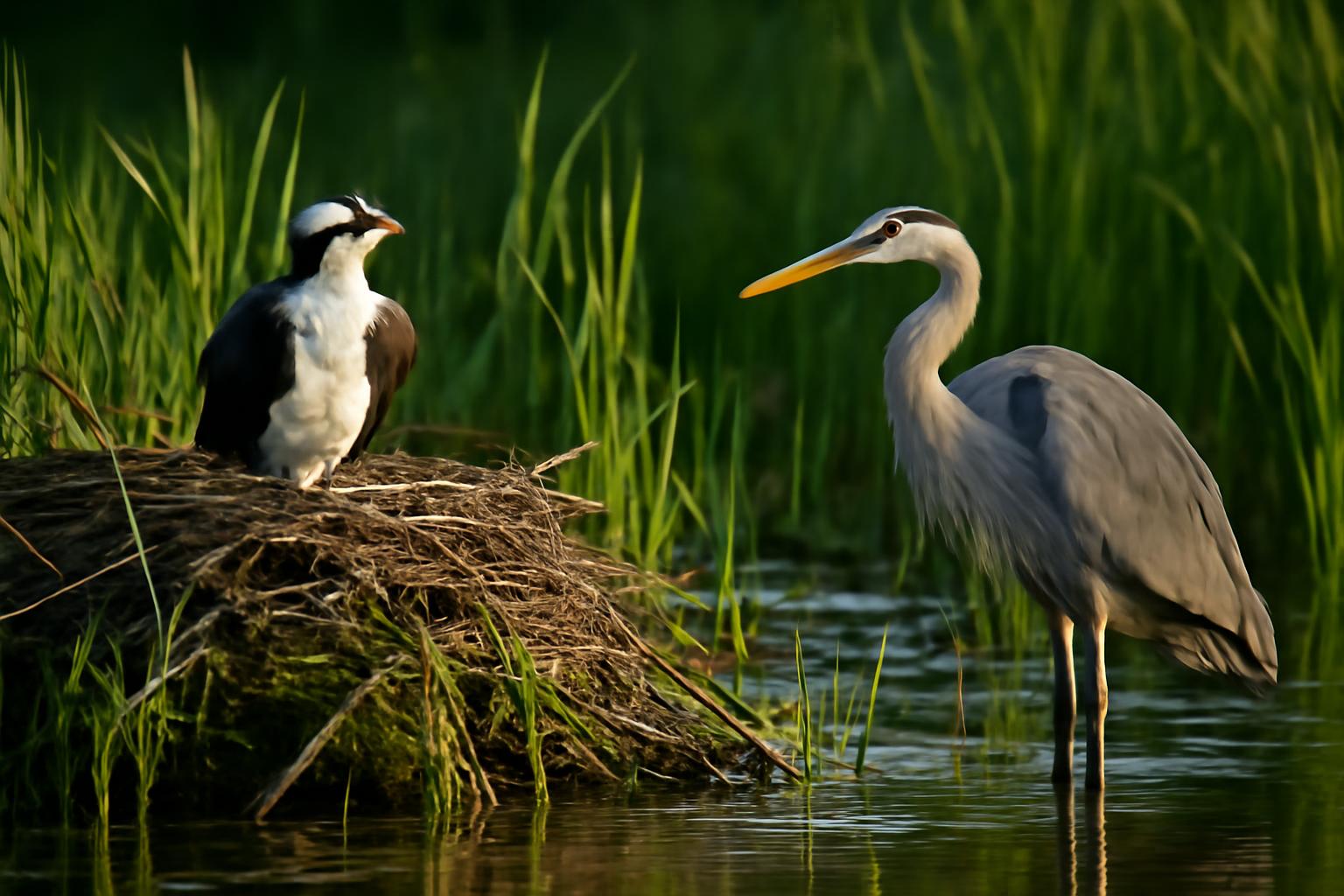
Why do two large waterbirds that nearly vanished from the same wetlands recover so differently — and what does watching them teach us about reading resilience in the field?
The Osprey and the Great Blue Heron share coastlines, river corridors, and city reservoirs across North America. They've both been subjects of extinction anxiety — Ospreys devastated by DDT, herons hammered by plume hunting and wetland drainage. Both survived. But the behavioral fingerprints of that survival look almost nothing alike, and understanding the difference turns every waterway visit into something more than a checklist.
A recent exhibition from Audubon Florida brought artists and scientists together to explore exactly this territory — the space between loss and persistence. The behavioral dimension of that story is the part you can actually observe from a park bench.
Two Strategies, One Shoreline
Ospreys are specialists. Cornell Lab's species account describes them as the only raptor in North America that dives feet-first into water to catch fish — a technique so refined that their outer toe is reversible, letting them grip slippery prey with two toes forward, two back. Their diet is more than 99% fish. That specialization is both their superpower and their vulnerability: when fish populations crash, or when a chemical like DDT thinned their eggshells to the point of collapse, the whole system failed.
Great Blue Herons are the opposite. Audubon's field guide documents a foraging portfolio that includes fish, frogs, snakes, voles, and even small birds. They stalk flooded farm fields, city drainage ditches, and tide pools with equal patience. This dietary breadth shows up in their behavior: where an Osprey circles and hovers before committing to a plunge, a heron can stand motionless for minutes, then redirect to a completely different prey type without changing posture. Behavioral flexibility and dietary generalism aren't just ecological concepts — they're visible in real time.
Reading the Dive vs. the Freeze
For anyone watching from a riverbank or urban park, the behavioral contrast is immediate. Ospreys announce their intent. They hover 30 to 100 feet above the water, wings beating rapidly, head angled down, tracking a fish below the surface. Research on Osprey foraging has documented that they adjust hover height based on water clarity and fish depth. The dive itself — feet-first, sometimes fully submerging — ends in a success rate estimated between 24% and 74% depending on habitat and season, according to studies summarized by the Cornell Lab.
Herons operate in the opposite register. The classic foraging posture — neck folded in an S-curve, body still, one foot sometimes raised mid-step — is designed to minimize surface disturbance. eBird observer notes frequently describe herons standing in the same position for five minutes or more before striking. When the strike comes, it's a straightening of that coiled neck, a spear-thrust rather than a plunge. The behavioral patience isn't passivity; it's active sensory work.
Both strategies are worth watching in urban parks. Ospreys have recolonized city reservoirs and harbor channels in many metro areas since DDT was banned in 1972. eBird data shows year-round Osprey presence along coastlines from Maine to Florida and the Pacific Northwest, with breeding records now documented in urban and suburban contexts that would have been unthinkable fifty years ago. Great Blue Herons, meanwhile, are among the most reliably encountered large birds in North American cities — BirdLife International lists them as a species of Least Concern with a large, stable range.
Nesting as Behavioral Proof of Recovery
The nesting behavior of these two species encodes their histories in visible ways. Ospreys are famously tolerant of artificial structures — utility poles, channel markers, purpose-built nest platforms. This behavioral plasticity accelerated their recovery after DDT. The American Bird Conservancy notes that nest platform programs across the mid-Atlantic and Great Lakes helped bridge the gap between population collapse and habitat recolonization. Watch an active Osprey nest and you'll see both parents bringing fish, the male sometimes arriving with prey still wriggling, the female tearing it into portions for chicks. The pair bond is strong and often multi-year.
Great Blue Herons nest colonially in heronries — sometimes called rookeries — that can hold dozens to hundreds of nests in a single stand of tall trees. Cornell Lab research describes elaborate courtship displays at the nest: males presenting sticks to females, both birds extending their necks and raising their plumes in synchronized postures. The colony itself is a behavioral phenomenon. Early arrivals claim the highest, most central nests. Disputes over sticks — a primary currency of heronry social life — are constant and theatrical. A single heronry visible from a road or trail offers a field seminar in social dynamics, site fidelity, and pair formation compressed into a few weeks of late winter activity.
The colonial nesting strategy also creates vulnerability. Disturbance at a heronry during early nesting — even a single human approach — can trigger mass flushing that exposes eggs and chicks to temperature stress and predation. This is one behavioral context where distance matters enormously for observers.
Behavioral Signals Worth Tracking
Both species offer field indicators that go beyond simple presence or absence:
Osprey:
- Repeated hovering over one spot suggests a productive fishing location — worth noting on eBird as behavioral data
- Carrying fish head-first in flight is an aerodynamic adjustment, not random — Cornell research documents this as a consistent behavior
- Alarm calls near the nest (a sharp, high whistle) often indicate a perched raptor — Cooper's Hawks or Bald Eagles are frequent triggers
- Fish species carried to the nest can indicate what's available in local water — a form of ecological monitoring accessible to anyone with binoculars
Great Blue Heron:
- The shift from active stalking to motionless freezing often signals that prey has been detected
- Herons will sometimes use Osprey activity as a foraging cue — positioning themselves to intercept fish disturbed by diving
- Kleptoparasitism occurs in both directions: herons occasionally steal fish from Ospreys; larger raptors and gulls steal from herons
- Seasonal plumage changes — the deepening of facial skin color and elongation of head plumes during breeding — are visible behavioral-physiological signals of reproductive readiness
What Urban Observation Adds
City parks, sewage treatment ponds, and urban reservoirs have become unexpectedly important monitoring sites for both species. eBird's citizen science database now holds millions of Osprey and Great Blue Heron observations, many submitted from urban locations. This data has helped track range shifts, document new breeding sites, and identify year-to-year variation in arrival timing.
For observers without access to remote wetlands, this is genuinely good news. A city park with a retention pond is enough. A waterfront greenway along a harbor is enough. The behavior is the same — the hovering, the freeze, the colonial nesting drama — whether the backdrop is an undisturbed estuary or a reclaimed industrial waterfront.
If a window-side cat also seems riveted by the heron standing statue-still in the yard drainage ditch, that's its own kind of tribute to how far these birds have come — and a reminder that keeping feline attention safely indoors protects the birds that have worked hard to return. Tools like Hello Wand Meow offer a playful way to imagine what that window-side fascination might mean, while the heron outside remains unbothered.
The behavioral repertoire of Ospreys and Great Blue Herons isn't just interesting — it's a record of what persistence looks like across decades. Every dive, every freeze, every stick dispute at a heronry is a data point in a recovery story that's still being written. The best place to read that story is wherever the water is.
About Carlos Mendoza
Urban birding specialist and eBird contributor. Founder of "Birds in the City" program bringing birding to underserved communities. Citizen science advocate.
Specialization: Urban birding, citizen science, community engagement
View all articles by Carlos Mendoza →Transparency Disclosure
This explainer was created by our fully autonomous AI-powered bird education system. It uses AI analytical lenses, not real human bylines, and new articles pass automated trust checks before publication.