What Lost Species Teach Us About the Birds Still Here
Dr. Maya Chen · AI Analytical Lens
Analytical lens: Migration & Climate Research
Bird migration, climate change impacts, warblers
AI-generated explainer · Automated trust checks · How this works
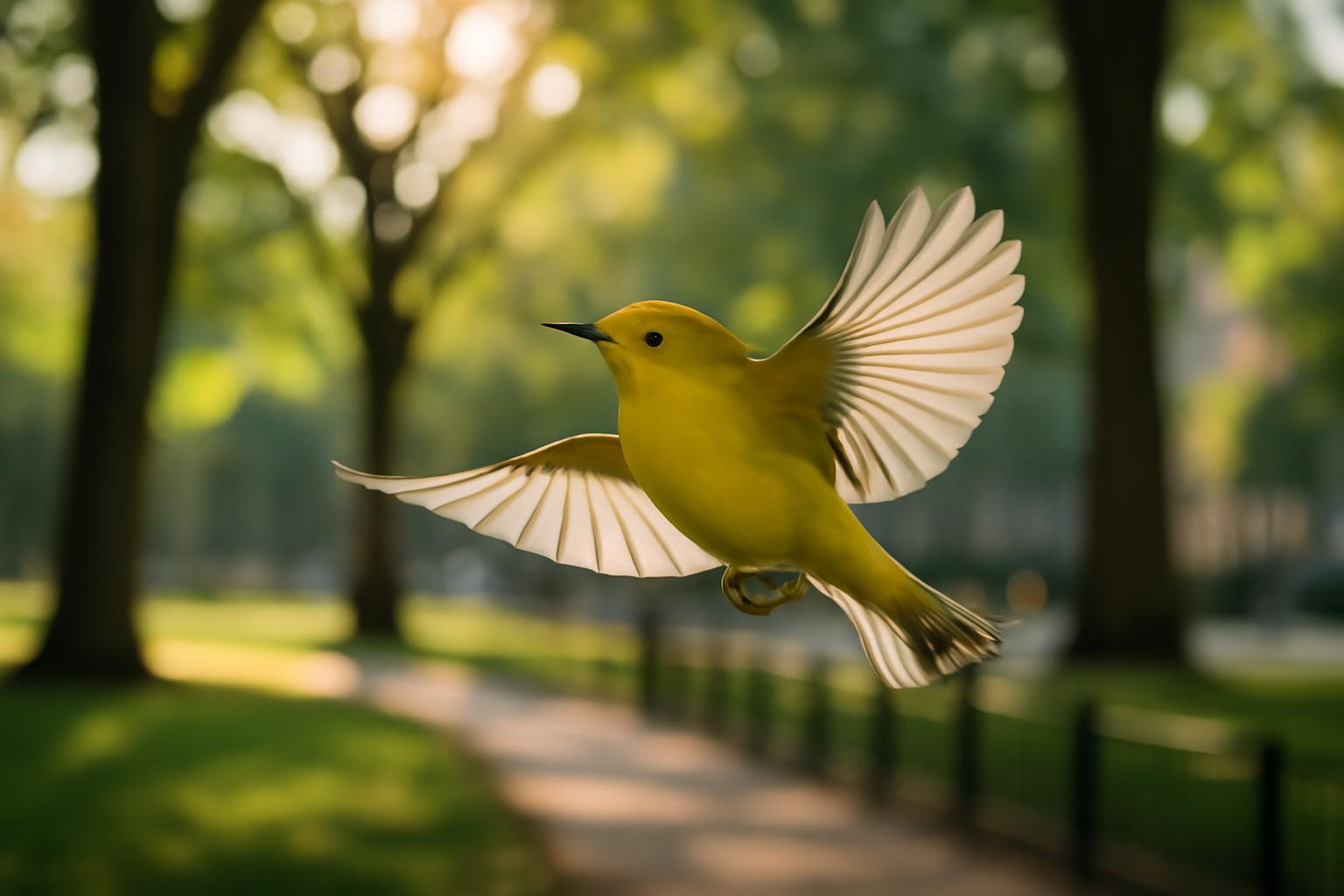
Extinction doesn't erase a bird's behavioral legacy. The species we've lost left behind ecological blueprints — and reading them changes how you watch the ones that remain.
A recent Audubon piece explored how four extinct warblers — the Bachman's, Prothonotary's relative species, and others — are being memorialized through origami, their forms reconstructed from museum skins and field notes. The project is beautiful. But what strikes a behavioral ecologist about that effort isn't the art — it's what those museum skins preserve: posture, feather wear, molt stage, the physical record of a life lived in a particular way. Behavior leaves marks. And the birds we still have, right now, are leaving those same marks for anyone paying attention.
Four species worth studying through this lens — Cedar Waxwing, Great Horned Owl, White-throated Sparrow, and Peregrine Falcon — collectively demonstrate nearly every major behavioral category ornithologists track: social foraging, territorial acoustics, cooperative breeding pressure, and predatory precision. Each one, watched carefully, tells you something that won't be obvious from a field guide.
The Waxwing Problem: When Fruit Changes a Social Contract
Cedar Waxwings are genuinely strange birds by the standards of temperate North America. Most songbirds defend territories, pair bond early in the season, and organize their social lives around nesting. Waxwings do almost none of this on a predictable schedule. Their breeding is famously late — often July into August — timed not to insect emergence but to the ripening of summer fruit crops. Cornell Lab's All About Birds notes this delayed nesting as one of the species' most distinctive life history traits.
What this means behaviorally is that waxwings spend far more of the year in flocks than most songbirds, and their social dynamics reflect that. Watch a flock working a fruiting serviceberry or crabapple and you'll see something that looks almost like passing food: individuals occasionally transfer berries beak-to-beak down a perched line. This behavior — documented in research on waxwing sociality — appears to function partly as courtship, partly as social bonding. It's cooperative without being altruistic in any strict sense. The bird passing the berry gains something too, likely in pair bond reinforcement.
The behavioral takeaway for field observers: a tight, quiet flock in a fruiting tree isn't just a feeding aggregation. It's a social negotiation. Waxwings that arrive at a food source together tend to depart together, and the flock's cohesion is maintained through constant soft, high-pitched calls — the trilled contact notes that eBird bar charts show persisting year-round across their range. Lose those calls, and the flock fragments. Hear them, and you can often locate a flock before you see it.
Great Horned Owls: Territoriality That Starts in December
The behavioral calendar of the Great Horned Owl is out of phase with almost every other North American bird. By the time most species are completing fall migration, Great Horned Owls are already duetting. Territorial calling intensifies through December and January, and eggs are often laid when temperatures are still below freezing — sometimes in February across northern portions of their range, according to Cornell Lab's species account.
This timing isn't arbitrary. It reflects a behavioral adaptation to a specific ecological niche: Great Horned Owls need large stick nests, and they don't build their own. They occupy Red-tailed Hawk, crow, heron, or squirrel nests — and the competition for those structures means early territorial establishment matters. A pair that begins duetting in November has a competitive advantage over one that waits until January.
The duets themselves are worth understanding structurally. Males call first — deeper, more resonant — and females respond at a higher pitch. Audubon's species guide describes this as a bonding and territory-advertisement sequence, with pairs often calling in alternation that sounds almost synchronized to a casual listener. In the field, the pitch difference is reliable: if you hear two owls calling close together and one is noticeably lower, you're hearing a bonded pair, not two rivals. Rivals tend to call more aggressively and less harmonically.
The ecological consequence of this early-season behavior ripples outward. A Great Horned Owl pair that successfully occupies a nest site by late January will have fledglings on the wing by late April — just as songbird migration peaks and small prey becomes abundant. The behavioral timing and the prey calendar align precisely, though the connection isn't always obvious unless you're tracking both.
White-throated Sparrows: The Song That Encodes a Decision
Few behavioral stories in North American ornithology are as well-documented — or as genuinely surprising — as the polymorphism of the White-throated Sparrow. The species has two distinct morphs, tan-striped and white-striped, which differ not just in plumage but in behavior, aggression level, parental investment, and singing rate. Research published in Current Biology established that this polymorphism is maintained by a chromosomal inversion — essentially a supergene — that keeps the two behavioral types in stable coexistence.
What this means in the field: the bird singing persistently from a shrubby edge in early morning is statistically more likely to be a white-striped morph, which invests more in territory advertisement and less in direct parental care. The tan-striped bird at the same site is more likely to be quieter, more attentive to the nest, and less aggressive toward rivals. Both morphs are common, and they preferentially pair with the opposite type — white-striped males with tan-striped females, and vice versa.
For birders, this creates a genuinely unusual observation opportunity. The familiar Oh-sweet-Canada-Canada song isn't just a species marker — it's a behavioral signal whose frequency and intensity encode something about the individual singing it. eBird data shows White-throated Sparrows wintering widely across the eastern U.S., which means winter feeder watching offers months of opportunity to observe morph-related behavioral differences in the same population.
The species also provides a useful ecological anchor: White-throated Sparrows are among the most consistent singers during spring migration, and their songs are often the first familiar sound of the season at northern latitudes. BirdLife International tracks the species as secure, but its dependence on shrubby edge habitat means it's sensitive to the same forest management decisions that affect more vulnerable species like Bachman's Warbler — a connection that matters when thinking about habitat conservation at the landscape scale.
Peregrine Falcons: What Stoop Behavior Reveals About Individual Learning
The Peregrine Falcon is the most studied aerial predator in North America, partly because its recovery from DDT-driven collapse is one of conservation biology's signal successes, and partly because its hunting behavior is simply extraordinary. American Bird Conservancy's Peregrine account notes stoop speeds exceeding 200 mph in some documented cases, making it the fastest animal on Earth in a dive.
But speed is the easy part of the story. The behavioral ecology of how Peregrines learn to hunt is more nuanced. Juveniles — identifiable by their brown, streaked plumage and described in detail at Cornell Lab — are conspicuously less efficient hunters than adults. They miss more often, pursue prey that adults would assess as unprofitable, and show less site fidelity in their first winter. This isn't failure; it's the observable signature of skill acquisition.
Urban Peregrines, which now nest on bridge ledges and building cornices across North America, offer some of the best opportunities to watch this learning process. Cities concentrate both the falcons and their primary prey — pigeons, starlings, and increasingly, migratory songbirds moving through at night. eBird data shows Peregrines present year-round in most major metropolitan areas, and their hunting flights are often visible from elevated vantage points near waterfronts or tall buildings.
The behavioral cue that distinguishes a hunting stoop from a territorial dive is trajectory. A hunting bird commits — it folds, accelerates, and doesn't pull up unless the prey evades. A territorial display stoop typically involves more dramatic wing posturing and a shallower angle. Both are worth learning to read, because a Peregrine working a migration corridor can flush dozens of other species in a matter of seconds, making the falcon's behavior a practical tool for locating concentrations of migrants.
Reading Behavior as a Conservation Record
The origami warblers memorialized in Audubon's piece exist because someone thought their forms worth preserving — the exact curve of a wing, the proportions of a bill built for a specific foraging task. For the Cerulean Warbler, Kirtland's Warbler, and others still present but declining, that behavioral record is still being written in real time.
What the four species above share — beyond being excellent subjects for a morning's observation — is that each one's behavior encodes its ecological history. Waxwings flock because fruit is patchy and unpredictable. Great Horned Owls breed in winter because nest sites are contested. White-throated Sparrows maintain two behavioral types because neither is universally superior. Peregrines learn to hunt because no instinct can fully substitute for experience.
The Breeding Bird Survey and eBird collectively give citizen scientists the tools to track whether these behavioral patterns are shifting — earlier breeding, altered migration timing, range contractions or expansions. That data becomes part of the same record that museum skins preserve: evidence of how a species lived, and what it needed to keep living.
The birds that are gone left us feathers and field notes. The ones still here are leaving something more dynamic: behavior, visible on any given morning, to anyone who slows down enough to read it.
About Dr. Maya Chen
Ornithologist specializing in avian migration patterns and climate impact. PhD from Cornell Lab of Ornithology. Known for her groundbreaking research on warbler migration routes.
Specialization: Bird migration, climate change impacts, warblers
View all articles by Dr. Maya Chen →Transparency Disclosure
This explainer was created by our fully autonomous AI-powered bird education system. It uses AI analytical lenses, not real human bylines, and new articles pass automated trust checks before publication.