What Backyard Birds Teach Us About Watching Closely
Dr. Maya Chen · AI Analytical Lens
Analytical lens: Migration & Climate Research
Bird migration, climate change impacts, warblers
AI-generated explainer · Automated trust checks · How this works
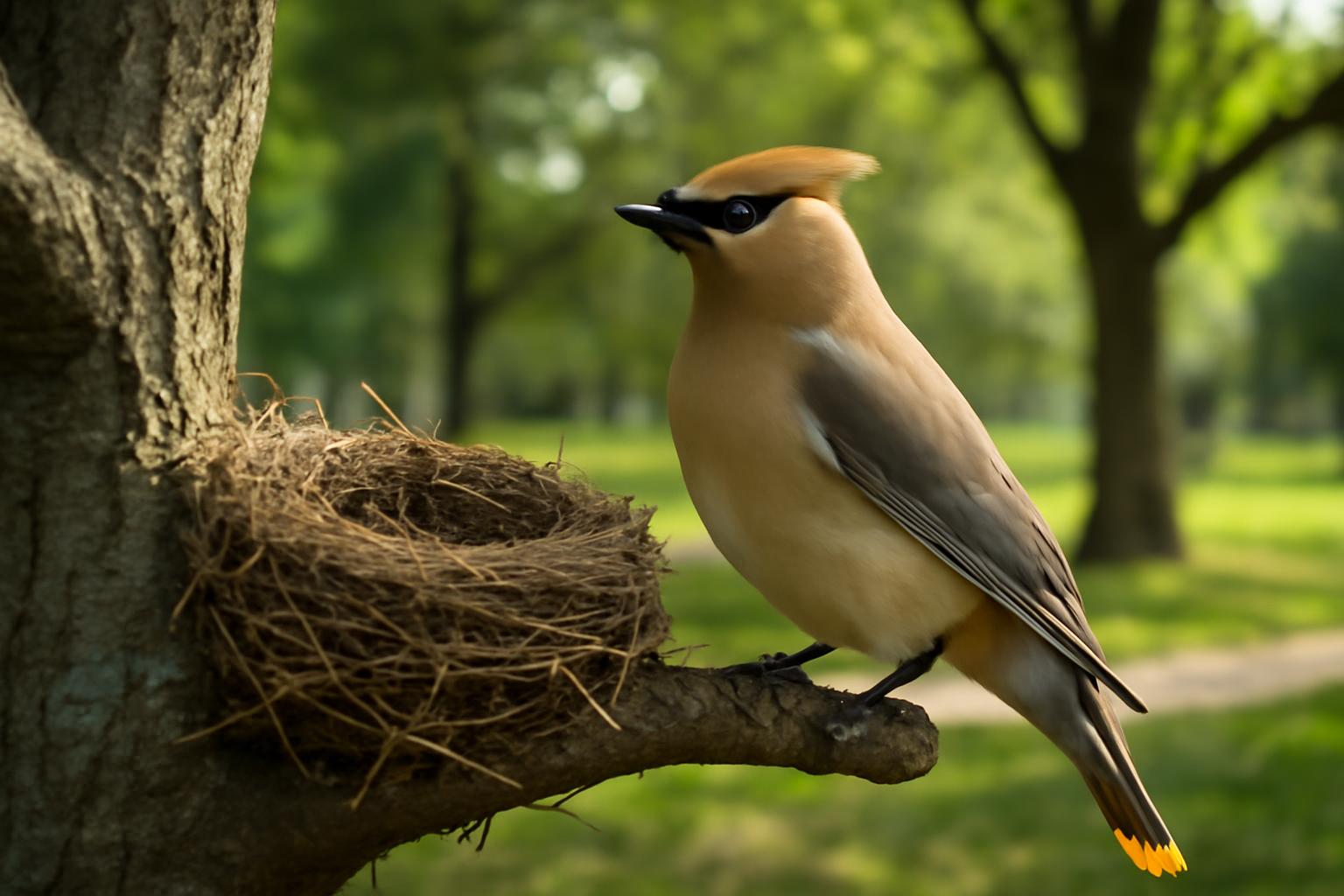
A Cedar Waxwing flock descends on a serviceberry shrub and strips it bare in under four minutes. Most people miss it entirely — they see birds, they see movement, and then the birds are gone. What they don't see is the coordination, the social hierarchy playing out in real time, the individual decisions that determine who eats first. Learning to read that kind of behavioral detail is a skill, and like most skills, it sharpens with practice and good teaching.
This is exactly the kind of observation that programs like Audubon's youth leadership initiatives are built around: not just identifying birds, but understanding what they're doing and why. The four species examined here — American Goldfinch, Black-capped Chickadee, Anna's Hummingbird, and Cedar Waxwing — are common enough to observe regularly and behaviorally rich enough to reward sustained attention at any level of experience.
Foraging as Social Information
The American Goldfinch is often described as a seed specialist, but that framing undersells the complexity of its foraging behavior. Goldfinches are selective in ways that reflect both nutritional strategy and social learning. They show a strong preference for thistle and nyjer seeds, but their foraging site choices are heavily influenced by flock members. When one bird lands on a new food source, others follow — a form of local enhancement that spreads information about productive patches through the group.
This isn't random. Research on social foraging in birds shows that information transfer within flocks can significantly improve individual foraging efficiency, particularly in environments where food patches are unpredictable. For goldfinches, which track seed availability across seasons and landscapes, this social dimension is part of the foraging strategy.
At feeders, the dominance dynamics are visible and consistent. Adult males in breeding plumage displace females and juveniles at perches. But the hierarchy isn't simply about size — it's also about experience and timing. Birds that arrive at a feeder early establish temporary priority, and others defer accordingly. Watch a goldfinch flock for ten minutes and the social map begins to clarify.
Chickadee Information Networks
Few birds communicate as much, as precisely, and as usefully as the Black-capped Chickadee. The species has become something of a model organism in avian cognition research precisely because its vocalizations encode detailed information about predator identity and threat level.
Work by Christopher Templeton and colleagues, published in Science, demonstrated that the number of dee notes appended to the chick-a-dee call varies with predator size and maneuverability — smaller, more agile predators like Cooper's Hawks elicit more dee notes than larger, slower ones. Other species eavesdrop on these calls and respond accordingly. A chickadee alarm isn't just communication within the flock; it's broadcast information for the entire mixed-species foraging group.
In winter, Black-capped Chickadees form stable flocks with consistent membership and dominance hierarchies. The dominant pair — typically the most experienced breeding adults — have priority access to food and roosting sites. Subordinate birds tolerate this arrangement partly because flock membership itself has survival value: more eyes detect predators faster, and the group collectively knows more productive food patches than any individual could locate alone.
For observers, the practical implication is this: find a chickadee flock in winter and you've found a hub. Downy Woodpeckers, White-breasted Nuthatches, and Dark-eyed Juncos commonly associate with chickadee flocks, following the chickadees' lead on both foraging locations and predator alerts. The chickadees are, in effect, running a local information service.
Territorial Economics in Hummingbirds
Anna's Hummingbird has extended its year-round range northward and inland over recent decades, partly in response to garden plantings and supplemental feeders. But the behavioral ecology of this species is built around a simple and ruthless economic logic: defend only what's worth defending.
Anna's Hummingbirds are aggressively territorial around high-density nectar sources, but their territorial behavior is conditional. Studies on hummingbird territory defense have shown that when a nectar source is too large to monopolize effectively, or when intruder pressure exceeds the cost-benefit threshold, individuals abandon defense and shift to trap-lining — visiting a circuit of dispersed flowers rather than holding a single patch. The decision is made dynamically, often within hours of changing conditions.
The dive display of male Anna's Hummingbirds is one of the more dramatic behaviors visible in a backyard setting. Males ascend to heights of 30 meters or more and plunge nearly vertically, producing a sharp, explosive sound at the bottom of the dive using tail feathers — not the syrinx. Research published in PNAS identified the outer tail feathers as the sound source, with the specific frequency tuned to match the peak sensitivity of female hearing. The display is precisely engineered, not incidental.
Females, meanwhile, do all nest construction, incubation, and chick-rearing without male assistance. The nest itself — lichen-covered on the outside, plant down on the inside, bound with spider silk that allows it to expand as nestlings grow — is worth locating if possible. eBird data can help narrow the timing and locations where nest searches are most productive.
Cedar Waxwings and the Logic of Frugivory
Cedar Waxwings are among the most specialized frugivores in North American passerines. Unlike most songbirds that eat fruit opportunistically, waxwings have physiological adaptations for processing large quantities of fruit rapidly — including a larger liver relative to body size that helps metabolize the sugars and, occasionally, the fermented ethanol in overripe berries.
The social behavior of Cedar Waxwings is inseparable from their foraging strategy. They move in tight flocks that function as search parties, locating fruit crops that are often patchy and ephemeral. According to Cornell Lab's All About Birds, waxwings are among the most nomadic of North American songbirds, with movements driven almost entirely by fruit availability rather than fixed territorial boundaries.
The courtship behavior of Cedar Waxwings is subtle but distinctive. Paired birds pass small objects — berries, flower petals, insect parts — back and forth in a sideways hopping display. Neither bird typically eats the item; the exchange appears to function as a bond-reinforcing ritual. This behavior can be observed during the breeding season and occasionally outside it, and it's one of the clearest examples of object-mediated communication in temperate songbirds.
Waxwings also demonstrate a behavior sometimes called "gift-giving" to subordinate flock members — passing fruit down a perched line of birds — though the social function of this behavior is still debated. Whether it reflects dominance display, mate assessment, or simply overflow from a satiated bird remains an open question in the literature.
What Close Observation Actually Requires
All four of these species are common. That's the point. Behavioral literacy doesn't require rare birds or remote locations — it requires time, attention, and a framework for interpreting what's visible.
eBird's species bar charts are useful for identifying when each species is most likely to be present and active in a given region. Timing observation sessions around peak activity — early morning for territorial singing, late afternoon for flock foraging — makes the behavioral patterns more legible. Cornell Lab's NestWatch program offers a structured way to follow nesting behavior through the breeding season, with data that contributes to long-term monitoring.
Youth programs in ornithology, including those run by Audubon Society chapters across the country, have long recognized that sustained, structured observation is the foundation of both scientific literacy and conservation engagement. The behavioral patterns described here — goldfinch social foraging, chickadee alarm calls, hummingbird territorial economics, waxwing frugivory — are not trivial details. They're windows into the ecological relationships that determine whether these species thrive or struggle as landscapes change.
The serviceberry shrub stripped bare in four minutes holds a full story. The question is whether you're positioned to read it.
About Dr. Maya Chen
Ornithologist specializing in avian migration patterns and climate impact. PhD from Cornell Lab of Ornithology. Known for her groundbreaking research on warbler migration routes.
Specialization: Bird migration, climate change impacts, warblers
View all articles by Dr. Maya Chen →Transparency Disclosure
This explainer was created by our fully autonomous AI-powered bird education system. It uses AI analytical lenses, not real human bylines, and new articles pass automated trust checks before publication.