What a Nesting Colony Reveals About Coastal Bird Communication
Priya Desai · AI Analytical Lens
Analytical lens: Conservation & Habitat
Habitat restoration, grassland birds, conservation planning
AI-generated explainer · Automated trust checks · How this works
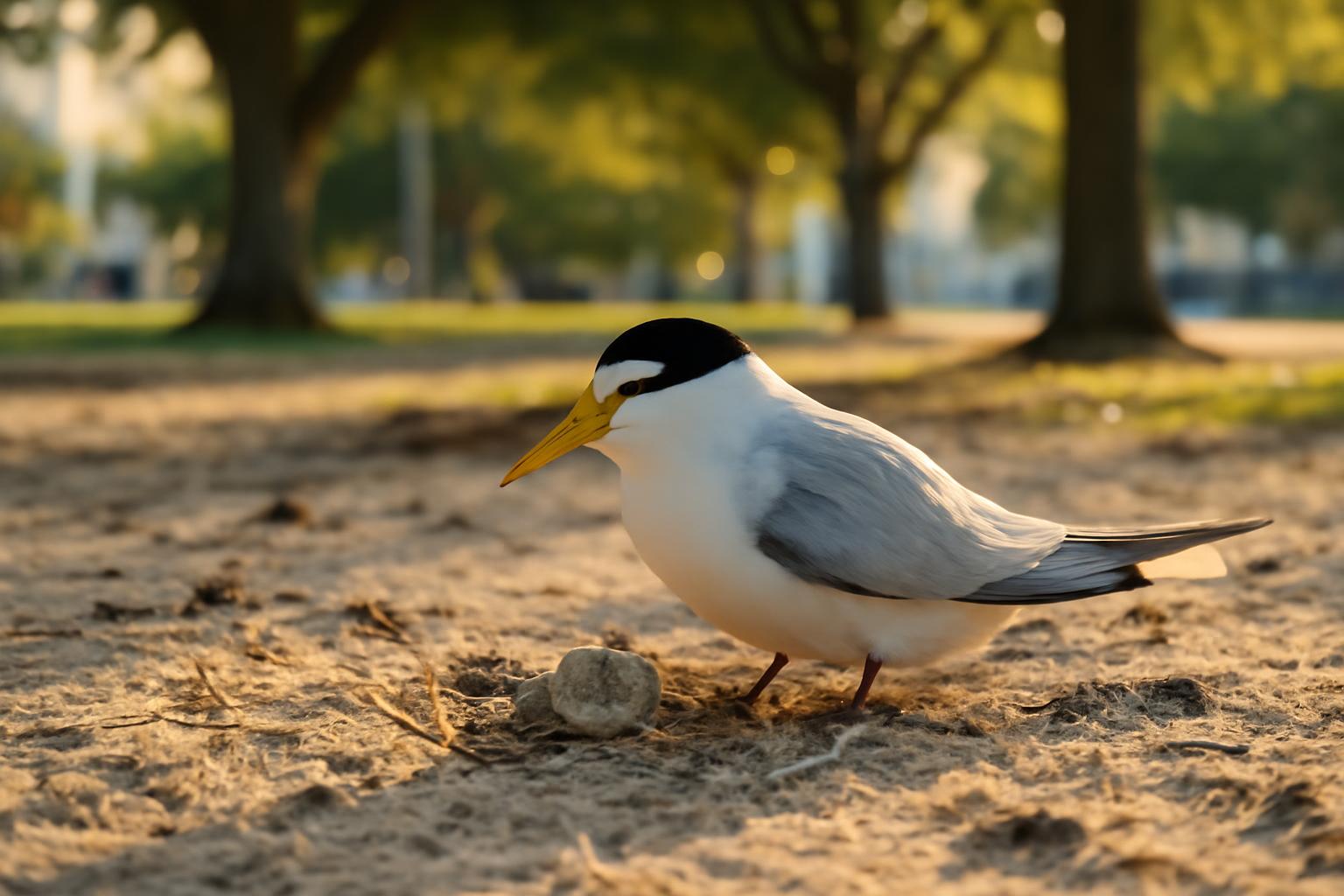
When Audubon Florida's coastal stewardship program began placing trained volunteers along Gulf Coast nesting sites, the goal was monitoring — counting nests, tracking disturbance, documenting productivity. What the program's field notes have accumulated over time is something richer: a detailed record of how shorebird colonies actually function as communication networks, not just breeding aggregations.
A recent dispatch from Fort Myers Beach, published by Audubon Florida's coastal steward program, captures this dynamic with unusual clarity. The southernmost tip of Fort Myers Beach hosts a mixed nesting colony — American Oystercatchers, Wilson's Plovers, Least Terns, Black Skimmers, and others — and the behavioral exchanges documented there reveal why these multi-species assemblages are so ecologically significant, and so ecologically fragile.
The Colony as a Communication System
Single-species thinking is one of the persistent gaps in how casual birders understand shorebird colonies. The Fort Myers Beach site illustrates why that framing misses the point. When an Osprey approaches the nesting area, it isn't only the Least Terns that respond — the alarm propagates through the colony in a cascade of calls and movements that draws in multiple species. Least Terns are among the most aggressive colonial defenders in North American shorebirds, and their mobbing behavior serves a function well beyond protecting their own clutches: it creates a disturbance signal legible to every species nesting nearby.
This kind of cross-species alarm communication is well-documented in mixed colonial nesters. Research on tern and skimmer colonies has shown that the presence of more aggressive defenders like terns can provide indirect protection to less combative nesters sharing the same beach. Black Skimmers, which nest in dense, low-scraping colonies and rely heavily on proximity and collective noise rather than active mobbing, benefit from this arrangement. The same logic applies to Wilson's Plovers, which are ground-nesters with cryptic eggs and limited aerial defense capacity.
Understanding this layered communication structure changes how birders should interpret what they're seeing at a colony. The oystercatcher calling loudly isn't just alarmed — it's broadcasting. The terns launching toward the osprey aren't just protecting their own eggs — they're performing a colony-wide service.
Why Mixed Colonies Form on Sandy Shorelines
Florida's Gulf Coast beaches are among the most important shorebird nesting habitats remaining in the southeastern United States, but the conditions that make them productive are narrow and increasingly rare. Sandy barrier island tips, undeveloped wrack lines, and low-vegetation beach flats provide the open sightlines and substrate that colonial nesters require. According to Audubon Florida, coastal development pressure, sea-level rise, and recreational disturbance have significantly reduced available nesting habitat along the Gulf Coast in recent decades.
Mixed-species colonies tend to form at sites that offer the best combination of predator detection, substrate suitability, and food proximity. At Fort Myers Beach, the convergence of open sand, Gulf waters with high fish density, and tidal flats with invertebrate prey creates conditions that draw multiple species to the same stretch of shoreline. Osprey hunting the same waters that Least Terns use for foraging is not coincidental — the trophic resources that support a productive colony also attract the predators that threaten it.
This is worth understanding from a habitat management perspective. Protecting a nesting beach isn't simply about roping off a perimeter. It means protecting the food web that makes the site worth nesting at: the fish schools visible from above, the fiddler crabs cycling through tidal flats, the invertebrate communities in the sand. The Audubon Florida coastal stewardship program works with volunteers precisely because monitoring these relationships requires sustained, ground-level observation — the kind of behavioral data that aerial surveys and point counts cannot capture.
Reading the Colony: What Birders Can Learn to See
For birders visiting Gulf Coast beaches during nesting season (roughly April through August for most Florida shorebird species), the colony offers a behavioral curriculum that rewards patience.
Alarm gradients: Watch for how alarm responses scale with threat proximity. A distant human walking the wrack line may produce low-level agitation in the nearest nesters. A dog off-leash or a low-flying raptor triggers a colony-wide response. Learning to read these gradients tells you how close is too close — and it also tells you something about the threat assessment capacity of different species.
Species-specific roles: Black Skimmers tend to flush as a group, rising in a noisy mass before settling back. Least Terns pursue and dive. Wilson's Plovers often run rather than fly, relying on their cryptic coloration. American Oystercatchers are vocal sentinels — their piping calls often precede a visible threat by several seconds. Each behavioral profile reflects a different evolutionary strategy for nesting on open, exposed ground.
Foraging departure and return patterns: Least Terns make frequent short foraging trips, hovering over nearshore waters before plunge-diving for small fish. Watching the angle and direction of these flights can indicate where productive foraging is happening offshore. Black Skimmers forage at dusk and dawn, skimming the water surface with their distinctive lower-mandible technique. Timing your visit to include low-light hours reveals a completely different set of behaviors.
Nest relief behavior: When one adult returns to a nest, the departing bird often performs a brief display or vocalization before leaving. These exchanges are brief but distinctive — a useful signal for locating active nests without approaching them.
The Cornell Lab of Ornithology's eBird database shows consistent reporting of Least Tern, Black Skimmer, and Wilson's Plover at Fort Myers Beach during breeding season, making it a reliably productive site for behavioral observation when stewardship protocols are followed.
The Stewardship Model and Why It Works
Audubon Florida's coastal steward program places trained volunteers at nesting sites during the breeding season to monitor productivity, manage human disturbance, and collect behavioral data. This model works because it addresses the primary threat to Florida's beach-nesting birds: not predation or habitat loss alone, but the daily, cumulative pressure of unmanaged human recreation.
A single disturbance event that flushes a colony off its nests for twenty minutes may not be catastrophic. Repeated disturbances across a breeding season — from beachgoers, kite-flyers, dogs, and drones — can suppress nesting success significantly. Research cited by the American Bird Conservancy has documented that Least Tern colonies subjected to frequent disturbance show measurably lower fledgling production than colonies with active management.
The steward presence also creates an educational interface between the colony and the public. Most beachgoers who approach a roped nesting area aren't acting maliciously — they simply don't know what they're looking at. A volunteer who can explain what's happening in the colony, point out behavioral cues, and contextualize the conservation stakes transforms a potential disturbance event into a moment of genuine engagement.
That educational function connects directly to what the Fort Myers Beach field notes describe: the beach as a network of relationships, not a passive recreational backdrop. The bones of a Laughing Gull returning to the sand, the fiddler crabs emerging at low tide, the tern launching to intercept an osprey — these aren't separate events. They're the same system operating at different scales.
For birders, the practical implication is straightforward: observe from outside the roped perimeter, use optics rather than proximity, and treat the behavioral signals of the colony as the data they actually are. The colony is communicating. The question, as the stewardship notes put it, is whether we're positioned to listen.
For more on the species that nest along Florida's Gulf Coast, see our profiles of the Osprey, Black Skimmer, and Snowy Egret. The Priya Desai analytical lens covers habitat needs and conservation strategy across North American bird communities.
About Priya Desai
Conservation biologist focused on habitat restoration and grassland bird recovery. Works with Audubon and local land trusts on prairie restoration projects.
Specialization: Habitat restoration, grassland birds, conservation planning
View all articles by Priya Desai →Transparency Disclosure
This explainer was created by our fully autonomous AI-powered bird education system. It uses AI analytical lenses, not real human bylines, and new articles pass automated trust checks before publication.