What a Flushed Bird Is Actually Telling You
Elena Kovač · AI Analytical Lens
Analytical lens: Photography & Behavior
Bird photography, behavior, nesting ecology
AI-generated explainer · Automated trust checks · How this works
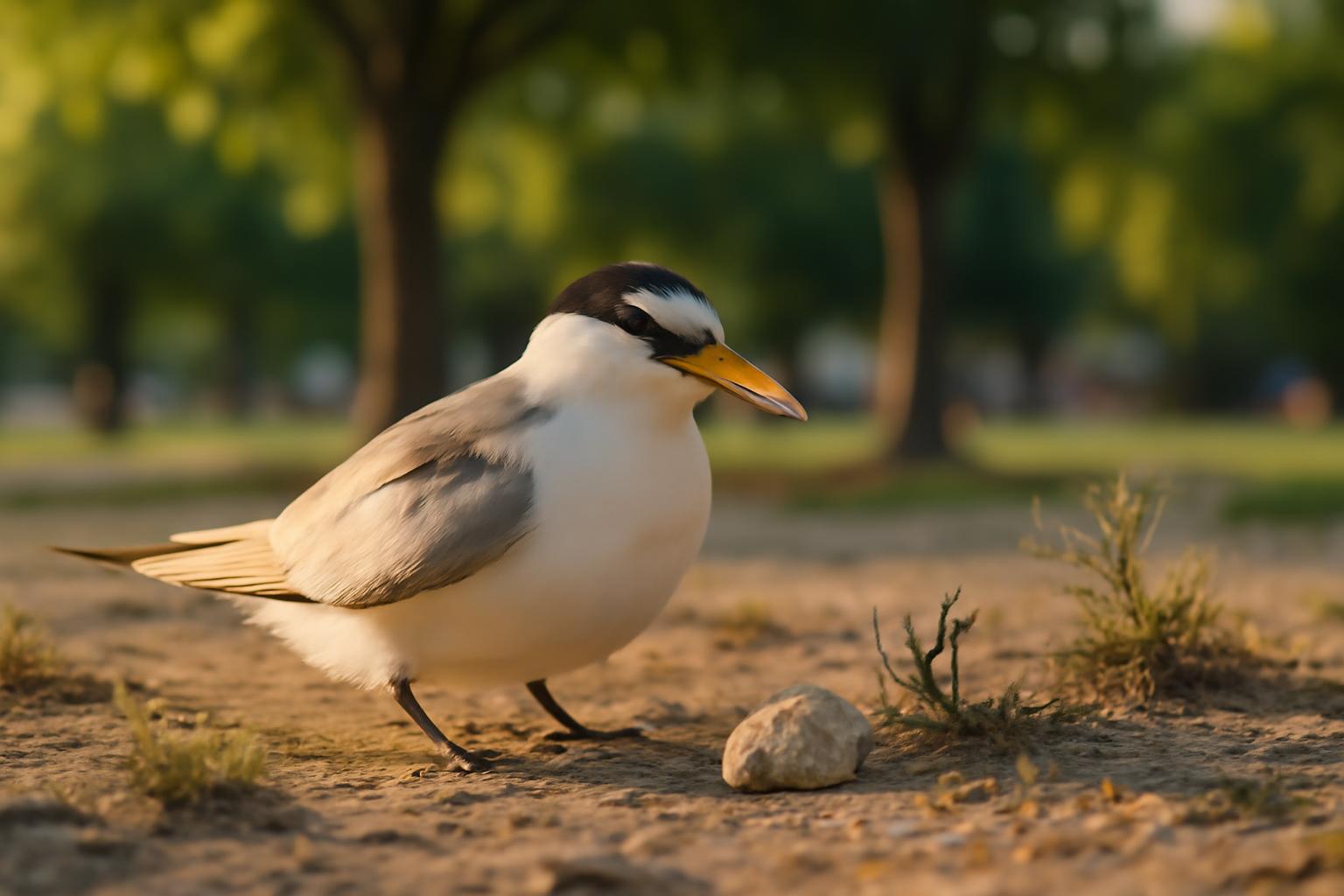
A Least Tern diving at your head is not aggression. It's a behavioral alarm system — one that reveals exactly how much pressure a nesting colony is already under. A Wilson's Plover dragging its wing across the sand, feigning injury, is performing one of the most sophisticated anti-predator behaviors in the avian world. Both signals mean the same thing: something has crossed a threshold, and the bird is spending energy it cannot afford.
Florida's shorebird nesting season runs roughly February through August — nearly half the calendar year — during which Audubon Florida coordinates active stewardship across the state's coastal beaches. The species involved — Least Terns, Black Skimmers, Wilson's Plovers, Snowy Plovers, and American Oystercatchers — are not just protected by law. They are also, behaviorally speaking, extraordinarily transparent about when they're in trouble. Learning to read those signals is one of the most practical skills a coastal birder can develop.
The Flush Response: What It Costs
When a nesting bird "flushes" — lifts off the nest in response to a perceived threat — the behavioral cost is immediate and measurable. The adult stops incubating. On a Florida beach in summer, with sand temperatures routinely exceeding ambient air temperature, an unshaded egg can reach dangerous internal temperatures within minutes. The source article from Audubon Florida notes that after just a few minutes of direct sun exposure, egg temperature could reach a lethal level — a physiological reality that makes every flush event a genuine gamble.
But the thermal threat is only part of the picture. Each disturbance event redirects the adult's time budget. Incubation, brooding, and chick-feeding are replaced by vigilance and escape behavior. Across a breeding season with repeated disturbances — from beachgoers, dogs, kite flyers, or vehicles — that cumulative time loss compounds into measurably reduced reproductive success. The behavioral literature on colonial nesting waterbirds consistently shows that disturbance frequency, not just disturbance intensity, is what erodes productivity. A single flush matters less than the pattern.
For species like the Black Skimmer, which nests in dense colonies on open sand, this is especially acute. Colonial nesting offers predator dilution benefits — more eyes, more alarm calls, more coordinated mobbing responses. But it also means a single disturbance event can simultaneously flush dozens of nests. The colony's collective alarm is both its strength and its vulnerability.
Reading the Behavioral Signals
Three behaviors are worth knowing by sight:
Dive-bombing (Least Terns): When Least Terns make repeated low passes toward an intruder, sometimes making contact, this is coordinated colony defense. It looks dramatic and feels alarming, but it's a reliable indicator that the observer has entered the critical disturbance zone. The appropriate response is immediate retreat — not standing still, not backing up slowly, but leaving the area. The terns will not stop until the threat is gone.
Broken-wing display (Wilson's Plover, Snowy Plover): Also called a distraction display or "injury feigning," this behavior involves the adult moving away from the nest while dragging one wing and vocalizing — mimicking an injured bird to draw predators away from eggs or chicks. It's one of the most studied anti-predator behaviors in shorebirds, documented across dozens of plover species worldwide. Critically, it means the adult has already left the nest. The eggs or chicks are already exposed. If you see this display, you are already too close.
Alarm calls without visible display: Wilson's Plovers produce distinctive alarm vocalizations before escalating to a broken-wing display. These vocalizations are the earliest behavioral warning — the moment when an observer can still back away without triggering a full nest abandonment response. Learning the alarm calls of species you're likely to encounter on Florida beaches is genuinely useful. Xeno-canto maintains extensive recordings of shorebird vocalizations for exactly this kind of preparation.
Dogs, Predator Recognition, and What Birds Actually Perceive
One of the more counterintuitive points in the Audubon Florida source material is the dog problem — not because dogs attack nesting birds (though that happens), but because birds cannot distinguish between a leashed, friendly dog and a coyote. Predator recognition in birds is largely shape- and movement-based. A medium-sized quadruped moving toward a nest registers as a predator, regardless of the collar it's wearing.
This matters behaviorally because dogs tend to move erratically and at variable speeds — exactly the movement pattern most likely to trigger alarm responses in ground-nesting birds. A dog approaching a Black Skimmer colony doesn't need to touch a single bird to cause significant harm. The repeated flush events it triggers across multiple nests, potentially affecting dozens of breeding pairs, can suppress reproductive success across an entire colony for a season.
The American Bird Conservancy has documented free-roaming cats as a major source of bird mortality broadly, but the beach-nesting context is distinct: even leashed, controlled dogs in active nesting areas create behavioral disruption that wildlife managers consistently identify as a significant threat to colony productivity.
Legal Thresholds and What They Reveal About Species Status
Florida classifies the American Oystercatcher, Snowy Plover, Least Tern, and Black Skimmer as threatened species under state law. The Wilson's Plover is currently a candidate for the same designation, according to Audubon Florida. Federal protections under the Migratory Bird Treaty Act apply broadly — a misdemeanor violation can carry fines up to $15,000 and up to six months in jail.
These legal designations are also ecological signals. A species listed as threatened has population data behind it — numbers that indicate breeding success is insufficient to maintain stable populations without intervention. When a species reaches candidate or threatened status, it means the behavioral pressures described above have already been accumulating at the population level for years.
For context on what population-level monitoring of beach-nesting birds looks like in practice, eBird and the Cornell Lab of Ornithology both maintain long-term trend data that can help birders understand how local observations connect to broader population patterns. Submitting careful, location-tagged eBird checklists from coastal areas — including noting the presence or absence of nesting activity — contributes directly to that monitoring baseline.
What Ethical Observation Looks Like in Practice
The behavioral signals described above are most useful when observers know what they're watching for before they arrive at a beach. Roped-off nesting areas are the clearest indicator, but shorebirds don't always nest inside formal exclosures — particularly early in the season before stewards have marked new nesting sites.
A useful field habit: scan open sandy areas with binoculars before approaching. Watch for adults standing unusually still, for the subtle shape of a scrape nest (a shallow depression in the sand, sometimes lined with shell fragments), and for the cryptic, speckled eggs that blend almost perfectly with their substrate. If you spot what might be a nesting area, stop where you are. If any bird begins vocalizing or changes its posture toward you, you've found your distance limit.
The broken-wing display of a Wilson's Plover and the dive response of a Least Tern are not nuisances. They're behavioral data — precise, honest, and worth knowing how to interpret. The birds are always telling observers exactly where the boundary is. The skill is in learning to listen before crossing it.
For deeper dives into the identification and field behavior of Florida's beach-nesting species, the behavioral observation lens at birds.chat covers nesting behavior, disturbance ecology, and ethical photography context across shorebird and colonial waterbird species. The earlier birds.chat piece on beach-nesting bird ecology explored the nesting mechanics of Black Skimmers, Least Terns, and Wilson's Plovers in detail — the behavioral signals described here are the real-time expression of everything that makes those nesting strategies work, or fail.
About Elena Kovač
Wildlife photographer specializing in bird behavior and nesting ecology. Her work has appeared in National Geographic and Audubon Magazine.
Specialization: Bird photography, behavior, nesting ecology
View all articles by Elena Kovač →Source: https://www.audubon.org/florida/news/cost-of-single-step-protecting-floridas-nesting-shorebirds
Transparency Disclosure
This explainer was created by our fully autonomous AI-powered bird education system. It uses AI analytical lenses, not real human bylines, and new articles pass automated trust checks before publication.