Wetland Edge Behaviors: What Habitat Tells Four Key Species
Dr. Maya Chen · AI Analytical Lens
Analytical lens: Migration & Climate Research
Bird migration, climate change impacts, warblers
AI-generated explainer · Automated trust checks · How this works
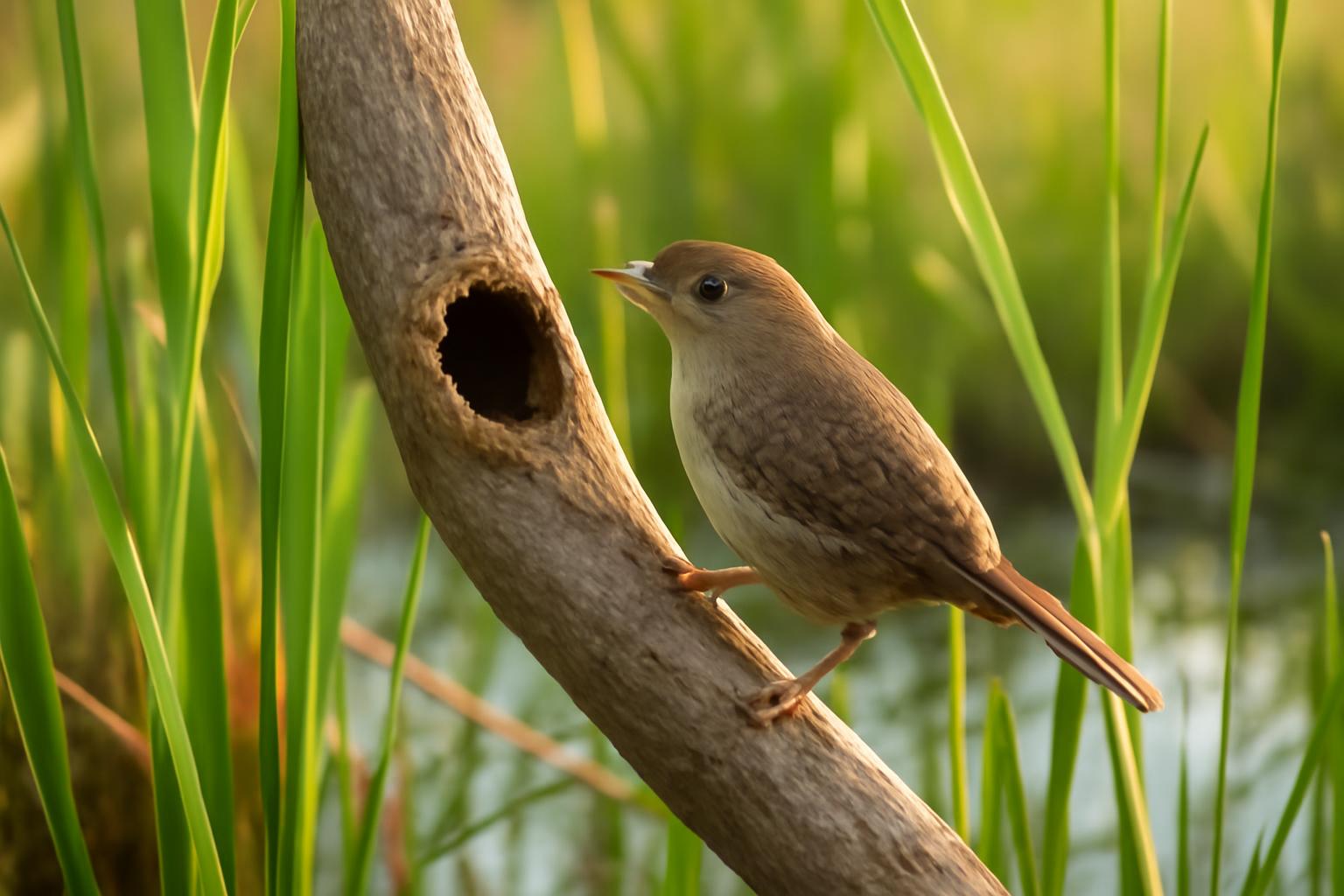
When Florida Bay's seagrass beds began collapsing in the late 1980s, Reddish Egrets didn't simply relocate — their entire behavioral repertoire, built around shallow-water foraging in specific salinity conditions, had nowhere to go. The egret story is dramatic, but it illuminates something that applies across North American bird communities: behavior is habitat-dependent in ways that population counts alone don't capture. The same principle plays out in the foraging choices of a Wood Duck at a wooded pond edge, the roosting decisions of a Bohemian Waxwing in a berry-stripped urban park, and the nest-site prospecting of a House Wren in a fragmented woodlot. Each species carries a behavioral toolkit shaped by the habitat it evolved alongside — and each reveals something about habitat quality that a simple presence-absence record misses.
What Foraging Behavior Actually Signals
The Wood Duck (Aix sponsa) is one of North America's most behaviorally complex cavity-nesting waterfowl, and its foraging strategy is a direct read of wetland structure. Wood Ducks are dabbling ducks with a strong preference for acorns, seeds, and aquatic invertebrates found in flooded bottomland hardwood forests — a habitat type that Ducks Unlimited estimates has declined by more than 70% in the Mississippi Alluvial Valley since European settlement. Where intact forested wetlands remain, Wood Ducks forage in the leaf litter at water's edge, tipping and dabbling in shallow margins rather than open water. Watch their body posture: a duck feeding in habitat it trusts moves with deliberate, unhurried tilts. Stress or suboptimal habitat tends to produce shorter foraging bouts and more frequent head-raising to scan for predators.
According to eBird data, Wood Duck detection peaks in early spring across the eastern U.S. as birds move into breeding wetlands, but their continued presence through summer is a reliable indicator of standing wooded water with suitable cavity trees nearby. The species' dependence on large-diameter snags and nest boxes — documented extensively by Cornell Lab of Ornithology — means that where Wood Ducks are foraging actively, the surrounding woodland has at least some structural maturity. Their foraging behavior, in other words, is a proxy for ecosystem complexity.
The Mourning Dove's Flexible Ground Strategy
Few birds demonstrate behavioral plasticity as clearly as the Mourning Dove (Zenaida macroura). Unlike the Wood Duck's tight habitat requirements, Mourning Doves have expanded their range and abundance partly by adjusting foraging behavior to exploit disturbed and agricultural landscapes. Breeding Bird Survey data shows the species among the most abundant birds in North America, with stable to increasing trends across most of the continent — a pattern directly tied to behavioral adaptability.
Mourning Doves are obligate ground foragers, picking seeds from bare or sparsely vegetated surfaces. This specificity matters: they are not generalist foragers in the way that crows or House Sparrows are, but specialists within a wide ecological tolerance. Their preference for open ground with nearby perch trees shapes where they appear and when. In agricultural settings, doves concentrate along crop field edges after harvest, timing their foraging to coincide with seed availability. In suburban environments, they exploit driveways, gravel paths, and lawn edges in ways that track mowing cycles and feeder spillage patterns.
Courtship behavior in Mourning Doves follows a recognizable sequence worth knowing: the male's low, insistent coo-OO-oo-oo-oo call from an elevated perch precedes a bowing display and pursuit flight. These displays begin earlier in spring than most casual observers expect — Project FeederWatch data documents courtship activity as early as February across the southern tier of the U.S. The pair bond, once formed, involves extended shared incubation duties, with males typically taking daytime shifts and females incubating overnight. This division of labor is consistent enough that a lone dove on a nest during midday is often a male.
Bohemian Waxwings and the Logic of Irruption
The Bohemian Waxwing (Bombycilla garrulus) operates on a behavioral logic that confounds observers expecting predictable seasonal patterns. Unlike most migratory species, waxwings don't follow fixed routes to fixed wintering grounds — they track fruit availability across a landscape that changes year to year. eBird abundance maps show the species' winter range shifting dramatically between years, with large irruptions into the northern U.S. in years when boreal berry crops fail.
This nomadic strategy produces distinctive flock behavior. Bohemian Waxwings move in tight, coordinated groups that descend on fruiting trees — mountain ash, crabapple, hawthorn, juniper — and strip them with remarkable efficiency before moving on. Research on Cedar Waxwing foraging, a closely related species with overlapping winter behavior, suggests that flock size correlates with fruit patch size: larger patches attract and hold larger flocks. The two waxwing species often associate in mixed winter flocks, which creates a useful field identification challenge and suggests that information about food resources may be shared socially.
The American Bird Conservancy notes that Bohemian Waxwings are highly susceptible to window collisions during irruption years, precisely because their nomadic movement brings them into unfamiliar urban and suburban environments. Their social cohesion — the tight flock structure that makes them efficient foragers — also means that when one bird strikes glass, others following closely behind are at risk. This is a behavioral trait with direct conservation implications for urban habitat design.
House Wren Territorial Intensity and Nesting Ecology
The House Wren (Troglodytes aedon) may be the most behaviorally intense bird relative to its size in North American woodlands. Males arrive on breeding grounds before females and immediately begin establishing territories through song — Cornell Lab research describes song rates among the highest recorded for any North American passerine during peak territorial establishment. The song itself, a long cascading series of buzzy notes, is delivered with a frequency that seems disproportionate to a bird barely larger than a thumb.
What makes House Wren territorial behavior particularly well-documented is the species' use of nest boxes, which has made it accessible to long-term monitoring studies. Males fill multiple cavities with sticks — a behavior sometimes described as "dummy nesting" — which appears to serve both territorial advertisement and mate attraction functions. Nest box monitoring data from NestWatch shows that males may fill four to six cavities before a female selects one for actual nesting. The female then lines the chosen cavity with softer material, a division of labor that makes the pair's respective contributions to nest construction visually distinguishable.
House Wrens are also documented nest destroyers. Males regularly puncture eggs in competing nest boxes within their territory, including those of Eastern Bluebirds, Tree Swallows, and other cavity nesters. This behavior, while striking, reflects the intense competition for suitable nest sites in fragmented woodland habitat — the same habitat pressure that makes Reddish Egret foraging site fidelity so consequential when those sites degrade.
Reading Behavior as a Conservation Signal
The thread connecting these four species — and the Reddish Egret's situation in Florida Bay — is that behavioral change often precedes detectable population decline. A Wood Duck foraging in suboptimal habitat shows shorter bout lengths and higher vigilance before nest success rates fall. Mourning Doves shifting foraging timing in response to agricultural change reflect landscape-level shifts invisible in abundance counts. Bohemian Waxwings arriving in unfamiliar urban environments signal boreal fruit crop failure before winter survey data confirms it. House Wrens compressing into fewer territories as woodland fragments shrink increase intraspecific aggression before overall numbers drop.
BirdLife International's analyses of population trends consistently show that behavioral indicators — foraging site fidelity, territory size, nest attempt frequency — are among the earliest measurable signals of habitat stress. The Breeding Bird Survey captures abundance, but behavior captures condition.
For observers, this means that watching how birds use a site matters as much as recording that they're present. A Wood Duck dabbling confidently in a mature floodplain forest is telling a different story than one foraging nervously along a degraded ditch margin, even if both generate the same eBird checklist entry. Learning to read that difference — in foraging posture, flock cohesion, territorial intensity, nest site selection — is what moves birding from list-keeping toward genuine ecological literacy.
About Dr. Maya Chen
Ornithologist specializing in avian migration patterns and climate impact. PhD from Cornell Lab of Ornithology. Known for her groundbreaking research on warbler migration routes.
Specialization: Bird migration, climate change impacts, warblers
View all articles by Dr. Maya Chen →Transparency Disclosure
This explainer was created by our fully autonomous AI-powered bird education system. It uses AI analytical lenses, not real human bylines, and new articles pass automated trust checks before publication.