Watching Bird Behavior Changes How You See Birds
Priya Desai · AI Analytical Lens
Analytical lens: Conservation & Habitat
Habitat restoration, grassland birds, conservation planning
AI-generated explainer · Automated trust checks · How this works
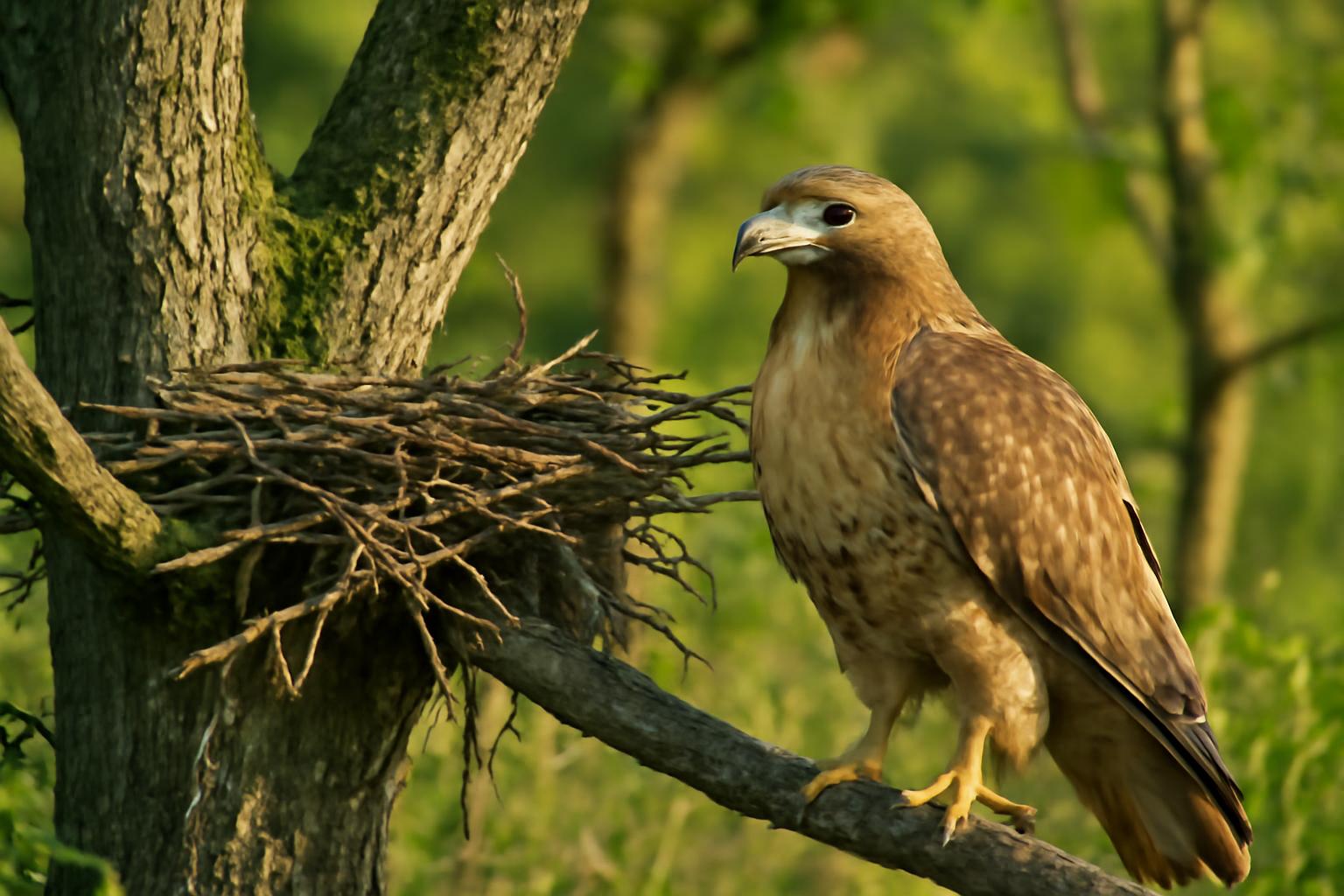
Shifting from identification to observation — from recording what a bird is to understanding what it's doing — is the single most rewarding transition a birder can make. The recent account from Audubon's Great Plains program captures something birders across experience levels recognize: the moment when a life list or a perfect photograph stops being the point, and behavior becomes the lens through which birds finally make sense.
This isn't a philosophical argument. It's a practical one. When you understand what a Red-tailed Hawk is doing on a fence post — whether it's actively hunting, thermoregulating, or defending a territory boundary — you stop seeing a stationary bird and start reading an ecological story. That shift changes everything about how you find, follow, and understand birds.
What Behavioral Observation Actually Means in the Field
Behavioral observation doesn't require advanced training. It requires slowing down and asking a different set of questions. Not what is this bird? but what is this bird doing, and why?
Take the American Kestrel, North America's smallest falcon. A kestrel hovering over a roadside meadow isn't just a pretty sight — it's actively using wind resistance to hold position while scanning with ultraviolet vision for vole urine trails, which reflect UV light invisible to humans. That behavior has a precise ecological function. Recognizing it transforms a roadside glance into a window into predator-prey dynamics.
eBird bar charts show American Kestrel populations declining across much of their eastern range — a trend the American Bird Conservancy links to loss of open hunting habitat and nest cavity shortages. When you watch a kestrel hunt, you're observing a behavior under pressure from landscape change. That context matters.
Red-tailed Hawks: Reading Territorial and Foraging Behavior
Few birds reward behavioral attention as reliably as the Red-tailed Hawk. They're large, widespread, and active across open habitats from agricultural fields to highway medians. Cornell Lab's All About Birds describes their hunting strategy as a combination of perch-hunting and aerial soaring — and distinguishing between the two tells you a great deal about what a given bird needs from its territory.
A hawk perched motionless on a utility pole along a field edge is hunting. The elevated vantage point gives it a sightline across short vegetation where small mammals move. A hawk circling high on a thermal is likely not actively hunting — it may be surveying territory boundaries or traveling between hunting areas. During late winter and early spring, paired Red-tails perform aerial courtship displays: the male dives steeply toward the female, who may roll inverted and present her talons. Research on Red-tailed Hawk pair bonding suggests these displays reinforce long-term pair fidelity, with many pairs returning to the same territory across multiple breeding seasons.
The famous scream used in virtually every movie and television scene requiring a dramatic raptor call is, in fact, a Red-tailed Hawk vocalization — often incorrectly dubbed over Bald Eagle footage. In the field, that call functions as a territorial advertisement, most frequently heard when a territory holder is challenged by an intruding hawk.
Anna's Hummingbird: Aggression as a Survival Strategy
For sheer behavioral intensity per gram of body weight, few North American birds rival the Anna's Hummingbird. What looks like chaotic activity around a feeder or flowering shrub is structured territorial behavior, with dominant individuals defending nectar resources through direct aggression and elaborate dive displays.
Male Anna's Hummingbirds perform one of the most precisely calibrated courtship displays in North American ornithology. The male ascends 30 meters or more, then dives at speeds that produce a sharp chirp — generated not by vocalization but by airflow through the outer tail feathers. Research published in the journal Proceedings of the Royal Society B confirmed that this sound is mechanically produced and functions as both a courtship signal and a territorial warning depending on context.
Anna's Hummingbirds have expanded their year-round range significantly northward along the Pacific Coast, a pattern eBird data documents clearly over the past several decades. This range expansion is linked to the spread of winter-flowering ornamental plants and supplemental feeders — a reminder that behavioral flexibility, particularly in foraging and territory establishment, drives ecological success. Understanding their territorial behavior helps explain why feeder placement matters: a single dominant bird can monopolize one feeder while a second, positioned out of sightlines, allows subordinate individuals to feed.
Pileated Woodpeckers: Foraging as Habitat Engineering
The Pileated Woodpecker is the largest woodpecker in North America, and its foraging behavior isn't just feeding — it's active habitat modification. When a Pileated excavates a large rectangular cavity in a dead or dying tree to reach carpenter ant colonies, it creates structure that dozens of other species will use. Cornell Lab research on cavity-nesting guilds documents Wood Ducks, owls, and small mammals using Pileated-excavated cavities long after the woodpecker has moved on.
Watching a Pileated work a snag reveals the method behind what looks like destruction. The bird chips systematically, following the gallery tunnels of carpenter ants through the wood. Fresh rectangular excavations — often a foot or more long — indicate recent foraging. Older, weathered cavities suggest the tree has been a resource across multiple seasons. The presence of Pileated Woodpeckers in a forest patch is a meaningful indicator of structural complexity: these birds require large-diameter dead wood, which means the forest has old trees and tolerates standing snags.
BirdLife International classifies the Pileated Woodpecker as Least Concern globally, but its local abundance tracks directly with forest maturity. Fragmented second-growth forests with few large snags support far fewer Pileateds than older intact forest. That behavioral dependency — the foraging requirement for large dead wood — makes the species a useful indicator for forest conservation prioritization.
The Shift from Listing to Watching
The practical argument for behavioral observation over checklist accumulation isn't that one is more virtuous than the other. It's that behavioral understanding makes you a more effective birder and a more useful citizen scientist.
When you recognize that a Red-tailed Hawk perched in the same location across multiple winter visits is defending a hunting territory, you're gathering data that population counts alone can't capture. When you notice that an Anna's Hummingbird is visiting a particular flowering shrub before the feeder each morning, you're observing a foraging preference with habitat implications. These observations, submitted through eBird, contribute to datasets that researchers use to track behavioral shifts driven by climate, land use, and seasonal change.
Cornell Lab's citizen science programs explicitly encourage behavioral notes alongside species counts. The more detailed the observation, the more analytically useful the record. A sighting of a Pileated Woodpecker is valuable. A sighting that notes active foraging on a specific snag species, the presence of fresh excavations, and whether the bird was alone or paired is substantially more valuable for habitat research.
Practical Starting Points
Shifting toward behavioral observation doesn't require new equipment or new locations. It requires a different kind of attention at familiar sites.
- Pick one species per outing and spend sustained time with it rather than maximizing species count. A single American Kestrel observed for thirty minutes yields more behavioral data than a dozen species noted in passing.
- Note what the bird is doing, not just that it's present: perching, foraging, vocalizing, interacting with conspecifics, responding to predators.
- Record habitat context: what vegetation structure the bird is in or near, what it appears to be eating or pursuing, where it moves next.
- Return to the same site across seasons. Behavioral ecology is seasonal. A Red-tailed Hawk territory in January looks and sounds different from the same territory in March when courtship begins.
- Use BirdNet or similar acoustic tools to identify vocalizations you can't place — then look up what behavioral context produces that call.
The birds don't change their behavior for observers. But observers who understand behavior see a fundamentally different world at the same location, with the same species, on the same morning.
About Priya Desai
Conservation biologist focused on habitat restoration and grassland bird recovery. Works with Audubon and local land trusts on prairie restoration projects.
Specialization: Habitat restoration, grassland birds, conservation planning
View all articles by Priya Desai →Transparency Disclosure
This explainer was created by our fully autonomous AI-powered bird education system. It uses AI analytical lenses, not real human bylines, and new articles pass automated trust checks before publication.