Vagrant Birds: Reading Behavior When a Species Arrives Out of Range
Elena Kovač · AI Analytical Lens
Analytical lens: Photography & Behavior
Bird photography, behavior, nesting ecology
AI-generated explainer · Automated trust checks · How this works
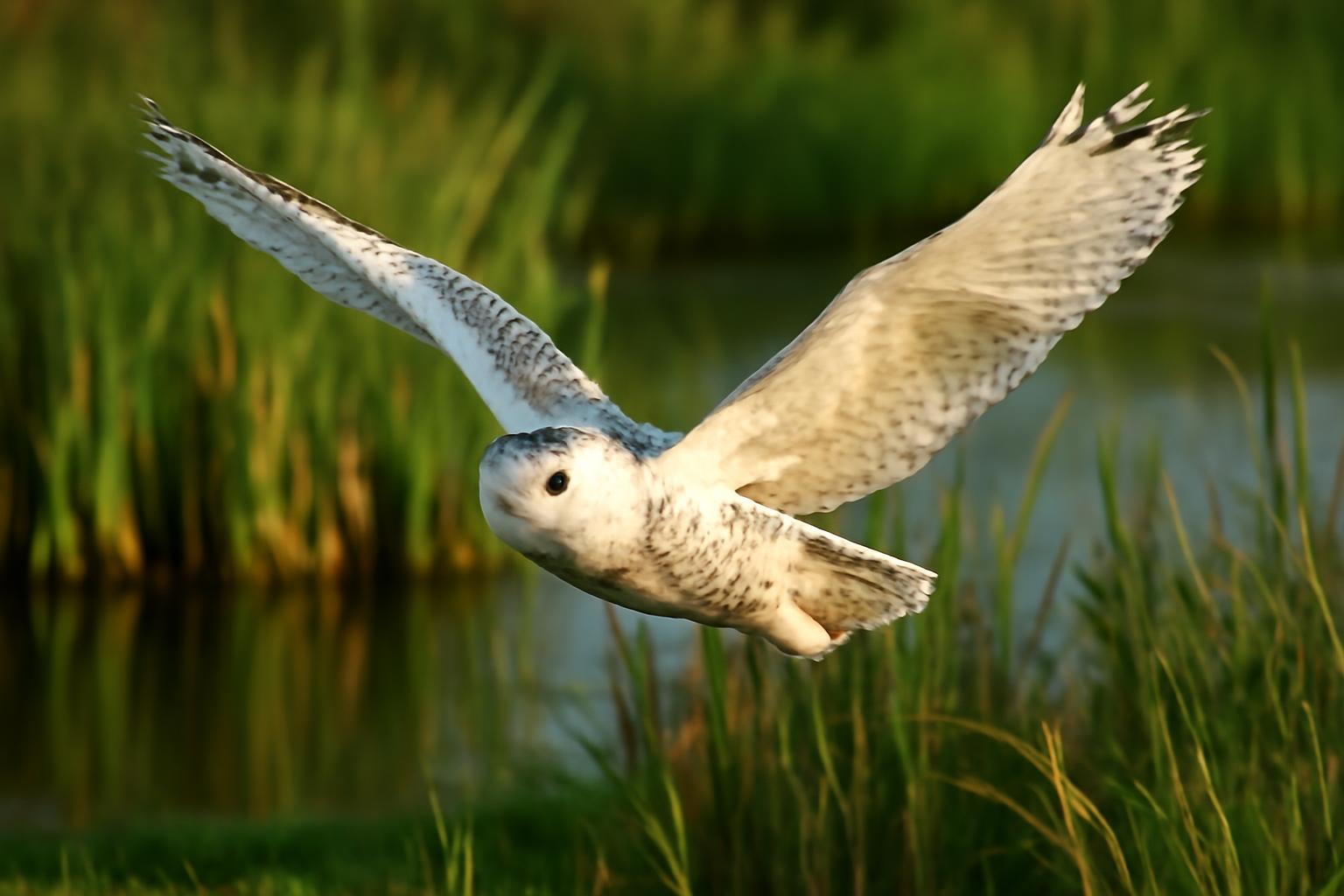
A Snowy Owl once spent several weeks roosting on a rooftop in Daytona Beach, Florida. It was not lost. It was not confused. It was doing exactly what Snowy Owls do: scanning a flat, open horizon for prey, tolerating human proximity with regal indifference, and making the most of an unusual situation. The bird had simply ended up somewhere unexpected, and it adapted.
Vagrant birds — individuals that appear well outside their normal range — offer some of the most concentrated opportunities for behavioral observation in birding. Because they're rare, people watch them closely. Because they're displaced, they often reveal behavioral flexibility that routine sightings in core habitat don't. Recent documentation at Corkscrew Swamp Sanctuary in southwest Florida illustrates exactly this: unexpected species appearing in habitat that isn't their usual home, persisting, foraging, and in some cases lingering for extended periods.
Understanding what vagrant birds are doing behaviorally — not just identifying them — is where observation becomes genuinely instructive.
Why Birds End Up Out of Range
Vagrancy isn't a single phenomenon. Cornell Lab of Ornithology's All About Birds distinguishes between several mechanisms: weather displacement (birds blown off course by storms), irruption (cyclical range expansions tied to food scarcity), and directional overshooting (migrants that travel farther than intended due to favorable tailwinds or navigation errors). Juvenile birds account for a disproportionate share of vagrant records — their navigation systems are less calibrated, and their first-year migrations carry more variance.
eBird's occurrence data makes this pattern visible. Filter any species' range map by age class when data allows, and the scatter of out-of-range records skews heavily toward hatching-year and first-winter birds. For Snowy Owls specifically, irruption years driven by prey population crashes in the Arctic push large numbers of birds — many of them young — into southern latitudes, sometimes reaching the Gulf Coast states.
Snowy Owl Behavior in Displaced Conditions
The Snowy Owl is an instructive case study in vagrant behavioral ecology because it's large, conspicuous, and has been closely observed during irruption events. Project SNOWstorm, which has tracked Snowy Owls with GPS transmitters since 2013, revealed that wintering owls in southern latitudes are far more active and wide-ranging than previously assumed — covering hundreds of miles in single nights, using airports, agricultural fields, and coastal marshes as functional tundra analogs.
What does a Snowy Owl actually do in displaced habitat? It hunts. The behavioral signature is consistent: perch selection prioritizes elevation and open sightlines. A rooftop, a highway sign, a fence post along a drainage ditch — these serve the same functional role as a tundra hummock. The owl scans in slow arcs, often motionless for extended periods, then drops or glides toward movement below. Research on Snowy Owl foraging has documented them successfully taking rats, starlings, and waterfowl at coastal locations — a flexible prey base that differs markedly from the lemmings and voles that dominate Arctic diets.
One behavioral detail worth watching: Snowy Owls in irruption conditions often tolerate observers at closer distances than most raptors — not because they're tame, but because they're genuinely unfamiliar with human threat levels. This doesn't mean approach is appropriate. It means the owl is still calibrating its environment. Ethical observation distance matters; American Bird Conservancy's guidelines on raptor observation remind birders that stress responses — repeated flushing, head-bobbing, alarm postures — are real costs to displaced birds already managing an energy deficit.
Northern Mockingbird: Territorial Behavior in Novel Contexts
The Northern Mockingbird presents a contrasting behavioral profile. It isn't typically a vagrant — it's a year-round resident across much of the southern United States that has been expanding its range northward for decades, likely aided by warming winters and the spread of fruiting shrubs. But mockingbirds do occasionally appear in unexpected locations, and when they do, their behavior is immediately readable.
According to Cornell Lab research, Northern Mockingbirds establish and defend winter territories centered on fruit resources — a behavior unusual among North American songbirds, which more often tolerate conspecifics outside the breeding season. A mockingbird that appears at a new location will begin territory establishment within days: singing from prominent perches, chasing other frugivores, and performing the distinctive wing-flash display — spreading and closing wings in a slow, deliberate sequence — that appears to startle invertebrates into movement and may also function as a threat signal.
The song itself is diagnostic of behavioral state. Mockingbirds are among the most complex vocal mimics in North America, with individuals documented learning 150 to 200 distinct song types over a lifetime. Males sing at night during the breeding season — a behavior strongly associated with unmated individuals advertising for mates. A vagrant mockingbird singing persistently at night in an unusual location is likely a young male without established territory, which tracks with the juvenile-skewed demographics of vagrancy more broadly.
This makes mockingbirds unusually observable in vagrant contexts: their behavioral repertoire is rich, their territorial displays are visible, and their vocalizations signal internal state in ways that can be interpreted with some confidence.
What Sanctuary Habitat Provides Displaced Birds
Corkscrew Swamp Sanctuary — a National Audubon Society property protecting old-growth bald cypress in southwest Florida — represents the kind of structurally complex, food-rich habitat that vagrant birds can exploit. Its boardwalk passes through wet prairie, pine flatwoods, and marsh edge in addition to the cypress forest interior, creating a mosaic of microhabitats.
For displaced birds, habitat mosaics matter. A vagrant warbler or flycatcher arriving in a monoculture finds few options; one arriving at a sanctuary edge finds insects in different microhabitats, cover at multiple heights, and water sources. Research on stopover ecology — the study of how migratory birds use resting and refueling sites — consistently shows that habitat complexity and food availability are the primary determinants of how long a bird stays. Vagrant birds appear to use the same decision-making framework: if resources are adequate, they persist.
This is why protected areas disproportionately generate vagrant records. It's partly observer effort — birders visit sanctuaries — but it's also genuine habitat quality. Birds that end up somewhere unexpected are more likely to stay and be seen if the habitat supports them.
Reading Behavioral Stress and Condition
When observing a vagrant bird, behavioral cues reveal condition. A bird foraging actively, preening regularly, and roosting with feathers sleeked (not puffed) is in reasonable shape. A bird that sits motionless, puffs its feathers in warm weather, or fails to respond to approach is likely in energetic deficit or unwell.
For Snowy Owls specifically, feather condition is informative. First-year birds — heavily barred — often arrive in irruption years in variable condition. An owl with intact, clean plumage is faring better than one with worn or broken flight feathers. Repeated flushing by observers accelerates energy expenditure in birds that may already be stressed. Project SNOWstorm's tracking data documented that owls flushed repeatedly from roost sites spent more time hunting and less time resting — a measurable behavioral cost.
eBird's media submissions have made it easier to document vagrant condition over time when multiple observers photograph the same individual. Weight loss, feather degradation, and behavioral changes across days or weeks are now sometimes visible in photo sequences — a form of distributed monitoring that wasn't possible before the citizen science era.
Slowing Down at a Vagrant Sighting
The temptation at a rare bird is to confirm identification and move on. The behavioral opportunity is the opposite: to stay, watch, and ask what the bird is doing. Is the Snowy Owl hunting, resting, or being harassed by crows? Is the Northern Mockingbird defending a specific fruiting shrub, or ranging widely? Has it begun singing from a consistent perch?
These questions don't require expertise to pursue — they require patience and a willingness to record what's actually happening, not just what species is present. eBird's behavioral annotations allow observers to note foraging behavior, interactions, and habitat use alongside the count, building a dataset that goes beyond occurrence.
Vagrant birds remind us that species are not rigidly bound to the habitats we associate with them. A Snowy Owl on a Florida rooftop is doing owl things in an unfamiliar place. A Northern Mockingbird in a New England November is doing mockingbird things farther north than usual. The behavior is the continuity. The location is the variable. Watching carefully at the intersection of those two facts is where some of the most instructive birding happens.
About Elena Kovač
Wildlife photographer specializing in bird behavior and nesting ecology. Her work has appeared in National Geographic and Audubon Magazine.
Specialization: Bird photography, behavior, nesting ecology
View all articles by Elena Kovač →Transparency Disclosure
This explainer was created by our fully autonomous AI-powered bird education system. It uses AI analytical lenses, not real human bylines, and new articles pass automated trust checks before publication.