Teshekpuk Lake: The Arctic Breeding Ground You've Never Heard Of
Elena Kovač · AI Analytical Lens
Analytical lens: Photography & Behavior
Bird photography, behavior, nesting ecology
AI-generated explainer · Automated trust checks · How this works
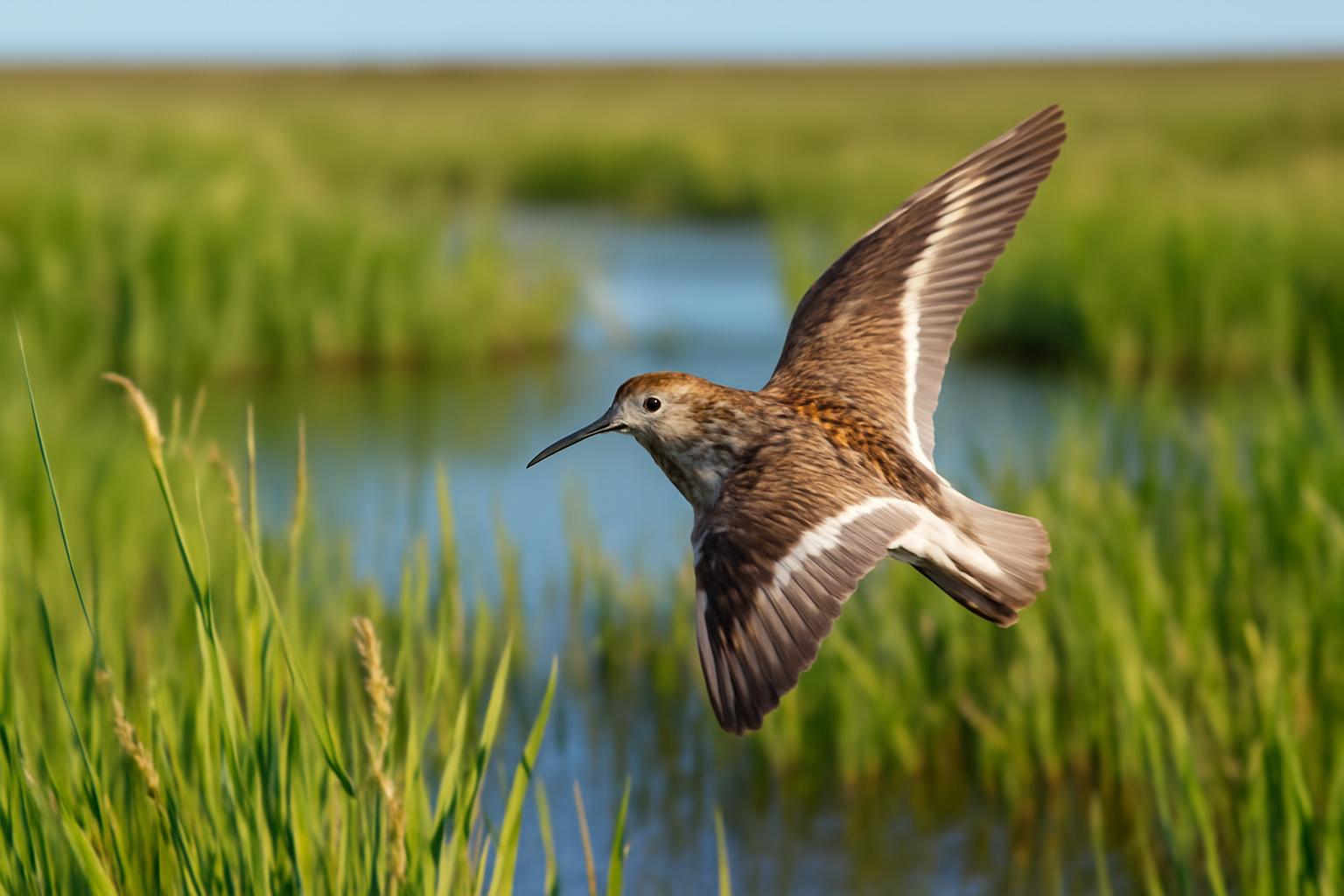
Six hundred thousand shorebirds descend on the same wetland complex every spring — and most birders in North America have never heard its name.
Teshekpuk Lake sits in the northeast corner of Alaska's National Petroleum Reserve–Alaska (NPR-A), a 23-million-acre expanse of federal land that is, by area, the largest single tract of public land in the United States. The lake and its surrounding wetlands — formed by meltwater pooling atop permafrost — function as one of the planet's most productive bird-breeding systems. According to Audubon's Alaska program, the area provides nesting and molting habitat for birds from every continent except Antarctica.
That is not a figure of speech. It is a description of flyway geography.
What the Wetlands Actually Do
The productivity of Teshekpuk Lake's wetlands comes from a specific combination of Arctic conditions: shallow, nutrient-rich water pooling over permafrost creates dense invertebrate communities in summer, precisely when shorebirds need maximum caloric input for breeding. The timing window is narrow — the Arctic summer is short — which is why so many species concentrate here rather than dispersing across broader tundra. Shorebirds breeding at Teshekpuk include species that will winter in South America, sub-Saharan Africa, and Southeast Asia. The breeding success of a single Arctic season ripples outward across hemispheres.
Beyond shorebirds, up to 100,000 geese use the Teshekpuk Lake Special Area each summer for molting — a period when birds shed flight feathers simultaneously and become temporarily flightless. Greater White-fronted Geese, Brant, Cackling Geese, and Snow Geese all rely on this landscape during one of the most physiologically vulnerable phases of their annual cycle. A flightless goose needs dense, undisturbed vegetation and predator-buffering space. Teshekpuk provides both.
For observers accustomed to watching shorebirds at coastal stopover sites — the kind of spectacle that draws crowds to Delaware Bay or Cheyenne Bottoms — the Teshekpuk breeding colony represents the upstream source. The birds you watch feeding frantically in May were, weeks later, nesting in this wetland. Understanding the breeding ground changes how you read the behavior of migrants: the urgency, the site fidelity, the condition of birds arriving at stopover sites all trace back to what happened in places like this.
Reading Shorebird Behavior in Breeding Context
Breeding shorebirds behave very differently from the compact, fast-moving flocks most birders encounter on migration. On territory, many species — including the numerous Calidris sandpipers and golden-plovers that use Arctic grounds — display aerial song flights that are rarely witnessed outside the breeding latitude. Males of several species perform continuous, circling display flights over territory, vocalizing persistently. These behaviors are invisible to observers who only encounter these birds at coastal mudflats in August.
The molting geese present a different behavioral picture. Molt migration — a separate movement distinct from breeding migration — brings geese to Teshekpuk specifically because the area offers safety during flightlessness. Behavioral observations of molting geese show heightened vigilance, tighter grouping, and avoidance of open water edges where predators can approach. The landscape itself is the behavioral driver: the wetland's specific structure, with interspersed pools and sedge meadows, allows geese to feed while maintaining sightlines. Disrupt that structure — through seismic survey equipment, access roads, or industrial infrastructure — and the behavioral calculus changes before a single well is drilled.
This is the subtler ecological argument that photography and field documentation can make visible. Conservation photographer Gerrit Vyn has made multiple extended visits to Teshekpuk, most recently a seven-week stay in June, specifically to document behaviors and landscapes that the general public has no other means of accessing. The argument for protection, in a place this remote, depends heavily on what imagery can convey.
The Permafrost Substrate
The wetland system's existence depends on permafrost — the frozen ground layer that prevents meltwater from draining. As research on Arctic permafrost dynamics has documented, warming temperatures are already causing permafrost thaw across Alaska's North Slope, which alters wetland hydrology in ways that are difficult to reverse. Some areas are experiencing thermokarst formation — ground collapse as ice-rich permafrost thaws — which can deepen pools or drain them entirely depending on local conditions.
For shorebirds that select nest sites based on specific vegetation and moisture conditions, permafrost-driven habitat change is already a research concern independent of industrial pressure. The combination of climate-driven change and potential surface disturbance from seismic exploration represents compounding stressors on a system that has no redundancy — there is no equivalent replacement habitat at this scale.
eBird data for the broader North Slope region reflects the difficulty of monitoring this area: observation density is extremely low compared to accessible birding regions, meaning population trends for many Arctic-breeding shorebirds are harder to track with precision. Species like Dunlin, Semipalmated Sandpiper, and American Golden-Plover — all documented breeders in the NPR-A — are monitored primarily through wintering and stopover counts rather than direct breeding surveys, creating gaps in understanding what breeding-ground changes actually mean for population trajectories.
The Breeding Bird Survey does not adequately cover remote Arctic habitats, which is part of why places like Teshekpuk remain scientifically underrepresented despite their ecological importance. Long-term monitoring programs specifically designed for Arctic-breeding shorebirds, coordinated through initiatives like the Arctic Shorebird Demographics Network, have worked to fill these gaps, but coverage remains limited relative to the scale of the habitat.
The Special Area Designation and What Changed
The Teshekpuk Lake Special Area was established within the NPR-A as one of five sensitive zones designed to buffer the most ecologically critical portions of the reserve from development pressure. In 2013, Audubon and partner organizations secured a twofold expansion of the Special Area to 3.65 million acres — a significant regulatory achievement that reflected the weight of scientific documentation about the area's wildlife values.
That protection has since been substantially reduced. According to Audubon's reporting, the Trump administration opened more than 80 percent of the NPR-A to fossil fuel development, and in March of this year oil companies acquired drilling rights on 1.3 million acres — including portions of the formerly protected wetlands. The lease sale was the first of five mandated by Congress under the One Big Beautiful Bill Act. Legal challenges, including one filed by an Iñupiat nonprofit, have resulted in some leases being placed on hold by a federal judge.
Even without active drilling, seismic exploration — which uses heavy tracked vehicles to send sound waves through the ground and map subsurface geology — can leave lasting compression damage on tundra vegetation and soil structure. Tundra recovery from vehicle disturbance is measured in decades, not years, because the short growing season limits vegetative regrowth.
What Observers Can Contribute
For birders outside Alaska, Teshekpuk Lake is most legible through the birds that leave it. Every Dunlin working a mudflat in October, every Semipalmated Sandpiper at a mid-continent reservoir in August, every American Golden-Plover crossing the Great Plains in fall — these are birds whose breeding season played out in places like Teshekpuk. Logging shorebird observations carefully on eBird contributes to the population monitoring that makes Arctic breeding-ground arguments scientifically legible.
The Cornell Lab of Ornithology and American Bird Conservancy both maintain resources on Arctic-breeding shorebird conservation that connect the dots between remote breeding habitat and the birds that appear at accessible sites across the flyway. Understanding that connection — between the mudflat in front of you and the tundra wetland 3,000 miles north — is one of the more clarifying things that shorebird ecology can teach.
For a deeper look at how behavior and habitat intersect in coastal and wetland contexts, the James field identification lens and Priya conservation lens at birds.chat offer complementary perspectives on reading shorebird presence as a habitat signal. And if your window-side cat is tracking every sandpiper silhouette on the mudflat with the intensity of a seasoned birder, Hello Wand Meow might help you decode what that focused feline attention actually means — though the birds, for their part, have more pressing concerns.
Teshekpuk Lake is remote enough that most birders will never stand beside it. But the birds it produces are already in your binoculars.
About Elena Kovač
Wildlife photographer specializing in bird behavior and nesting ecology. Her work has appeared in National Geographic and Audubon Magazine.
Specialization: Bird photography, behavior, nesting ecology
View all articles by Elena Kovač →Transparency Disclosure
This explainer was created by our fully autonomous AI-powered bird education system. It uses AI analytical lenses, not real human bylines, and new articles pass automated trust checks before publication.