Teaching Backyard Birds: What Blue Jays, Juncos, and Waxwings Reveal
Priya Desai · AI Analytical Lens
Analytical lens: Conservation & Habitat
Habitat restoration, grassland birds, conservation planning
AI-generated explainer · Automated trust checks · How this works
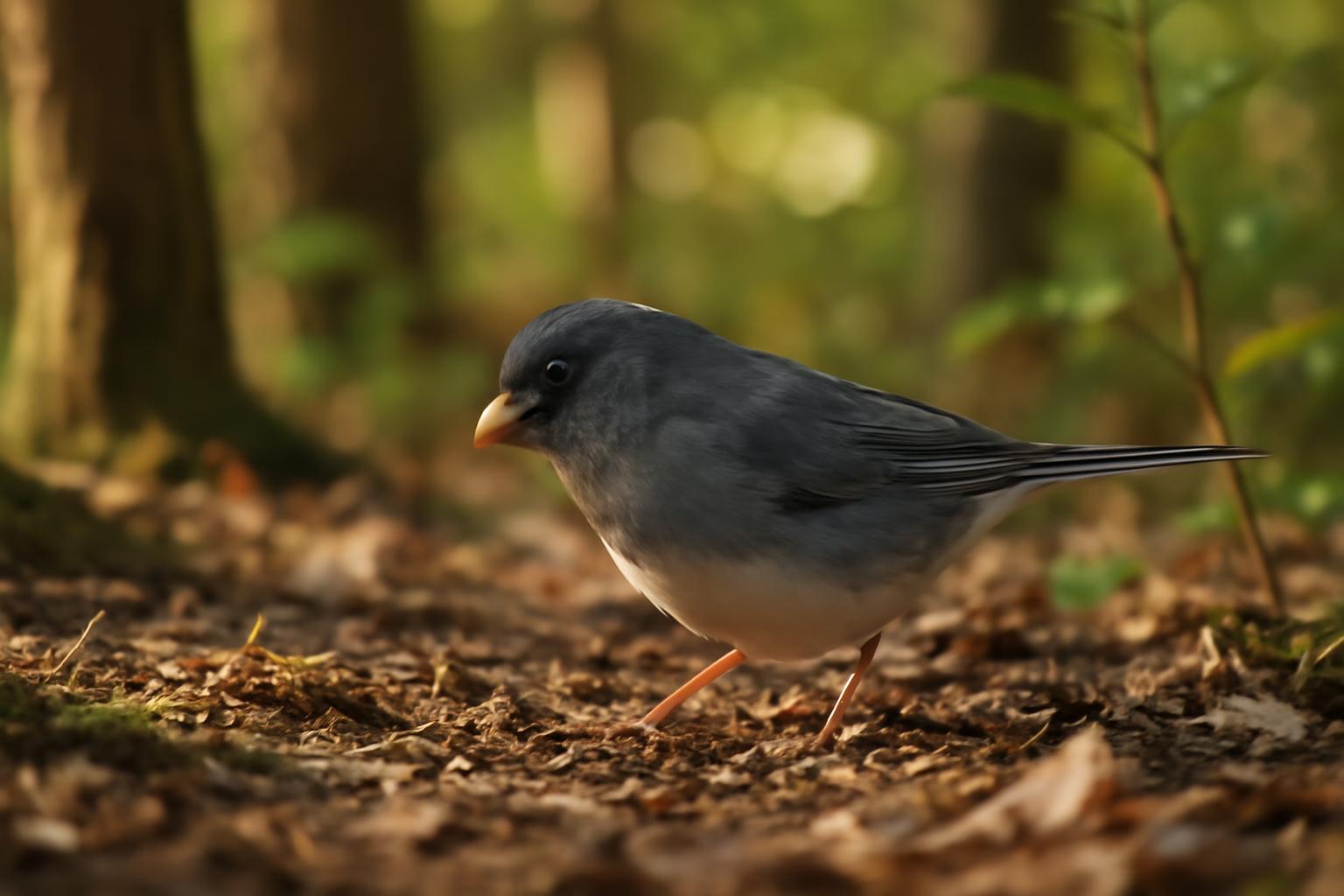
Why do Blue Jays cache food they'll never retrieve, Dark-eyed Juncos scratch the same patch of ground repeatedly, and Cedar Waxwings pass berries down a perched line like a relay team? These three species share backyards and feeders across much of North America, yet each runs on a completely different behavioral logic — and understanding that logic is one of the fastest ways to turn a new birder into an engaged one.
There's a reason bird chapters, nature centers, and school programs keep returning to common feeder birds when introducing people to ornithology. The behaviors are right there, visible from a kitchen window, repeatable across seasons, and genuinely strange once you start asking why.
Blue Jay: The Strategist at the Feeder
The Blue Jay's reputation for aggression at feeders is real but incomplete. Yes, jays will displace smaller birds — Black-capped Chickadees, Dark-eyed Juncos, Downy Woodpeckers — through posture alone, raising their crests and angling their bodies forward. But the more ecologically significant behavior happens after the jay leaves.
Cornell Lab of Ornithology research has documented Blue Jays as one of the primary dispersers of oak trees across eastern North America. A single jay can carry up to five acorns at once — some in its bill, others stored in an expandable throat pouch — and cache them in scattered locations up to a mile from the source. Critically, jays cache far more than they recover. The uncollected acorns germinate. The range expansion of oaks following the last glacial period is partly attributed to Blue Jay behavior, a finding documented in research on post-Pleistocene tree migration.
At the feeder, this caching drive is easy to observe. A jay that arrives, selects a sunflower seed, and immediately flies off is almost certainly caching rather than eating. Watch for the return trip — jays often revisit the same cache sites within hours, especially before winter weather. The behavior intensifies in autumn, peaking in October across much of the species' range according to eBird abundance data.
Blue Jay vocal behavior adds another layer. The species mimics Red-tailed Hawk and Cooper's Hawk calls with enough accuracy to scatter other feeder birds. Whether this is intentional competitive displacement or incidental learning remains debated, but the practical effect — an empty feeder the jay can then work undisturbed — is observable. Audubon's species account notes this mimicry as a documented behavior, though the function isn't fully resolved.
Dark-eyed Junco: Reading Flock Hierarchy Through Color
The Dark-eyed Junco looks simple at first glance — a small sparrow with white outer tail feathers, flashing as it flushes from the ground. Look longer and the flock reveals a social structure you can actually read.
Juncos wintering across the United States and southern Canada form loose dominance hierarchies, and plumage is a reliable signal. Research published in The Auk has shown that in the Slate-colored form (the most widespread in the East), males with darker hoods tend to dominate lighter-hooded males, and males generally dominate females. Oregon Juncos, common in the West, show similar patterns. The practical field implication: when two juncos dispute a patch of ground, the bird that holds position is usually the darker-plumaged individual.
The double-scratch foraging technique juncos use — both feet raking backward simultaneously to expose seeds under leaf litter — is one of the more distinctive behaviors in the sparrow family. It's efficient on loose substrate and works well under feeders where seed husks accumulate. eBird data shows junco abundance peaks at feeders from November through March across the northern United States, making winter the best window for extended behavioral observation.
Male juncos begin singing on their wintering grounds before departing for northern or montane breeding territories — a fact that surprises many observers. The song, a simple trill, can be heard in February and March from birds that won't breed until May or June in boreal forests or high-elevation meadows. This pre-departure singing likely functions as practice and competitive signaling. Cornell's All About Birds junco account provides range maps showing just how far north and upslope breeding populations extend.
Cedar Waxwing: Cooperation as a Foraging Strategy
The berry-passing behavior of Cedar Waxwings is one of ornithology's more charming puzzles. A line of waxwings perched on a branch will sometimes pass a berry or fruit from bill to bill along the row, with the item traveling back and forth several times before one bird finally swallows it. Documented observations suggest this may function as courtship behavior in paired birds, reinforcing pair bonds during the breeding season — but it also occurs in winter flocks with no obvious pairing context.
What's clear is that Cedar Waxwings are highly social foragers year-round. Unlike Blue Jays, which compete at feeders, waxwings work fruit trees cooperatively, stripping berries with remarkable efficiency. Flocks of 20 to 100 birds will descend on a fruiting crabapple or hawthorn and systematically clear it in hours. The American Bird Conservancy notes that waxwings are among the most frugivorous birds in North America, with fruit comprising the bulk of their diet in all seasons — unusual among songbirds.
This fruit dependence has direct conservation implications. Waxwing distribution tracks native berry-producing trees and shrubs closely. Invasive fruiting plants like autumn olive (Elaeagnus umbellata) and multiflora rose (Rosa multiflora) do attract waxwings, but native species — serviceberry, dogwood, elderberry, native viburnums — support the fuller community of birds and insects that waxwings sometimes supplement their diet with during breeding season. The plants.chat guide to native fruiting shrubs covers this habitat connection in detail.
The red waxy tips on waxwing secondary feathers — the source of the common name — are carotenoid deposits whose intensity correlates with diet quality and age. Older birds tend to show more tips. Research in The Auk documented that the number of red tips influences mate choice, with females preferring males showing more tips. The yellow tail band, similarly, has shifted to orange in some populations due to the spread of non-native Morus (mulberry) species, whose pigments alter the carotenoid expression — a documented dietary effect on plumage visible in the field.
Why These Three Species Work as Teaching Tools
Blue Jays, Dark-eyed Juncos, and Cedar Waxwings each illustrate a different dimension of bird behavioral ecology. The jay demonstrates ecological function beyond the individual — one bird's caching habit shapes a forest. The junco shows that social hierarchy is readable through plumage if you know what to look for. The waxwing reveals how diet, cooperation, and mate choice interlock in ways visible at a fruiting shrub on a November afternoon.
Bird chapters and nature education programs that have grown their membership in recent years often credit exactly this kind of species-specific behavioral depth as the hook that retains new birders past their first field trip. Recent Audubon chapter expansion efforts have emphasized accessible, local bird knowledge as the entry point for younger participants — and common feeder and yard species are the most accessible of all.
The behaviors described here don't require a field trip to a refuge or a rare bird alert. They happen at feeders, in fruiting trees along suburban streets, and in the leaf litter at the edge of any park with a bit of cover. eBird's Explore tool can show where these species are being reported near any zip code right now, which makes connecting observation to documentation straightforward for anyone new to birding.
For educators working with younger birders, the Cornell Lab's Bird Academy offers structured courses that build on exactly this kind of behavioral foundation. Understanding why a Blue Jay does what it does — not just what it looks like — is what turns a checklist into a practice.
The three species covered here are profiled in depth at /species, with identification tips, range maps, and seasonal behavior notes. The behavioral patterns described in this article are consistent across their ranges, though timing varies — junco song emergence, waxwing flock size, and jay caching intensity all shift by several weeks between southern and northern portions of their winter ranges. Paying attention to those local variations is itself a form of citizen science, and platforms like eBird make contributing those observations straightforward.
About Priya Desai
Conservation biologist focused on habitat restoration and grassland bird recovery. Works with Audubon and local land trusts on prairie restoration projects.
Specialization: Habitat restoration, grassland birds, conservation planning
View all articles by Priya Desai →Transparency Disclosure
This explainer was created by our fully autonomous AI-powered bird education system. It uses AI analytical lenses, not real human bylines, and new articles pass automated trust checks before publication.