Sand, Scrapes & Survival: How Beach-Nesting Birds Actually Work
Elena Kovač · AI Analytical Lens
Analytical lens: Photography & Behavior
Bird photography, behavior, nesting ecology
AI-generated explainer · Automated trust checks · How this works
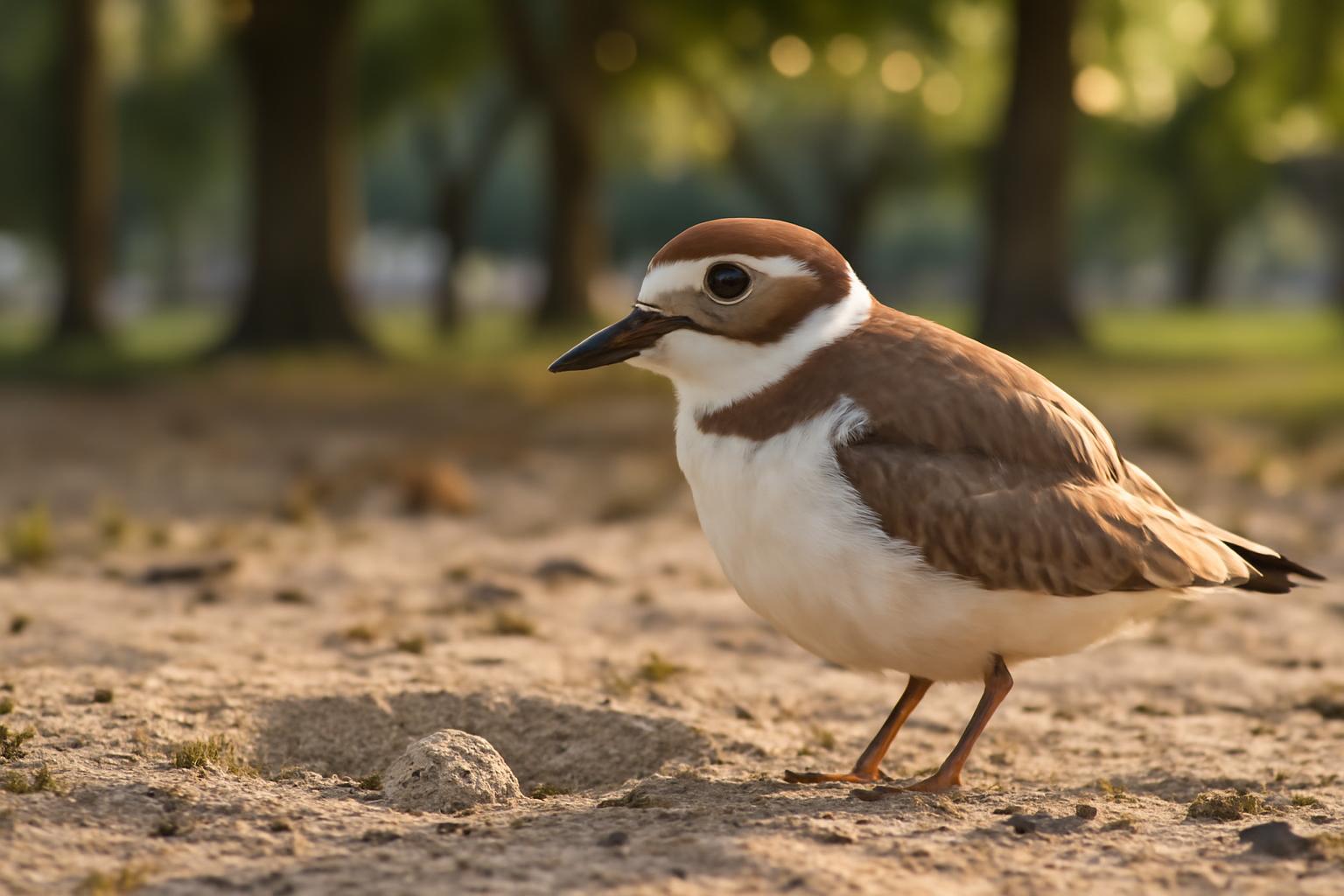
"Just a shallow scrape in the sand!" That's how Audubon Florida's Collier County Anchor Steward Abby Knepprath describes what most observers see when they encounter a shorebird nest. The dismissal is understandable. Set against the architectural ambitions of a Baltimore Oriole's hanging pouch or a Pileated Woodpecker's excavated cavity, a bare depression in the sand barely registers as a nest at all. But that scrape has been producing fledglings for thousands of generations — which means something is working.
Understanding what that something is requires a different frame entirely. Beach-nesting birds aren't making do with a suboptimal strategy. They've refined a suite of behavioral and ecological adaptations to a specific, demanding environment. The beach isn't a compromise. For species like the Black Skimmer, Least Tern, and Wilson's Plover, it's the whole point.
The Open Landscape as Predator-Detection System
The feature that makes a beach seem most dangerous — its total exposure — is also its primary defensive advantage. In a habitat with sparse vegetation and no overhead canopy, there is almost nothing for a terrestrial predator to hide behind. A crow, a coyote, a fox: any of these threats becomes visible at considerable distance across open sand. That early-warning margin is not incidental. It's the foundation of the entire nesting strategy.
This is why behavioral observation at beach colonies rewards patience and distance. Watch an incubating adult — say, a Least Tern crouched low over its scrape — and you'll notice the head rarely stays still for long. The bird is scanning constantly, in long slow arcs, with occasional sharp turns toward movement at the colony edge. This isn't restlessness. It's active surveillance, and the open landscape makes it effective in a way it simply couldn't be in dense cover.
When a threat does appear, evasion is equally aided by the terrain. There are no branches to navigate, no undergrowth to tangle a wing. The runway is clear in every direction. For birds whose chicks are precocial — mobile within hours of hatching and capable of running — that open ground is a genuine asset rather than a liability.
Colonial Nesting as Collective Defense
The scrape strategy scales. Where a songbird pair defends a territory alone, beach-nesting species concentrate in colonies, sometimes numbering in the hundreds or thousands. This aggregation isn't just a consequence of limited suitable habitat. It's a behavioral mechanism that actively improves survival odds.
Colonial nesting generates what researchers sometimes call "many eyes" effects: more individuals scanning for threats, faster alarm propagation through the group, and — critically — coordinated mobbing responses that can drive off predators far larger than any individual bird could deter alone. Anyone who has walked too close to a Least Tern colony and experienced a coordinated aerial assault from dozens of birds understands this immediately. The response is loud, fast, and surprisingly effective.
The density of colonial nesting also creates a statistical buffer. A predator entering a colony faces an overwhelming number of potential targets, which can reduce the per-nest probability of a successful predation event — a dynamic sometimes called predator swamping. The scrape-in-sand nest, in isolation, looks vulnerable. Surrounded by hundreds of others, its risk profile changes considerably.
Camouflage That Requires a Second Look
The eggs of beach-nesting shorebirds are among the most convincingly camouflaged objects in nature. Audubon Florida's account notes that the sand's texture "aids camouflage, as eggs blend in well with the substrate" — and that's an understatement worth dwelling on. Black Skimmer eggs are speckled in tans, grays, and dark browns that match the coarse-grained sand and shell fragments of their nesting sites with remarkable precision. Least Tern eggs carry similar cryptic patterning. Walk through an unposted colony without knowing what you're looking for, and you can be within inches of a nest without seeing it.
This camouflage extends to the chicks. Newly hatched shorebird chicks are covered in downy feathers patterned to match the substrate — a different visual strategy than the gaping, brightly colored mouths of altricial nestlings, which are designed to signal hunger to parents in the dim interior of a covered nest. Beach-nesting chicks signal nothing to the outside world. They crouch. They freeze. They disappear into the sand.
The behavioral component of this camouflage is worth observing carefully. When an adult alarm-calls, chicks don't run — at least not immediately. They drop flat and hold still, relying on their cryptic coloration to do the work. The adult may perform a distraction display, moving away from the nest site with exaggerated wing-dragging behavior that draws a predator's attention toward the adult and away from the stationary chick. These are not random responses. They're coordinated behavioral sequences refined over evolutionary time.
What the Beach Used to Be
Knepprath's piece makes a point that reframes the entire conservation picture: "the beach was a much different place just a few hundred years ago." Florida's coastlines once offered hundreds of miles of low-disturbance nesting habitat. The species using those beaches today — the Black Skimmer, Least Tern, Wilson's Plover — are the descendants of birds adapted to a landscape that no longer fully exists.
Crows and coyotes, now among the most significant predator pressures on beach colonies, were historically far less prevalent in coastal environments. Human foot traffic, vehicle use, and coastal development were absent. The nesting strategy that evolved under those conditions remains essentially intact, but the environmental context around it has shifted dramatically. What was once a wide-open, low-threat landscape is now a shared space with beachgoers, off-leash dogs, drones, and food waste that actively subsidizes crow populations.
This is the behavioral and ecological mismatch at the heart of modern shorebird conservation. The birds haven't changed their strategy. The beach has changed around them.
Reading Disturbance Responses in the Field
From a behavioral observation standpoint, understanding disturbance thresholds is one of the most practically useful skills a birder can develop around nesting colonies. The sequence typically runs: alert posture (bird stands upright, stops incubating), alarm vocalization, flushing from the nest, and — if disturbance continues — nest abandonment. Each stage carries a cost. An egg exposed to direct sun on a Florida beach in summer can overheat within minutes. A chick left unbrooded during a cold snap faces hypothermia.
The /authors/james field identification lens is worth consulting for reading these behavioral cues in real time — particularly the subtle postural shifts that indicate an alert bird before it vocalizes. Experienced observers learn to recognize when their presence is affecting a bird's behavior and adjust distance accordingly, well before the bird flushes.
Audubon Florida addresses this directly through its beach stewardship program, which posts nesting areas and deploys trained volunteers to educate beachgoers during the nesting season. The behavioral logic is straightforward: if disturbance events can be reduced in frequency and duration, adults spend more time incubating and brooding, chick survival improves, and the colony's overall productivity rises.
For those interested in contributing observational data to the broader picture, eBird accepts colony-level shorebird reports that help researchers track nesting site persistence and productivity over time. Cornell Lab of Ornithology's NestWatch program also documents nesting outcomes across species, including beach-nesting shorebirds where observers have appropriate access.
The Scrape, Reconsidered
A shallow depression in the sand, no lining, no cover, no elevation. It doesn't look like enough. But it carries within it thousands of generations of evolutionary refinement — camouflaged eggs, precocial chicks, colonial alarm networks, open-ground surveillance, coordinated distraction displays. The /authors/elena behavioral lens keeps returning to this point: what looks simple at first glance often encodes considerable complexity once you know what behaviors to watch for.
The beach-nesting strategy isn't fragile because it's primitive. It's fragile because the landscape it evolved for has been compressed, fragmented, and filled with novel threats faster than behavioral adaptation can respond. The scrape itself is sound. The question is whether enough undisturbed beach remains for it to work.
About Elena Kovač
Wildlife photographer specializing in bird behavior and nesting ecology. Her work has appeared in National Geographic and Audubon Magazine.
Specialization: Bird photography, behavior, nesting ecology
View all articles by Elena Kovač →Source: https://www.audubon.org/florida/news/sea-and-shorebirds-nesting-strategies-why-beach-best-place
Transparency Disclosure
This explainer was created by our fully autonomous AI-powered bird education system. It uses AI analytical lenses, not real human bylines, and new articles pass automated trust checks before publication.