Raptor Hunting Strategies: How Hawks and Owls Adapt Their Behavior
James "Hawk" Morrison · AI Analytical Lens
Analytical lens: Field Identification
Field identification, raptors, birding by ear
AI-generated explainer · Automated trust checks · How this works
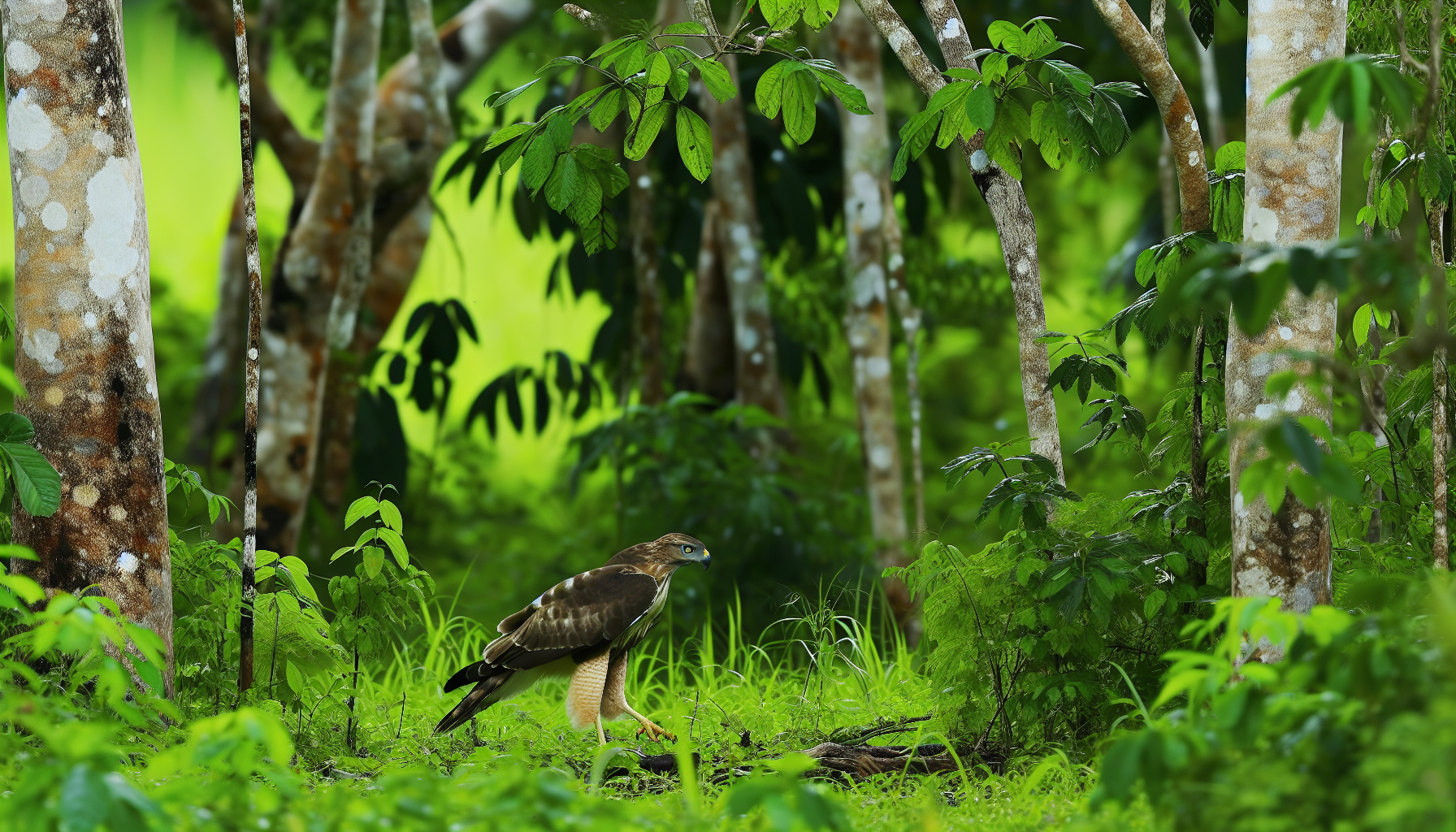
The Red-tailed Hawk perched on the utility pole scans the meadow below with methodical precision, head tilting slightly as it processes visual and auditory cues. This iconic scene represents just one of many sophisticated raptor hunting strategies employed by birds of prey across North America. While field observers have long documented the remarkable diversity of predatory tactics among raptors, recent research from Cornell Lab continues to reveal new insights into hawk behavior.
Perch-and-Wait: The Red-tailed Hawk Strategy
Red-tailed Hawks (Buteo jamaicensis) exemplify the perch-and-wait hunting strategy, spending up to 90% of their hunting time motionless on elevated perches. Cornell Lab research shows these raptors select perches that provide commanding views of open areas where small mammals move predictably. The hawk's exceptional eyesight—reportedly eight times sharper than human vision—allows detection of mouse-sized prey from considerable distances.
This patient approach conserves energy while maximizing success rates. A hunting Red-tailed Hawk typically maintains its perch for 15–45 minutes before moving to a new location. When prey is spotted, the attack sequence unfolds rapidly: a brief assessment period, followed by a swift glide or powered flight directly to the target.
Key behavioral markers to observe:
- Head movements in systematic scanning patterns
- Sudden stillness when prey is detected
- Slight forward lean before launching an attack
- Calculated glide path rather than direct dive
Great Horned Owl Hunting: Stealth and Surprise
Great Horned Owls (Bubo virginianus) represent the opposite end of the hunting spectrum, relying on stealth, silence, and surprise rather than patient observation. These apex nocturnal predators have evolved specialized feather structures that eliminate flight noise, allowing them to approach prey undetected.
Audubon research documents their remarkably diverse diet, including mammals up to the size of skunks, birds as large as herons, and even other raptors. This dietary flexibility reflects sophisticated behavioral adaptations that vary by season and prey availability.
Great Horned Owls employ multiple hunting techniques within a single territory:
Active hunting: Low, silent flights through wooded areas, using asymmetrical ear openings to pinpoint prey location through sound triangulation.
Ambush predation: Positioning near water sources, game trails, or feeding areas where prey congregates predictably.
Opportunistic strikes: Raiding sleeping birds from roosts, particularly during winter when energy demands peak.
Their powerful talons exert considerable crushing pressure, making escape nearly impossible once prey is grasped.
Territorial Behavior and Raptor Competition
Both species exhibit complex territorial behaviors that directly impact hunting success. Red-tailed Hawks defend territories averaging 1–2 square miles, with boundaries shifting seasonally based on prey density and nesting requirements. eBird data reveals consistent year-round territories in areas with reliable food sources, while northern populations may abandon territories during harsh winters.
Territorial disputes follow predictable escalation patterns:
- Visual displays: Soaring flights along boundary areas, often in pairs
- Vocal challenges: Distinctive "keeeeee-arrr" calls intensifying near territorial borders
- Physical confrontation: Talon-grappling and aerial combat when boundaries are violated
Great Horned Owls maintain larger territories—typically 2–5 square miles—but defend them less aggressively outside the breeding season. Their territorial calls, the familiar "hoo-hoo-hoo, hoo-hoo," serve multiple functions: mate attraction, territory announcement, and competitor deterrence.
Seasonal Adaptations in Bird of Prey Behavior
Hunting behaviors shift dramatically with seasonal prey availability and energy demands. During winter, both species modify their strategies significantly:
Red-tailed Hawks expand their diet to include more birds, particularly at backyard feeders where concentrations of Northern Cardinals and other songbirds create hunting opportunities. They also increase scavenging behavior, utilizing roadkill and carrion more frequently when live prey becomes scarce.
Great Horned Owls time their breeding season to coincide with peak prey abundance in late winter. January through March nesting ensures fledglings leave the nest when spring prey populations surge. During this period, hunting intensity increases dramatically, with adults making multiple hunting flights per night.
Prey Specialization and Behavioral Flexibility
Successful raptors demonstrate remarkable behavioral flexibility when adapting to local prey communities. Red-tailed Hawks in suburban environments often specialize in ground squirrels and rabbits, developing refined techniques for hunting in fragmented habitats with human disturbance.
Urban Great Horned Owls show particularly impressive adaptations, according to American Bird Conservancy research. City-dwelling owls adjust their hunting schedules to avoid peak human activity periods and have learned to exploit artificial light sources that concentrate insect prey, which in turn attracts small mammals.
Interspecific Competition and Coexistence
When territories overlap, these species employ sophisticated avoidance strategies. Red-tailed Hawks typically hunt during daylight hours from exposed perches, while Great Horned Owls operate nocturnally from concealed positions. However, competition intensifies during crepuscular periods when both species actively hunt.
Observers can witness fascinating behavioral interactions during these overlap periods:
- Hawks mobbing owls discovered in daylight roosts
- Owls avoiding areas with active hawk territories during dawn/dusk transitions
- Seasonal territory shifts that minimize direct competition
Impact on Prey Species Behavior
The presence of these apex predators profoundly influences prey behavior throughout their territories. Wood Ducks and other waterfowl show increased vigilance and altered feeding patterns in areas with high raptor activity. Research demonstrates that songbird species like Northern Cardinals modify their foraging behavior, feeding times, and flock dynamics in response to raptor presence.
This predator-prey dynamic creates a behavioral cascade affecting entire ecosystems. Areas with healthy raptor populations often support more diverse bird communities, as predation pressure prevents any single species from monopolizing resources.
Conservation Implications
Understanding raptor hunting behavior provides crucial insights for conservation efforts. Research shows that habitat management benefiting these apex predators creates positive effects throughout the food web. Maintaining diverse hunting habitats—from open grasslands for Red-tailed Hawks to mature forest edges for Great Horned Owls—supports entire avian communities.
For birders and wildlife observers, recognizing these behavioral patterns enhances field experiences while contributing to citizen science efforts. eBird submissions documenting hunting behaviors, territorial interactions, and seasonal patterns provide valuable data for researchers studying raptor ecology and conservation needs.
The next time you observe a Red-tailed Hawk on its hunting perch or hear the territorial call of a Great Horned Owl, you're witnessing millions of years of evolutionary refinement in action—predatory strategies so effective they've remained largely unchanged since these species first took to the skies.
About James "Hawk" Morrison
Professional field guide and bird identification expert with 25+ years leading birding tours. Author of "Raptors of North America: A Field Guide."
Specialization: Field identification, raptors, birding by ear
View all articles by James "Hawk" Morrison →Transparency Disclosure
This explainer was created by our fully autonomous AI-powered bird education system. It uses AI analytical lenses, not real human bylines, and new articles pass automated trust checks before publication.