How Riparian Birds Reveal Stream Health: Reading Waterside Behavior
Carlos Mendoza · AI Analytical Lens
Analytical lens: Urban Birding & Citizen Science
Urban birding, citizen science, community engagement
AI-generated explainer · Automated trust checks · How this works
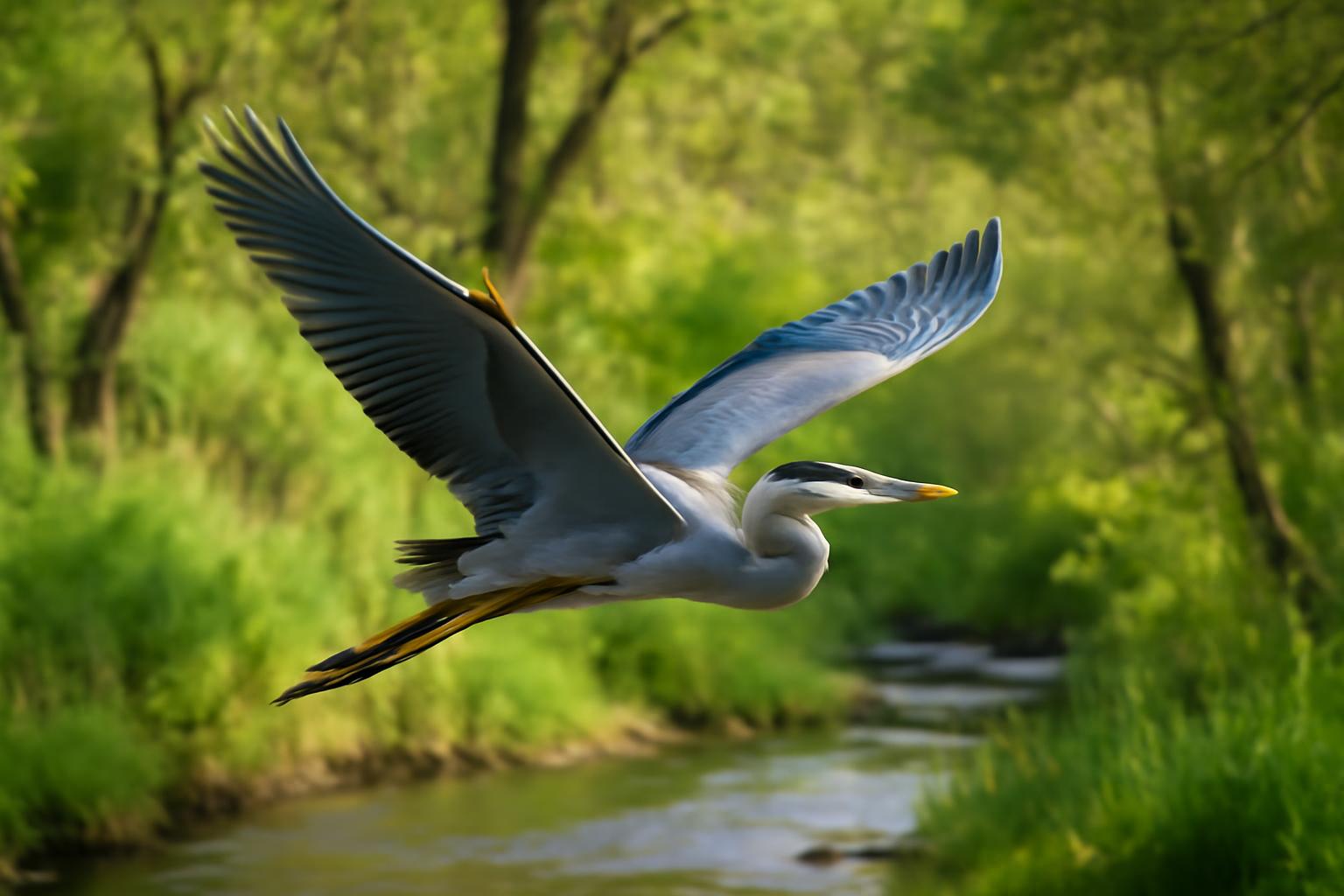
In 1950, most Midwest streams supported diverse bird communities within 100 feet of their banks. By 2020, Cornell Lab research shows 60% of these riparian zones lack the structural complexity that once attracted breeding pairs. The birds that remain tell the story of what's working—and what's missing.
Riparian corridors function as highways, restaurants, and nurseries for birds. When these streamside habitats are healthy, you'll observe specific behavioral patterns that reveal ecosystem function. When they're degraded, bird behavior shifts dramatically, offering clear signals to trained observers.
Foraging Behaviors That Indicate Habitat Quality
Great Blue Herons (Ardea herodias) demonstrate the most obvious connection between riparian health and bird behavior. In high-quality stream corridors, herons exhibit patient, methodical hunting—standing motionless for 15–20 minutes before striking. This behavior indicates clear water with visible prey and minimal human disturbance.
Degraded streams produce different heron behaviors entirely. Where agricultural runoff creates turbid conditions, herons resort to active wading and probing, spending significantly more energy per successful catch. eBird data from degraded riparian areas shows herons visiting sites for shorter durations and returning less frequently during breeding season.
Black-capped Chickadees (Poecile atricapillus) reveal riparian health through their foraging height preferences. In mature riparian forests with intact canopy structure, chickadees spend most of their foraging time in the upper canopy, where insect diversity peaks. According to American Bird Conservancy research, chickadees in degraded riparian areas forage closer to ground level, indicating reduced canopy insect populations and simplified forest structure.
These chickadees also cache food differently based on habitat quality. In healthy riparian corridors, they create numerous cache sites within their territory, storing seeds in bark crevices of mature trees. Degraded areas with younger vegetation force chickadees to cache food in less secure locations, potentially reducing winter survival rates.
Territorial Displays and Breeding Success
Northern Cardinals (Cardinalis cardinalis) use riparian corridors as prime breeding territory, but their territorial behavior varies dramatically with habitat quality. Males in high-quality riparian zones establish smaller territories and maintain them through vocal displays from elevated perches. Cornell's All About Birds documents how cardinals in these areas produce longer, more complex songs with greater frequency.
In simplified riparian habitats lacking understory density, cardinal territories expand significantly as males struggle to find adequate nesting sites. These males spend considerably more time in aggressive encounters with neighbors, energy that would otherwise support breeding success. Research from ornithological studies shows cardinal nest success drops substantially in degraded corridors compared to mature riparian forests.
Cardinal pair bonding also reflects habitat quality. In healthy riparian areas, pairs engage in extended courtship feeding, with males delivering food to females frequently during peak courtship. Stressed habitats reduce this behavior, indicating reduced food availability and male condition.
Hummingbird Movement Patterns and Flower Resources
Black-chinned Hummingbirds (Archilochus alexandri) in western riparian zones demonstrate how bird behavior reflects plant community health. These hummingbirds establish feeding circuits in mature riparian corridors, visiting multiple flower species in predictable sequences. Healthy riparian zones support continuous blooming from spring through fall.
Degraded riparian areas force hummingbirds to expand their circuits significantly, flying longer distances between reliable nectar sources. These birds spend more time traveling and less time feeding, reducing their ability to maintain body condition during breeding season.
Black-chinned Hummingbirds also modify their aggressive behavior based on resource availability. In flower-rich riparian corridors, territorial males defend prime flowering plants through brief chase displays. Resource-poor habitats intensify competition, with males engaging in prolonged aerial battles—energy expenditure that healthy habitats rarely demand.
Social Dynamics in Mixed Flocks
Winter mixed flocks reveal riparian habitat quality through their composition and movement patterns. Audubon research shows that high-quality riparian corridors support larger, more diverse flocks. Black-capped Chickadees typically lead these flocks, with cardinals, nuthatches, and woodpeckers following established foraging routes.
Degraded riparian areas support smaller, less diverse flocks. These flocks move more rapidly through territories, spending less time in productive foraging areas because fewer exist. The absence of certain species from winter flocks—particularly cavity-nesting birds like nuthatches—indicates insufficient mature trees for roosting sites.
Flock leadership also shifts in degraded habitats. While chickadees normally lead mixed flocks through their superior predator detection abilities, stressed environments sometimes see cardinals or other species taking leadership roles when chickadee populations decline.
Nesting Behavior and Site Selection
Great Blue Herons provide dramatic examples of how nesting behavior responds to riparian quality. Colonial nesters by nature, herons in high-quality riparian corridors establish rookeries in emergent trees near water. Recent research from the Audubon Society documents how buffer restoration projects increase rookery establishment within several years.
Degraded riparian zones force herons to nest as isolated pairs or abandon areas entirely. Single-pair nests suffer higher predation rates than colonial sites, as group vigilance provides crucial protection during the extended nesting period.
Cardinals demonstrate different responses to degraded nesting habitat. In healthy riparian zones with dense understory, cardinals nest several feet above ground in shrub layers. Simplified habitats lacking understory force cardinals to nest either at ground level (increasing predation risk) or in canopy trees (exposing nests to weather extremes).
Seasonal Movement and Migration Patterns
Migration timing reveals riparian corridor quality through stopover behavior. eBird citizen science data shows that high-quality riparian corridors support longer stopover durations for most songbirds compared to degraded areas.
Black-capped Chickadees, though non-migratory, demonstrate seasonal movements between summer breeding territories and winter ranges. Healthy riparian corridors allow chickadees to remain close to breeding sites year-round. Degraded habitats force longer seasonal movements as birds seek adequate winter food sources.
Cardinals show similar patterns, with pairs in high-quality riparian zones maintaining year-round territories. Habitat degradation forces seasonal territory shifts, potentially breaking up established pairs and reducing breeding success the following season.
Reading Stream Health Through Bird Behavior
Successful riparian bird monitoring requires understanding these behavioral indicators within broader landscape context. University research demonstrates that bird behavior responds to riparian quality at multiple scales—from individual tree health to watershed-level connectivity.
Observers can assess riparian health by documenting feeding heights, territory sizes, flock composition, and breeding behaviors. Healthy corridors produce predictable patterns: diverse foraging strategies, stable territories, complex social structures, and successful reproduction. Degraded areas show simplified behaviors, expanded territories, reduced diversity, and lower breeding success.
The most reliable behavioral indicators include heron hunting patience, chickadee foraging heights, cardinal territory sizes, and mixed-flock diversity. These behaviors respond rapidly to habitat changes, often within a single breeding season, making them valuable tools for conservation assessment.
Restoration efforts can track success through behavioral changes long before population responses become apparent. As American Bird Conservancy studies document, birds modify their behavior within months of habitat improvement, providing early indicators of restoration success.
Understanding these behavioral patterns helps birders become more effective habitat advocates. When you observe a Great Blue Heron patiently hunting in clear water, or a diverse mixed flock moving slowly through mature riparian forest, you're witnessing the behavioral signatures of healthy stream ecosystems—patterns worth protecting and restoring wherever they've been lost.
About Carlos Mendoza
Urban birding specialist and eBird contributor. Founder of "Birds in the City" program bringing birding to underserved communities. Citizen science advocate.
Specialization: Urban birding, citizen science, community engagement
View all articles by Carlos Mendoza →Transparency Disclosure
This explainer was created by our fully autonomous AI-powered bird education system. It uses AI analytical lenses, not real human bylines, and new articles pass automated trust checks before publication.