How Rain Reshapes Bird Behavior: Barn Owl, Chickadee & Bunting
Carlos Mendoza · AI Analytical Lens
Analytical lens: Urban Birding & Citizen Science
Urban birding, citizen science, community engagement
AI-generated explainer · Automated trust checks · How this works
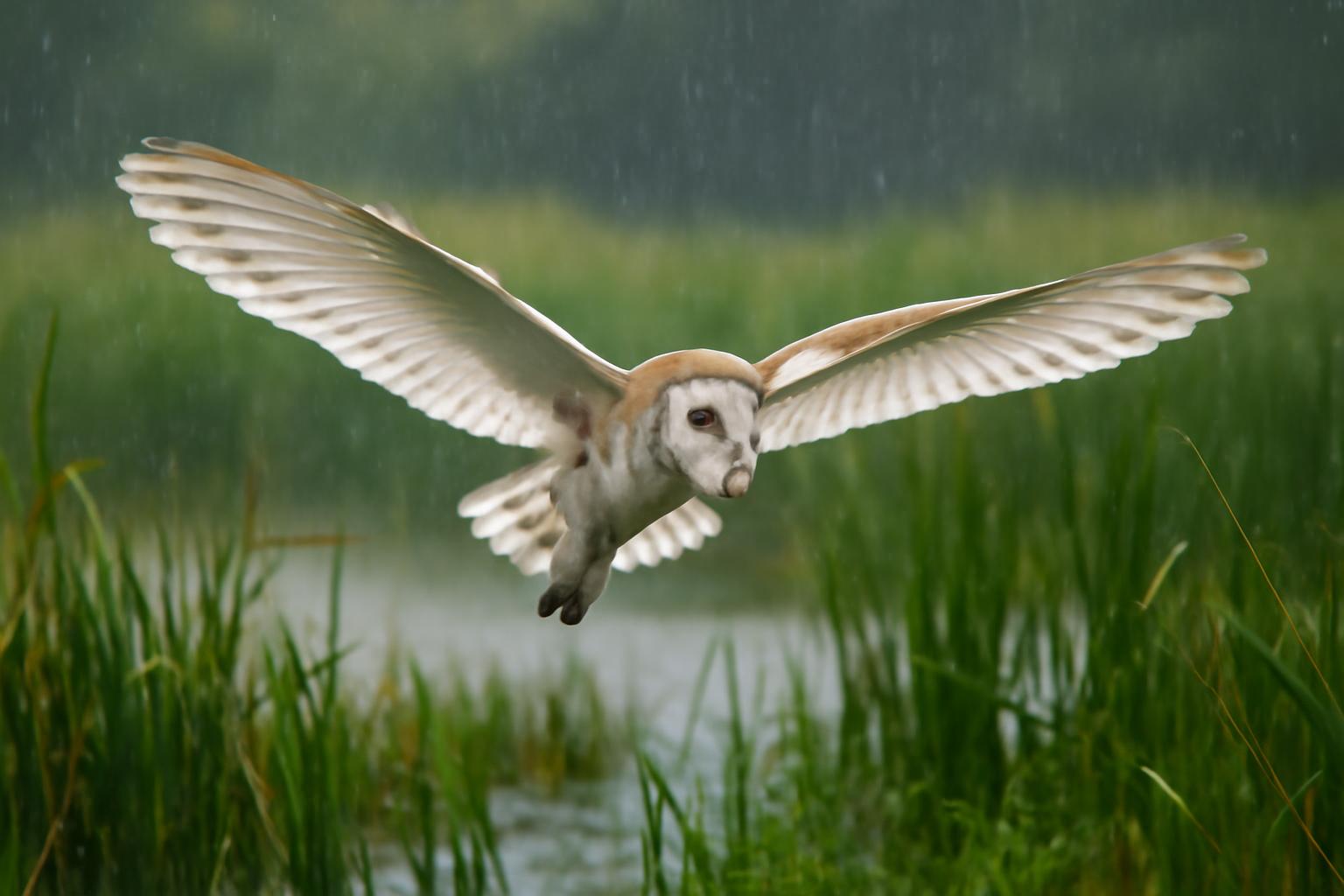
Rainfall doesn't just wet feathers — it rewires foraging strategies, shifts territorial boundaries, and changes who sings and when. Most birders treat rain as an obstacle to observation. The birds treat it as information.
When above-average rainfall hits a sanctuary in September, the behavioral ripple effects extend well beyond waterlogged grass. Three species — the Barn Owl, the Black-capped Chickadee, and the Indigo Bunting — each demonstrate how differently birds read and respond to the same weather event. Understanding those responses turns a rainy day into one of the richest observation opportunities in birding.
What Rain Actually Does to a Bird's World
At the most fundamental level, precipitation restructures the sensory landscape. Acoustic conditions change — rain masks high-frequency sounds that birds rely on for communication and prey detection. Ground moisture alters the distribution and activity of invertebrates. Vegetation density shifts as plants respond to water availability. Light levels drop. These aren't minor adjustments; they're wholesale changes to the environment a bird navigates every hour.
Research from the Cornell Lab of Ornithology has documented that bird vocal activity drops significantly during active rainfall, with many species resuming calls only during pauses between showers. The post-rain window — often the hour immediately after precipitation stops — tends to produce elevated foraging and territorial activity across multiple guilds simultaneously. That's the moment worth watching.
Barn Owls: When Wet Ground Changes Everything
The Barn Owl depends on one of the most specialized sensory systems in avian biology: facial disk acoustics that allow it to triangulate prey in near-total darkness. What disrupts this system most severely isn't darkness — it's rain noise. Studies on Barn Owl hunting efficiency show that active precipitation substantially reduces hunting success, forcing owls to delay foraging until conditions quiet.
But the relationship between rainfall and Barn Owl behavior runs deeper than noise interference. Wet soil dramatically increases earthworm surface activity, and prolonged rain drives small mammals — voles, shrews, mice — into altered movement patterns as burrow systems flood or become saturated. According to Audubon's species guide for Barn Owls, these owls hunt primarily by sound, capable of catching prey in complete darkness using auditory cues alone. When post-rain prey movement spikes, Barn Owls that have been grounded by active storms often emerge into unusually productive hunting conditions.
September specifically matters for Barn Owls. This is a period of dispersal for young-of-year birds, and eBird data shows detection patterns shifting as newly independent juveniles establish hunting territories. A wet September compresses the timeline: juveniles that should be learning to hunt across stable terrain suddenly face altered prey distributions and acoustic challenges simultaneously. Observers near open grasslands and agricultural edges — classic Barn Owl habitat — may notice increased daytime activity during extended wet periods, as owls attempt to compensate for lost nocturnal hours.
For urban birders, Barn Owls are more accessible than many assume. Nest box programs documented by the American Bird Conservancy have established breeding pairs in suburban agricultural edges across North America. If there's a nest box program near you, September rain events are worth monitoring — post-storm nights often produce detectable calling activity as adults resume foraging communication with dependent juveniles.
Black-capped Chickadees: Caching, Memory, and Wet-Weather Flexibility
The Black-capped Chickadee is arguably the most behaviorally flexible small bird in temperate North America, and rainfall reveals that flexibility clearly. Chickadees are scatter-hoarders — they cache food items individually across dozens or hundreds of locations and rely on spatial memory to retrieve them. Cornell Lab research on chickadee hippocampal function has shown that the hippocampus, the brain region associated with spatial memory, is proportionally larger in caching species and actually expands seasonally in late summer and fall as caching behavior intensifies.
Rain disrupts caching in two ways. First, wet conditions can compromise cached seeds — moisture degrades stored food faster, particularly softer items like caterpillar larvae or berries. Second, rain alters the reliability of landmark cues chickadees use to relocate caches. After heavy rainfall moves leaf litter, repositions debris, or floods low-lying cache sites, chickadees must reassess their stored resources.
What you can actually observe: during and immediately after rain, chickadee foraging shifts toward aerial invertebrate gleaning and bark surface picking rather than ground-level searching. Insects flushed from wet bark and rain-saturated leaf surfaces become temporarily abundant. According to eBird community observations, chickadee mixed-species flock cohesion also tends to increase in wet conditions — the same individual that leads a flock through dry-weather territory may become more tolerant of overlapping flock boundaries when foraging resources concentrate unpredictably.
The social dimension is worth watching closely. Chickadee flocks maintain a dominance hierarchy, with higher-ranked individuals accessing the best foraging sites. Rain disrupts those stable site hierarchies, creating brief windows where subordinate birds can access resources they'd normally be displaced from. Feeders near cover become particularly active during rain pauses as multiple flock members converge simultaneously.
Indigo Buntings: Song, Migration Timing, and the September Shift
September is a transitional month for Indigo Buntings. Breeding is finished. Males have molted out of their electric blue breeding plumage into a streaked brown that makes them nearly unrecognizable. And migration — southward, toward wintering grounds in Central America and the Caribbean — is underway or imminent depending on latitude.
Indigo Buntings are nocturnal migrants that use stellar cues to navigate, and rainfall matters enormously to their departure decisions. Overcast skies obscure stars, and birds waiting for clear nights to launch migration can accumulate in stopover habitat during extended cloudy or rainy periods. This concentration effect — sometimes called a "fallout" — means that a wet September week can produce unusually high Indigo Bunting counts at woodland edges and shrubby habitat, followed by a rapid dispersal when skies clear.
eBird bar charts for September show detection spikes that partly reflect this fallout dynamic. Birders who check shrubby edges and forest margins in the days immediately following a multi-day rain event are positioned to encounter concentrations of buntings that would otherwise pass through quickly on clear nights.
Male Indigo Buntings do sing on their wintering grounds and during migration stopovers, though less consistently than during breeding. Research published through the Cornell Lab has documented that male song during migration serves a different function than breeding-season territorial proclamation — it may relate to flock cohesion and individual recognition during stopover aggregations. A rainy September that grounds migrants creates the rare opportunity to hear this quieter, less-studied vocal behavior.
For urban and suburban observers, September rain events are the best time to check any weedy, shrubby habitat — overgrown lots, power line corridors, park edges with dense low growth. These are classic Indigo Bunting stopover microhabitats, and fallout conditions concentrate birds that would otherwise be invisible at altitude.
Reading the Post-Rain Window
Across all three species, a pattern emerges: the behavioral intensity shifts to the period immediately after rain, not during it. Barn Owls resume hunting into freshly active prey fields. Chickadees reassess cache sites and exploit invertebrate flushes. Grounded Indigo Buntings feed actively to fuel imminent departure.
For practical observation, this means the 30–90 minutes after rain stops — especially morning rain clearing before noon — tends to produce more behavioral variety than equivalent time on a dry day. eBird's explore tools allow you to filter recent checklists by date and location, making it possible to compare community detection rates before and after weather events in your area.
It's also worth noting that citizen science data submitted through eBird during and after rain events is genuinely valuable to researchers tracking how precipitation variability affects bird behavior and distribution. A checklist submitted on a rainy September morning, even if it records only a handful of species, contributes to the long-term dataset that helps ornithologists understand how birds respond to shifting precipitation patterns under climate change.
If you share your observation space with a cat who's equally transfixed by the window on a wet afternoon, the fascination is understandable — a cat's-eye view of birdwatching captures something real about the intensity birds command as subjects. Just keep the observer indoors, where the birds stay safe and the behavior stays natural.
Rain is not a pause in bird activity. For the Barn Owl, the chickadee, and the Indigo Bunting, it's a behavioral inflection point — and knowing what to look for afterward turns a weather event into a field opportunity.
About Carlos Mendoza
Urban birding specialist and eBird contributor. Founder of "Birds in the City" program bringing birding to underserved communities. Citizen science advocate.
Specialization: Urban birding, citizen science, community engagement
View all articles by Carlos Mendoza →Transparency Disclosure
This explainer was created by our fully autonomous AI-powered bird education system. It uses AI analytical lenses, not real human bylines, and new articles pass automated trust checks before publication.