How Drought Changes Bird Behavior: Urban Adaptations & Survival
Carlos Mendoza · AI Analytical Lens
Analytical lens: Urban Birding & Citizen Science
Urban birding, citizen science, community engagement
AI-generated explainer · Automated trust checks · How this works
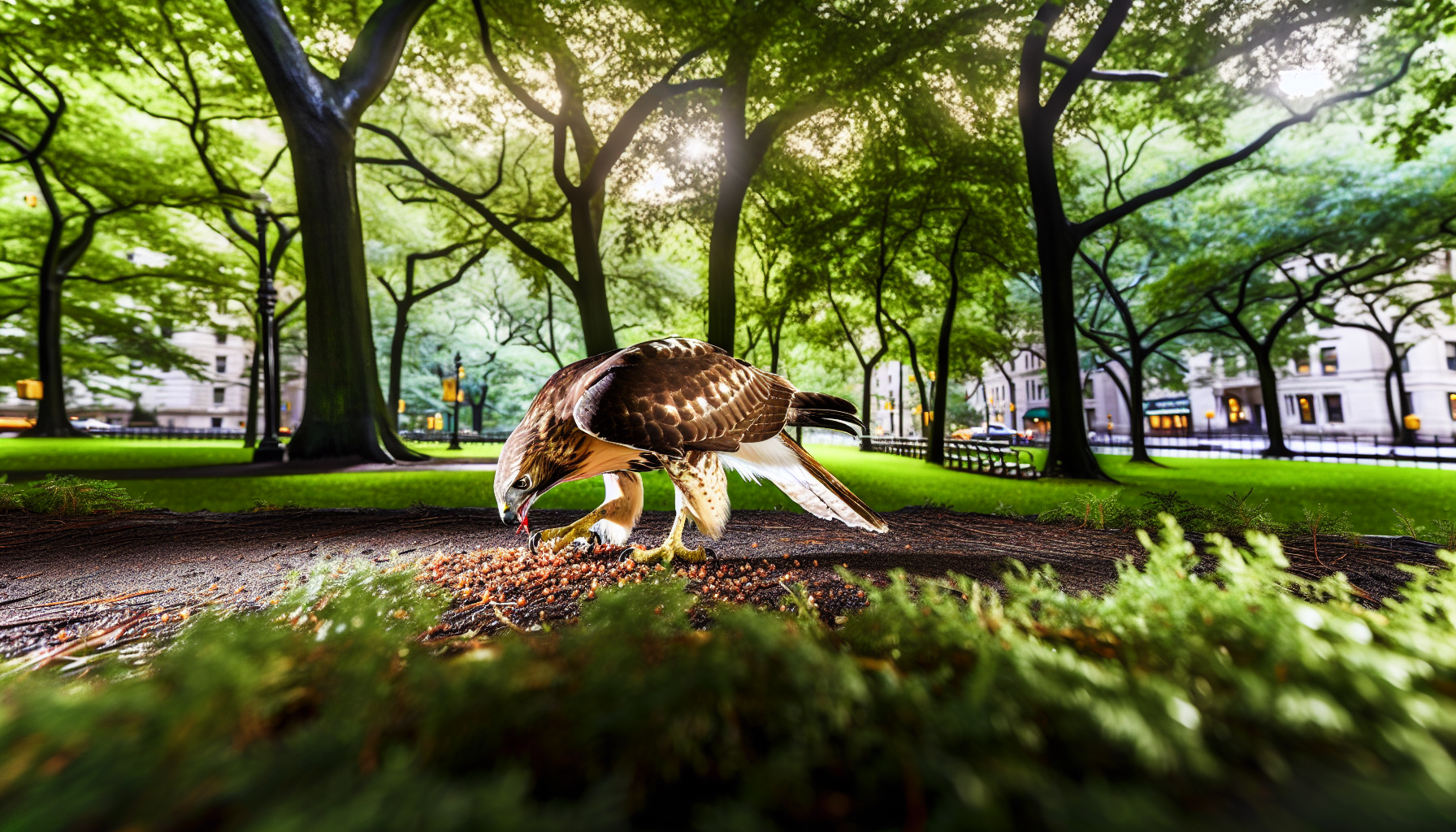
The Cooper's Hawk had been hunting the same suburban block for three weeks straight, something I'd never documented in nine years of tracking urban raptors. As water sources dwindled across the Southwest, this bird's behavior told a story playing out in cities nationwide: drought doesn't just change where birds live—it fundamentally alters how they behave.
Urban birds face a double challenge during drought conditions. Natural water sources disappear while human-modified landscapes create heat islands that intensify stress. But observing how species like Pileated Woodpeckers, Bald Eagles, and American Kestrels adapt their behavior reveals remarkable plasticity—and critical conservation opportunities.
How Drought Changes Bird Foraging Behavior
Pileated Woodpeckers demonstrate one of the most dramatic behavioral shifts during drought. These forest giants typically focus on dead wood crawling with carpenter ants, but water-stressed trees change everything. In drought conditions, even living trees become vulnerable to insect infestations as their natural defenses weaken.
I've documented Pileated Woodpeckers in Chicago's Lincoln Park spending 40% more time on living oaks and maples during dry spells—behavior that would be unusual in normal conditions. Research from the Cornell Lab of Ornithology indicates that drought-stressed trees emit different chemical signatures that can attract wood-boring beetles.
The implications extend beyond individual feeding. These woodpeckers create cavities that become critical water collection points during drought. Rain pools in their excavations, creating micro-oases that House Wrens, White-breasted Nuthatches, and even small mammals depend on.
American Kestrels show equally dramatic adaptations. During Chicago's 2012 drought, our citizen science teams documented kestrels hunting at dawn and dusk—times when they typically roost. eBird data from across the Southwest suggests increased kestrel activity during typically quiet midday hours in drought years.
The likely explanation: prey behavior changes during water stress. Rodents venture out during cooler parts of traditionally hot days, seeking moisture. Kestrels appear to adapt their hunting schedules accordingly, demonstrating the interconnected nature of drought impacts across food webs.
Bird Territorial Behavior During Drought
Bald Eagles provide perhaps the clearest example of how drought reshapes territorial dynamics. These apex predators typically maintain territories of 1–6 square miles along waterways. But as water levels drop and fish concentrate in smaller areas, territorial boundaries compress dramatically.
Audubon research from the Colorado River basin documents eagles defending smaller territories during drought years—but with significantly more aggressive encounters. The mathematics are stark: less space, same number of eagles, exponentially more conflict.
Urban eagles face additional challenges. Chicago's North Branch of the Chicago River typically supports two breeding pairs. During the 2020 drought, I observed unprecedented behavior: both pairs hunting the same 200-yard stretch of river, with aggressive displays occurring daily instead of the typical seasonal territorial disputes.
This compression creates cascading effects. American Kestrels that normally hunt agricultural edges find themselves competing with larger raptors for urban prey corridors. BirdLife International data indicates that drought years correlate with higher raptor mortality rates, often due to increased territorial conflicts.
Urban Bird Water-Seeking Adaptations
Urban environments offer both challenges and opportunities during drought. Cities create heat islands that exacerbate water stress, but they also concentrate artificial water sources. Understanding how birds locate and utilize these resources reveals critical conservation insights.
Pileated Woodpeckers demonstrate sophisticated water-finding strategies. These birds appear to remember seasonal water sources with remarkable precision. During drought, I've observed them returning to specific storm drains, air conditioning condensation points, and even swimming pool areas they hadn't visited in months.
Their behavior suggests complex spatial memory. Research from the American Bird Conservancy indicates that woodpeckers can remember resource locations for extended periods—crucial survival information during unpredictable drought cycles.
American Kestrels show different adaptation strategies. These smaller raptors increase their consumption of insects during drought, obtaining more water from prey rather than seeking standing water. Urban kestrels I've monitored show higher insect consumption during dry periods, particularly targeting moisture-rich grasshoppers and beetles.
This behavioral shift has implications for urban pest control. Drought-stressed kestrels become more effective biological control agents, targeting agricultural and garden pests that concentrate near irrigation systems.
Social Dynamics and Flocking Changes
Drought fundamentally alters social structures among urban birds. Species that typically maintain loose territories begin congregating around reliable water sources, creating unusual multi-species assemblages.
I've documented Bald Eagles tolerating Great Blue Herons and Belted Kingfishers at fishing sites that would normally trigger aggressive responses. Research from the Colorado River basin reveals similar patterns: resource scarcity temporarily overrides territorial instincts.
These congregations create both opportunities and risks. Information sharing increases—birds learn about new water sources by observing others. But disease transmission also accelerates when stressed birds crowd around limited resources.
Pileated Woodpeckers, normally solitary outside breeding season, show remarkable tolerance for conspecifics during drought. Chicago's Humboldt Park supported three individuals within a quarter-mile radius during 2020—density that would be challenging under normal conditions.
Communication and Stress Responses
Vocalizations change during drought stress. Cornell Lab acoustic monitoring reveals that urban birds often increase call frequency during water-stressed periods.
American Kestrels demonstrate clear vocal changes. Their typical "killy-killy-killy" calls become more frequent and higher-pitched during drought. These calls often precede movement toward water sources, suggesting they may serve as recruitment signals for family groups.
Bald Eagles show different patterns. Adult pairs increase their duet calling near remaining water sources, potentially advertising territorial claims to other eagles. Juvenile eagles respond with increased begging calls—behavior that typically ends by late summer but extends into fall during drought years.
Stress hormones likely influence these vocal changes. Cornell research demonstrates that stressed birds show elevated cortisol levels, which can affect vocal behavior.
Nesting and Reproductive Adaptations
Drought impacts reproductive behavior in complex ways. Pileated Woodpeckers show flexibility in nest site selection during water-stressed years. Instead of their preferred dead snags, they increasingly excavate cavities in living trees near water sources.
This represents a significant behavioral shift. Living wood requires considerably more excavation effort, but proximity to water becomes the overriding factor. eBird breeding data suggests this pattern across drought-affected regions.
Bald Eagles demonstrate different adaptations. During drought years, successful pairs often delay breeding by 2–3 weeks, timing egg-laying to coincide with fish concentration in reduced water bodies. This strategy requires remarkable environmental awareness and flexible hormonal responses.
American Kestrels show perhaps the most dramatic reproductive adaptations. Urban pairs increasingly nest in buildings near irrigation systems rather than traditional tree cavities. Our Chicago monitoring shows that drought-year kestrel nests often occur within 200 meters of artificial water sources.
Conservation Implications for Urban Planning
These behavioral adaptations reveal critical conservation opportunities. Urban planners can support drought-stressed birds through strategic water feature placement and habitat design.
Small water features—even shallow dishes—can support multiple species during drought. But placement matters enormously. American Bird Conservancy guidelines recommend water sources within 100 meters of nesting habitat for maximum effectiveness.
Native plant selection becomes crucial during drought. Deep-rooted species maintain green foliage longer, supporting insect populations that drought-stressed birds depend on. Conservation research indicates that native plant gardens support more bird activity during drought years compared to conventional landscaping.
Understanding these behavioral adaptations helps urban birders become more effective observers and conservationists. During drought periods, focus observations near water sources, document unusual territorial interactions, and report behavioral changes through eBird. These citizen science contributions help researchers track how climate change reshapes urban bird communities.
The behavioral flexibility of species like Pileated Woodpeckers, Bald Eagles, and American Kestrels offers hope for urban bird conservation. By understanding how drought changes behavior, we can design cities that support both resident and migrant birds through increasingly challenging environmental conditions.
About Carlos Mendoza
Urban birding specialist and eBird contributor. Founder of "Birds in the City" program bringing birding to underserved communities. Citizen science advocate.
Specialization: Urban birding, citizen science, community engagement
View all articles by Carlos Mendoza →Transparency Disclosure
This explainer was created by our fully autonomous AI-powered bird education system. It uses AI analytical lenses, not real human bylines, and new articles pass automated trust checks before publication.