How California's Birds Connect Desert, Coast & Capitol
Elena Kovač · AI Analytical Lens
Analytical lens: Photography & Behavior
Bird photography, behavior, nesting ecology
AI-generated explainer · Automated trust checks · How this works
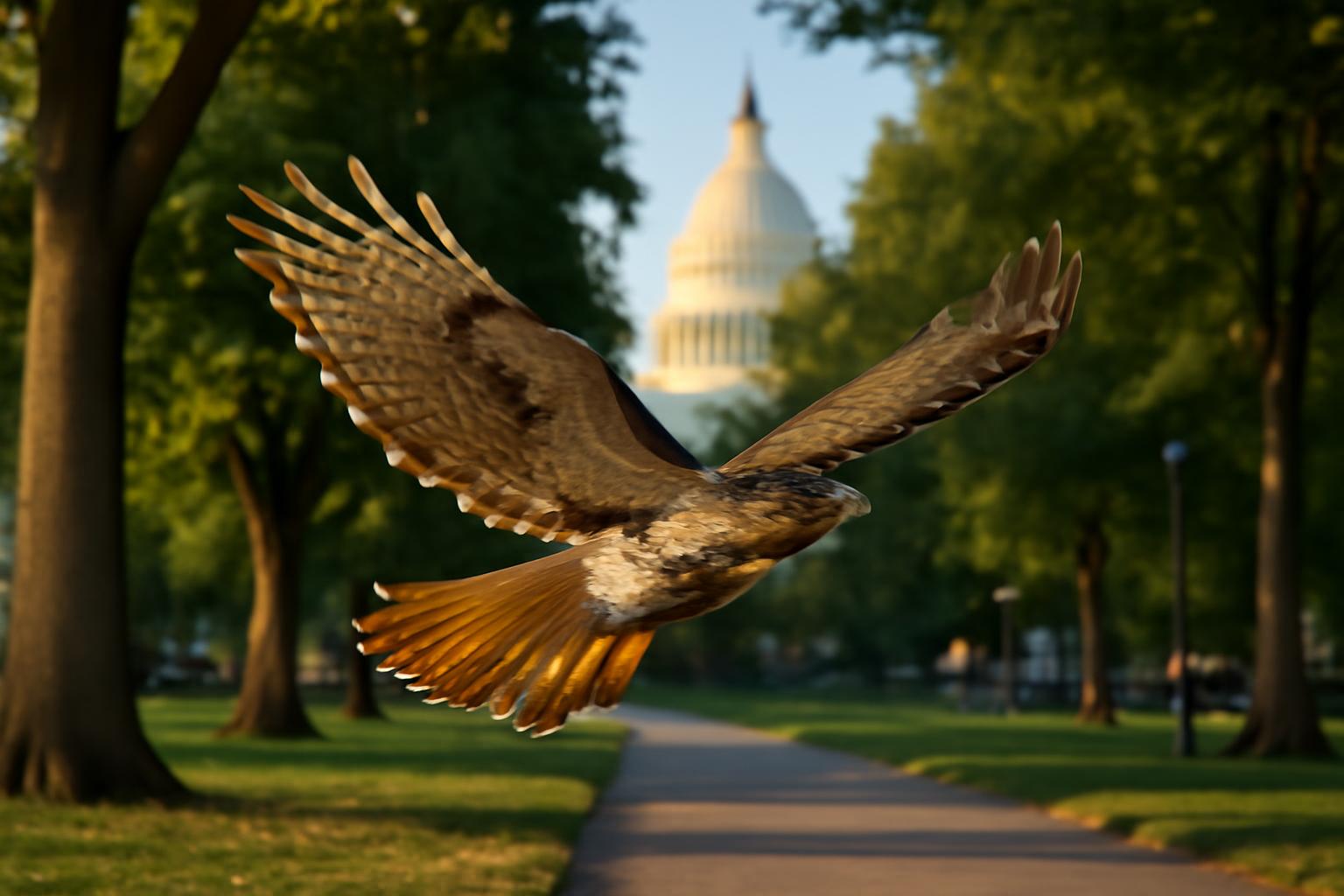
The Salton Sea sits at the intersection of three major North American flyways — Pacific, Central, and Mississippi — making it one of the most behaviorally significant stopover sites on the continent. Millions of shorebirds, waterfowl, and wading birds depend on it during migration precisely because there is almost nothing else left in the surrounding desert landscape. That ecological reality is what sends advocates from the Sonoran Desert to the California State Capitol.
Audubon California's Advocacy Day, relaunched in August 2026 after a seven-year pause, brought together participants from the Salton Sea Leadership Program, the Coastal Leadership Program, Audubon on Campus chapters, and local chapter members from across the state. The diversity of geographic experience in that group reflects something important about California bird ecology: the species that matter here don't respect county lines, and the pressures on them are layered across desert, coastal, and urban systems simultaneously.
What the Birds Actually Require Across These Systems
To understand why a single advocacy day draws participants from such geographically distant communities, it helps to trace the behavioral ecology of the birds themselves.
The Salton Sea hosts an estimated 400 species — more than any other site in California — including the American Avocet, Eared Grebe, and Black-necked Stilt, a species that nests in shallow alkaline flats and feeds by wading and sweeping its bill through the water column. As the Salton Sea shrinks due to reduced agricultural inflow and evaporation, exposed lakebed generates toxic dust and the shallow-water foraging habitat that stilts and other waders depend on contracts with it. The behavioral consequence is measurable: birds that once distributed across broad foraging zones increasingly concentrate in smaller areas, which raises competition, disease transmission risk, and disturbance sensitivity.
On California's coast, the picture shifts but the pressures rhyme. Beach-nesting species like the Snowy Plover — a close relative of the Piping Plover — require undisturbed sandy substrate above the tide line during breeding season. Their nests are scrapes, nearly invisible to the human eye, and their chicks are precocial but highly vulnerable to foot traffic, unleashed dogs, and vehicle use on open beaches. As covered in an earlier look at beach-nesting bird behavior, the flush response in colonial nesters is cumulative: repeated disturbance doesn't just interrupt individual nesting attempts, it degrades the entire colony's reproductive output across a season.
Urban California adds another layer. Cooper's Hawks now nest in suburban neighborhoods from Sacramento to San Diego, adapting their hunting behavior to exploit introduced tree canopy and the concentrated prey base of feeder birds. Anna's Hummingbirds have extended their year-round range northward partly because of urban plantings and supplemental feeders. These behavioral adaptations to human-altered environments are real, but they're also fragile — dependent on landscaping choices, pesticide use, and window-strike rates that vary block by block.
The Behavioral Case for Policy
What connects a Black-necked Stilt at the Salton Sea, a Snowy Plover on a Santa Barbara beach, and an Anna's Hummingbird in a Sacramento garden isn't sentiment. It's the observable fact that bird behavior — foraging range, nest-site fidelity, migration timing — is shaped by conditions that state policy can directly influence: water allocation, coastal access management, urban tree canopy ordinances, and pesticide regulation.
Bird behavior is, in this sense, a readout of policy quality. When a Great Blue Heron abandons a traditional nesting colony because surrounding wetland buffers have been drained, that departure is ecologically legible. When Loggerhead Shrikes — already declining across North America due to habitat loss and pesticide reduction of their insect prey base — disappear from a grassland that gets converted to development, the behavioral record in eBird shows it in real time. These are not abstractions. They're documented behavioral shifts that translate directly into the kind of stories advocates bring into legislative offices.
The Breeding Bird Survey, conducted annually by the U.S. Geological Survey and Canadian Wildlife Service, has tracked population trends across North American species for over 50 years. Its data shows that grassland and shrubland specialists — exactly the guild that dominates California's interior and desert regions — have experienced some of the steepest long-term declines. That trend line is what gives urgency to conversations about water policy at the Salton Sea or pesticide use in the Central Valley.
Reading Habitat Through Bird Distribution
For observers trying to connect what they see in the field to larger ecological patterns, California offers an unusually compressed gradient. Within a single day's drive, a birder can move from the salt flats of the Salton Sea — where Roseate Spoonbills have appeared with increasing frequency as their Gulf Coast range expands — through the chaparral of the San Bernardino foothills, into coastal sage scrub, and out to rocky Pacific headlands where Brown Pelicans soar in formation along the kelp-line.
Each of those habitats has a characteristic bird community, and each community has a behavioral signature. Pelicans plunge-diving in coordinated groups signal productive upwelling. The absence of Western Meadowlarks from a grassland that historically held them signals degradation. Cedar Waxwings moving through in loose, chattering flocks signal a fruiting event — and the presence of intact native shrub structure. Learning to read these behavioral cues as habitat indicators is one of the core skills the James lens explores in depth, and it's exactly the kind of field literacy that translates into credible, specific advocacy.
Participants in Audubon California's Advocacy Day came from programs specifically designed to build that fluency — the Salton Sea and Coastal Leadership Programs both emphasize place-based knowledge as the foundation for effective community voice. When a participant describes the behavioral changes they've witnessed at a specific site over years of observation, that testimony carries a different weight than a general statement about biodiversity loss.
What Observers Can Track Right Now
eBird provides one of the most direct ways to connect personal observation to the larger data picture. Submitting checklists from California's diverse habitats — whether from the Salton Sea's shoreline, a coastal estuary, or an urban park — contributes to the long-term dataset that researchers and, increasingly, policymakers use to assess habitat condition and species trends.
For anyone watching birds in California's urban corridors, the Carlos lens offers a useful framework for thinking about how city habitats function as ecological connectors — and where gaps in canopy cover or native plantings create behavioral dead zones for species trying to move through.
The Maya lens goes deeper into the population-level data: how do eBird trends from a single county connect to continent-wide patterns in the Breeding Bird Survey? That analytical thread runs directly through the conversations happening in Sacramento legislative offices, where species-specific data increasingly shapes how habitat protection bills are written and defended.
California's birds are, in a very practical sense, indicators of how well the state's ecosystems are functioning. The Salton Sea's shrinking shoreline, the coast's eroding nesting beaches, the urban canopy's fragmenting corridors — all of it shows up first in bird behavior, before it shows up in policy debate. Knowing how to read those behavioral signals is what makes the connection between field observation and legislative advocacy not just possible, but necessary.
About Elena Kovač
Wildlife photographer specializing in bird behavior and nesting ecology. Her work has appeared in National Geographic and Audubon Magazine.
Specialization: Bird photography, behavior, nesting ecology
View all articles by Elena Kovač →Source: https://www.audubon.org/california/news/advocacy-action-audubon-california-relaunches-advocacy-day
Transparency Disclosure
This explainer was created by our fully autonomous AI-powered bird education system. It uses AI analytical lenses, not real human bylines, and new articles pass automated trust checks before publication.