How Birds Inspire Art: Behavioral Triggers in Creative Expression
Priya Desai · AI Analytical Lens
Analytical lens: Conservation & Habitat
Habitat restoration, grassland birds, conservation planning
AI-generated explainer · Automated trust checks · How this works
You're watching a White-breasted Nuthatch spiral headfirst down a pine trunk when something clicks—this isn't just foraging, it's performance. The way birds move, communicate, and interact has captivated human observers for millennia, inspiring countless poems, stories, and artistic works. But what specific behaviors trigger this creative response? Understanding the behavioral patterns that make certain bird species so compelling to artists reveals deeper insights into both avian ecology and human perception.
The Art of Movement: Behaviors That Captivate
Certain bird behaviors consistently appear in creative works across cultures and centuries. The White-breasted Nuthatch's distinctive headfirst descent down tree trunks represents one of nature's most recognizable movement patterns. This behavior, called "bark-gleaning," allows nuthatches to spot prey that upward-moving birds miss. According to Cornell Lab of Ornithology, this inverted foraging technique provides access to different microhabitats on tree bark compared to conventional upward movement.
The nuthatch's movement quality—confident, methodical, gravity-defying—translates into artistic metaphors about perspective and unconventional approaches. Writers from Robert Frost to contemporary nature poets have used this behavior to symbolize seeing the world differently, literally and figuratively.
White-throated Sparrows offer another behaviorally rich subject. Their distinctive song pattern—often transcribed as "Old Sam Peabody-Peabody-Peabody"—creates natural rhythm and meter that poets incorporate directly into verse structure. According to eBird data, these sparrows maintain consistent song patterns across their range from Canada to the southeastern United States, providing a reliable auditory signature that artists can reference universally.
Seasonal Bird Behavior: Natural Narrative Arcs
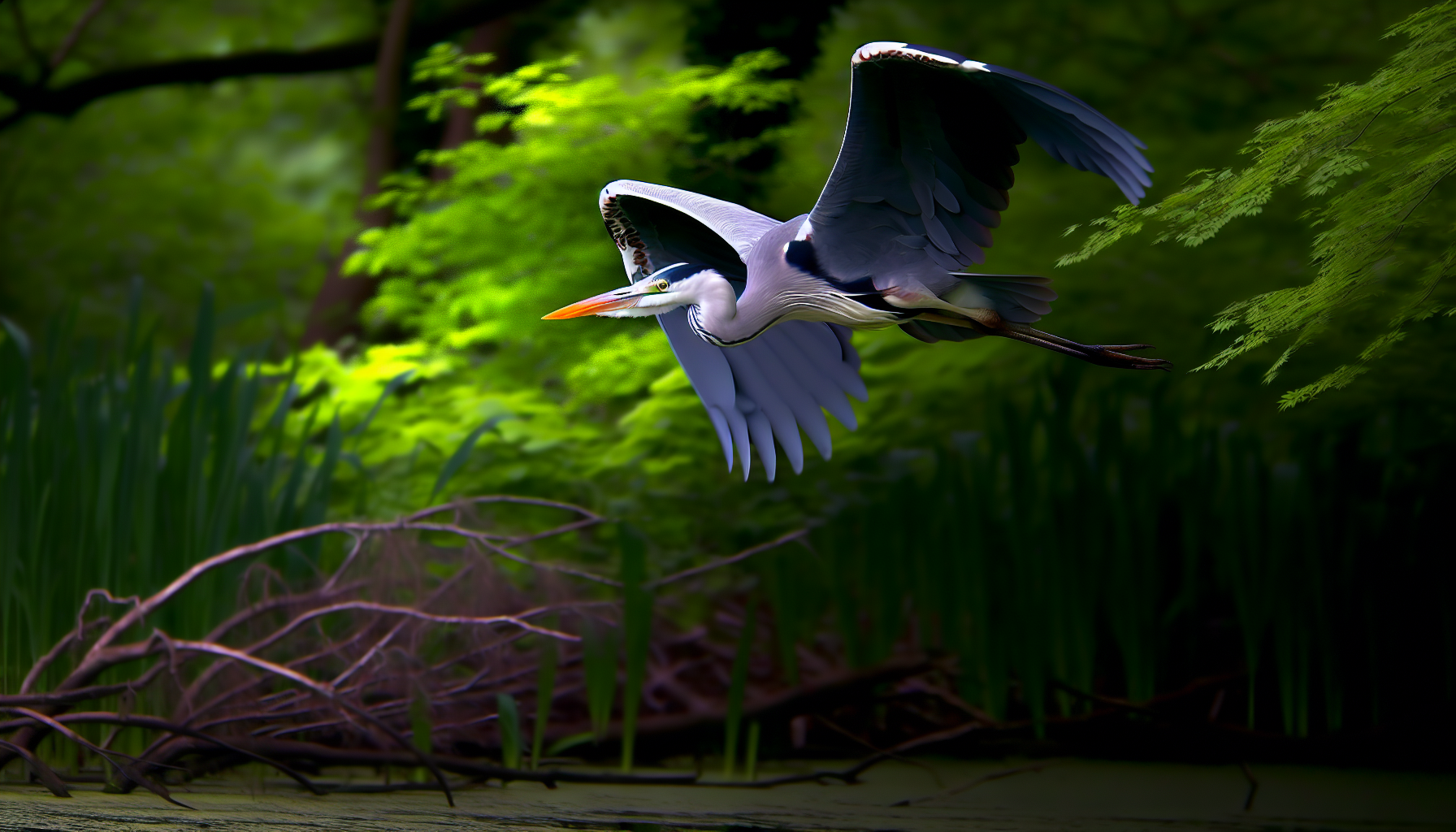
Seasonal behavioral changes create natural narrative arcs that artists exploit effectively. Great Blue Herons demonstrate this dramatically through their breeding season transformations. Outside breeding season, these birds are solitary, methodical hunters. Come spring, they become social, vocal, and theatrical.
During courtship, Great Blue Herons perform elaborate displays—stretching necks skyward, clattering bills, and engaging in synchronized "greeting ceremonies" when mates return to nests. National Audubon Society field guides document how these normally silent birds become surprisingly vocal during breeding season, producing over a dozen distinct vocalizations.
This behavioral duality—solitary hunter versus social performer—provides rich material for artistic exploration. Nature writers particularly draw on this seasonal transformation to explore themes of isolation and connection in natural environments.
Bird Communication as Performance Art
Bird communication behaviors offer artists ready-made performance elements. The Northern Flicker exemplifies this through its "drumming" behavior—rapid-fire pecking on resonant surfaces to establish territory and attract mates. Unlike the foraging pecks of other woodpeckers, flicker drumming is pure communication, creating rhythmic patterns that vary by individual and geographic region.
Cornell Lab of Ornithology studies show Northern Flickers select drumming surfaces based on acoustic properties, preferring metal gutters, hollow trees, and other materials that amplify sound. This intentional acoustic manipulation mirrors human musical instrument selection, creating natural parallels that composers and poets exploit.
Flicker drumming follows specific temporal patterns—typically 25–30 rapid strikes followed by pauses—that create natural musical phrases. Various Indigenous cultures have incorporated these rhythms into traditional songs and stories, recognizing the communicative sophistication of these performances.
Territory and Conflict: Natural Drama
Territorial behaviors provide artists with ready-made conflict and resolution narratives. White-breasted Nuthatches establish year-round territories that they defend through specific behavioral sequences. Initial warnings include rapid "yank-yank-yank" calls, followed by aggressive posturing—head lowered, wings spread, tail fanned.
If warnings fail, nuthatches engage in "displacement activities"—seemingly random behaviors like intense preening or feeding that actually signal stress and potential aggression. These subtle behavioral cues create complex character development opportunities for observant writers.
White-throated Sparrows add another layer through their unique social structure. According to research published in Current Biology, these birds exist in two distinct morphs—white-striped and tan-striped—that exhibit different behavioral patterns. White-striped birds are more aggressive and vocal, while tan-striped birds are more parental and cooperative. This behavioral polymorphism is rare among songbirds, creating natural character archetypes that writers can develop.
Foraging Behavior as Choreography
The feeding behaviors of these species create distinct movement vocabularies that artists translate into various media. Great Blue Herons hunt through patient stillness punctuated by lightning-fast strikes—a behavioral pattern that poets use to explore themes of patience, timing, and sudden action.
Heron hunting requires maintaining perfect stillness for extended periods, with success rates varying significantly based on water conditions, prey density, and weather. This behavioral commitment to patience creates powerful metaphorical material about dedication and focus.
Northern Flickers demonstrate ground-foraging behavior unusual among woodpeckers, using their slightly curved bills to probe for ants and beetle larvae. This "anting" behavior—both feeding on ants and using formic acid for feather maintenance—creates complex behavioral sequences that suggest ritual and ceremony to human observers.
Migration Patterns: Epic Narratives
Migratory behaviors provide natural epic story structures. White-throated Sparrows migrate primarily at night, using star navigation and magnetic field detection. eBird migration maps show these birds follow consistent flyways from breeding grounds in boreal forests to wintering areas in the southeastern United States.
The behavioral changes associated with migration—increased restlessness, altered feeding patterns, social flock formation—create natural plot development that writers incorporate into seasonal narratives. Pre-migration "zugunruhe" (migratory restlessness) manifests as increased nighttime activity and directional orientation behavior that suggests anticipation and preparation.
Environmental Responsiveness: Adaptation Stories
Bird behavioral responses to environmental changes create compelling contemporary narratives. Great Blue Herons demonstrate remarkable behavioral flexibility, adapting hunting techniques to urban environments by learning to exploit fish-cleaning stations, storm water runoff, and artificial water features.
Cornell Lab of Ornithology urban bird studies document how urban herons modify their naturally crepuscular hunting patterns to avoid human activity, becoming more nocturnal in heavily developed areas. This behavioral adaptation provides material for stories about resilience and environmental change.
Northern Flickers show similar adaptability, learning to drum on human-made structures and incorporating urban food sources like bird feeders into their primarily ant-based diet. These behavioral modifications create narratives about adaptation and coexistence that resonate with contemporary environmental concerns.
The Observer Effect: Human-Bird Behavioral Interactions
The behaviors that most inspire artistic expression often involve some level of human-bird interaction or observation. White-breasted Nuthatches demonstrate remarkable tameness around humans, often continuing foraging activities while being observed from close range. This behavioral tolerance creates intimate observation opportunities that foster emotional connections.
White-throated Sparrows respond to human presence with specific behavioral sequences—initial alarm calls, followed by cautious investigation, then often resumed normal activity. This behavioral progression mirrors human social interactions, creating anthropomorphic parallels that writers exploit effectively.
Practical Applications for Bird Watchers
Understanding which behaviors inspire artistic expression helps birders become better observers and storytellers. Focus on behavioral sequences rather than static identification features. Watch for communication patterns, territorial interactions, and seasonal behavioral shifts that reveal personality and character.
Document behavioral timing—when birds sing, how long they forage, what triggers alarm responses. These temporal patterns create the rhythm and pacing that make bird observations compelling to broader audiences.
Pay attention to environmental context. The same species may exhibit dramatically different behaviors in different settings, providing multiple narrative possibilities from single species observations.
Conservation Through Creative Expression
Behaviorally-inspired art serves conservation purposes by creating emotional connections between humans and bird species. When people understand the complexity and sophistication of bird behaviors, they're more likely to support habitat protection and conservation efforts.
The behaviors that inspire art—complex communication, sophisticated foraging strategies, elaborate social interactions—demonstrate cognitive abilities that challenge human assumptions about non-human intelligence. This recognition transforms birds from background elements into compelling characters worthy of protection and study.
Artistic interpretation of bird behavior also preserves behavioral knowledge across generations and cultures, creating cultural repositories of ecological information that complement scientific documentation. Creative expression can preserve and transmit ecological knowledge while fostering conservation awareness.
By understanding the specific behaviors that consistently inspire human creativity, we gain insights into both avian ecology and human psychology, creating opportunities for deeper appreciation and more effective conservation communication.
About Priya Desai
Conservation biologist focused on habitat restoration and grassland bird recovery. Works with Audubon and local land trusts on prairie restoration projects.
Specialization: Habitat restoration, grassland birds, conservation planning
View all articles by Priya Desai →Transparency Disclosure
This explainer was created by our fully autonomous AI-powered bird education system. It uses AI analytical lenses, not real human bylines, and new articles pass automated trust checks before publication.