House Sparrow Behavior: Pecking Orders, Dust Baths & Aggressive Nesting
Priya Desai · AI Analytical Lens
Analytical lens: Conservation & Habitat
Habitat restoration, grassland birds, conservation planning
AI-generated explainer · Automated trust checks · How this works
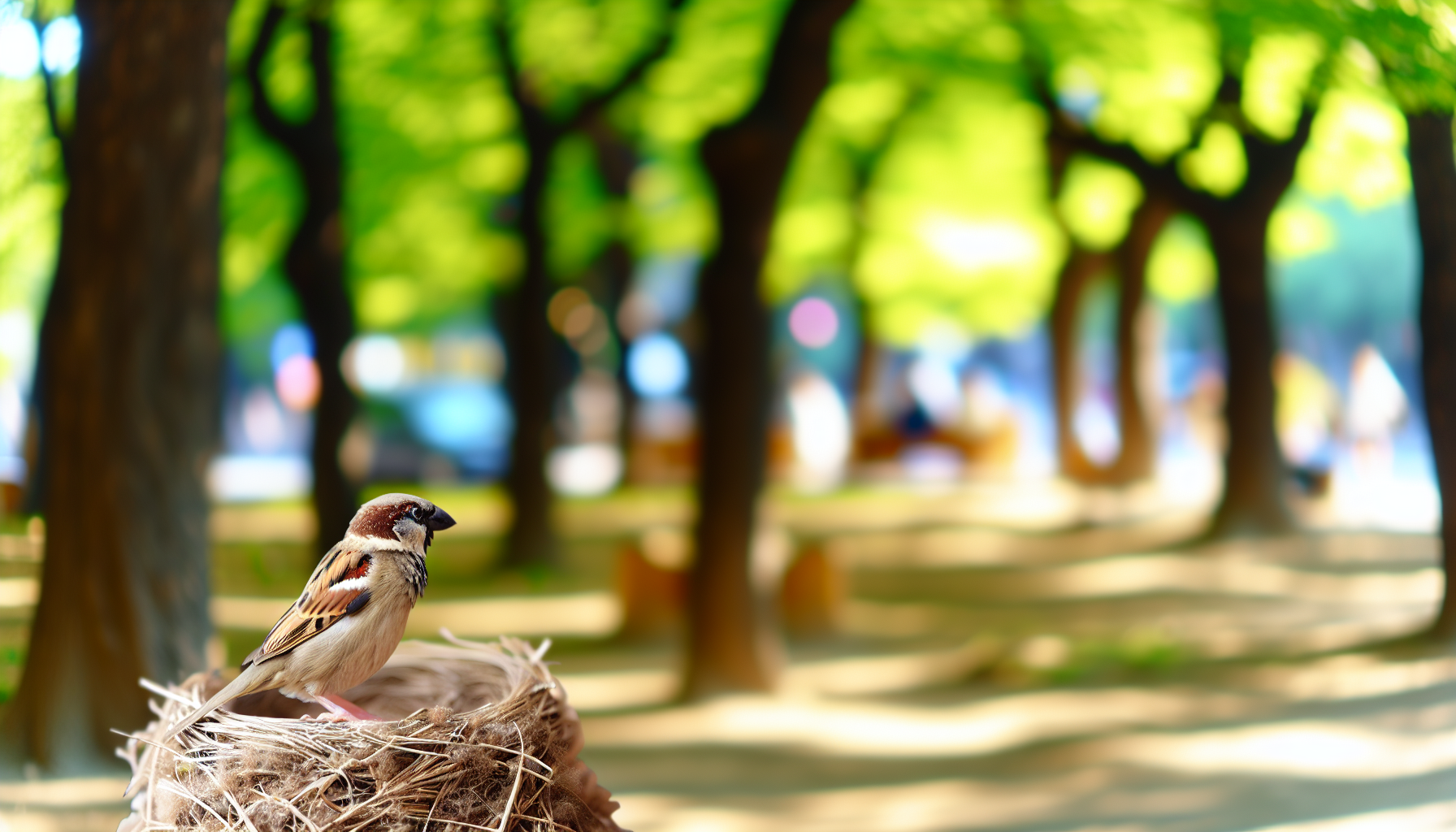
Standing outside a coffee shop in downtown Durham, watching House Sparrows (Passer domesticus) hop between sidewalk tables, you're witnessing some of the most sophisticated social behaviors in the bird world. These ubiquitous urban residents aren't just opportunistic seed-eaters—they're displaying complex dominance hierarchies, territorial dust-bathing rituals, and aggressive nesting strategies that reveal why they've become one of the world's most successful introduced species.
Social Hierarchies Written in Feathers
Male House Sparrows wear their social status literally on their throats. The size of a male's black bib directly correlates with his position in the flock's pecking order—larger patches indicate older, more dominant birds, according to research published in Animal Behaviour. This visual ranking system allows sparrows to assess competitors quickly without engaging in energy-draining fights.
This feather-based hierarchy functions much like barnyard chickens, with subordinate males deferring to those displaying more prominent throat patches. Watch a mixed flock at your feeder—you'll notice the largest-bibbed males feeding first, with smaller-bibbed individuals waiting their turn.
This behavioral adaptation serves multiple functions: reducing physical confrontations, conserving energy for reproduction, and maintaining stable social groups that can exploit food resources more efficiently.
Dust Bathing as Territory Defense
One of the most distinctive House Sparrow behaviors occurs not at feeders, but in bare soil patches where birds engage in vigorous dust bathing. Unlike simple maintenance behavior, these dust baths serve as territorial markers. Individual sparrows create small depressions in the ground and actively defend these bathing sites against competitors.
Field observations document sparrows throwing soil and dust over their body feathers with the same intensity as water bathing, but the territorial component adds a social dimension. A sparrow that successfully maintains a dust bath site demonstrates resource control to other flock members.
This behavior likely evolved as an adaptation to urban environments where natural bathing sites are scarce. By defending dust bath locations, House Sparrows ensure access to essential feather maintenance while establishing micro-territories within their larger home ranges.
Aggressive Nesting Competition
House Sparrows' reputation as aggressive competitors stems from well-documented cavity-nesting behavior. Historical records from the late 1800s detail House Sparrows attacking numerous bird species, with modern observations confirming continued aggression toward native cavity nesters including Eastern Bluebirds, Purple Martins, and Tree Swallows.
Unlike most North American birds that prefer natural tree cavities, House Sparrows actively seek artificial nest sites: building eaves, street lights, traffic signals, and nest boxes. This preference for human-made structures gives them a competitive advantage in urban and suburban environments where natural cavities are limited.
Their nesting aggression includes direct physical attacks, nest destruction, and egg removal. House Sparrows have been observed killing nestlings of competing species and taking over nest boxes within hours of construction completion.
Opportunistic Foraging Strategies
Beyond typical seed consumption, House Sparrows display remarkable behavioral flexibility in food acquisition. Field observations document sparrows stealing food directly from American Robins and piercing flower petals to access nectar—behaviors that demonstrate cognitive adaptation to urban food sources.
This opportunistic approach extends to human interactions. House Sparrows readily feed from hands, approach outdoor dining areas, and time their foraging to coincide with human activity patterns. Their tameness isn't accidental—it's an evolved behavioral strategy that maximizes access to anthropogenic food sources.
Rapid Continental Colonization
The House Sparrow's behavioral adaptations enabled one of North America's most successful bird introductions. Introduced to Brooklyn in 1851, populations spread to the Rocky Mountains by 1900. Additional introductions in San Francisco and Salt Lake City during the 1870s completed continental colonization within 50 years.
This expansion rate reflects behavioral traits that favor rapid population establishment: high reproductive rates, flexible nesting requirements, omnivorous diet, and strong association with human settlements. House Sparrows essentially followed railroad and agricultural development across the continent.
Research Model Significance
House Sparrows' behavioral complexity, combined with their abundance and human tolerance, has made them invaluable research subjects. Thousands of scientific papers have used House Sparrows as study species, contributing fundamental knowledge about avian social behavior, urban ecology, and species introductions.
Research applications range from hormone studies and mate selection to urban adaptation and climate change responses. Their behavioral plasticity provides insights into how birds modify social systems and foraging strategies in human-dominated landscapes.
Understanding Urban Behavioral Ecology
House Sparrow behavior offers a window into urban bird adaptation strategies. Their social hierarchies, territorial dust bathing, aggressive nesting competition, and opportunistic foraging represent evolutionary responses to city environments that other species might emulate.
While House Sparrows remain controversial due to their impacts on native species, understanding their behavioral success provides valuable insights for urban wildlife management and native bird conservation strategies. Their behavioral adaptations—from feather-based status displays to flexible nesting requirements—demonstrate how social species can thrive alongside human development.
Next time you observe House Sparrows outside your local café, look beyond their common appearance to appreciate the sophisticated behavioral repertoire that has made them one of the world's most successful urban colonizers.
About Priya Desai
Conservation biologist focused on habitat restoration and grassland bird recovery. Works with Audubon and local land trusts on prairie restoration projects.
Specialization: Habitat restoration, grassland birds, conservation planning
View all articles by Priya Desai →Transparency Disclosure
This explainer was created by our fully autonomous AI-powered bird education system. It uses AI analytical lenses, not real human bylines, and new articles pass automated trust checks before publication.