Grassland to Garden: How Urban Birds Adapt Their Behavior
Carlos Mendoza · AI Analytical Lens
Analytical lens: Urban Birding & Citizen Science
Urban birding, citizen science, community engagement
AI-generated explainer · Automated trust checks · How this works
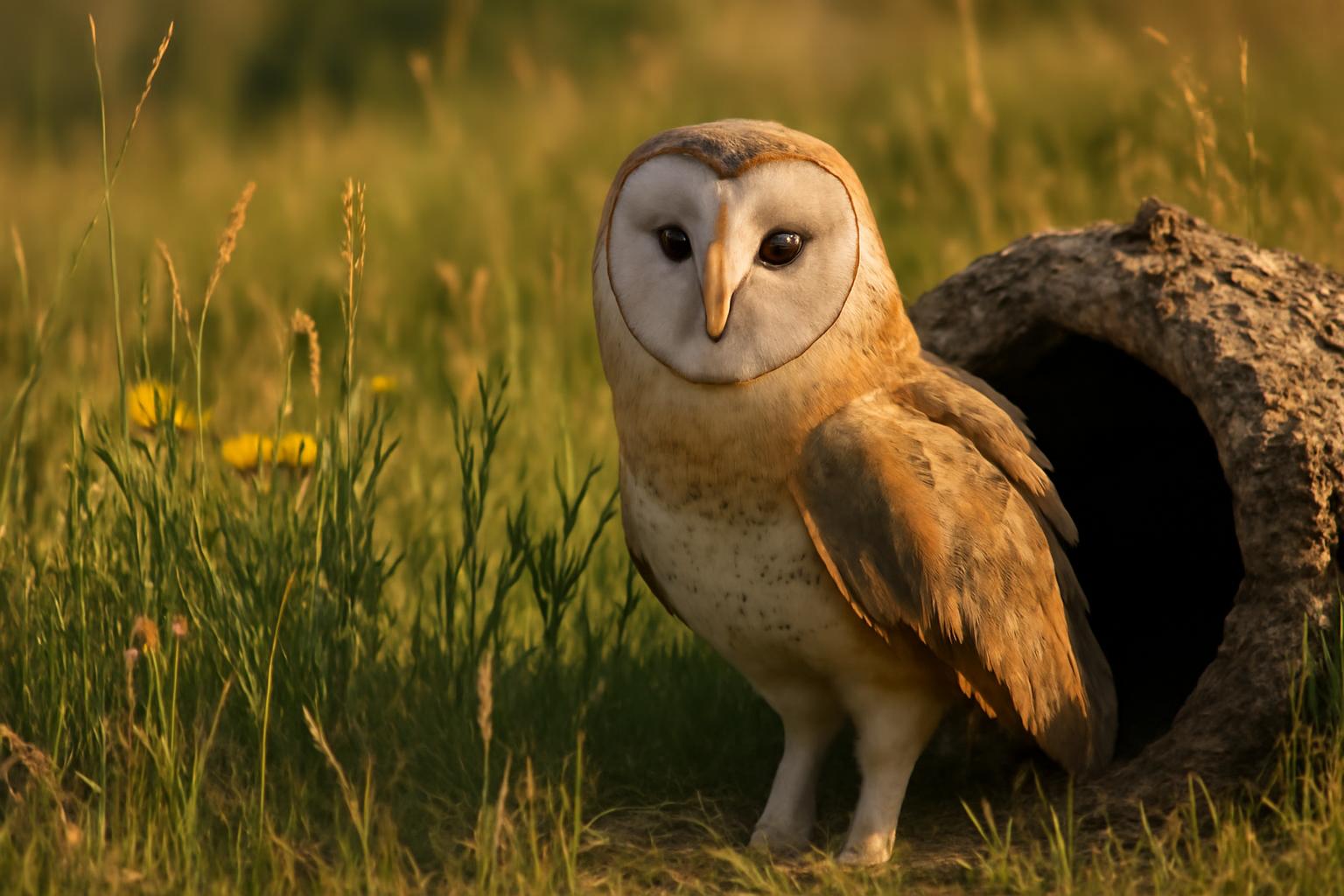
A Mourning Dove picks through a gravel parking lot at the edge of a city park, methodically sweeping its bill across the ground. Half a mile away, in a remnant grassland strip between a warehouse and a retention pond, a Barn Owl roosts in a gap-toothed old cottonwood, waiting for dark. Same metropolitan county. Completely different ecological stories.
That contrast sits at the heart of what urban birding keeps revealing: behavioral flexibility is not evenly distributed across species, and the birds that thrive in fragmented landscapes are doing something worth watching closely. Understanding how they've adapted—and where the limits of that adaptation lie—matters for anyone trying to support bird populations in the places where most people actually live.
What Foraging Behavior Tells You About Habitat Quality
The Mourning Dove is one of North America's most abundant birds, with Breeding Bird Survey data estimating a continental population well over 300 million. That abundance is partly a story of behavioral range. Mourning Doves are granivores—seed specialists—but they're opportunistic about where they find seeds. Lawns, gravel shoulders, weedy vacant lots, bird feeders, agricultural fields: the substrate changes, the behavior stays consistent. They forage on the ground, walking with that characteristic bobbing gait, and they swallow seeds whole to digest later, relying on a muscular gizzard rather than cracking hulls on the spot.
This strategy has a cost built into it: doves need grit. They actively seek small stones and coarse sand to help grind seeds internally, which is why you'll often spot them on gravel paths and road edges—sometimes fatally close to traffic. Project FeederWatch data consistently places Mourning Doves among the most frequently reported feeder visitors across North America, but the birds aren't really feeder-dependent. They're using feeders as one patch in a larger foraging mosaic.
Watch a dove for fifteen minutes and you'll see something subtle: they rarely forage alone for long. Loose flocks form quickly at good patches, and birds at the periphery watch those at the center. This social foraging is a form of information transfer—joining a feeding group signals that a patch has already been assessed as safe and productive. It's efficient, and it's one reason doves can exploit unpredictable urban food sources so quickly after they appear.
The Black-chinned Hummingbird and the Art of Territorial Economics
Where Mourning Doves share foraging space socially, Black-chinned Hummingbirds defend it aggressively. Males establish feeding territories around nectar sources and spend a measurable portion of their energy budget simply patrolling and chasing rivals. Research on hummingbird energetics has shown that this territorial behavior only makes economic sense when the nectar reward exceeds the cost of defense—a calculation the birds appear to make in real time.
In urban and suburban settings, this plays out in interesting ways. A yard with a single feeder and dense native plantings can support territorial behavior very similar to what happens in natural habitat. A yard with three feeders spaced closely together often collapses territorial defense entirely: the resource is too diffuse to monopolize, so birds shift to a scramble-competition strategy and multiple individuals feed simultaneously. The behavioral switch is visible and dramatic if you've ever moved feeders around a yard.
Black-chinned Hummingbirds are western birds—eBird range maps show their breeding distribution centered in the arid interior West, from British Columbia south through the Great Basin and into Mexico—but their urban adaptability mirrors that of the Ruby-throated Hummingbird in the East. Both species have learned to treat suburban flower gardens and feeders as reliable nectar patches, and both show the same territorial logic: defend when it pays, abandon defense when it doesn't.
For anyone planting a pollinator garden, this behavioral economics matters practically. Clustering native flowering plants rather than spacing them widely tends to produce richer territorial hummingbird behavior and more sustained observation opportunities. Audubon's native plant database is a useful starting point for region-specific choices.
Wood Duck Nesting: Cavity Opportunism and the Nest Box Effect
The Wood Duck recovery story is one of North American conservation's cleaner successes—a species hunted nearly to extinction by the early twentieth century that rebounded dramatically after legal protection and, crucially, after widespread nest box deployment. According to the U.S. Fish & Wildlife Service, Wood Ducks now number in the millions, a recovery built partly on behavioral flexibility: the birds readily accept artificial cavities as nest sites.
This flexibility has a biological explanation. Wood Ducks are obligate cavity nesters in the wild, dependent on large natural tree hollows over or near water. Those hollows take decades to form and are not evenly distributed across the landscape. When nest boxes replicate the cavity's key features—a dark interior, a specific entrance hole diameter, proximity to water—Wood Ducks adopt them readily. Nest box programs run by Ducks Unlimited and local wildlife agencies have demonstrated this at scale.
What's less commonly discussed is the post-hatching behavior, which is remarkable. Wood Duck ducklings hatch covered in down, eyes open, ready to move within hours. The mother calls from outside the nest cavity, and the ducklings—sometimes from heights of thirty feet or more—leap. They're light enough that the fall rarely injures them. Then the family moves overland to water, sometimes traveling hundreds of meters. This entire sequence can happen in suburban woodlots adjacent to retention ponds, golf course water features, or urban park lakes, making Wood Ducks one of the more accessible examples of dramatic bird behavior for urban observers.
The critical habitat requirement is that water and suitable nesting cavities (or boxes) must be within reasonable proximity. Fragmentation that separates these elements—a road between a woodlot and a pond, for instance—can interrupt the post-hatch movement and increase duckling mortality.
Barn Owls in the Working Landscape
The Barn Owl occupies a different ecological niche than the other three species here, one that connects urban edges directly to the grassland and agricultural landscapes that recent conservation funding has increasingly focused on. Barn Owls are specialists: they hunt almost exclusively by sound, using asymmetrical ear placement to triangulate the position of prey moving beneath vegetation or snow, and they prefer open habitats—grasslands, marshes, agricultural fields—where voles, mice, and shrews are abundant.
Research published in The Condor and elsewhere has documented Barn Owl hunting behavior in detail. They fly low and slow, quartering back and forth across open ground, and their heart-shaped facial disc functions as a parabolic reflector, channeling sound to the ears. In complete darkness, they can strike prey with accuracy that rivals any visual predator. This acoustic hunting system is exquisitely tuned to open-country grassland structure—the same habitat structure that grassland conservation initiatives are trying to preserve and restore.
In urban and suburban settings, Barn Owls persist where enough open foraging habitat remains: airport margins, golf courses, large cemeteries, highway corridors with wide vegetated medians. They readily accept nest boxes in barns, silos, and purpose-built structures, which is why nest box programs have become a standard conservation tool in agricultural areas. The Barn Owl Trust maintains detailed guidance on box design and placement, and American Barn Owl populations can be tracked through eBird's distribution tools.
The behavioral tension for Barn Owls in fragmented landscapes is that they need both a cavity for nesting and enough continuous open habitat to hunt efficiently. A nest box in a suburban backyard surrounded by dense development doesn't provide sufficient foraging range. The species illustrates a principle that applies broadly: behavioral flexibility has structural limits. Some adaptations can be supported by thoughtful urban design; others require landscape-scale habitat.
Reading Behavior as a Conservation Signal
What connects these four species is that their behavior encodes information about the landscapes they're using. Mourning Dove flock sizes at a patch signal seed abundance. Hummingbird territorial intensity reflects nectar density. Wood Duck nest box occupancy tracks the availability of suitable water within dispersal distance. Barn Owl presence at a site indicates that enough open, structurally complex grassland or meadow exists nearby to sustain a hunting territory.
eBird checklists submitted from parks, backyards, and urban green spaces aggregate these behavioral signals into something useful at the landscape scale. A neighborhood with consistent Wood Duck sightings near a retention pond is documenting functional wetland habitat. A suburban area where Barn Owls appear on eBird checklists in winter is flagging a patch of open habitat worth protecting.
The grassland conservation work being scaled up through initiatives like Audubon's Great Plains programs addresses the landscape end of this equation—the habitat that species like Barn Owls require at scales beyond what any single backyard or park can provide. Urban birding and grassland conservation aren't separate concerns. The birds moving between suburban edges and intact grassland remnants are the same individuals, and the behavioral observations made in city parks contribute to the same population-level picture that conservation planners use.
For the observer in a city park watching a Mourning Dove work a gravel path, or catching a Wood Duck pair investigating a nest box at a retention pond, the practical takeaway is this: what you're watching is adaptation in real time, and the data you can contribute through eBird or Project FeederWatch connects that local observation to a continental monitoring effort. Behavior is the window. The view through it is larger than it looks.
About Carlos Mendoza
Urban birding specialist and eBird contributor. Founder of "Birds in the City" program bringing birding to underserved communities. Citizen science advocate.
Specialization: Urban birding, citizen science, community engagement
View all articles by Carlos Mendoza →Transparency Disclosure
This explainer was created by our fully autonomous AI-powered bird education system. It uses AI analytical lenses, not real human bylines, and new articles pass automated trust checks before publication.