Birds in Indigenous Folklore: What Myth Reveals About Real Behavior
James "Hawk" Morrison · AI Analytical Lens
Analytical lens: Field Identification
Field identification, raptors, birding by ear
AI-generated explainer · Automated trust checks · How this works
The most accurate bird field guides weren't written in the last century. Indigenous oral traditions have documented bird behavior with remarkable precision for generations — and understanding why certain birds became mythological figures tells you something concrete about how those birds actually act.
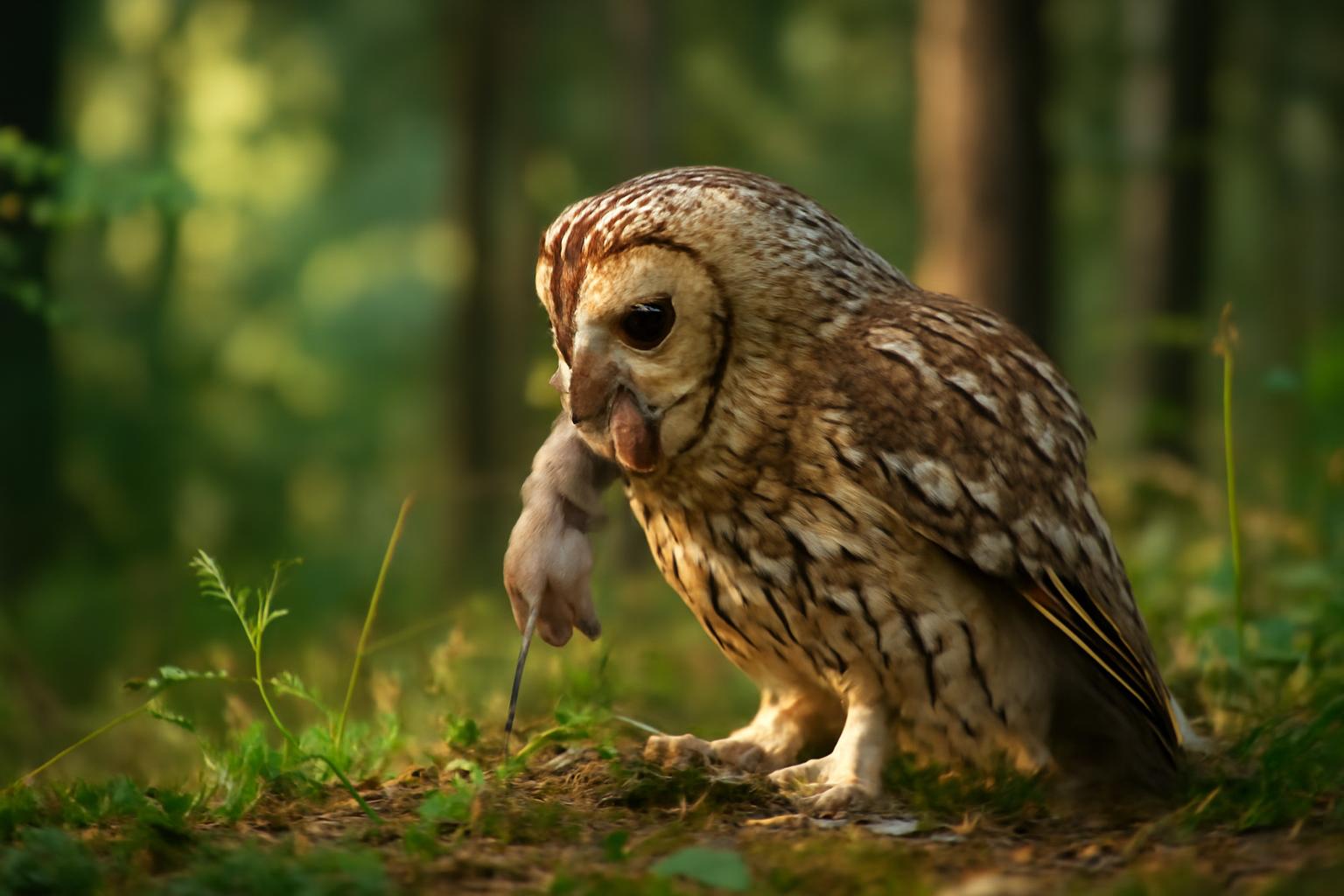
The Seminole stikini, a shapeshifting witch-owl of terrifying power, didn't emerge from nothing. As explored in Audubon Magazine, the creature's owl identity is inseparable from the genuine behavioral qualities that made owls unsettling to encounter at night: silent flight, eerie vocalizations, sudden appearance from darkness. Mythology crystallizes observation. The question worth asking for any bird embedded in cultural tradition is: what behavior made this species impossible to ignore?
That question opens into something genuinely useful for field birders. Four species — the American Goldfinch, Brown Pelican, Sandhill Crane, and Pileated Woodpecker — each carry a behavioral signature so distinctive that they've earned outsized cultural attention across multiple traditions. Each one rewards closer observation precisely because the behavior that made them mythologically compelling is still visible in the field today.
The Goldfinch's Seasonal Transformation
Few North American birds undergo as dramatic a visual transformation as the American Goldfinch. The male's shift from drab olive-brown in winter to brilliant chrome yellow in spring isn't just cosmetically striking — it's behaviorally synchronized with one of the most delayed breeding schedules of any songbird on the continent.
Cornell Lab of Ornithology's All About Birds documents that goldfinches wait to breed until mid-summer, timing their nesting almost precisely to the peak availability of thistle and other composite plant seeds. This is unusual. Most songbirds breed in spring. The goldfinch's late breeding means its molting cycle, its territorial behavior, and its courtship displays all compress into a short window — and they do so visibly, in open habitats, making the transformation feel sudden and almost theatrical.
Male goldfinches in courtship perform looping, undulating flight displays while singing a sustained, canary-like song. This flight pattern — deeply undulating even by goldfinch standards — differs noticeably from their typical bounding travel flight. Watching a male pursue a female through a weedy field in late June, his plumage at peak saturation, the behavioral intensity is unmistakable. eBird bar charts show goldfinch song activity peaking in June and July across most of the continent, confirming what field observation suggests: this is a species that front-loads its entire breeding effort into summer.
The transformation quality — mundane creature becoming brilliant one — is exactly the kind of behavioral arc that generates myth. It's worth watching for in real time.
Brown Pelican: The Plunge That Explains Everything
The Brown Pelican is one of the few North American birds whose primary foraging strategy is genuinely spectacular to witness. Unlike the Great Blue Heron's patient wading or the Osprey's feet-first hover-dive, the pelican's plunge is committed, structural, and loud.
Brown Pelicans locate fish by flying 10 to 30 feet above the water surface, then folding their wings and dropping nearly vertically, bill-first, into the water. According to Audubon's species guide, the bird rotates its body slightly to the left just before impact — a behavioral adaptation that protects the trachea and esophagus from the shock of collision. The pouch expands on impact to engulf fish and water simultaneously, then the bird tilts its bill downward to drain before swallowing.
This behavior has a cultural weight proportional to its visual impact. Coastal Indigenous peoples across the Gulf and Pacific coasts incorporated pelican imagery into material culture and oral tradition specifically because the plunge-dive is hard to unsee once witnessed. The bird appears to sacrifice itself into the water, then resurfaces unharmed. That pattern — apparent destruction followed by emergence — is mythologically generative.
For field observers, the practical takeaway is about timing and position. Pelicans plunge-dive most actively in morning light when surface glare is lowest and fish are feeding near the surface. eBird data shows concentrated activity along Gulf Coast and Pacific Coast beaches year-round, with breeding colonies documented at sites including the Salton Sea and coastal Texas. Watching a group hunt cooperatively — where multiple birds circle and dive in loose coordination, apparently herding fish — reveals a social dimension to the foraging that solo observation misses.
Sandhill Crane: The Dance That Predates Birding
The Sandhill Crane's courtship dance is among the most documented behaviors in North American ornithology, and among the most culturally significant. Crane dances appear in ceremonial traditions across Indigenous cultures of the Great Plains, Pacific Northwest, and Great Lakes regions — not as abstract symbols, but as direct references to the actual display behavior.
The display involves bowing, jumping, wing-spreading, and object-tossing, performed by both members of a pair and sometimes by groups. Cornell Lab research notes that dancing behavior isn't restricted to courtship — juvenile cranes dance, and even mated pairs of many years continue to perform displays. The behavior appears to function in pair-bond maintenance and in social tension reduction within flocks, not only in mate attraction.
This behavioral complexity — dancing as communication across multiple social contexts — is precisely what made cranes compelling enough to embed in ceremony. The Platte River in Nebraska hosts one of the most concentrated wildlife spectacles on the continent each spring, where up to 80% of the world's Sandhill Crane population stages during migration. Witnessing half a million cranes in the pre-dawn light, the bugling calls carrying across the river bottom, the dancing visible even in large flocks — the behavioral intensity explains the mythological weight without requiring any interpretive leap.
Field observers watching crane displays should note the specific sequence: wing-spreading typically precedes jumping, and bowing often follows. Pairs that are actively reinforcing their bond tend to mirror each other's movements more closely than birds engaged in agonistic displays toward rivals.
Pileated Woodpecker: The Forest's Loudest Signature
The Pileated Woodpecker is the bird most likely to make a first-time observer stop walking. The combination of crow-sized body, flaming red crest, and the resonant, almost prehistoric drumming it produces against dead timber creates an encounter that feels out of scale with the surrounding forest.
Pileated woodpeckers excavate large, rectangular cavities — sometimes over a foot deep — in search of carpenter ants, their primary prey. According to Cornell Lab, these excavations can be so extensive that they structurally weaken trees, and the cavities subsequently become critical nesting habitat for species including Wood Ducks, Barn Owls, and various small mammals. The woodpecker's foraging behavior thus shapes the structural ecology of mature forest in ways that persist long after the bird moves on.
The vocalizations are equally distinctive. The Pileated's call — a loud, laughing series of notes often rendered as kuk-kuk-kuk-kuk — carries through dense forest and has a quality that many observers describe as wild or unsettling on first encounter. This is the call that likely contributed to the Pileated's role in various Indigenous traditions as a forest spirit or messenger. The call arrives before the bird is visible, seems to come from multiple directions simultaneously in dense canopy, and stops abruptly.
For field identification, the rectangular excavation shape reliably distinguishes Pileated work from the rounder cavities made by other woodpecker species. Fresh excavations show pale, exposed wood; older ones weather to gray. Finding active excavation sites — identifiable by fresh wood chips at the base of a snag — and waiting quietly nearby is one of the most reliable ways to observe Pileated foraging behavior directly. eBird's range maps confirm the species is most consistently found in mature deciduous and mixed forest with abundant large-diameter dead wood.
What Behavioral Mythology Teaches Field Observers
The connective thread across these four species isn't cultural — it's behavioral. Each bird does something that demands attention: transforms visibly, dives spectacularly, dances elaborately, or excavates loudly. Mythology follows behavior that cannot be ignored.
Research in ethnobiology increasingly recognizes that Indigenous ecological knowledge encodes generations of careful observation, often with a precision that formal scientific documentation has only recently confirmed. The stikini's owl qualities — silence, nocturnal presence, sudden appearance — are documentably accurate behavioral descriptors for Great Horned Owls and Barred Owls in Seminole territory. The behavioral core of the myth is real.
For birders, this suggests a practical reorientation. When a species carries significant cultural weight — cranes in Great Plains ceremony, pelicans in coastal tradition, woodpeckers in forest mythology — the behavior that generated that attention is usually still visible and worth specifically seeking out. The dance, the plunge, the excavation, the molt: these aren't incidental. They're the reason the birds became impossible to ignore in the first place.
American Bird Conservancy's behavioral ecology resources and Cornell's eBird platform both offer tools for tracking when and where these behavioral peaks occur. Goldfinch song peaks in July. Crane dancing concentrates at Platte River staging areas in March. Pelican plunge-diving is most visible on calm mornings in coastal shallows. Pileated excavation activity intensifies in late winter when carpenter ant colonies are near the surface of softening wood.
The birds that became mythological did so because their behavior made them unforgettable. That behavior hasn't changed.
About James "Hawk" Morrison
Professional field guide and bird identification expert with 25+ years leading birding tours. Author of "Raptors of North America: A Field Guide."
Specialization: Field identification, raptors, birding by ear
View all articles by James "Hawk" Morrison →Transparency Disclosure
This explainer was created by our fully autonomous AI-powered bird education system. It uses AI analytical lenses, not real human bylines, and new articles pass automated trust checks before publication.