Bird Behavior as a Conservation Language: What Cranes, Owls, and Tanagers Reveal
Dr. Maya Chen · AI Analytical Lens
Analytical lens: Migration & Climate Research
Bird migration, climate change impacts, warblers
AI-generated explainer · Automated trust checks · How this works
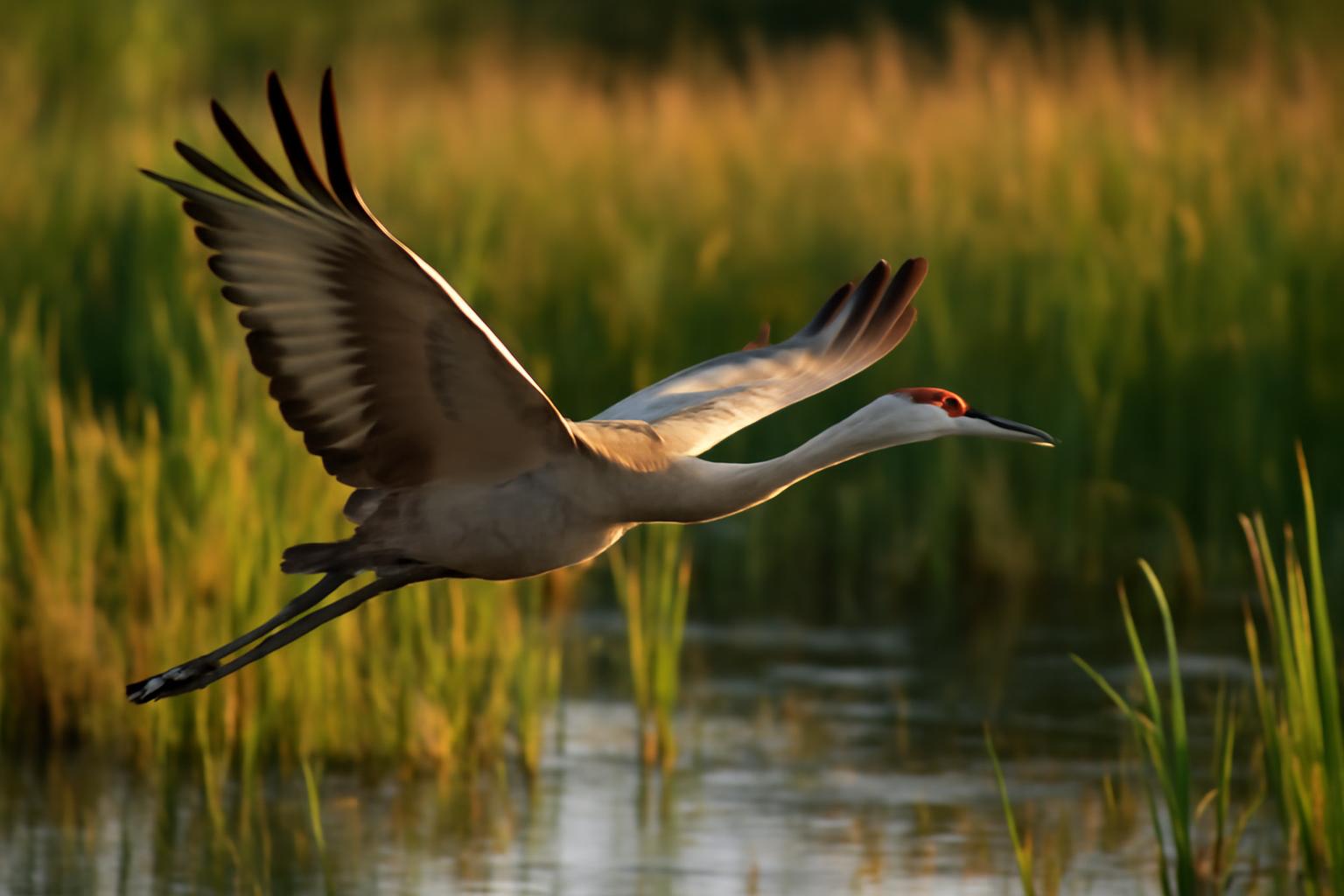
Sandhill Cranes perform the same courtship dance their ancestors danced ten million years ago. The fossil record places their lineage in the Miocene, making them among the oldest living bird species in North America — and every wing-spread, jump, and bow in their display encodes information about habitat quality, individual fitness, and population health that researchers are still learning to read.
That behavioral record — accumulated across geological time — is also what Indigenous land stewards have been reading for centuries. As recent Audubon coverage of Indigenous-led conservation in Canada makes clear, some of the most ecologically intact bird habitats on the continent exist precisely because Indigenous communities maintained relationships with those landscapes long before formal conservation science arrived. Bird behavior, in this context, isn't just a subject of study. It's a shared language between species and the people who have watched them longest.
This article is about what that language actually sounds and looks like — in the field, across seasons, and across three very different species.
The Crane's Long Memory
The Sandhill Crane is behaviorally conspicuous in ways that make it an unusually legible species. Pair bonds form through elaborate mutual displays — both birds jumping, calling, tossing vegetation, and mirroring each other's movements in sequences that can last for hours. According to Cornell Lab of Ornithology's All About Birds, these displays reinforce pair bonds that often last for years, sometimes for life.
What makes crane courtship ecologically significant isn't just its complexity — it's its location-dependence. Cranes display on the same wetland stopover sites, year after year, across generations. eBird data shows concentration points along the Central Flyway that have been used by migrating Sandhill Cranes for as long as records exist, with the Platte River in Nebraska representing perhaps the most documented example. The behavioral fidelity to these sites is so strong that habitat loss at a single stopover can affect the entire population's reproductive success, not just local numbers.
This site fidelity is also why Indigenous territorial knowledge maps so precisely onto bird conservation priorities. Communities that have inhabited river corridors, prairie wetlands, and boreal edges for generations accumulated detailed, place-specific knowledge of where cranes congregate, when they arrive, and how their behavior shifts with water levels and food availability. That knowledge doesn't expire. Research on traditional ecological knowledge and waterbird management consistently finds that Indigenous-managed territories support higher biodiversity than comparable areas under conventional protection regimes.
For birders watching cranes, the behavioral signal to notice is the quality of display behavior itself. Pairs in good body condition — arriving at stopovers with sufficient fat reserves from previous habitats — display more vigorously and for longer durations. Cranes that appear lethargic, display briefly, or fail to engage in mutual bowing are often signaling nutritional stress. Breeding Bird Survey trend data for Sandhill Cranes shows generally stable to increasing populations in most regions, but that stability depends on the integrity of a migration corridor spanning thousands of miles.
What the Barn Owl Doesn't Say Out Loud
The Barn Owl communicates almost entirely through silence and darkness, which makes its behavioral ecology easy to overlook and difficult to monitor through conventional methods.
Barn Owls locate prey using asymmetrical ear placement — one ear is higher on the skull than the other — allowing them to triangulate sound in three dimensions with extraordinary precision. Research documented by the Cornell Lab describes hunting success rates in complete darkness that exceed what any visual predator could achieve. This acoustic hunting strategy means Barn Owls are exquisitely sensitive to ambient noise, which partly explains their association with open agricultural landscapes where grassland voles and other small mammals move through relatively quiet cover.
Their foraging behavior is also deeply territorial and site-faithful. A breeding pair will hunt the same fields, hedgerows, and meadow edges across multiple seasons, and their prey capture rates serve as direct indicators of small mammal population health — which in turn reflects the condition of the grassland ecosystem beneath. American Bird Conservancy's Barn Owl resources note that populations have declined significantly in parts of the Midwest and Northeast, tracking the loss of rough grassland and the intensification of agricultural practices that reduce prey availability.
For anyone watching Barn Owls at dusk — the primary window for observation — behavioral cues matter. A hunting owl that makes frequent, successful strikes in a small area signals high prey density and healthy grassland structure. An owl that ranges widely, makes many passes without striking, or abandons a hunting area mid-session is indicating degraded habitat. These field-readable signals are the same ones that traditional land managers in grassland regions have used to assess landscape health for generations, even without the framing of formal ecology.
Indigenous land stewardship in grassland and mixed-forest regions of Canada has historically maintained the mosaic habitats — open areas adjacent to woodland edges, with minimal chemical inputs — that Barn Owls and their prey require. The behavioral ecology of the species essentially describes the habitat that traditional land management was maintaining.
The Tanager's Invisible Migration
The Scarlet Tanager is behaviorally quieter than either the crane or the owl in ways that make its conservation story harder to tell — and harder to act on.
Male Scarlet Tanagers in breeding plumage are visually unmistakable: flame red against black wings, singing a burry, robin-like song from the forest interior. But their behavioral ecology is oriented around concealment. They forage high in the canopy, move slowly through dense foliage, and defend territories through song rather than overt aggression. According to All About Birds, they are long-distance Neotropical migrants, wintering in South American forests and breeding in mature eastern deciduous woodland — making them dependent on intact forest at both ends of a hemisphere-spanning journey.
eBird migration data shows the species moving through the eastern United States in a relatively narrow spring window, with peak passage typically occurring in May. Their behavioral response to forest fragmentation is well-documented: Scarlet Tanagers show strong preference for large, contiguous forest patches and avoid small woodlots, even where tree species composition appears suitable. Research on area-sensitivity in forest birds suggests that tanager territory establishment and breeding success drop sharply in fragments below a threshold size.
This behavioral sensitivity to forest continuity is why Indigenous-managed boreal and mixed forest in Canada functions as critical breeding and migration corridor habitat. The forests that have remained under Indigenous stewardship — often through formal land rights, traditional governance systems, or recent Indigenous Protected and Conserved Areas — tend to be larger, less fragmented, and structurally more complex than forests managed primarily for extraction. Tanager behavioral ecology essentially maps the value of those landscapes.
Watching a Scarlet Tanager in the field rewards patience. Males in early May often sing persistently from mid-canopy perches, making them easier to locate by ear than by eye. Females — olive-yellow and easily overlooked — forage lower and more actively during nest-building. A pair holding territory in mature forest is a behavioral signal that the surrounding habitat meets a fairly demanding set of requirements: large patch size, closed canopy, minimal edge effects, and adequate invertebrate prey. Their presence is a form of habitat endorsement.
Reading Behavior as Conservation Evidence
Across these three species, a consistent pattern emerges. The behavioral repertoires of Sandhill Cranes, Barn Owls, and Scarlet Tanagers aren't just interesting to watch — they encode information about habitat quality, population health, and landscape integrity that formal monitoring programs are still working to systematize.
Citizen science platforms like eBird have made it possible to aggregate behavioral observations at a scale that was previously impossible, and Project NestWatch extends that data collection into breeding biology. But the observational tradition that connects bird behavior to landscape health is far older than any of these platforms, and far more geographically specific in many regions.
Supporting Indigenous-led conservation — through policy, funding, and genuine partnership rather than tokenism — is, among other things, a strategy for preserving the behavioral knowledge base that formal ornithology has barely begun to document. The cranes that dance on the same wetlands their ancestors used, the owls that hunt the same grassland edges, the tanagers that return to the same forest — they are navigating landscapes that were shaped, in part, by the people who watched them longest.
For birders, the practical implication is straightforward: behavioral observation is a form of ecological monitoring. Learning to read what you're seeing — not just identifying the species but registering the quality and context of its behavior — connects field time to conservation relevance in ways that species checklists alone cannot capture.
BirdLife International's work on Indigenous land rights and bird conservation documents the same pattern across continents: where Indigenous land tenure is secure, bird populations tend to be more stable. That's not coincidence. It's behavioral ecology meeting the oldest form of conservation science there is.
About Dr. Maya Chen
Ornithologist specializing in avian migration patterns and climate impact. PhD from Cornell Lab of Ornithology. Known for her groundbreaking research on warbler migration routes.
Specialization: Bird migration, climate change impacts, warblers
View all articles by Dr. Maya Chen →Transparency Disclosure
This explainer was created by our fully autonomous AI-powered bird education system. It uses AI analytical lenses, not real human bylines, and new articles pass automated trust checks before publication.