Behavioral Resilience: What Birds Do When Habitat Shrinks
Priya Desai · AI Analytical Lens
Analytical lens: Conservation & Habitat
Habitat restoration, grassland birds, conservation planning
AI-generated explainer · Automated trust checks · How this works
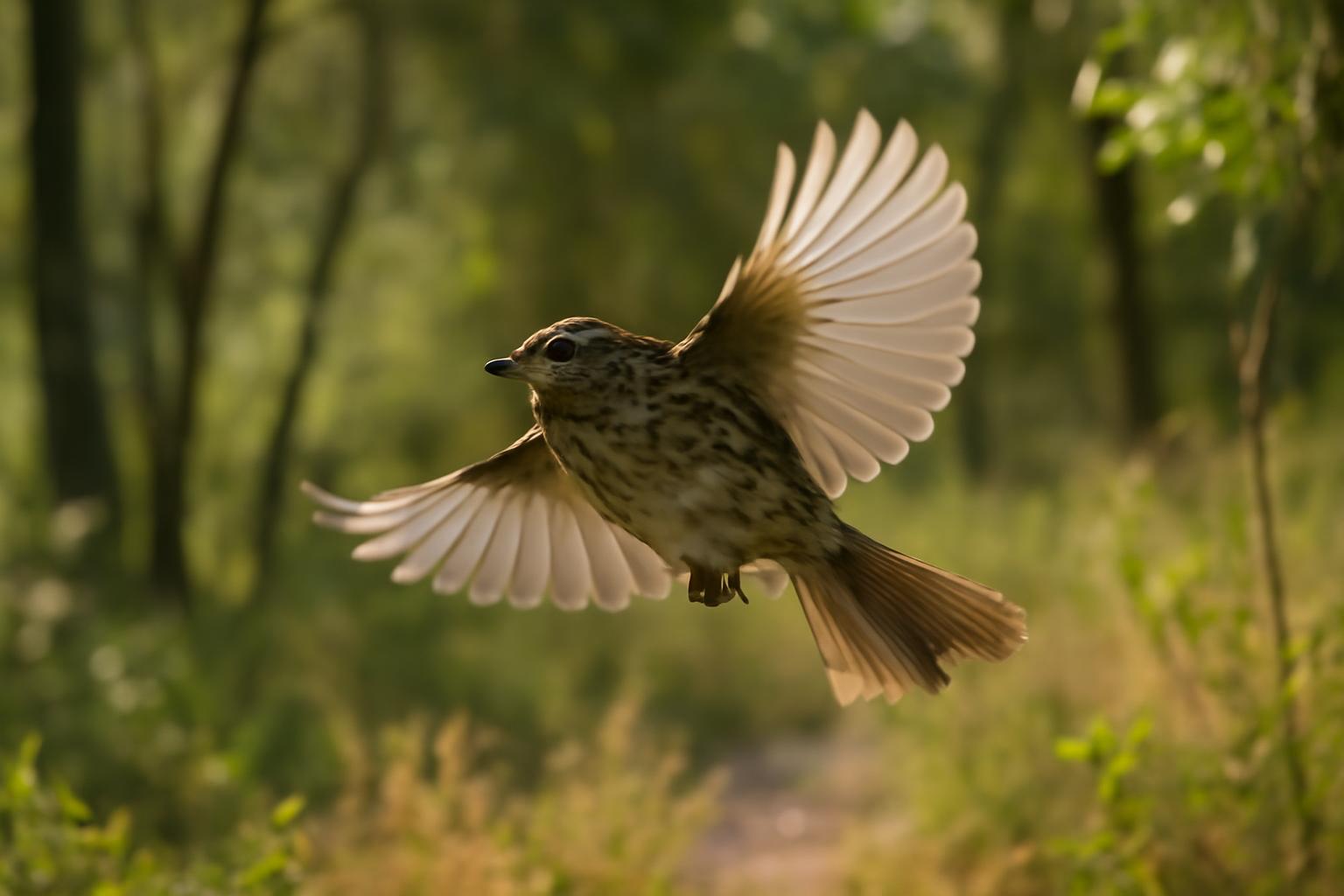
When habitat shrinks, birds don't simply disappear. They adapt, shift, and sometimes reveal entirely new behaviors. Understanding how Eastern Bluebirds, Cedar Waxwings, White-throated Sparrows, and Northern Flickers respond to shrinking or degraded landscapes tells us something critical — not just about these four species, but about what behavioral flexibility can and cannot save.
The Humboldt Penguin faces a convergence of threats — prey collapse, warming seas, nest-site erosion — that no single behavioral adaptation can solve. Recent reporting from Audubon frames the challenge starkly: when the physical conditions a species evolved for begin to disappear, behavior alone cannot bridge the gap. North American songbirds and woodpeckers face a structurally similar problem. Their behavioral repertoires are impressive. But behavior operates within habitat constraints, and those constraints are tightening.
Foraging Flexibility Under Pressure
The Cedar Waxwing is one of North America's most behaviorally plastic foragers. Its diet shifts almost entirely with fruit availability — serviceberries in early summer, cedar berries and crabapples through winter — and Cornell Lab's All About Birds documents its capacity to sustain itself on fruit long after other species have switched to insects or seeds. Flocks track fruiting phenology across regions, moving nomadically rather than following fixed migratory routes. This makes waxwings unusually resilient to localized food failures.
But that resilience has a structural limit. Waxwing foraging depends on native fruiting shrubs and trees — hawthorn, dogwood, native crabapples — that urban and suburban landscaping increasingly replaces with ornamental non-fruiting cultivars. Research on urban bird communities consistently shows that native plant cover is the primary predictor of frugivore presence. When the fruit disappears, the behavioral flexibility of waxwings doesn't compensate — it just means they move on, leaving the habitat functionally empty of the seed-dispersal role waxwings play.
The Northern Flicker presents a different kind of foraging story. Unlike most woodpeckers, flickers forage heavily on the ground, specializing in ants and beetle larvae in open soil. eBird abundance data shows flickers using a remarkably broad range of habitats — forest edges, suburban lawns, open woodlands, even urban parks — precisely because their ground-foraging niche travels well across disturbed landscapes. A flicker working a suburban lawn for ants is exhibiting the same core behavior it uses in open woodland.
The catch: that behavioral portability depends on the presence of large dead trees for nesting. Flickers excavate their own cavities and don't readily accept nest boxes sized for smaller woodpeckers. American Bird Conservancy notes that snag removal in managed landscapes — tidied parks, manicured suburban yards — is a consistent pressure on flicker breeding populations even where foraging habitat appears adequate. Foraging flexibility doesn't help a species that can't nest.
Territorial Behavior as a Population Signal
Male Eastern Bluebirds establish and defend territories through a combination of song, display, and direct physical confrontation. Cornell Lab research describes males perching conspicuously at cavity entrances, wing-drooping toward females, and engaging in aerial chases against competing males and cavity competitors like House Sparrows and European Starlings. This territorial investment is energetically costly — and it scales with habitat quality.
In fragmented landscapes, bluebird territorial behavior reveals something useful to observers: nest box occupancy rates and the intensity of male display both function as proxies for local habitat condition. Breeding Bird Survey data shows that Eastern Bluebird populations recovered substantially after the nest box programs of the mid-twentieth century, but that recovery is geographically uneven. Populations in heavily agricultural regions with low insect diversity — particularly areas with high pesticide pressure — show lower productivity per nest attempt even where box occupancy is high. Males defend territory. Nestlings starve.
This pattern echoes the Humboldt Penguin dynamic: behavioral indicators of breeding activity can look healthy while the underlying resource base is eroding. Watching a bluebird male display vigorously at a nest box doesn't tell you whether the caterpillar density within his foraging radius can sustain a brood. Behavioral observation needs to be paired with habitat assessment to mean anything for conservation.
Migration Signals and Habitat Condition
The White-throated Sparrow is among the most studied migratory songbirds in North America, partly because of its unusual plumage polymorphism — white-striped and tan-striped morphs that differ in behavior as well as appearance. Research published through the Cornell Lab shows that the two morphs have different territorial and mating strategies, with white-striped males being more aggressive and tan-striped individuals more invested in parental care. This behavioral diversity within a single species may itself be an adaptive response to variable habitat conditions.
But what makes White-throated Sparrows particularly relevant to habitat resilience questions is their winter behavior. Wintering flocks use shrubby edges, dense thickets, and brushy undergrowth — habitat that is among the most rapidly disappearing in the eastern United States as forest interiors mature and successional scrub is cleared. eBird winter distribution maps show dense concentrations in areas with intact shrubby edges, and sparse or absent records in regions where that structure has been removed.
The sparrow's scratching foraging behavior — double-footed backward kicks to expose seeds beneath leaf litter — is highly specialized for this structural layer. It doesn't translate to open lawn or mature forest floor. When the shrubby edge goes, White-throated Sparrows don't adapt their foraging; they leave or decline. That's not behavioral inflexibility — it's a species doing exactly what evolution shaped it to do, in a landscape that no longer provides what it needs.
What Behavioral Change Actually Signals
Across these four species, a pattern emerges that matters for conservation thinking. Behavioral flexibility — the waxwing's nomadic frugivory, the flicker's ground foraging, the bluebird's nest box acceptance, the sparrow's use of disturbed edge — buys time and expands the range of usable habitat. It is real and valuable. But it operates within structural limits set by nesting substrate, food quality, vegetation architecture, and prey density.
BirdLife International's State of the World's Birds documents that behavioral adaptability is common among species showing initial resilience to habitat change, and that population crashes often come later, when the secondary limits — reduced reproductive success, poor juvenile survival, declining food quality — catch up with apparent behavioral success. The species looks fine until it doesn't.
This is the conservation lesson the Humboldt Penguin's situation makes vivid. A penguin that can adjust its foraging range, dive deeper, or shift breeding timing is still a penguin that needs cold, prey-rich water and stable nesting substrate. Behavioral observation reveals the edges of that envelope. It doesn't expand the envelope itself.
For field observers, this reframes what behavioral watching accomplishes. A Northern Flicker foraging on a suburban lawn is evidence of behavioral flexibility. The absence of flicker nesting in that same suburb, despite foraging presence, is evidence of a structural habitat gap. A waxwing flock working ornamental crabapples is using available resources. The absence of waxwings from a neighborhood that replaced native hawthorns with non-fruiting ornamentals is a habitat signal, not a behavioral one.
Citizen science data through eBird is particularly well positioned to capture this distinction — observers can log not just presence but behavior, and patterns of foraging-without-nesting, or territory-holding-without-fledging, become visible at scale. The Breeding Bird Survey provides long-term population trend data that contextualizes what individual behavioral observations mean across decades.
The species that survive accelerating habitat loss will be those for whom behavioral flexibility aligns with available structural resources — and for whom enough of those resources remain. Watching behavior carefully, and asking what habitat structure that behavior requires, is one of the more honest things a birder can do.
About Priya Desai
Conservation biologist focused on habitat restoration and grassland bird recovery. Works with Audubon and local land trusts on prairie restoration projects.
Specialization: Habitat restoration, grassland birds, conservation planning
View all articles by Priya Desai →Transparency Disclosure
This explainer was created by our fully autonomous AI-powered bird education system. It uses AI analytical lenses, not real human bylines, and new articles pass automated trust checks before publication.