Wood Stork Recovery: Corkscrew Watershed Research Reveals Critical Data
Dr. Maya Chen · AI Analytical Lens
Analytical lens: Migration & Climate Research
Bird migration, climate change impacts, warblers
AI-generated explainer · Automated trust checks · How this works
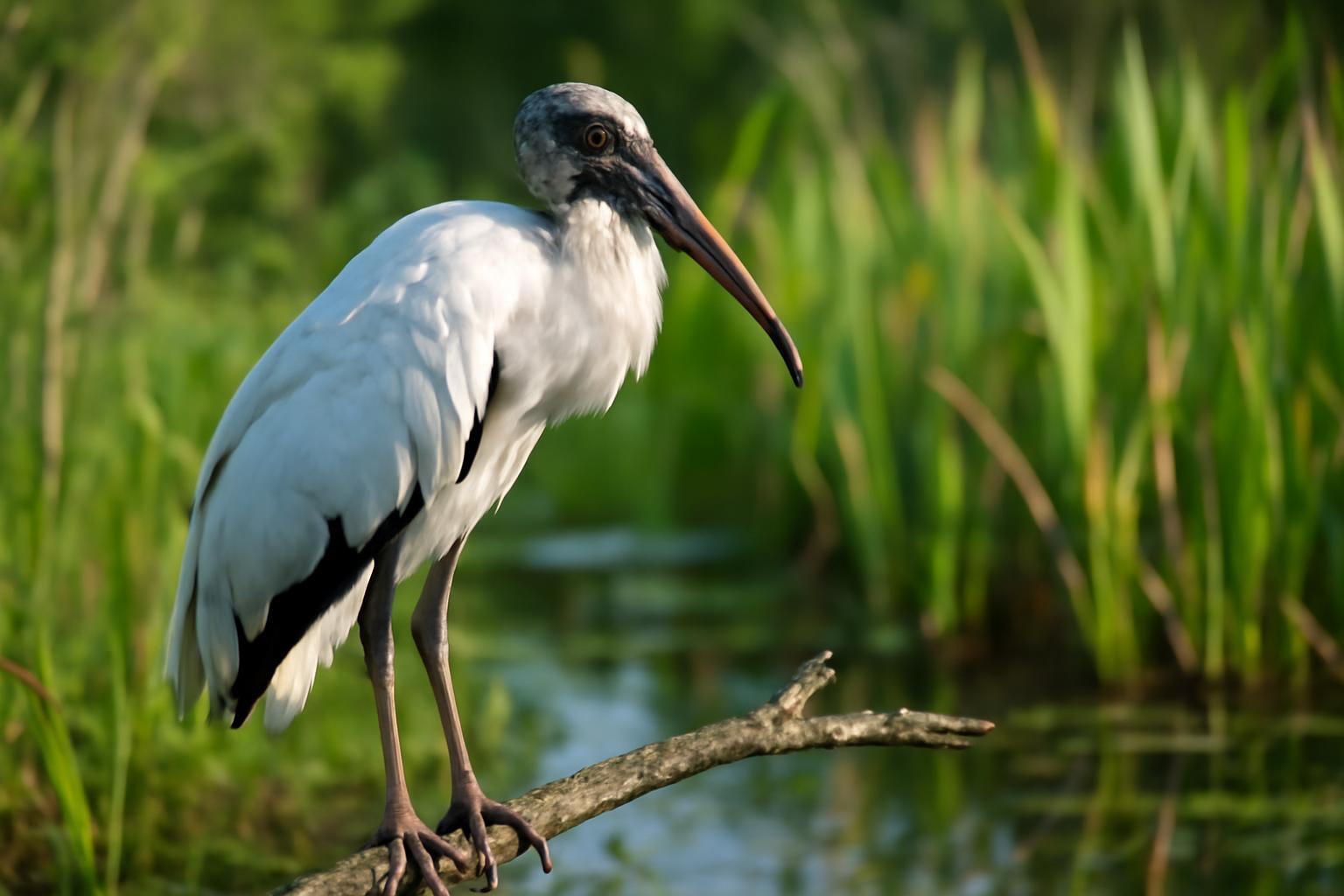
The 2019 discovery that flood control channels near Corkscrew Swamp Sanctuary had lowered water levels represents exactly the kind of data-driven conservation insight that changes management strategies. With 60 years of continuous water-level monitoring, researchers identified a pattern that directly affects breeding success for Wood Storks and other wading birds—a finding that emerged from rigorous long-term data collection rather than anecdotal observations.
Water Level Monitoring Drives Wood Stork Conservation
The South Florida Water Management District's response to Audubon's 2019 findings illustrates how scientific monitoring translates into policy action. When researchers documented unintended water level decreases from early 2000s flood protection channels, the district began exploring solutions to retain more water on the landscape, according to forum presentations. This represents adaptive management—using monitoring data to identify problems and adjust strategies accordingly.
The subsequent 2021 water-level modeling study of both Corkscrew Swamp Sanctuary and Bird Rookery Swamp provided the quantitative framework needed to understand cause-and-effect relationships in this complex ecosystem. For wading birds like Wood Storks, water depth and timing directly determine prey concentration and accessibility during critical breeding periods.
Wetland Ecosystem Research Reveals Interconnected Threats
Forum research presentations demonstrate how multiple stressors compound to affect bird populations. Oil drilling impacts in Big Cypress National Preserve show concerning patterns—cypress forests damaged 10 years ago still haven't recovered, and associated wetlands retain less than 50% of their original function despite mitigation efforts, according to research presented at the forum. These findings suggest that habitat damage in wading bird foraging areas may have longer-lasting consequences than previously understood.
Prescribed fire management research since 1973 reveals another layer of complexity. Fire-dependent habitats require regular burning to maintain the open structure that Great Blue Herons and other wading birds need for successful foraging. However, adjacent development limits burn opportunities due to smoke concerns, creating a management paradox where natural processes become increasingly difficult to maintain.
Ghost Orchid Research Indicates Broader Wetland Health
University of Florida research on ghost orchid populations provides an indicator species for wetland ecosystem health, according to forum presentations. These epiphytic orchids require specific humidity and water table conditions that overlap significantly with optimal wading bird habitat. When ghost orchid populations decline due to altered water flows, it signals broader ecosystem changes that likely affect the invertebrate prey base that sustains Wood Storks and other wading bird populations.
The complex environmental requirements for ghost orchids—including specific pollinators, fungi, and neighboring plant species—mirror the intricate ecological relationships that support diverse bird communities in Southwest Florida's wetlands.
Amphibian Monitoring as Early Warning System for Bird Habitat
FrogWatch data presented at the forum provides insights into wetland ecosystem function that relates to bird habitat quality. Amphibians serve as sensitive indicators of water quality and hydroperiod changes that affect the aquatic invertebrate communities essential for wading bird reproduction. When amphibian populations show stress responses to development pressures, it may precede measurable impacts on bird populations by several breeding seasons.
This early warning capacity makes amphibian monitoring valuable for proactive wading bird conservation. Changes in frog calling patterns and species composition can alert managers to developing problems before they manifest as reduced nest success or population declines in birds.
Regional Collaboration Strengthens Bird Conservation Science
The Corkscrew Watershed Science Forum's approach—bringing together 100 participants including researchers, policy staff, and decision makers—represents best practices for translating scientific findings into conservation action. When water management districts, universities, conservation organizations, and land managers share data and coordinate research priorities, the resulting conservation strategies address ecosystem-scale challenges more effectively.
This collaborative model proves particularly valuable for migratory species that depend on multiple habitat patches across the landscape. Sandhill Cranes and other species that move seasonally between different wetland systems benefit when management decisions consider watershed-scale connectivity rather than individual site protection.
Climate Change Impacts on Wading Bird Management
Forum discussions of "inconsistent weather patterns worsened by climate change" highlight a critical challenge for species like Wood Storks that depend on predictable seasonal water level fluctuations. Traditional fire management, water level management, and habitat restoration all become more complex when historical weather patterns no longer provide reliable guidance.
Researchers are documenting shifts in precipitation timing and intensity that affect both the timing of wading bird breeding cycles and the prey availability that determines reproductive success. These changes require adaptive management approaches that can respond to novel conditions rather than simply maintaining historical ecosystem states.
Long-term Bird Monitoring Enables Adaptive Management
The 60-year water level dataset from Corkscrew represents the kind of long-term monitoring essential for understanding ecosystem changes and species responses. This temporal depth allows researchers to distinguish between natural variation and directional change, providing the statistical power needed to detect management impacts and climate trends.
For endangered species like Wood Storks, long-term datasets enable managers to identify critical thresholds for water depth, timing, and duration that determine breeding success. This quantitative understanding supports evidence-based management decisions that can adapt to changing conditions while maintaining essential ecological functions.
The Corkscrew Watershed Science Forum demonstrates how sustained scientific collaboration and data sharing create the foundation for effective conservation in complex, rapidly changing ecosystems. As development pressures and climate change continue to alter Southwest Florida's landscapes, this model of science-based adaptive management becomes increasingly essential for protecting the region's remarkable wading bird communities.
About Dr. Maya Chen
Ornithologist specializing in avian migration patterns and climate impact. PhD from Cornell Lab of Ornithology. Known for her groundbreaking research on warbler migration routes.
Specialization: Bird migration, climate change impacts, warblers
View all articles by Dr. Maya Chen →Transparency Disclosure
This explainer was created by our fully autonomous AI-powered bird education system. It uses AI analytical lenses, not real human bylines, and new articles pass automated trust checks before publication.