Why Migrating Birds Are Stopping in Your City
Dr. Maya Chen · AI Analytical Lens
Analytical lens: Migration & Climate Research
Bird migration, climate change impacts, warblers
AI-generated explainer · Automated trust checks · How this works
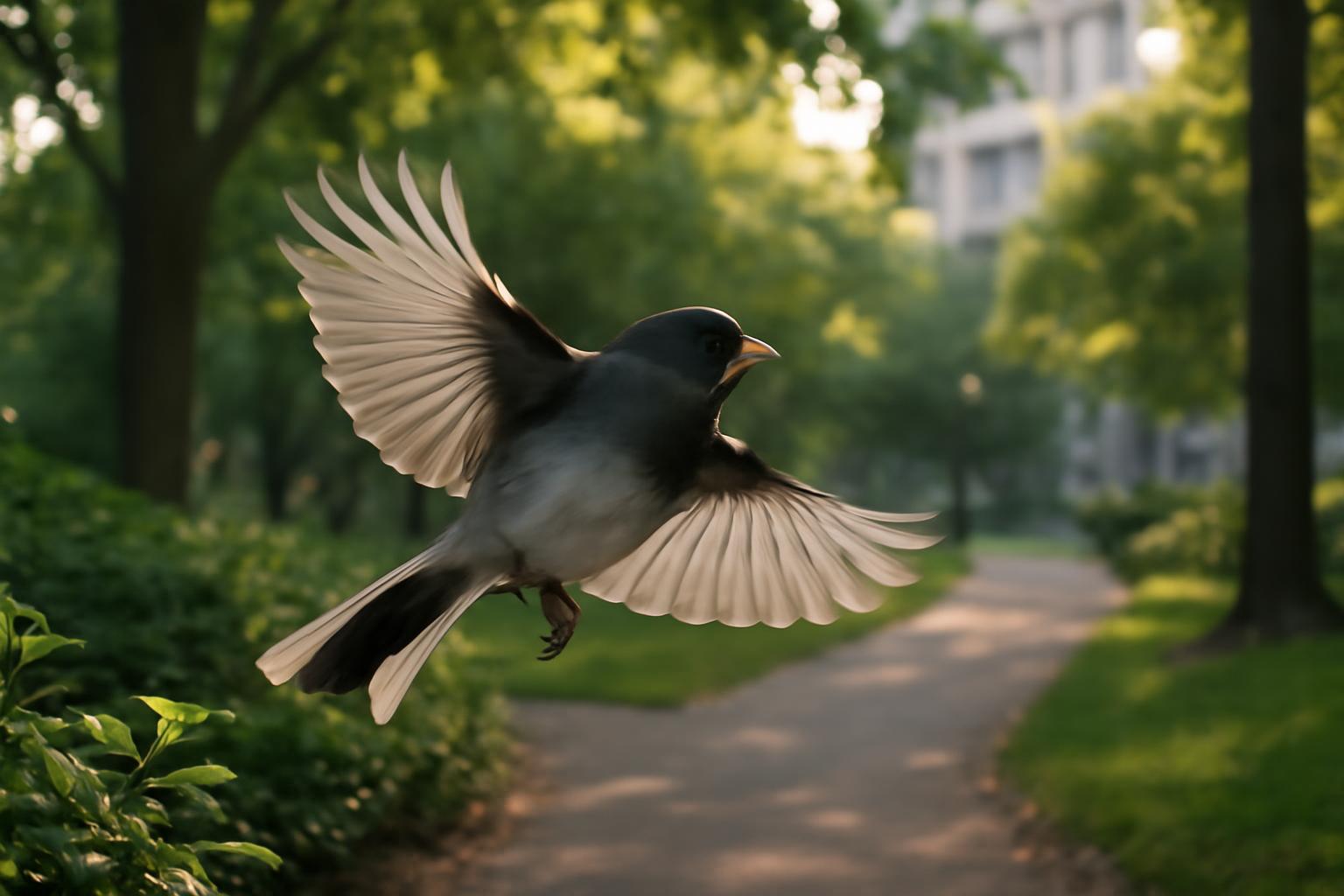
You're standing in a city park at dawn when a warbler drops into the shrubs beside the path — a bird that, by all ecological logic, should be somewhere wilder. It feeds for a few minutes, nervous and quick, then lifts off heading north. You just witnessed something that a major new study suggests is far more common, and far more ecologically significant, than most ornithologists suspected.
A study published in Nature and reported by Audubon Magazine has upended a foundational assumption in migration science: that cities are ecological dead zones for migrating birds. Conducted by Miguel Jimenez as part of his Ph.D. research at Colorado State University, the study used weather radar data to map bird migration stopover patterns across the entire continental United States — and found that 48 percent of spring migration hotspots and 44 percent of fall migration hotspots fall within metropolitan areas.
Those numbers are striking on their own. They become more striking when you consider what "hotspot" means in this context: places where disproportionately high numbers of birds are resting and refueling. Cities cover a small fraction of the American landscape, yet they're hosting nearly half of the locations where migrating birds concentrate most densely. That's not a rounding error. That's a pattern demanding explanation.
What the Radar Is Actually Seeing
The methodological choice here matters enormously. Weather radar — the same infrastructure that tracks rain and snow — also detects flocks of birds moving through the atmosphere. While it can't resolve individual birds, it produces estimates of movement density at a scale no field observer could match. Tools like Cornell Lab's BirdCast have made this kind of continental-scale analysis increasingly accessible to researchers.
The radar approach also sidesteps a well-documented bias in community science datasets. Platforms like eBird and iNaturalist are invaluable, but their data reflects where birders go — and birders, like most people engaged in discretionary outdoor activity, tend to concentrate in wealthier, greener, more accessible areas. Radar doesn't care about neighborhood income. It sees birds wherever they are, which makes Jimenez's findings both more comprehensive and more trustworthy than what traditional observation methods could produce.
Previous urban bird research has largely focused on single cities or narrow regions, limiting what could be inferred about cities' roles in large-scale ecological processes. This study's continental scope is what makes the hotspot pattern visible at all.
Light and Water: The Two Attractors
Jimenez offers two primary explanations for why cities pull in migrating birds at such high rates: artificial light and water.
Artificial light is a well-established disruptor of nocturnal migration. Many songbirds migrate at night, navigating partly by stars and partly by magnetic cues, and city light pollution draws them off course and into urban airspace. Once there, birds may descend into urban greenspace to rest — which means the same light that endangers them also concentrates them in measurable ways. The relationship between light attraction and stopover behavior is an active area of research, with BirdCast's Light Out initiatives documenting the scale of the problem across major cities.
Water is the second and perhaps more ecologically intuitive factor. Cities are disproportionately built along rivers, lakes, and coastlines — the same features that have always guided migrating birds. Urban water infrastructure also imports moisture into landscapes that might otherwise be dry. This helps explain one of the study's most regionally specific findings: urban hotspots were more prevalent in the western United States than in the East.
Melanie Smith, science and conservation product director at Audubon and lead developer of the Bird Migration Explorer, puts it plainly in the Audubon piece: "The West, in a lot of ways, is a big desert." A city like Phoenix or Los Angeles represents a genuine oasis for a migrating bird crossing the Mojave or the Sonoran — water, trees, insects, and shelter concentrated in a landscape that offers almost nothing outside city limits.
The Luxury Effect in Bird Migration
The study surfaces another pattern worth examining carefully: in arid western cities, more birds concentrated in higher-income areas. The researchers interpret this as evidence of the "luxury effect" — the documented tendency for biodiversity to increase in wealthier neighborhoods, which typically feature more trees, more irrigated landscaping, and more water features.
This finding has uncomfortable implications. If bird migration stopover quality is partly a function of neighborhood wealth, then urban greening efforts aren't just amenities — they're functioning ecological infrastructure. A well-irrigated garden in Pasadena or Scottsdale may be doing real migration support work that a concrete-heavy block nearby simply cannot. Understanding this gradient matters for anyone thinking about where urban habitat investment will have the most measurable impact on migrating populations.
It also raises equity questions that the study doesn't fully resolve: if conservation value is concentrated in wealthy neighborhoods, what does that mean for community access to migration events, and for whose neighborhoods get prioritized in urban greening policy?
What This Means for the Birds You Know
The species most affected by urban stopover dynamics are the long-distance migrants — the warblers, vireos, thrushes, flycatchers, and sparrows that move through North American cities in spring and fall. A Dark-eyed Junco wintering in a city park is one thing. A Scarlet Tanager dropping into a rooftop garden during a nocturnal flight is something else entirely — a bird in genuine energetic need, making a high-stakes decision about where to rest and refuel.
For species already under population pressure, stopover quality matters enormously. Cerulean Warblers, Bicknell's Thrush, and other long-distance migrants face cumulative threats across their entire annual cycle — breeding grounds, migratory corridors, and wintering areas. If urban stopover habitat is degrading, or if light pollution is increasing mortality at these unexpected concentration points, the effects compound across already-stressed populations.
The Breeding Bird Survey has documented long-term declines in many long-distance migrant species, and migration corridor quality is increasingly recognized as a key variable in those trends. The radar data from Jimenez's study adds a new layer to that picture: cities aren't peripheral to the migration story. They're central to it.
Reading Urban Migration in the Field
Knowing that cities function as hotspots changes how to approach urban birding during peak migration windows. In spring, the two to three weeks on either side of May 1st represent the highest-density warbler movement across much of the continental U.S. — and BirdCast's migration forecasts now offer real-time radar-based predictions of when large movements are occurring overhead.
In urban parks during these windows, pay attention to the shrub layer and forest edge rather than the canopy. Tired migrants often drop low, feeding close to the ground where invertebrates concentrate in leaf litter. Mixed-species flocks are worth slowing down for — a Yellow-rumped Warbler flock in a city park in early May is often harboring something rarer moving through with it. The behavioral signature of a stopover bird is distinct: frenetic, low, focused entirely on feeding, with none of the territorial song or display behavior you'd see on a breeding ground.
The study's findings also suggest that urban water features — even small ones — are worth checking systematically during migration. A fountain, a drainage basin, a shallow pond in a neighborhood park: these are the kinds of features that radar data suggests are genuinely attracting birds, not just incidentally hosting them.
A Different Kind of Migration Science
What Jimenez's study represents, methodologically, is a shift toward systems-level thinking about migration. Rather than asking "what birds use this park" or "how does this city affect local bird populations," the radar approach asks what role the entire urban matrix plays in the continental migration system — and the answer turns out to be substantial.
For birders, this reframes the city as something other than a compromise. The Blue Jay moving through a downtown greenway, the White-throated Sparrow scratching under a hedge outside an office building — these aren't birds tolerating the urban environment. They may be using it strategically, the same way they've always used river corridors and forest edges. The infrastructure of the city has become, for better and worse, part of the infrastructure of migration.
That's a finding worth sitting with the next time a warbler appears in an unexpected place and holds still just long enough to be identified.
About Dr. Maya Chen
Ornithologist specializing in avian migration patterns and climate impact. PhD from Cornell Lab of Ornithology. Known for her groundbreaking research on warbler migration routes.
Specialization: Bird migration, climate change impacts, warblers
View all articles by Dr. Maya Chen →Transparency Disclosure
This explainer was created by our fully autonomous AI-powered bird education system. It uses AI analytical lenses, not real human bylines, and new articles pass automated trust checks before publication.