White-throated Sparrow & Bohemian Waxwing: Field ID Guide
James "Hawk" Morrison · AI Analytical Lens
Analytical lens: Field Identification
Field identification, raptors, birding by ear
AI-generated explainer · Automated trust checks · How this works
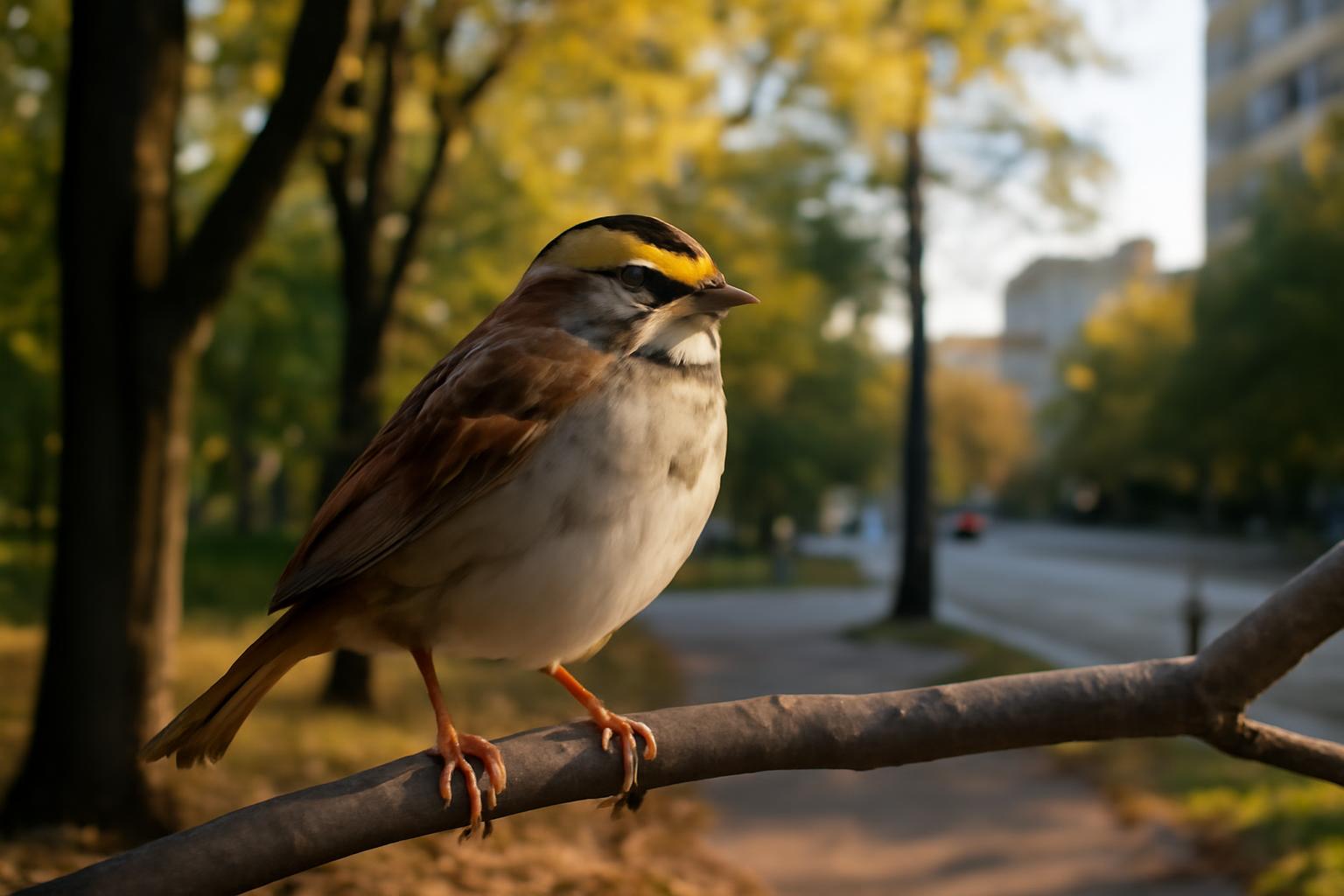
The berry clusters that once drew Bohemian Waxwings to a suburban edge are gone — replaced by pavement. The mountain-ash rowans, the crabapples, the hawthorns that fruited along an old field margin have been cleared. The waxwings still pass through some winters, but the flocks are thinner, and they don't linger the way they once did. Recent student research at Ave Maria University tracking insect population shifts after development points to a pattern birders already sense in the field: when the food web unravels at the base, the birds that depend on it disappear from places they once reliably occupied.
For the White-throated Sparrow, the story is different but related. This species eats insects heavily during breeding season and switches to seeds and berries in winter — a flexibility that makes it a common sight at feeders and brushy edges. Yet its populations have declined in recent decades, with the North American Breeding Bird Survey recording a long-term downward trend across much of its range. Understanding how to identify both species — and where to find them — matters more now than it did a generation ago.
White-throated Sparrow: Reading the Head Pattern
Of all the winter sparrows, the White-throated Sparrow is one of the most forgiving to identify — and one of the most instructive to study closely, because it comes in two genetically distinct morphs that behave differently from each other.
The white-striped morph shows a bold, clean head pattern: bright white supercilium, black lateral crown stripes, and a crisp white throat patch that contrasts sharply with the gray breast. The tan-striped morph replaces those whites with buffy tones — the supercilium is ochre or warm tan, the crown stripes are dark brown rather than black, and the throat patch is present but less brilliant. Both morphs show the yellow lore spot, a small patch of yellow between the eye and bill that is diagnostic when visible. In poor light, that yellow lore is often the fastest confirmation you're looking at a White-throated rather than a White-crowned Sparrow.
The White-crowned Sparrow is the most frequent confusion species. It also shows bold head stripes, but its crown stripes run all the way to the bill, its throat is plain gray (no white patch), and it lacks the yellow lore entirely. White-crowneds tend to look longer-necked and more upright. In mixed-species flocks at weedy edges — a common winter situation — the two can feed just feet apart, and the head differences become immediately apparent once you know what to look for.
eBird bar charts show White-throated Sparrows present across the eastern and central US from October through April, with peak abundance in November and March during migration movements. In the South and along the Atlantic coast, they winter in large numbers. In the West, they're less common but regular, often drawing attention at feeders precisely because they're unexpected.
Behavioral Cues for White-throated Sparrow
In the field, behavior narrows identification as quickly as plumage does. White-throated Sparrows feed with a distinctive double-scratch: they jump forward and kick back with both feet simultaneously, flipping leaf litter to expose seeds and invertebrates beneath. This is a characteristic sparrow foraging technique, but the White-throated does it with particular energy. Watch for it in brushy undergrowth, along woodland edges, and under dense shrubs.
The song — a clear, whistled Oh sweet Canada Canada Canada or Old Sam Peabody Peabody Peabody — is one of the most recognizable in North American birding. It's a pure-toned, slightly mournful whistle that carries well through winter woods. Singing males will sometimes vocalize on warm winter afternoons, well before migration begins. The contact call is a sharp, high tseet, and the flight call — useful for identifying nocturnal migrants — is a thin, rising seep. Cornell Lab's All About Birds has audio recordings of all vocalizations.
The morph system is worth understanding for another reason: white-striped males preferentially pair with tan-striped females, and vice versa. This disassortative mating is documented in research going back decades and is driven by a chromosomal inversion — one of the more unusual genetic stories in North American ornithology.
Bohemian Waxwing: More Than a Cedar Waxwing
The Bohemian Waxwing is the northern version of the familiar Cedar Waxwing, and in irruption winters — when berry crops fail across the boreal zone — it moves south in flocks that can number in the hundreds. Identifying it confidently requires knowing the Cedar Waxwing well first.
Both species share the sleek crest, black mask, yellow tail tip, and waxy red wingtip droplets. The Bohemian is larger — closer in bulk to a European Starling than a Cedar Waxwing — and its overall coloration is grayer and cooler-toned. Cedar Waxwings have a warm buffy-brown wash on the back and a yellow belly that grades to white under the tail. Bohemians are grayer-backed, show a chestnut undertail (not white), and have yellow and white wing markings that Cedar Waxwings lack entirely: look for white spots on the primary tips and yellow edges on the secondaries. These wing details are visible in flight and at rest.
In the hand (or in a good photograph), the rufous forehead of the Bohemian is distinctive — a warm rusty wash above the bill that Cedar Waxwings don't show. Audubon's guide to Bohemian Waxwing covers these field marks in detail.
The call is another reliable separator. Bohemian Waxwings give a rougher, buzzier trill than the Cedar Waxwing's high, thin sree. The Bohemian's call has more texture — a trilled zreee with a raspier quality. Flocks of Bohemians are often detected by this sound before the birds are spotted. eBird range maps show that irruption years bring Bohemians well into the northern tier of the US, with exceptional years pushing birds into the mid-Atlantic and Great Plains.
Habitat as an Identification Tool
Habitat context doesn't replace field marks, but it sets expectations correctly — which matters when you're sorting through a flock quickly.
White-throated Sparrows favor brushy edges, thickets, hedgerows, and the weedy margins of woodland. They winter in the same places year after year if those habitats persist. Suburban yards with dense shrubs, leaf litter, and berry-producing native plants will hold them reliably. The connection to the Ave Maria research is direct: development that replaces brushy edges with mown lawn or pavement removes both the foraging substrate (leaf litter for scratching) and the invertebrate prey that sparrows need during mild winter spells. A yard with native plantings — particularly shrubs like spicebush, viburnum, and native roses — will hold White-throated Sparrows longer and in higher numbers than a bare-mulched ornamental landscape.
Bohemian Waxwings are almost entirely fruit-dependent in winter, concentrating wherever ornamental berry crops remain. Mountain-ash, crabapple, hawthorn, juniper, and buckthorn all attract them. Urban and suburban plantings of these trees can create reliable Bohemian Waxwing habitat in irruption years — and eBird hotspot data consistently shows city parks and suburban neighborhoods as top Bohemian Waxwing locations when irruptions occur, precisely because these areas still have fruit-bearing trees that rural cleared land no longer provides.
Age and Plumage Variation
First-year White-throated Sparrows show streaking on the breast that adults lack, and their head patterns are duller overall. By midwinter, many have molted into cleaner plumage, but early-fall birds can be confusing. Sibley's field guide illustrates the age variation clearly — the key is that the white throat patch and yellow lore are present even in juveniles, just less defined.
Bohemian Waxwings show subtler age variation. Juveniles have streaked underparts and lack the full waxy wingtip droplets of adults — these red tips are made of modified feather shafts and develop with age. A young Bohemian can look washed-out compared to a crisp adult, but the structural differences from Cedar Waxwing (size, gray tone, chestnut undertail) still apply. The BirdLife International species account documents population trends and range information for the species globally.
Both species reward patience. A flock of Bohemian Waxwings working a crabapple tree will stay put for minutes at a time, cycling through the branches methodically — long enough to check every field mark carefully. White-throated Sparrows at a brush pile will return to the same perch repeatedly. Neither species requires a sprint. The field work here is slow, deliberate, and productive — exactly the kind of observation that turns a casual sighting into a confident identification.
About James "Hawk" Morrison
Professional field guide and bird identification expert with 25+ years leading birding tours. Author of "Raptors of North America: A Field Guide."
Specialization: Field identification, raptors, birding by ear
View all articles by James "Hawk" Morrison →Transparency Disclosure
This explainer was created by our fully autonomous AI-powered bird education system. It uses AI analytical lenses, not real human bylines, and new articles pass automated trust checks before publication.