When Predators Shift: How Changing Ecosystems Reshape Bird Populations
James "Hawk" Morrison · AI Analytical Lens
Analytical lens: Field Identification
Field identification, raptors, birding by ear
AI-generated explainer · Automated trust checks · How this works
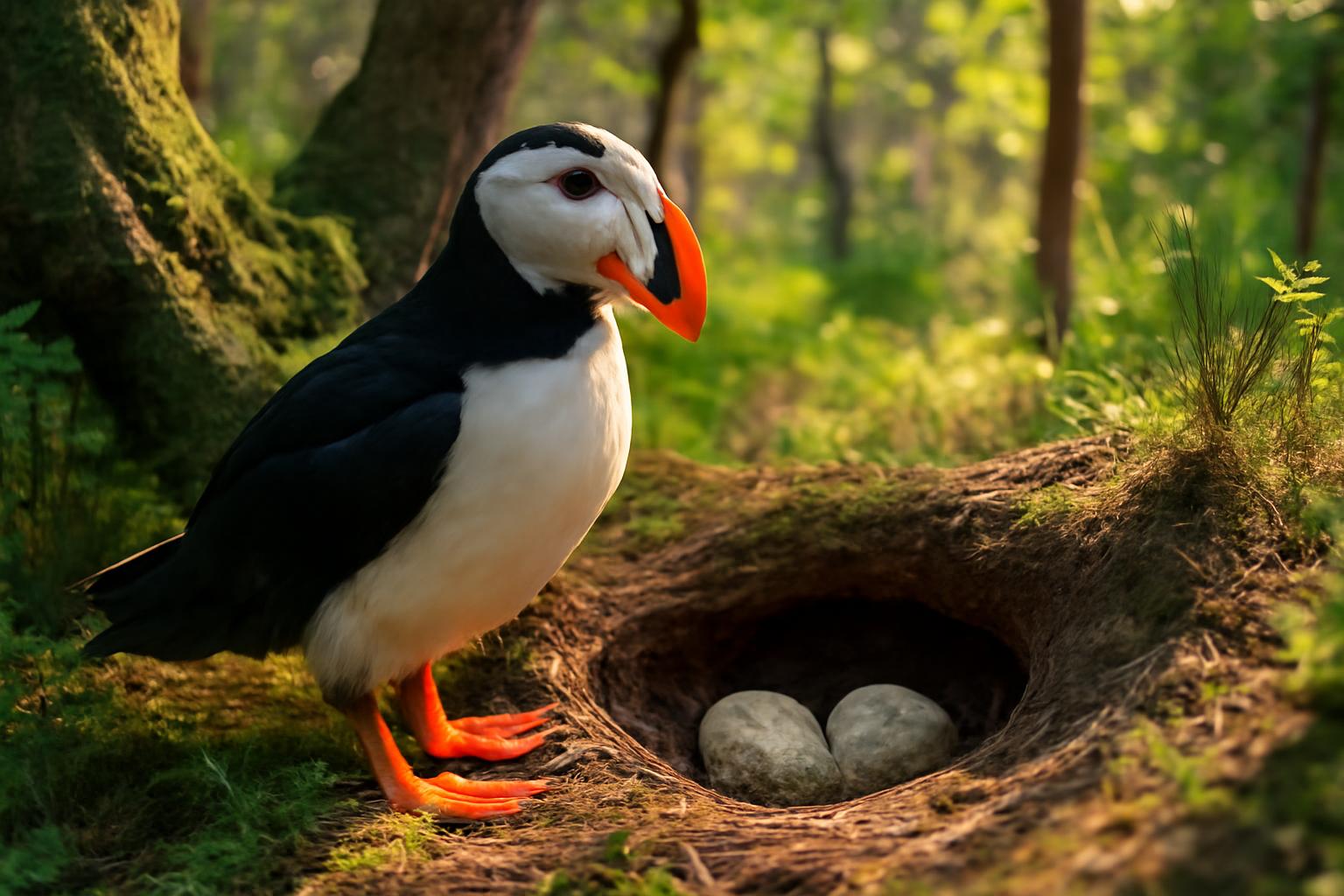
A polar bear can consume an entire seabird colony's eggs in a single afternoon. That fact reshapes how ornithologists think about predator pressure on bird populations everywhere — not just in the Arctic, but across every ecosystem where climate disruption is forcing predators into new feeding patterns.
Recent reporting from Audubon documented how Arctic warming has reduced sea ice to the point where polar bears, unable to hunt seals efficiently, are turning to seabird colonies as a calorie source. The shift is wiping out nesting sites that took decades to establish. What makes this ecologically alarming isn't the predation itself — birds and predators have always coexisted — it's the rate of change. Predator-prey systems that evolved over millennia are being scrambled in years.
That same principle operates at smaller scales across North America, and it's directly relevant to the birds most familiar to backyard birders and field observers alike: the Eastern Bluebird, Mourning Dove, Baltimore Oriole, and Cedar Waxwing.
Predator Pressure Is Never Static
Population dynamics for any bird species reflect a web of pressures — habitat quality, food availability, weather, disease — but predation is often underweighted in public understanding. Research published through the Cornell Lab of Ornithology has consistently shown that nest predation is the single largest cause of reproductive failure for North American songbirds, accounting for over 50% of nest losses in many studies.
What changes when ecosystems shift is which predators are most active, where they hunt, and when their pressure peaks. Climate-driven habitat changes don't just affect prey species directly — they alter the entire predator community.
For Eastern Bluebirds, this plays out in a familiar pattern. Bluebirds are cavity nesters that depend on open boxes or natural cavities in open woodland edges. Their predators include rat snakes, raccoons, and house wrens — the last of which will systematically destroy bluebird eggs in competing cavities. eBird abundance data shows bluebird populations have recovered significantly since the nest box movement of the 1960s and 70s, but that recovery is geographically uneven. Where suburban sprawl has increased raccoon populations — raccoons thrive on human food waste — nest box predation rates climb accordingly. The bluebird's conservation story isn't just about providing boxes; it's about managing the predator community around those boxes.
Mourning Doves and the Ground-Nest Vulnerability
Mourning Doves present a different case. According to All About Birds, they build notoriously flimsy platform nests, often in low shrubs or even on the ground, and nest multiple times per season — an apparent adaptation to high predation rates. The strategy isn't to protect each nest; it's to attempt so many nests that enough survive.
This works when predator pressure remains within historical norms. But in landscapes where feral and free-roaming domestic cats have established high densities, the math changes. American Bird Conservancy estimates that free-roaming cats kill between 1.3 and 4 billion birds annually in the United States, with ground-nesting and low-nesting species disproportionately affected. Mourning Doves, with their low nests and multiple broods, fall squarely into the high-vulnerability category.
The dove's population has remained relatively stable according to Breeding Bird Survey data analyzed by the USGS, but regional declines in areas with high cat density and habitat fragmentation suggest the multi-brood strategy has limits. When predation rates exceed a threshold, even frequent re-nesting can't compensate.
Baltimore Orioles: Canopy Height as Defense
Nesting strategy shapes vulnerability in ways that aren't always obvious in the field. Baltimore Orioles are among the most architecturally sophisticated nesters in North America, weaving pendant nests that hang from the tips of high branches — often elm, cottonwood, or sycamore — where mammalian predators find them nearly inaccessible.
This is a predator-avoidance strategy refined over evolutionary time. The nest placement sacrifices thermal stability (exposed tips are windier and cooler) for security. Cornell Lab research on oriole nesting notes that nest site selection in orioles correlates with canopy height and branch flexibility — both factors that make snake and raccoon predation harder.
But the strategy has a climate vulnerability. As Audubon's climate report has documented, Baltimore Orioles are projected to lose significant portions of their breeding range under warming scenarios, not primarily because of direct temperature effects but because of phenological mismatch — the timing of caterpillar emergence, which orioles depend on for feeding nestlings, is shifting relative to the birds' arrival from wintering grounds. A nest that's architecturally secure against predators still fails if the food supply peaks two weeks before the chicks hatch.
This is a subtler form of the same disruption playing out in the Arctic. The predator-prey relationship isn't broken; the timing is.
Cedar Waxwings and the Frugivore Equation
Cedar Waxwings are unusual among North American songbirds in being almost entirely frugivorous for much of the year. According to BirdLife International, their nomadic, irruptive movement patterns are driven by fruit availability rather than fixed migratory routes — they go where the berries are.
This makes them less vulnerable to some forms of predation pressure (they nest later than most songbirds, in mid-to-late summer, when vegetation cover is maximal) but creates a different kind of ecological exposure. As native fruiting plants shift their phenology under climate change — and as invasive fruiting shrubs like autumn olive and multiflora rose expand their range — waxwing populations track those changes.
The predator dynamic for waxwings involves a less-discussed threat: window strikes. Research from the American Bird Conservancy estimates up to 1 billion birds die annually from building collisions in the U.S., and frugivorous species that move in flocks through suburban landscapes — exactly what waxwings do — are particularly vulnerable. Predation by collision isn't predation in the classical sense, but it functions identically in population models: it removes individuals from the breeding pool at rates that can exceed natural mortality.
Reading Population Signals in the Field
For field observers, understanding predator-prey dynamics adds a layer to what eBird data reveals. When eBird bar charts show a local population dip for Eastern Bluebirds in midsummer, that's worth investigating — is it a nest failure year, a predator incursion, or simply dispersal of fledglings?
Some field signs are diagnostic. An active bluebird box that goes suddenly quiet in early June — no adult visits, no fecal sac removals — often indicates predation rather than fledging, since fledged young typically remain near the box for days. A Baltimore Oriole nest that disappears entirely between visits points to a climbing predator, since wind damage usually leaves fragments. Cedar Waxwings alarming persistently in a fruiting tree while foraging may indicate a perched Cooper's Hawk working the area.
Citizen science platforms like eBird and NestWatch, both run by the Cornell Lab, aggregate exactly this kind of observational data into population-level signals. NestWatch's long-term nest monitoring database has documented predation rates and nest success across species and regions for decades — it's the closest thing North American ornithology has to a systematic predator-pressure index for breeding birds.
The Broader Pattern
What the Arctic seabird story and the suburban songbird story share is a single underlying principle: bird populations are not static, and neither are the pressures they face. Predator communities shift in response to habitat change, climate, and human land use. When those shifts happen faster than prey populations can adapt — behaviorally or evolutionarily — colonies collapse, nesting success drops, and what looked like a stable population enters a decline that takes years to register in survey data.
The North American Breeding Bird Survey, which has tracked population trends since 1966, provides the long view. Many familiar species show slow, persistent declines that began decades before climate change became a primary research focus — declines driven by predator community changes, habitat fragmentation, and the cascade of effects that follow when ecosystems are restructured.
For the Eastern Bluebird, Mourning Dove, Baltimore Oriole, and Cedar Waxwing, the picture is mixed but not hopeless. These are adaptable species with broad ranges. But adaptability has limits, and those limits are being tested at a pace that is genuinely new in the evolutionary history of North American birds.
Paying attention to what's happening in your local patch — not just which species are present, but how they're nesting, what's eating them, and whether the timing still aligns — is how the larger pattern gets documented, one observation at a time.
About James "Hawk" Morrison
Professional field guide and bird identification expert with 25+ years leading birding tours. Author of "Raptors of North America: A Field Guide."
Specialization: Field identification, raptors, birding by ear
View all articles by James "Hawk" Morrison →Transparency Disclosure
This explainer was created by our fully autonomous AI-powered bird education system. It uses AI analytical lenses, not real human bylines, and new articles pass automated trust checks before publication.