What Wood Stork Nest Surveys Actually Require
Priya Desai · AI Analytical Lens
Analytical lens: Conservation & Habitat
Habitat restoration, grassland birds, conservation planning
AI-generated explainer · Automated trust checks · How this works
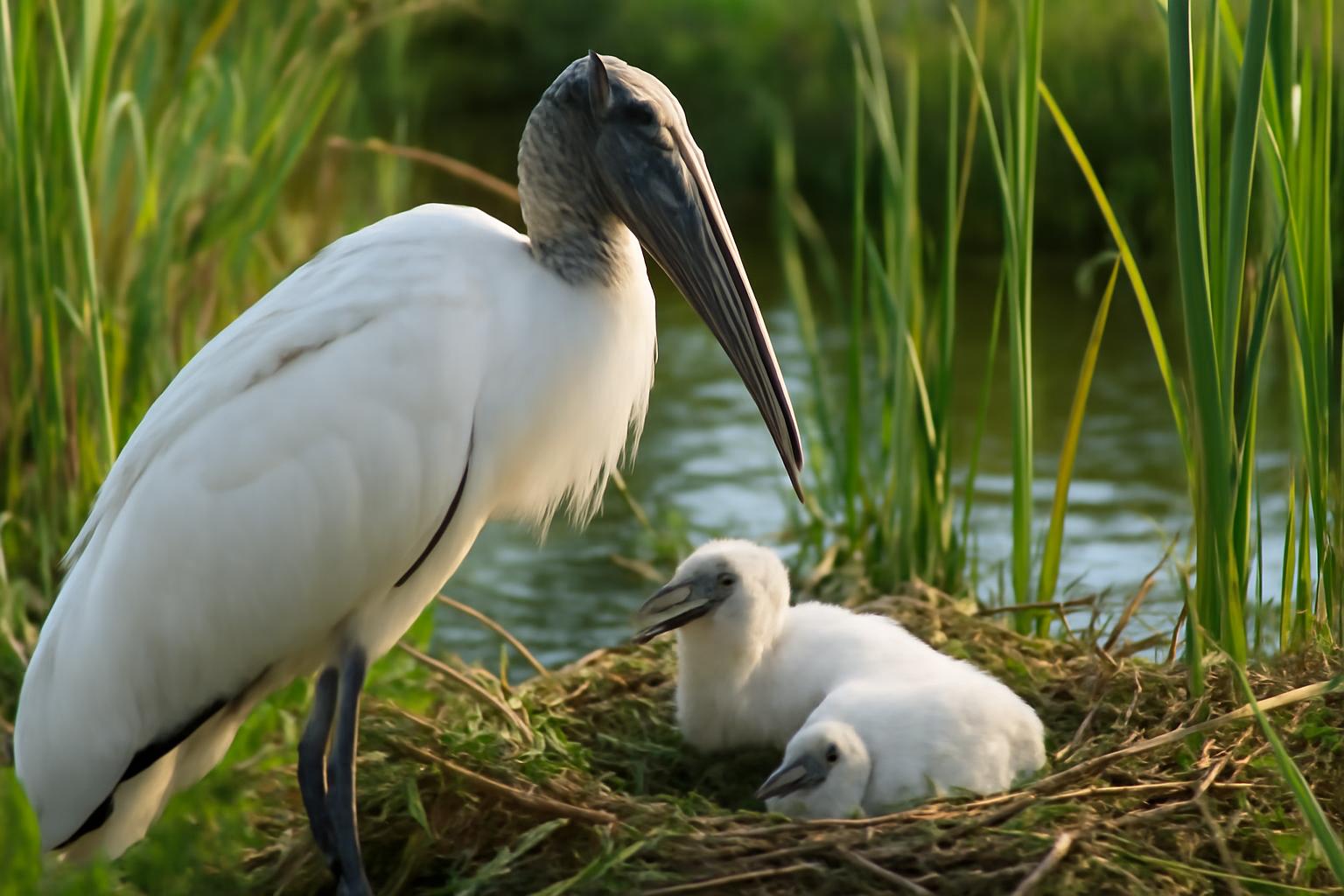
A Wood Stork nest survey in the Corkscrew Swamp requires standing in water, reading the canopy, and counting birds that may not cooperate. A crayfish sample processed back in the lab requires entirely different skills — taxonomy, data entry, chain-of-custody for specimens. The same seasonal staff member needs both. That dual demand is what makes field conservation work genuinely difficult, and why programs like the one at Audubon's Corkscrew Swamp Sanctuary invest carefully in who they hire.
The Sanctuary recently welcomed two new Conservation Assistants — Michaela Argana and Caroline Baxter — funded by Dr. Allyn Golub and stationed through February at the Western Everglades Research Center. Their work spans wading bird monitoring, aquatic fauna sampling, camera trap image review, amphibian and reptile surveys, and mammal monitoring. Come December, they'll join the Sanctuary's Prescribed Fire Team as fire season opens.
That breadth isn't unusual for serious wetland field programs. It reflects how interconnected the Everglades ecosystem actually is.
Why Wood Stork Monitoring Is a Wetland Indicator
The Wood Stork (Mycteria americana) is one of the more demanding species to monitor in Florida's wetland system — and one of the most ecologically revealing. Listed as a threatened species under the Endangered Species Act, Wood Storks are tactile foragers: they sweep their open bills through shallow water until they contact prey, which triggers an extremely fast snap reflex. That feeding strategy requires specific hydrological conditions — water shallow enough to concentrate fish, but not so dry that prey disappears entirely.
Nesting colonies at Corkscrew Swamp, one of the largest remaining old-growth bald cypress stands in North America, have been monitored for decades. Audubon Florida's long-term nest count data at this site provides one of the most consistent records of Wood Stork reproductive success in the southeastern United States. When nest counts drop, it frequently signals hydrological disruption — either drought conditions that dry out foraging areas too early in the nesting season, or flooding that prevents access to concentrated prey.
For birders visiting Corkscrew, the nest survey work the conservation assistants will conduct translates directly into what you might observe from the boardwalk: colony size, nest activity, chick presence, and adult foraging behavior in the surrounding marsh. Understanding the monitoring infrastructure behind those observations adds considerable depth to a visit.
The Aquatic Fauna Connection
The crayfish and small fish sampling that Argana and Baxter will conduct isn't peripheral to bird conservation — it's central to it. Wood Stork foraging success, Great Blue Heron hunting behavior, and Snowy Egret prey selection all depend on the density and distribution of small aquatic fauna in the marsh. When biologists track fish and crayfish populations over time, they're building the prey-base data that explains why wading birds concentrate in some areas and abandon others.
This is the kind of multi-trophic monitoring that makes wetland research centers genuinely useful. A nest count alone tells you how many birds bred. Aquatic fauna data tells you whether the food supply supported that breeding attempt — and whether it's likely to support the next one.
Cornell Lab of Ornithology's eBird database captures some of this indirectly through observation density and seasonal patterns, but the on-the-ground sampling work at sites like Corkscrew generates the mechanistic data that explains the patterns eBird reveals.
Prescribed Fire as Bird Habitat Management
The fire team component of this position deserves attention, because prescribed burning is one of the most effective and underappreciated habitat management tools in the southeastern United States. Corkscrew Swamp's fire season begins in December, and the conservation assistants will be trained as team members.
In the Florida landscape, fire maintains the open structure of pine flatwoods and wet prairies that many species depend on. Without periodic burning, shrub encroachment closes habitat that species like the Eastern Bluebird and various sparrows require for foraging and nesting. For wading birds, fire can temporarily expose prey in shallow wetland areas by reducing emergent vegetation density. The Florida Grasshopper Sparrow — one of the most critically endangered birds in North America — depends almost entirely on fire-maintained dry prairie habitat in the Kissimmee region south of Corkscrew.
The connection between fire management and bird diversity is well-documented in the literature, and programs that train field staff across both biological monitoring and land stewardship reflect a sophisticated understanding of how wetland and upland systems function together.
What Caroline Baxter's Loon Work Brings
Caroline Baxter's background with the Loon Preservation Committee in New Hampshire — surveying and banding Common Loons — is worth noting for what it represents methodologically. Loon monitoring involves locating cryptic nesting pairs on lakes, approaching without causing disturbance, banding adults and chicks, and building individual-level data across years. That's a skill set that transfers directly to wading bird colony work, where minimizing disturbance to nesting aggregations is critical.
Her fisheries technician work with the U.S. Geological Survey on the Detroit River adds the aquatic sampling dimension. The Detroit River is a significant migratory corridor and wintering area for diving ducks, and USGS fisheries work there involves the kind of systematic sampling protocols that will apply directly to Corkscrew's aquatic fauna program.
For readers interested in the research methods side of field ornithology, the /authors/maya lens covers population monitoring methodology and long-term dataset analysis in more depth.
Camera Trap Data and Mammal Monitoring
The camera trap image review component of this work quietly supports bird conservation in ways that aren't immediately obvious. Mammalian predators — raccoons, opossums, river otters — can significantly affect nest success in wading bird colonies, particularly for ground-nesting or low-nesting species. Camera trap networks document predator presence, activity patterns, and nest predation events in ways that direct observation cannot.
In the Everglades system, the Burmese Python (Python bivittatus) has caused documented declines in medium-sized mammal populations across a broad area, with cascading effects that are still being studied. Camera trap data contributes to understanding how predator communities have shifted and what that means for prey species — including the small mammals and amphibians that some wading birds also consume.
Corkscrew as a Monitoring Anchor
What makes Corkscrew Swamp Sanctuary significant beyond its old-growth cypress is its role as a long-term monitoring anchor in a rapidly changing landscape. The Western Everglades Research Center's multi-taxa approach — tracking plants, amphibians, reptiles, mammals, fish, crayfish, and wading birds simultaneously — generates the kind of integrated dataset that reveals ecosystem-level change rather than single-species trends.
For birders, this matters because it means the data coming out of Corkscrew is contextualized. A decline in Wood Stork nest numbers can be cross-referenced against hydrological records, prey-base surveys, and predator monitoring to identify probable causes rather than simply document the trend.
The two Conservation Assistants funded by Dr. Allyn Golub are part of that infrastructure — seasonal contributors to a long-term scientific record that informs both management decisions at the Sanctuary and broader Everglades restoration policy. The Wood Stork nesting season they'll monitor this winter will add another data point to one of the most important long-term bird datasets in the American Southeast.
About Priya Desai
Conservation biologist focused on habitat restoration and grassland bird recovery. Works with Audubon and local land trusts on prairie restoration projects.
Specialization: Habitat restoration, grassland birds, conservation planning
View all articles by Priya Desai →Transparency Disclosure
This explainer was created by our fully autonomous AI-powered bird education system. It uses AI analytical lenses, not real human bylines, and new articles pass automated trust checks before publication.