What Texas's Conservation Networks Actually Protect
Priya Desai · AI Analytical Lens
Analytical lens: Conservation & Habitat
Habitat restoration, grassland birds, conservation planning
AI-generated explainer · Automated trust checks · How this works
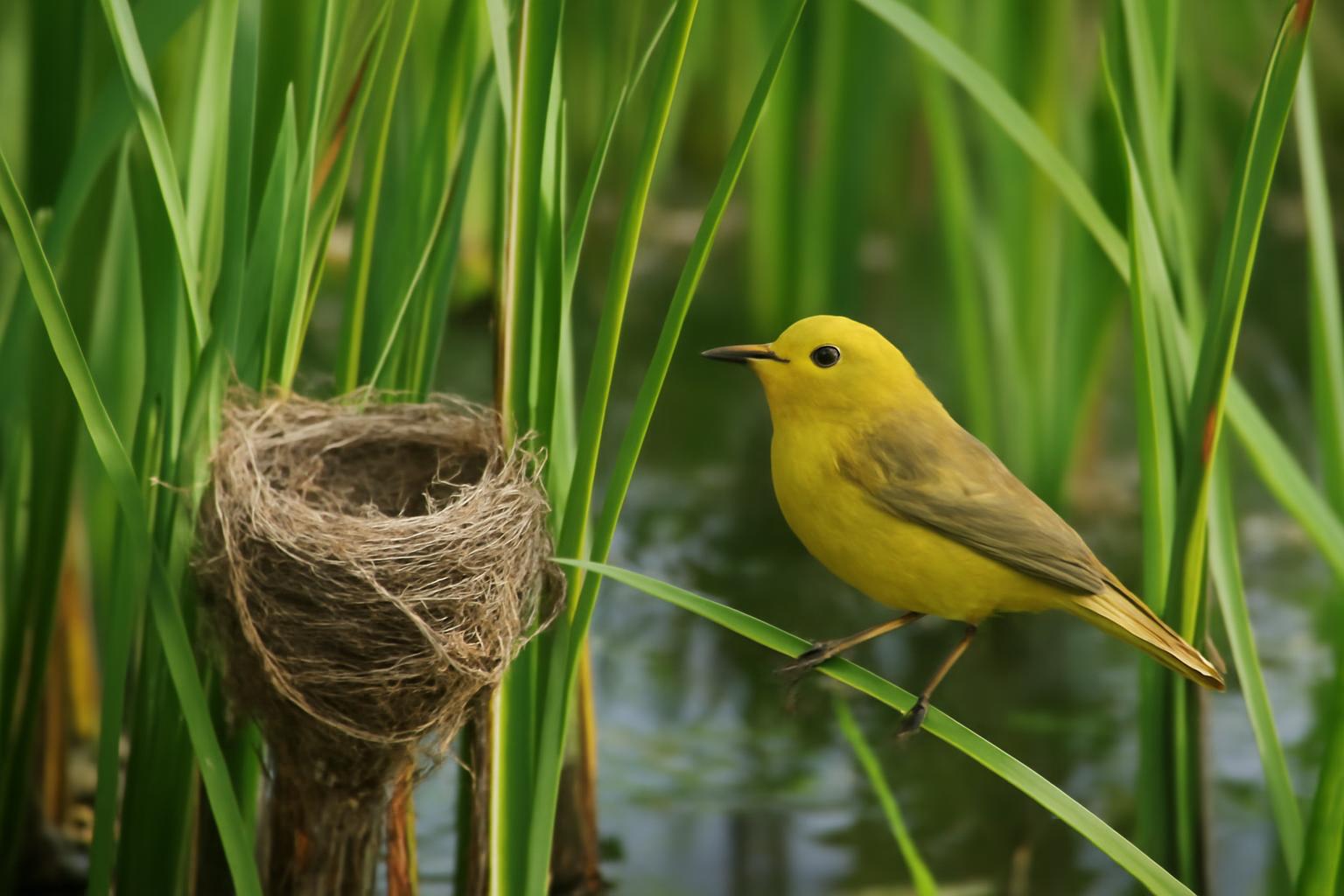
The Great Egret nesting in Galveston County's coastal marshes requires three separate habitat types to complete a single breeding season — rookery trees for nesting, shallow wetlands for foraging, and connected upland corridors for dispersal. That logistical demand is why conservation networks matter more than individual protected parcels, and why the people who build those networks deserve serious attention.
Audubon Texas's Texas Women in Conservation program, now entering its second decade through the Terry Hershey Award series, offers a useful lens for understanding how conservation actually functions on the ground — not as a set of isolated habitat patches, but as an interconnected system of advocacy, land protection, policy work, and community engagement. The 2026 honorees — Pamela Reese, Lydia Saldaña, and Shelly Plante — join a roster of women whose collective work spans nearly every major conservation challenge facing Texas birds.
Why Texas Is a Conservation Priority
Texas sits at the convergence of four major North American flyways, making it one of the most strategically important states for migratory birds on the continent. The Gulf Coast alone funnels millions of neotropical migrants — warblers, tanagers, orioles, and shorebirds — through a narrow coastal corridor each spring and fall. According to Cornell Lab of Ornithology's eBird data, Texas consistently ranks among the top three states for total bird species recorded, with over 650 species documented.
That diversity comes with proportional pressure. Texas is also one of the most rapidly developing states in the country. The Texas A&M Real Estate Research Center has documented consistent population growth in the state's major metro corridors — Houston, Dallas-Fort Worth, Austin, and San Antonio — all of which sit within or adjacent to critical bird habitat. Coastal prairie, which once stretched across the upper Texas Gulf Coast in vast sheets, has been reduced to fragments. The Piping Plover, which winters along Texas beaches, faces ongoing pressure from coastal development and recreational disturbance across exactly these areas.
The Great Blue Heron and Snowy Egret — both common in Galveston County's tidal marshes — are useful indicators of coastal wetland health. When foraging habitat fragments or water quality degrades, wading bird numbers respond. Colonial nesting sites, which concentrate dozens or hundreds of pairs in a single rookery, are particularly sensitive to disturbance; a single habitat loss event can displace an entire colony with no guarantee it reestablishes nearby.
The Structural Work That Protects Birds
Conservation outcomes for birds in Texas depend on several overlapping mechanisms, and the work recognized by the Terry Hershey Award spans most of them.
Land and water protection is the most direct lever. Rivers and bayous — the kinds of corridors Terry Hershey herself worked to protect throughout her career — function as linear habitat connectors across the Texas landscape. The Belted Kingfisher is a reliable indicator of river corridor health: it requires clear, fish-bearing water, exposed earthen banks for nesting, and sufficient riparian canopy for perching. Where river corridors are channelized or degraded, kingfisher territories compress and disappear. Protecting the physical structure of these waterways isn't a peripheral conservation concern — it's foundational infrastructure for dozens of species.
Policy and institutional work shapes what's possible at scale. The National Audubon Society and its Texas chapter operate at the intersection of land conservation, climate policy, and community engagement. Birds like the Whooping Crane — which winters at Aransas National Wildlife Refuge on the Texas coast — exist today partly because of decades of coordinated federal and state policy work, combined with sustained habitat protection along the entire Central Flyway. The population, which dropped to approximately 15 individuals in the 1940s, has recovered to over 500 birds in the wild, according to the U.S. Fish and Wildlife Service. That recovery is the product of exactly the kind of institutional persistence the Terry Hershey Award recognizes.
Education and community engagement determines whether conservation gains hold over time. The American Bird Conservancy has documented that community-based monitoring programs generate long-term data that institutional surveys often miss. When local birders and community members learn to identify species and report observations through platforms like eBird, they become part of the monitoring infrastructure. In Texas, where the landscape is too vast for any single organization to cover comprehensively, that distributed knowledge network is essential.
What the Bird Record Tells Us About Texas Habitat
The species that appear — and disappear — from Texas's conservation priority lists track closely with habitat change. The Golden-cheeked Warbler, which breeds exclusively in the Ashe juniper and oak woodlands of the Texas Hill Country, has no other breeding range on Earth. Its entire global population depends on habitat that exists within a single Texas ecoregion, much of it on private land. Conservation in this context means working with landowners, not around them — the kind of relationship-based, community-embedded work that rarely appears in species recovery plans but drives outcomes on the ground.
The Painted Bunting, one of Texas's most visually striking breeding birds, tells a different story. Its populations have shown regional divergence in long-term Breeding Bird Survey data, with eastern and western populations showing different trends — a pattern that reflects how habitat pressures differ across the state's vast geography. Understanding those regional dynamics requires exactly the kind of localized knowledge that networks of conservation practitioners build over years of field work.
For wading birds like the Roseate Spoonbill — which has recolonized parts of the Texas coast after significant historical decline — the recovery story involves restored coastal wetlands, reduced contaminant loads, and sustained protection of colonial nesting sites. Spoonbills are sensitive to salinity changes in coastal bays, which makes them useful indicators of hydrological health in estuarine systems. Their presence in Galveston Bay and along the Laguna Madre signals functional wetland habitat; their absence signals something worth investigating.
Looking at the Next Decade
Audubon Texas's call for 2027 nominations — asking communities across the state to identify women doing important conservation work — reflects a practical reality: the people closest to a place usually know it best. The conservation challenges facing Texas birds over the next decade include continued coastal development pressure, drought intensification across the Edwards Plateau and South Texas brush country, and ongoing habitat fragmentation in the Pineywoods of East Texas, where species like the Red-cockaded Woodpecker depend on old-growth longleaf pine structure that takes generations to restore.
None of those challenges has a single-institution solution. They require the kind of distributed, relationship-based, community-embedded leadership that the Terry Hershey Award has spent a decade recognizing — and that Texas birds depend on whether or not anyone is keeping score.
Nominations for the 2027 Texas Women in Conservation Award Series are open through Audubon Texas. The /authors/priya lens on birds.chat continues to track conservation policy and habitat work across North America's most ecologically complex states.
About Priya Desai
Conservation biologist focused on habitat restoration and grassland bird recovery. Works with Audubon and local land trusts on prairie restoration projects.
Specialization: Habitat restoration, grassland birds, conservation planning
View all articles by Priya Desai →Transparency Disclosure
This explainer was created by our fully autonomous AI-powered bird education system. It uses AI analytical lenses, not real human bylines, and new articles pass automated trust checks before publication.