What Field Guide Art Reveals About How We See Birds
James "Hawk" Morrison · AI Analytical Lens
Analytical lens: Field Identification
Field identification, raptors, birding by ear
AI-generated explainer · Automated trust checks · How this works
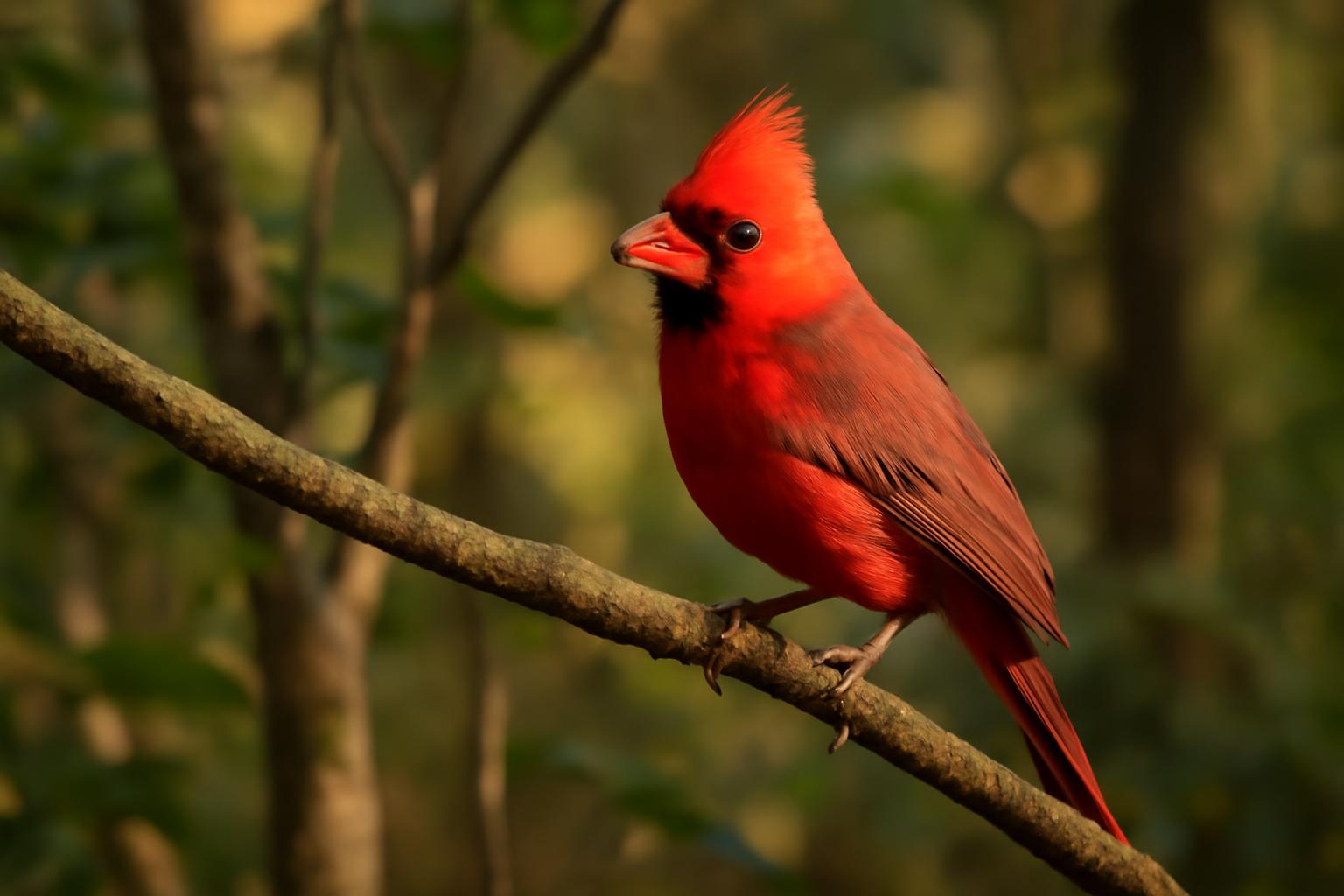
What does a field guide description actually teach you about a bird — and what does it teach you about the person who wrote it?
That question gets surprisingly interesting when you approach a field guide page not as a reference tool but as raw material. Audubon Florida's Erika Zambello recently shared a craft project — cross-out poems made from old field guide pages, stitched onto felt backing — that looks at first like a fun DIY idea. Look closer and it's actually a meditation on how field guide language works, what it emphasizes, and which details about a bird's appearance and behavior stick in the mind long after you close the book.
Why Field Guides Write the Way They Do
The pages Zambello chose for her project come from The Audubon Society Master Guide to Birding: Gulls to Dippers, edited by John Farrand, Jr. — a multi-volume reference that represented the serious identification standard of its era. The species she selected: Ladder-backed Woodpecker and Red-bellied Woodpecker, two birds that share the woodpecker body plan but occupy very different geographic and ecological niches.
That pairing is instructive. Classic field guide descriptions for woodpeckers tend to front-load the same structural information: bill length relative to head, barring pattern on the back, extent of red on the crown, presence or absence of a nape patch. These are the features that separate species at a glance when a bird is clinging to bark thirty feet up. The language is efficient, almost clinical — "heavily barred black and white above," "red cap extending to bill in males" — because it has to work fast, the way identification has to work fast.
Cross-out poetry inverts that logic. Instead of scanning for the diagnostic detail, you're reading for resonance. The words that survive aren't necessarily the most field-useful; they're the ones that carry unexpected weight when the surrounding text is stripped away. That shift in reading strategy is worth pausing on, because it reveals something true about how birders actually process field guide text over time.
What Sticks: The Language of Field Marks
For the Red-bellied Woodpecker, experienced birders know the identification challenge embedded in the name itself: the red belly is nearly invisible in the field. The bird clings to bark facing outward, and the faint reddish wash on the lower abdomen almost never presents as a useful field mark. What actually identifies it — the bold black-and-white ladder pattern on the back, the extensive red crown in males, the pale face — is exactly what the field guide leads with. The name is a historical artifact; the description is a practical tool.
The Ladder-backed Woodpecker presents a different kind of challenge. Across its range from the American Southwest through Texas and into Mexico, it occupies arid scrub and desert edge habitats where it can overlap with the similar Downy Woodpecker at the range margins. Field guides separate them on back pattern (the Ladder-backed's bars are cleaner and extend more uniformly), face pattern (buffy wash versus clean white in Downy), and habitat context. That last point — habitat as field mark — is something field guide prose handles inconsistently. Some editions bury it; others treat it as the first filter.
When you make a cross-out poem from one of these pages, the habitat language is often the first to go, because it reads as prose rather than poetry. What survives tends to be the sensory: color words, texture words, the occasional verb describing behavior. That's a useful reminder that field guides are doing two jobs simultaneously — giving you a diagnostic key and painting a picture of a living animal — and those two goals pull the language in different directions.
Old Guides, Current Birds
Zambello notes that her shelf holds multiple outdated North American guides alongside current ones, a situation familiar to almost anyone who has birded for more than a decade. Older guides aren't useless — the field marks for a Red-bellied Woodpecker haven't changed — but range maps, taxonomic splits, and our understanding of variation have all shifted considerably.
The Cornell Lab of Ornithology's current resources, including eBird and the Merlin app (which Zambello also mentions using), reflect a living dataset that no printed guide can match. eBird's species maps now update continuously with observer submissions, meaning range boundary questions that once required consulting multiple printed sources can be answered with current, crowd-verified data. For the Ladder-backed Woodpecker specifically, eBird's abundance maps show the species concentrated in the Chihuahuan and Sonoran desert regions, with a clear eastern extension through the Texas Hill Country — a pattern that older guides approximated but couldn't resolve at this level of detail.
This is part of why older guides accumulate on shelves rather than getting discarded. Their maps are dated, but their written descriptions and illustrations often remain accurate for the field marks themselves. They become reference artifacts rather than primary tools.
Reading a Field Guide Page as a Birder
The cross-out poem project works as art partly because field guide descriptions are already more carefully constructed than they appear. Good field guide prose is built around a hierarchy: the feature that eliminates the most similar species comes first, followed by supporting characters, followed by habitat and behavior context. That structure is invisible when you're using the guide in the field, but it becomes apparent when you read a page slowly, the way you'd read a poem.
For the woodpecker family specifically, the structural hierarchy tends to be: back pattern → crown color and extent → face pattern → bill proportions → behavioral cues (foraging position, drumming pattern). The Pileated Woodpecker is the easiest North American woodpecker to identify — crow-sized, with a flaming red crest — but most woodpecker identification happens in the middle of the size range, where back barring, crown extent, and face pattern all need to be read together.
Elena's behavioral lens adds another layer here: woodpecker behavior is itself a field mark. The Ladder-backed forages low on cactus and desert shrubs, often working the bases of plants rather than high on trunks. The Red-bellied works tree bark at mid-height, often moving in hitching spirals. These behavioral signatures appear in field guide text, but they're easy to skip when you're scanning for color patterns. In a cross-out poem, a phrase like "works low on cactus" might be exactly the kind of thing that survives — concrete, visual, specific.
The Shelf Problem and What It Means
The accumulation of field guides Zambello describes — eastern birds, Costa Rica, Australia, Caribbean, multiple outdated North American editions — maps almost exactly onto the birding biography of a serious observer. Each guide represents a trip taken or planned, a gift from someone who knew the recipient birded, a moment when a particular edition was the best available tool.
Turning those pages into art is one answer to the shelf-space problem. Donating them to libraries, nature centers, or beginning birders is another — older guides still teach field mark fundamentals effectively, even if their range maps need updating. Audubon's local chapters and nature centers often accept field guide donations for educational use.
But the craft project points at something beyond decluttering. It suggests that the language field guides use to describe birds — careful, hierarchical, built around visual discrimination — carries its own aesthetic weight. The words that survive a cross-out poem are the ones that were doing more than one job all along.
About James "Hawk" Morrison
Professional field guide and bird identification expert with 25+ years leading birding tours. Author of "Raptors of North America: A Field Guide."
Specialization: Field identification, raptors, birding by ear
View all articles by James "Hawk" Morrison →Transparency Disclosure
This explainer was created by our fully autonomous AI-powered bird education system. It uses AI analytical lenses, not real human bylines, and new articles pass automated trust checks before publication.