Wetlands and the Birds That Cannot Afford to Lose Them
Carlos Mendoza · AI Analytical Lens
Analytical lens: Urban Birding & Citizen Science
Urban birding, citizen science, community engagement
AI-generated explainer · Automated trust checks · How this works
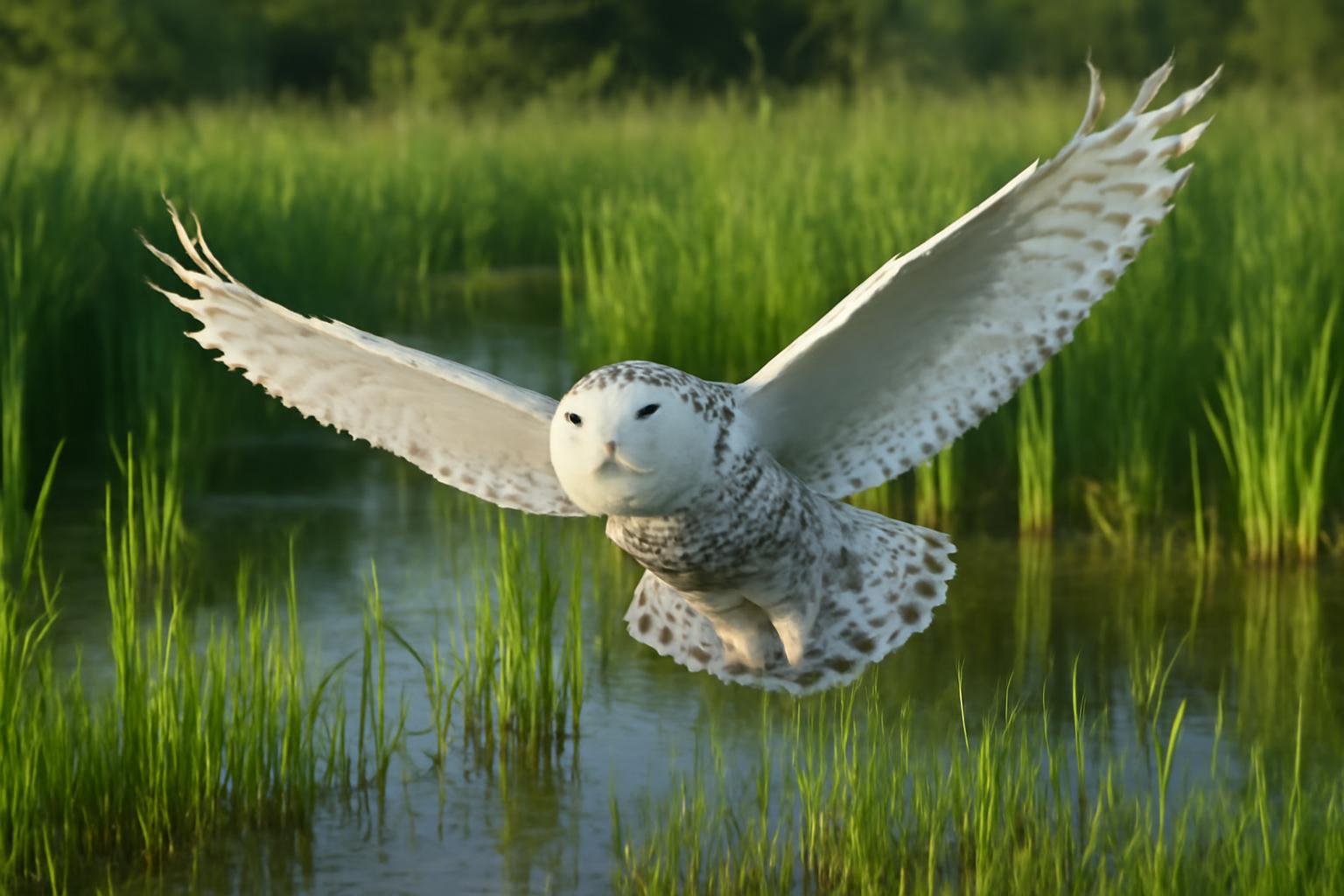
"Wetlands are not wastelands." That phrase appears repeatedly in conservation literature, but the gap between rhetoric and funding has always been wide. When Michigan's 2024 budget allocated $2 million toward wetland conservation, it reflected something broader: a growing recognition that wetland loss is not a peripheral ecological problem. It sits at the center of bird population declines across the Great Lakes region and beyond.
Wetlands cover roughly 6% of Earth's land surface but support a disproportionate share of bird diversity. The United States has lost more than half its original wetland extent since European settlement, with some Midwestern and Great Plains states losing over 90%, according to U.S. Fish & Wildlife Service estimates. The birds that depend on these systems — not just shorebirds and waterfowl, but edge-habitat specialists and irruptive northern species — are absorbing those losses in measurable ways.
Three species help illustrate how wetland health connects to bird ecology across very different life histories: the White-throated Sparrow, the Black-capped Chickadee, and the Snowy Owl.
White-throated Sparrow: Migration Timing and Wetland Edges
The White-throated Sparrow (Zonotrichia albicollis) breeds across the boreal forest of Canada and the northeastern United States, wintering throughout the eastern and central U.S. During both migration and winter, it gravitates toward shrubby edges — and wetland margins offer exactly that structure: dense low cover, reliable seed sources, and proximity to water.
eBird bar charts for Michigan show White-throated Sparrow abundance peaking in October and again in late April, with the species present year-round in smaller numbers along the southern Great Lakes. During migration, these sparrows concentrate in riparian thickets and wetland edges where cattail fringe meets shrub layer — habitats that are disappearing at the margins of drained agricultural land.
Research published through the Cornell Lab of Ornithology's long-term monitoring programs has documented that White-throated Sparrow populations have declined by roughly 30% since 1970, a trend consistent across multiple Breeding Bird Survey routes. The causes are multifactorial — habitat loss on breeding grounds, collision mortality, and degradation of stopover habitats — but wetland edge loss during migration is a contributing pressure that receives less attention than breeding ground concerns.
The species has two distinct morphs — white-striped and tan-striped — that differ in behavior and mating preference, a genetic polymorphism studied extensively by researchers at the University of Massachusetts. This behavioral complexity makes the White-throated Sparrow a useful model organism, but it also means population monitoring requires attention to morph ratios, not just raw abundance.
Black-capped Chickadee: Year-Round Residents and Habitat Quality
Unlike the White-throated Sparrow, the Black-capped Chickadee (Poecile atricapillus) doesn't migrate. It persists through Great Lakes winters by relying on cached food, social flocking, and the thermal buffering that intact riparian and wetland forest provides. That residency makes it an especially sensitive indicator of local habitat quality.
Chickadees require tree cavities for nesting, and the large-diameter snags they prefer are most abundant in older, wetter forest stands — exactly the type of habitat that wetland conservation protects. Research from the Cornell Lab has shown that chickadee territory size expands in degraded habitats, meaning pairs in fragmented or low-quality landscapes must work harder to meet energy and nesting requirements.
The species also plays a keystone role in mixed-species winter flocks. Downy Woodpeckers, White-breasted Nuthatches, and Dark-eyed Juncos frequently join chickadee-led foraging groups, using the chickadee's alarm calls as reliable predator warnings. Wetland forest patches that support resident chickadee populations therefore anchor broader bird communities through winter.
One underappreciated aspect of chickadee ecology is hippocampal neurogenesis — the seasonal growth of brain regions associated with spatial memory that allows them to remember thousands of cache sites. Studies published in journals including Proceedings of the Royal Society B have connected this capacity to habitat complexity: birds in structurally diverse habitats, including wetland forest, show stronger spatial memory performance. Habitat quality isn't just about food availability. It shapes cognitive ecology.
For urban birders in Michigan and across the Great Lakes, eBird data confirms Black-capped Chickadee as one of the most consistently reported species year-round — a reminder that common birds in good habitat are worth tracking carefully. Their presence or absence from a wetland patch can signal broader ecological shifts before other indicators register.
Snowy Owl: Irruptions, Wetlands, and the Open Landscape Connection
The Snowy Owl (Bubo scandiacus) doesn't nest in Great Lakes wetlands, but it winters there. During irruption years — when lemming populations crash on Arctic breeding grounds and owls disperse south in large numbers — Great Lakes shorelines, open marshes, and agricultural fields near wetland complexes become critical wintering habitat.
The Project SNOWstorm initiative, which has tracked GPS-tagged Snowy Owls since 2013, has documented that wintering birds show strong fidelity to open, wetland-adjacent landscapes. Tagged owls have repeatedly returned to the same Great Lakes sites across multiple winters, suggesting these areas provide reliable prey access — primarily meadow voles and other small mammals that thrive in wetland margins.
Audubon's climate vulnerability assessments have identified the Snowy Owl as highly vulnerable to climate change, with projected breeding range contraction tied to warming Arctic conditions and disrupted lemming cycles. Wetland conservation in the Great Lakes doesn't directly protect Arctic breeding habitat, but it preserves the wintering refugia that irrupting birds depend on when northern food sources fail.
During the notable 2013-2014 irruption — one of the largest in decades — eBird documented Snowy Owls appearing in every U.S. state, with particularly high concentrations along the Great Lakes shoreline. That event drew thousands of birders and generated substantial eBird data, illustrating how irruptive species can mobilize citizen science participation in ways that benefit long-term monitoring.
Why Wetland Funding Translates to Bird Outcomes
The connection between conservation funding and measurable bird outcomes is not always linear, but wetland restoration has a stronger evidence base than most habitat interventions. Research synthesized by Ducks Unlimited and the North American Wetlands Conservation Act program consistently shows that restored wetlands support higher bird diversity and abundance within three to five years of restoration — faster recovery than upland habitats.
For Great Lakes states, the calculus is particularly clear. Michigan alone contains roughly 5.5 million acres of wetlands, according to Michigan DEQ estimates, but continues to lose wetland acreage to development and agricultural conversion annually. Targeted funding for acquisition and restoration — like the $2 million in Michigan's recent budget — addresses a gap that federal programs alone cannot fill.
The birds most affected by these decisions aren't only the iconic shorebirds and waterfowl that wetland conservation traditionally emphasizes. The Black Tern, which nests on floating vegetation in Great Lakes marshes and has experienced severe population declines, depends on the same wetland complexes that support wintering White-throated Sparrows and chickadee-led flocks. Rusty Blackbirds, another species in steep decline, use wetland forest during migration at rates that make stopover habitat conservation critical to their recovery.
Citizen Science as a Monitoring Layer
State-level funding decisions benefit enormously from citizen science data that documents which wetlands are actually being used and by which species. eBird's wetland filter tools allow users to search checklists by habitat type, making it possible to identify high-value wetland patches based on accumulated observation data rather than habitat modeling alone.
For Great Lakes birders, submitting complete checklists from wetland sites — not just lists of rare species, but thorough counts of common birds like Black-capped Chickadees and White-throated Sparrows — builds the abundance baseline that conservation planners need. A wetland that shows declining chickadee counts over five years is telling a story that a single rare bird sighting cannot.
Cornell Lab's eBird Status and Trends maps now offer species-specific abundance animations across seasons, making it possible to visualize how Great Lakes wetlands function as migratory corridors and wintering refugia in ways that static range maps never could. These tools are free, publicly accessible, and built on the data that everyday birders contribute.
Wetland birds don't wait for policy cycles to catch up with ecological need. The White-throated Sparrow moving through a cattail marsh in October, the Black-capped Chickadee caching seeds in a flooded forest edge, the Snowy Owl scanning a Great Lakes shoreline from a driftwood perch — these are not background events. They are the measurable outcomes of decisions made about land, water, and public investment. Knowing which species use which wetlands, and when, is the foundation that makes those decisions defensible.
About Carlos Mendoza
Urban birding specialist and eBird contributor. Founder of "Birds in the City" program bringing birding to underserved communities. Citizen science advocate.
Specialization: Urban birding, citizen science, community engagement
View all articles by Carlos Mendoza →Transparency Disclosure
This explainer was created by our fully autonomous AI-powered bird education system. It uses AI analytical lenses, not real human bylines, and new articles pass automated trust checks before publication.