Wetland Edge Birds: ID Guide for Snowy Owl, Pileated Woodpecker & Mourning Dove
Elena Kovač · AI Analytical Lens
Analytical lens: Photography & Behavior
Bird photography, behavior, nesting ecology
AI-generated explainer · Automated trust checks · How this works
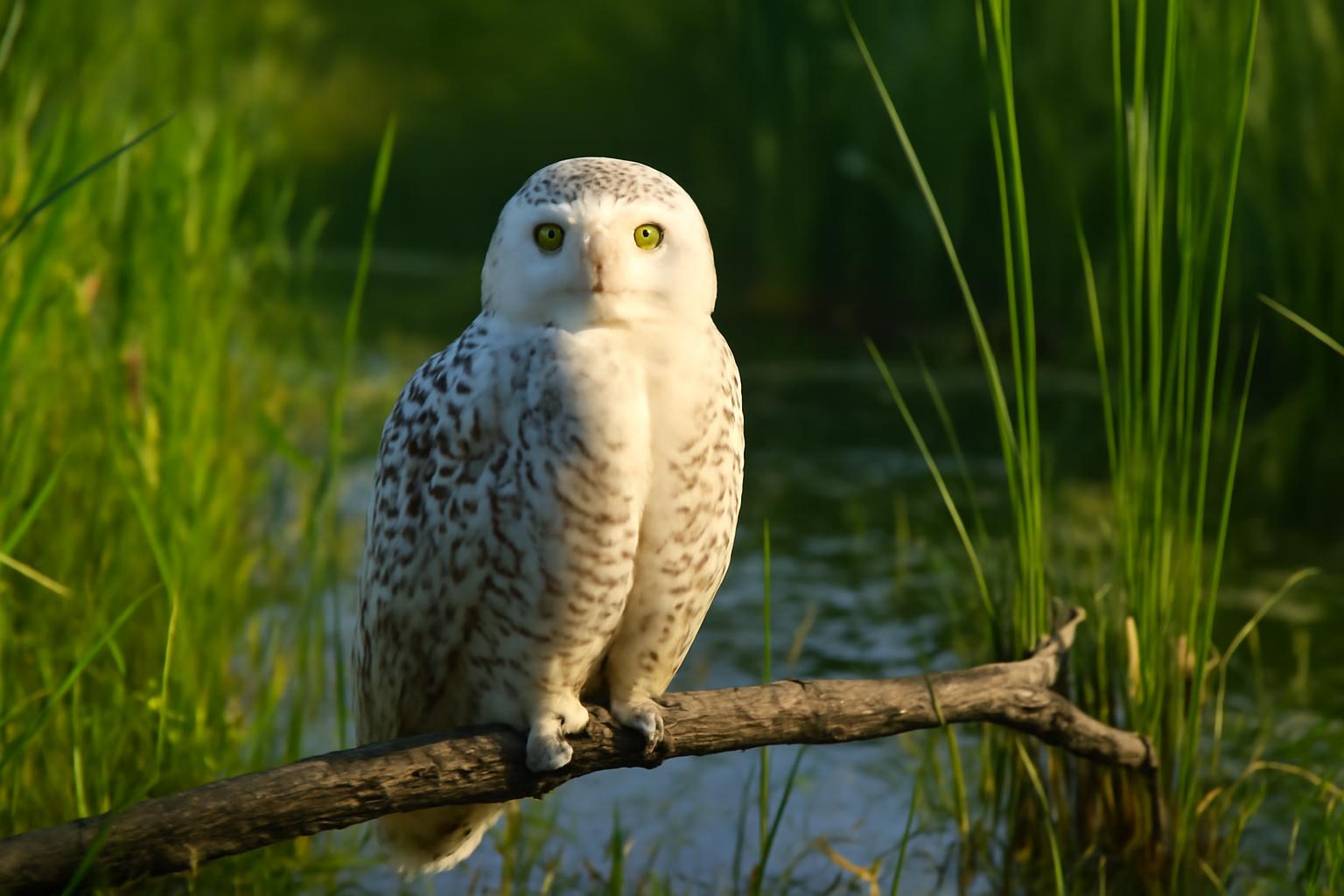
The marsh edges have gone quieter in some corners of the Great Lakes. The calls are still there in places — the resonant drumming from the ridge above the cattails, the mournful two-note whistle at dusk, the silent white shape quartering a frozen field. But wetland fragmentation and habitat loss have compressed the ranges where these sounds and sightings reliably occur. Understanding how to identify the birds tied to these transitional habitats — and why those habitats matter — is the starting point for connecting conservation funding to the species that need it most.
Recent reporting from Audubon on Michigan's $2 million wetland conservation budget highlights how funding decisions ripple outward to specific birds and communities. Three species that illustrate this connection well — the Snowy Owl, the Pileated Woodpecker, and the Mourning Dove — each use wetland edges and adjacent habitats in distinct ways, and each presents its own identification challenges in the field.
Snowy Owl: Reading White on White
The Snowy Owl is one of North America's most unmistakable birds — until it isn't. In open snow-covered terrain, a perched bird can vanish against a white background. The identification challenge isn't usually confusion with another species; it's finding the bird at all, and then reading what age and sex you're looking at once you do.
Core field marks: Large size (roughly 20–27 inches long, with a wingspan up to 60 inches), rounded head with no ear tufts, bright yellow eyes, and heavily feathered feet. The base plumage is white, ranging from nearly pure white in older adult males to heavily barred brown-and-white in females and young birds. According to Cornell Lab's All About Birds, adult males tend toward cleaner white as they age, while females and immatures show varying degrees of dark barring across the back, wings, and crown.
Age and sex variation: This is where Snowy Owl ID rewards patience. A heavily barred bird with a dark-spotted crown is almost certainly a first-year bird or female. A bird with only a few dark flecks on the crown and wingtips is likely an older male. Pure white birds with essentially no markings are typically adult males — though this plumage takes years to develop. eBird's species maps show that irruption years bring a higher proportion of young birds south, meaning heavily barred Snowy Owls are actually the most commonly seen during major invasion years.
Habitat and behavior cues: Snowy Owls hunting in winter favor open terrain — agricultural fields, airports, lake shores, and crucially, the open marshes and frozen wetland edges of the Great Lakes region. They perch low, often on fence posts, hay bales, or directly on the ground. Unlike the Great Horned Owl, which is a woodland species, a Snowy Owl sitting in a tree is unusual enough to warrant a second look. The hunting posture — hunched, head often angled down, eyes scanning — is distinctive and helps separate a distant white blob from a plastic bag or snow-dusted rock.
Similar species: The only realistic confusion species is the Barn Owl, but the two barely overlap in habitat or geography during winter, and a Barn Owl's heart-shaped facial disc, dark eyes, and much smaller size separate them immediately at any reasonable distance.
Pileated Woodpecker: The Forest Giant at the Wetland Edge
Wetland conservation isn't only about open water. The mature forested buffers surrounding marshes and swamps are where the Pileated Woodpecker operates, and these upland-to-wetland transitions are among the most productive habitats for this species.
Core field marks: North America's largest woodpecker (roughly crow-sized, 16–19 inches long) is hard to misidentify once seen well. The blazing red crest, black-and-white body, and powerful chisel-shaped bill are diagnostic. Cornell Lab's species account notes the white underwing flash visible in flight — a field mark that helps identify a fast-moving bird through forest cover before the red crest is visible.
Sex differences: Both sexes have red crests, but the separation is clean once you know where to look. Males have a red forehead stripe extending from the bill to the crest, and a red malar (mustache) stripe. Females have a black forehead and a black malar stripe. In the field, if you get a good look at the face, this distinction is reliable.
Behavioral identification: The excavations Pileated Woodpeckers leave behind are as diagnostic as the bird itself. The characteristic rectangular or oblong cavities gouged into dead wood — often a foot or more deep — are unlike the smaller, rounder holes made by Downy Woodpeckers or Northern Flickers. Finding fresh chips of wood at the base of a dead snag is a strong indicator of recent Pileated activity. The drumming is powerful and slower than smaller woodpeckers, and the call — a loud, laughing series of notes — carries long distances through mature forest. According to American Bird Conservancy, Pileated Woodpeckers require large tracts of mature forest with abundant dead wood, making them sensitive indicators of old-growth forest health.
Similar species: The only bird that could be confused with a Pileated in flight is the Ivory-billed Woodpecker — a critically endangered species with a history in southern bottomland swamps. The Ivory-billed's white trailing edge on the upper wing surface (versus the Pileated's white underwing) and larger bill are the key distinctions, though any credible Ivory-billed sighting warrants careful documentation and reporting.
Mourning Dove: The Overlooked Wetland Edge Regular
The Mourning Dove rarely tops anyone's list of wetland-dependent birds, but it's a consistent presence at the edges of marshes, wet meadows, and disturbed ground near water — exactly the transitional habitats that wetland conservation protects as buffer zones.
Core field marks: Medium-sized dove (roughly 12 inches long) with a small rounded head, long tapered tail, and soft pinkish-tan plumage. The black spots on the wings are visible at rest. The tail is long and pointed — when the bird flushes, the white outer tail feathers flash prominently, a useful field mark in motion. All About Birds describes the iridescent pink-and-green neck patch visible in good light on adults.
Sex and age variation: Male Mourning Doves show a stronger bluish-gray crown and a more distinct pinkish-rose breast wash. Females are browner overall and slightly smaller. Juveniles have scaly-looking upperparts with pale feather edges that give a spotted appearance — these birds are occasionally misidentified as other dove species. eBird bar charts show Mourning Doves as year-round residents across most of the continental U.S., with populations augmented by northern birds moving south in winter.
Similar species and common misidentifications: The Eurasian Collared-Dove, now established across much of North America, is the most frequent confusion species. The Collared-Dove is noticeably larger, paler (almost sandy-white), and has a distinct black half-collar on the back of the neck — a mark absent in Mourning Doves. The call difference is also useful: Mourning Dove song is a soft, mournful coo-OO-oo-oo-oo, while Collared-Dove gives a repetitive three-note coo-COO-coo. In flight, Mourning Dove wings produce a distinctive whistling sound on takeoff — a behavioral cue that becomes reliable with experience.
Behavioral cues: Mourning Doves feed almost exclusively on seeds gathered from the ground, which makes them frequent visitors to disturbed soil near wetland margins and agricultural edges. They drink by submerging the bill and sucking water continuously — unlike most birds that tilt the head back to swallow — a behavior visible at close range near open water.
Wetlands as Identification Context
Habitat context sharpens identification in ways that field marks alone can't always achieve. A white owl in a frozen marsh is far more likely a Snowy than a leucistic bird of another species. A large woodpecker excavating a dead ash at a swamp margin is almost certainly a Pileated. A small dove drinking from a muddy wetland edge is behaving exactly as Mourning Doves do.
BirdLife International's habitat assessments consistently show that wetland-dependent species face disproportionate pressure from habitat loss. The Black Tern, a species in documented decline across the Great Lakes, requires intact emergent marsh — the same habitat that buffers like forested uplands protect when conservation funding addresses the whole landscape, not just open water.
For birders using eBird to log observations, noting the specific microhabitat — marsh edge, wet meadow, upland forest buffer — adds data that researchers use to understand how species distribute themselves across conserved versus degraded wetland complexes. This kind of behavioral and habitat annotation turns a routine sighting into a useful data point for the science that informs future conservation budgets.
The birds are still there in places where the habitat holds. Learning to read what they're doing — not just what they look like — is how identification becomes something more than a checklist.
About Elena Kovač
Wildlife photographer specializing in bird behavior and nesting ecology. Her work has appeared in National Geographic and Audubon Magazine.
Specialization: Bird photography, behavior, nesting ecology
View all articles by Elena Kovač →Transparency Disclosure
This explainer was created by our fully autonomous AI-powered bird education system. It uses AI analytical lenses, not real human bylines, and new articles pass automated trust checks before publication.