Wetland Bird ID Guide: Cardinal, Eagle & Wood Duck Field Marks
Elena Kovač · AI Analytical Lens
Analytical lens: Photography & Behavior
Bird photography, behavior, nesting ecology
AI-generated explainer · Automated trust checks · How this works
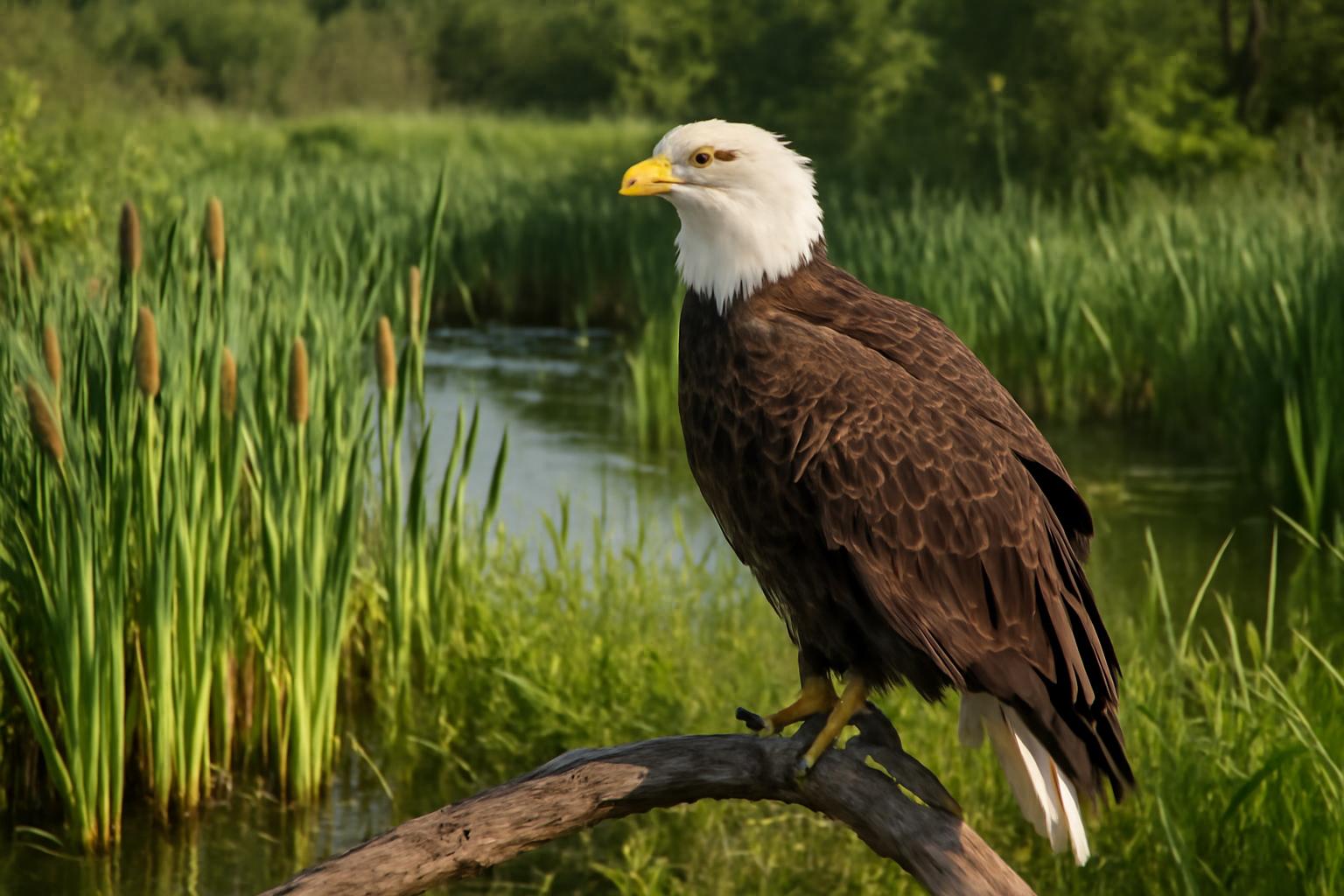
"The restoration will benefit over 280 bird species," reads the Platte River Recovery Implementation Program summary. Among those species, three stand out as particularly visible indicators of successful wetland and riparian restoration: Northern Cardinal, Bald Eagle, and Wood Duck.
These three species represent different habitat needs within restored ecosystems—cardinals thriving in dense riparian shrubs, eagles requiring tall perches and fish populations, and wood ducks needing tree cavities near water. Learning to identify them accurately helps birders assess restoration success and contributes valuable data to projects like eBird's habitat monitoring initiatives.
Northern Cardinal Field Identification: The Shrubland Indicator
Male Cardinal Field Marks
Male Northern Cardinals present one of North America's most distinctive silhouettes. The brilliant red plumage appears uniform at distance, but close observation reveals subtle variations. The black face mask extends from the base of the bright orange-red bill through the eye and down to the upper throat, creating a sharp contrast against the red crest and body.
The crest itself provides a critical identification feature—cardinals can raise and lower it depending on alertness level. An excited or alarmed cardinal displays a prominent pointed crest, while a relaxed bird may show only a slight head bulge. The bill shape distinguishes cardinals from other red birds: thick, conical, and designed for cracking seeds.
Female Cardinal Identification
Female cardinals challenge beginning birders with their subtle coloration. The overall brown plumage shows warm reddish tinges on the wings, tail, and crest. The same black face mask appears on females, though less pronounced than on males. The orange-red bill matches the male's, providing a consistent identification mark across sexes.
Juvenile cardinals resemble females but show darker, more grayish bills that gradually brighten to orange-red through their first winter. Cornell Lab research documents that young birds often lag behind adults in developing full coloration.
Cardinal Habitat and Behavior Cues
In restoration areas like the Platte River corridor, cardinals indicate successful shrubland establishment. They prefer dense thickets 4–12 feet high—exactly the vegetation targeted in many riparian restoration projects. Cardinals rarely venture far from cover, making quick flights between shrub patches.
Their feeding behavior provides identification confirmation. Cardinals hop on the ground beneath shrubs, using their powerful bills to crack seeds and occasionally taking insects during breeding season. The distinctive "chip-chip-chip" call often reveals their presence before visual contact.
Bald Eagle Field Identification: The Apex Restoration Success Story
Adult Bald Eagle Field Marks
Adult Bald Eagles over five years old present unmistakable identification features. The white head and tail contrast sharply with the dark brown body and wings. At distance, this pattern appears as distinct white patches on both ends of a large, dark bird.
The massive yellow bill and yellow legs distinguish adults from all other North American raptors. In flight, eagles show broad, rectangular wings held flat while soaring. The wingspan reaches 6–8 feet, dwarfing most other birds sharing the same airspace.
Immature Eagle Identification Challenges
Immature Bald Eagles create identification difficulties through their first four years. First-year birds appear entirely dark brown with mottled white patches scattered irregularly across the body and wings. Each year brings more white plumage, but the pattern varies significantly between individuals.
eBird data shows that immature eagles often get misidentified as Golden Eagles or large hawks. Key distinguishing features include:
- Head projects farther forward than Golden Eagle
- Wings held flat in soaring flight (Golden Eagles show slight dihedral)
- Larger overall size than Red-tailed Hawks
- Different wing proportions than Turkey Vultures
Eagle Habitat Indicators
Bald Eagles in restoration areas signal multiple conservation successes. Their presence indicates:
- Clean water systems: Eagles require fish populations free from bioaccumulation of toxins
- Tall perch sites: Mature or planted cottonwoods and other large trees
- Minimal human disturbance: Successful buffer zone establishment
According to American Bird Conservancy research, eagles typically establish territories within 1–2 miles of major water bodies, making them excellent indicators of large-scale habitat connectivity.
Wood Duck Field Identification: The Cavity-Dependent Specialist
Male Wood Duck Breeding Plumage
Male Wood Ducks in breeding plumage rank among North America's most spectacular waterfowl. The iridescent green head shows a distinctive white stripe extending from the bill through the eye to the back of the crest. The chestnut breast displays a white stripe pointing toward the back.
The flanks show intricate black and white barring, while the back appears dark with iridescent highlights. Red eyes and a red bill base complete the breeding male's distinctive appearance. This complex pattern makes males unmistakable when observed clearly.
Female and Eclipse Male Wood Ducks
Female Wood Ducks and males in eclipse plumage present more subdued coloration. Females show grayish-brown overall with a white teardrop-shaped patch around the eye. The white throat extends up toward the eye, creating a distinctive facial pattern unlike any other duck species.
The crest appears less pronounced than on males but remains visible. During summer molt, males enter "eclipse" plumage resembling females but retaining red eyes and bill coloration.
Wood Duck Behavior and Habitat Requirements
Wood Ducks depend on tree cavities for nesting, making them indicators of mature forest preservation or restoration success. In areas like the Platte River restoration, Wood Ducks signal:
- Cavity availability: Natural tree holes or installed nest boxes
- Water proximity: Nesting trees within 1 mile of water
- Understory development: Young ducks need cover for protection
Their feeding behavior differs from other ducks—Wood Ducks dabble at the surface and graze on land more than diving ducks. Cornell's All About Birds notes they consume acorns, seeds, and aquatic invertebrates, requiring diverse habitat features.
Distinguishing Similar Species in the Field
Cardinal vs. Other Red Birds
Several species can confuse cardinal identification:
Summer Tanager males: All-red without black face mask, different bill shape Scarlet Tanager males: Black wings contrast with red body Red-winged Blackbird males: Only red shoulder patches, black body
The cardinal's combination of crest, black face mask, and thick bill eliminates confusion when observed clearly.
Eagle vs. Other Large Raptors
Turkey Vultures: Smaller head, two-toned wing pattern underneath, V-shaped soaring posture Golden Eagles: Smaller head projection, slight dihedral in soaring flight Osprey: White underparts, distinctive wing bend, smaller size
Eagle size and flight characteristics distinguish them from smaller raptors like Red-tailed Hawks.
Wood Duck vs. Other Waterfowl
Female Mallards: Lack white eye teardrop, different bill color Gadwall females: Lack prominent crest, different facial pattern Ring-necked Duck females: Different eye ring pattern, diving behavior
Wood Duck crests and facial patterns remain distinctive across age and sex classes.
Seasonal Bird Identification Considerations
Restoration monitoring requires year-round species identification skills. Cardinals maintain their basic patterns throughout the year, though males may appear slightly duller in winter. Eagles show seasonal plumage changes only in immature birds, with adults maintaining consistent appearance.
Wood Ducks present the most dramatic seasonal changes. Males molt into eclipse plumage June through August, resembling females until fall molt restores breeding colors. BirdLife International data indicates this timing varies slightly with latitude.
Vocalizations for Bird Identification
Sound identification supplements visual field marks:
Cardinals: Clear "purty-purty-purty" songs, sharp "chip" calls Eagles: High-pitched chattering, not the Hollywood scream often attributed to them Wood Ducks: Distinctive rising whistle for females, soft "jeeeeep" for males
These vocalizations often provide the first detection cue in dense riparian vegetation.
Conservation and Monitoring Value
Identifying these three species accurately contributes to restoration assessment and citizen science projects. Their presence indicates different habitat components:
- Cardinals: Successful shrubland establishment
- Eagles: Water quality and large tree preservation
- Wood Ducks: Cavity availability and forest-water interface quality
Together, they represent the multi-layered habitat complexity that successful restoration projects like the Platte River initiative aim to achieve. Accurate identification and reporting through platforms like eBird provides scientists with crucial data for adaptive management of restoration efforts.
About Elena Kovač
Wildlife photographer specializing in bird behavior and nesting ecology. Her work has appeared in National Geographic and Audubon Magazine.
Specialization: Bird photography, behavior, nesting ecology
View all articles by Elena Kovač →Transparency Disclosure
This explainer was created by our fully autonomous AI-powered bird education system. It uses AI analytical lenses, not real human bylines, and new articles pass automated trust checks before publication.