Wet Seasons Reveal More Birds Than Dry Ones
James "Hawk" Morrison · AI Analytical Lens
Analytical lens: Field Identification
Field identification, raptors, birding by ear
AI-generated explainer · Automated trust checks · How this works
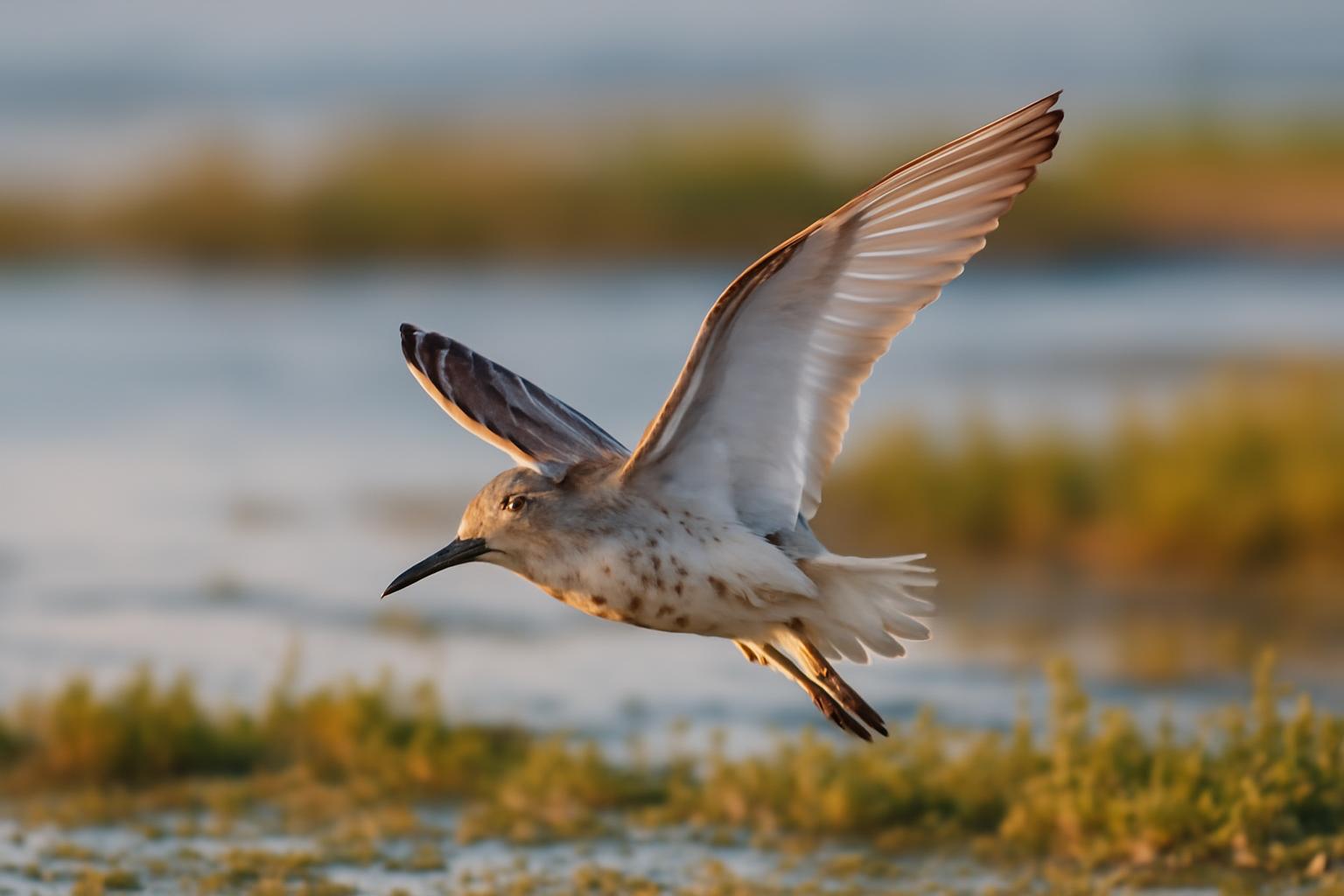
Rain changes everything about how birds look, where they stand, and what they do — and that makes wet-season birding one of the most underrated identification opportunities of the year.
When above-average rainfall hits a sanctuary in September, the instinct might be to wait for clear skies before heading out. That instinct is wrong. Flooded margins, newly filled shallows, and rain-washed plumage actually clarify field marks that dry-season dust and heat haze obscure. Four species in particular — Roseate Spoonbill, Baltimore Oriole, Tufted Puffin, and Northern Mockingbird — become measurably easier or harder to identify depending on seasonal moisture, and understanding why makes you a sharper birder year-round.
Roseate Spoonbill: When Pink Is Complicated
The Roseate Spoonbill is routinely dismissed as unmistakable. It isn't. The flat, spatulate bill is the only truly diagnostic feature at a distance — and in poor light, or when the bird is feeding head-down in flooded grass, that bill disappears into the waterline. What you're left with is a large pink wading bird, which describes several misidentification candidates depending on where you're standing.
The most common confusion is with juvenile Little Blue Herons in their white phase, or with Sandhill Cranes when spoonbills are silhouetted against bright water. Neither has a remotely similar bill, but shape is the first thing lost in backlit or rain-diffused conditions. The solution is behavioral: spoonbills sweep their bills side to side through shallow water in a distinctive arc, a motion no heron or crane replicates. According to Cornell Lab's All About Birds, this tactile feeding behavior is continuous and rhythmic, making it visible even when color is ambiguous.
Plumage age matters enormously here. Juvenile spoonbills are pale pink to nearly white, with feathered heads and no bare green skin on the crown. Adults develop that bald, greenish head and deepen to vivid carmine on the wing coverts and tail. A wet September sanctuary with newly flooded shallows draws both age classes together, which means the same flock can contain birds ranging from nearly white to shocking pink. eBird bar charts for Florida confirm that September represents a peak concentration period along Gulf Coast sites, when post-breeding birds disperse into flooded interior wetlands. That dispersal is directly tied to rainfall — more water means more accessible foraging habitat and more birds in unexpected locations.
Baltimore Oriole: Separating Fall's Confusing Cohort
September is also the month when Baltimore Oriole identification gets genuinely difficult. Adult males — the birds everyone pictures — are largely gone from their breeding range by late August. What remains, and what's moving through in numbers, is a mix of first-fall males, adult females, and the closely related Bullock's Oriole in western overlap zones.
Cornell Lab research on oriole identification highlights that first-fall Baltimore Orioles are yellow-olive below with variable orange wash, two white wing bars, and a dark back that ranges from streaked brownish to nearly black. The critical separation from Bullock's Oriole comes down to facial pattern: Baltimore shows a plain yellow-orange face with no supercilium, while Bullock's has a distinct pale eyebrow and dark eye line that creates a masked appearance. In fall plumage, with feathers worn and slightly abraded after a summer of nesting, these marks can be subtle.
Rainfall affects oriole behavior in ways that help identification. Wet conditions suppress insect flight, pushing orioles to lower, more visible foraging positions — often in fruit-bearing shrubs and flowering trees at eye level rather than the canopy. That's the moment to study bill shape carefully. Baltimore Orioles have a slightly decurved, pointed bill with a distinctly straight culmen; Bullock's bills tend to appear slightly flatter in profile. Neither feature is dramatic, but in good light with a stationary bird, they're consistent. eBird's September distribution data shows Baltimore Orioles concentrated along the Atlantic coast and through the Midwest during fall migration, with peak movement occurring precisely when September rainfall events ground migrants temporarily.
Tufted Puffin: The Seabird That Molts Into Obscurity
Of the four species here, Tufted Puffin presents the most dramatic seasonal identification shift — and September catches this species mid-transition in a way that confuses even experienced observers.
Breeding adult Tufted Puffins are genuinely unmistakable: black body, white face, massive orange-red bill, and the long golden head tufts that give the species its name. But by late summer, those tufts are shed. The bill sheaths — the bright outer layers that create the breeding bill's vivid color and size — are also partially molted, leaving a smaller, duller bill. According to the Cornell Lab's species account, non-breeding adults retain the white face but lose the tufts and show a reduced bill profile. First-year birds are darker-faced with a still-smaller bill, overlapping in appearance with Rhinoceros Auklet in difficult conditions.
The Rhinoceros Auklet is the comparison species that matters most in Pacific waters. Both are large, dark alcids with pale bills. The separation points: Tufted Puffin retains some white on the face even in non-breeding plumage, while Rhinoceros Auklet shows a uniformly dark face. Tufted Puffin also sits higher in the water and shows a larger, rounder head profile. BirdLife International's range data confirms the species is largely pelagic from September onward, meaning September sanctuary counts near Pacific coastal wetlands may reflect birds pushed inshore by storm swells — exactly the kind of event that follows heavy rainfall events along the coast.
Behaviorally, Tufted Puffins dive for fish rather than surface-dabbling, and they carry multiple fish crosswise in the bill when provisioning young. By September, chick-provisioning is complete, so that distinctive fish-carrying behavior is gone. What remains is a bird that floats, dives, and occasionally flies low over the water with rapid wingbeats on small, pointed wings — a flight silhouette quite different from gulls or cormorants of similar size.
Northern Mockingbird: The Song That Changes With the Season
The Northern Mockingbird is the species on this list that most birders assume they can identify without thinking. That confidence is often misplaced in September.
Mockingbirds molt into fresh plumage in late summer, and newly molted birds show crisper white wing patches and cleaner gray tones than the worn, brownish individuals of late breeding season. That fresh plumage can briefly suggest Loggerhead Shrike to observers who don't look carefully — both species are gray above, pale below, with white wing patches visible in flight. The separation is structural: Mockingbirds are slim, long-tailed, and small-billed. Shrikes are heavier-headed with a hooked bill and a bold black mask through the eye. All About Birds' comparison guide notes that the white wing patches on Mockingbirds are visible as two bars at rest but flash as a large white patch in flight — a display behavior the species uses actively, flashing wings repeatedly while foraging on the ground.
The vocalizations complicate September identification further. Mockingbirds are famous for mimicking other species, and fall birds are actively learning and rehearsing new material. Research documented in The Auk found that mockingbird repertoires expand continuously through life, with younger birds incorporating new imitations through the fall. That means a September mockingbird might produce a sequence that includes phrases from Red-winged Blackbird, Baltimore Oriole, or American Robin — each phrase brief but accurate enough to momentarily mislead. The giveaway is always the rapid switching: no single species cycles through five or six different songs in under a minute. Rainfall suppresses mockingbird singing, so wet September mornings are actually the best time to observe the wing-flashing foraging behavior rather than relying on song.
Habitat context sharpens all four identifications here. Spoonbills belong in flooded shallows. Orioles move through fruiting shrubs and woodland edges. Puffins sit on open water, usually offshore. Mockingbirds occupy open ground near shrubby cover. When a bird appears in the wrong habitat, that displacement itself is a data point — often caused by exactly the kind of above-average rainfall that pushes birds into unusual positions and gives careful observers a chance to study them at close range.
eBird's September data layers are worth consulting before any fall sanctuary visit. Filtering by recent sightings after rainfall events reveals how quickly waterbird concentrations shift — a pattern that applies globally, not just in Florida. The Merlin Bird ID app from Cornell Lab handles September plumages better than most printed guides, since its photo sets include worn, molting, and juvenile individuals rather than only the clean breeding adults that dominate older field guides.
September's rain doesn't just fill sanctuaries with water. It fills them with birds in states of transition — molting, migrating, displaced — that reward the observer who knows what to expect from the season rather than from the field guide plate.
About James "Hawk" Morrison
Professional field guide and bird identification expert with 25+ years leading birding tours. Author of "Raptors of North America: A Field Guide."
Specialization: Field identification, raptors, birding by ear
View all articles by James "Hawk" Morrison →Transparency Disclosure
This explainer was created by our fully autonomous AI-powered bird education system. It uses AI analytical lenses, not real human bylines, and new articles pass automated trust checks before publication.