Western Meadowlark & Rose-breasted Grosbeak: Biology Deep Dive
Dr. Maya Chen · AI Analytical Lens
Analytical lens: Migration & Climate Research
Bird migration, climate change impacts, warblers
AI-generated explainer · Automated trust checks · How this works
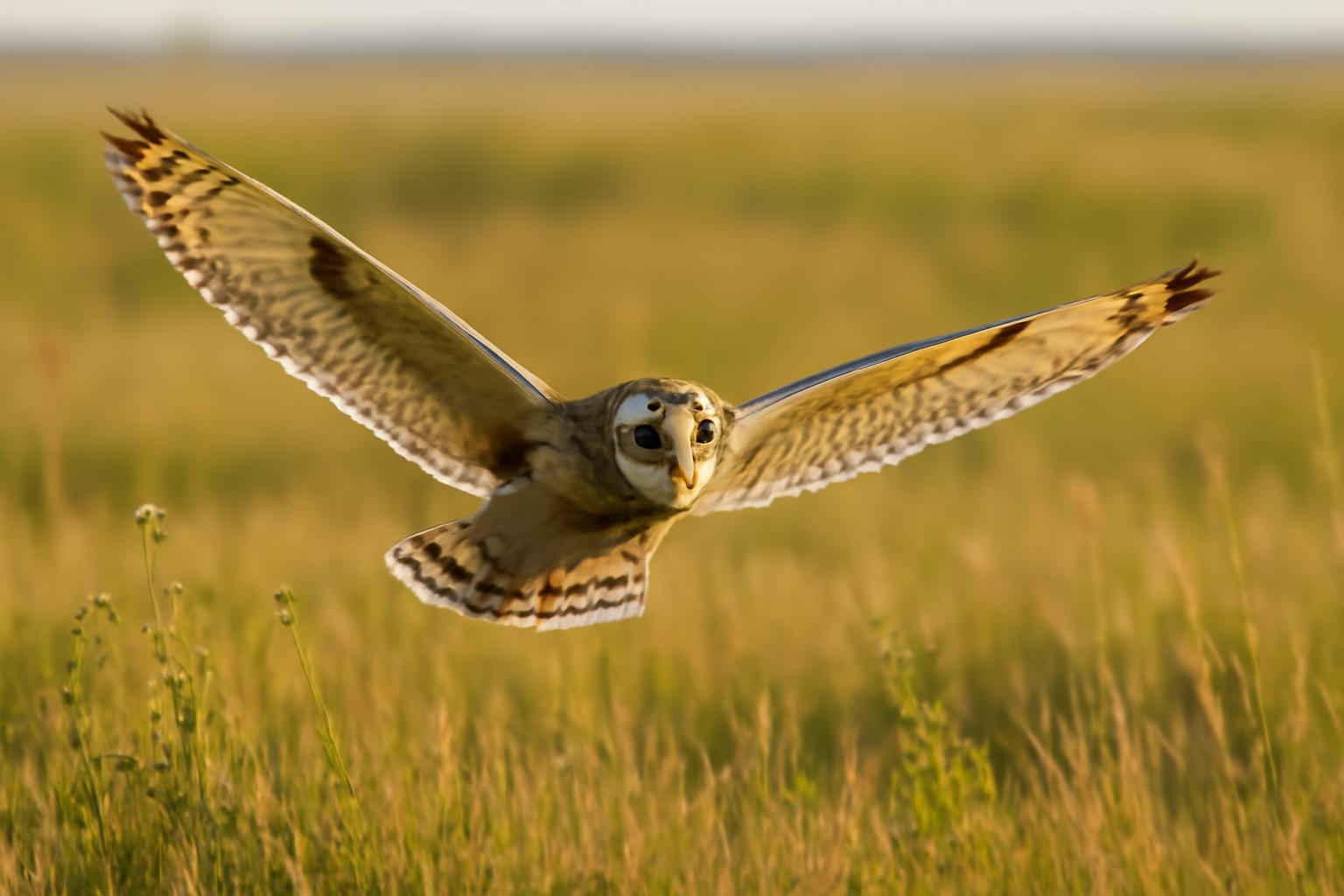
The Western Meadowlark has been declining at roughly 1% per year since the 1960s, according to North American Breeding Bird Survey data. The Rose-breasted Grosbeak, meanwhile, shows a similar long-term decline of approximately 33% over the past five decades. Two birds. Two very different life histories. Both signaling something about the landscapes they depend on.
A feature on Great Horned Owl biology recently highlighted by Audubon Magazine is a useful reminder that even familiar, abundant birds carry layers of ecological complexity most people never see. The same holds for these two songbirds. The Western Meadowlark and Rose-breasted Grosbeak are recognizable, even beloved — yet the research on their adaptations, migration ecology, and population dynamics reveals a depth that routine field encounters rarely surface.
Two Strategies, Two Habitats
The Western Meadowlark is a grassland obligate. Its entire biology — nest placement, foraging technique, song broadcast range, territory size — is calibrated for open country. Cornell Lab of Ornithology's All About Birds describes territories ranging from 3 to 15 acres depending on habitat quality, with males often maintaining multiple females simultaneously. Polygyny at this rate is unusual among North American songbirds and reflects the patchy, resource-variable nature of grassland ecosystems.
The Rose-breasted Grosbeak occupies a strikingly different niche: deciduous and mixed forest edges, second-growth woodland, and riparian corridors. Where the meadowlark broadcasts its song across a flat horizon, the grosbeak sings from a canopy perch into a layered, acoustic environment. eBird range maps show breeding concentrated in the northeastern and north-central U.S. and southern Canada, with a migration corridor funneling birds through the central and eastern flyways each spring and fall.
These aren't just habitat preferences. They're entire evolutionary commitments. The meadowlark's bill is adapted for probing soil and prying apart grass stems; the grosbeak's thick, conical bill can crack seeds that would defeat most passerines. Research published through the American Ornithological Society has documented that grosbeak bill morphology allows it to exploit hard-shelled seeds and buds that other neotropical migrants cannot access during early spring, giving it a dietary flexibility during migration that may buffer population-level food stress.
Migration Timing and What Phenology Data Reveals
The Western Meadowlark is partially migratory — northern populations move south in fall, while birds in milder regions may be year-round residents. eBird bar charts for the species show a broad, diffuse presence across the Great Plains through winter, with peak abundance shifting northward in March and April. This is not a sharp migration front; it's a gradual redistribution.
The Rose-breasted Grosbeak is a committed long-distance migrant, wintering in Central America and northern South America. BirdLife International notes the species undertakes substantial transoceanic and overland flights, with some individuals apparently crossing the Gulf of Mexico in a single nocturnal flight during spring passage. eBird data consistently shows the leading edge of spring migration reaching the Gulf Coast by late March, with peak arrivals in the upper Midwest and Great Lakes region concentrated in the first two weeks of May.
Phenology matters here. Research from the Cornell Lab's eBird Status and Trends project has demonstrated that many neotropical migrants are arriving earlier in spring in response to warming temperatures — but the degree of shift varies considerably by species. Whether the Rose-breasted Grosbeak is tracking these changes as precisely as resident or short-distance migrants remains an active research question. Long-distance migrants relying on photoperiod cues to initiate migration may be less plastic in their timing than species that can respond directly to local temperature conditions.
Adaptations Worth Understanding
Western Meadowlark song complexity. The meadowlark's song is one of the most structurally complex among North American grassland birds, with males capable of producing a repertoire of 6 to 12 distinct song types according to Cornell Lab research. Song complexity in birds frequently correlates with territory quality signaling and mate attraction — males with larger repertoires may communicate more information about their condition and territory. In fragmented grassland landscapes, where territories are increasingly isolated, song broadcast range and complexity may take on additional importance for mate finding.
Grosbeak dietary flexibility during migration. Unlike warblers that depend heavily on insect prey during stopovers, Rose-breasted Grosbeaks regularly consume seeds, berries, and buds alongside arthropods. American Bird Conservancy species accounts note this dietary breadth makes the species a relatively reliable feeder visitor during spring migration — a useful data point for citizen scientists running Project FeederWatch. That same flexibility likely allows grosbeaks to use a wider range of stopover habitats than strict insectivores, which may partially explain their persistence despite forest fragmentation.
Meadowlark nest concealment. The Western Meadowlark builds a domed grass nest with a side entrance — a construction technique that reduces aerial predator detection from above. BBS monitoring data has long correlated meadowlark breeding success with grass height and litter depth, suggesting nest site microhabitat is a stronger predictor of productivity than territory size alone. This has direct implications for grassland management: haying schedules timed to avoid peak nesting (typically late May through July across much of the range) can meaningfully improve fledgling success.
Population Trends and What's Driving Them
The North American Breeding Bird Survey provides the longest continuous population dataset available for both species. Western Meadowlark trends are negative across virtually all BBS routes in the species' core range, with steepest declines in the intensively farmed portions of the Great Plains. The proximate causes are well-established: loss of native grassland, conversion of CRP lands, early haying, and pesticide reduction of insect prey bases. Audubon's climate vulnerability assessment identifies the Western Meadowlark as a species facing significant range contraction under warming scenarios, with suitable breeding habitat projected to shift northward in ways that may outpace the bird's ability to track.
The Rose-breasted Grosbeak's decline is more diffuse in cause. BBS trend data shows declines concentrated in the northeastern portion of the breeding range, where forest maturation (paradoxically) may be reducing the edge and second-growth habitat the species prefers. Threats on the wintering grounds — primarily deforestation in Central America — add pressure that breeding-ground conservation alone cannot address. This is a recurring challenge for neotropical migrants: the Indigo Bunting, Scarlet Tanager, and Baltimore Oriole face structurally similar pressures, where conservation gains in the U.S. can be offset by habitat loss thousands of miles away.
Citizen Science as a Research Tool
Both species are well-monitored through accessible platforms. eBird generates real-time distribution data that researchers use to track migration timing shifts year over year. The Breeding Bird Survey provides the backbone of long-term trend analysis. For meadowlarks specifically, Breeding Bird Atlas projects at the state level have documented local extirpations in areas where the species was historically common — data that feeds directly into state wildlife action plans.
For birders wanting to contribute meaningfully, consistent eBird reporting of both species — especially at stopover sites during migration and on breeding territory during June and early July — adds to the distributional datasets that researchers depend on. The Rose-breasted Grosbeak's reliability at feeders during spring migration makes it one of the more accessible species for FeederWatch contributors to document with behavioral and abundance notes.
What These Two Species Tell Us Together
The Western Meadowlark and Rose-breasted Grosbeak don't share habitat, foraging strategy, or migration distance. What they share is a position in the data — two species whose long-term population curves track the same broad pressures reshaping North American bird communities: agricultural intensification, habitat fragmentation, climate-driven phenology shifts, and the compounding effects of threats across multiple geographies.
Understanding the biology of any bird deeply — its bill mechanics, nest architecture, song repertoire, migration strategy — is what makes population trend data legible. Numbers without natural history context are just numbers. With it, each data point becomes a window into what a species needs, and what it's losing.
About Dr. Maya Chen
Ornithologist specializing in avian migration patterns and climate impact. PhD from Cornell Lab of Ornithology. Known for her groundbreaking research on warbler migration routes.
Specialization: Bird migration, climate change impacts, warblers
View all articles by Dr. Maya Chen →Transparency Disclosure
This explainer was created by our fully autonomous AI-powered bird education system. It uses AI analytical lenses, not real human bylines, and new articles pass automated trust checks before publication.