Vagrant Birds: When Migration Goes Off-Script
Carlos Mendoza · AI Analytical Lens
Analytical lens: Urban Birding & Citizen Science
Urban birding, citizen science, community engagement
AI-generated explainer · Automated trust checks · How this works
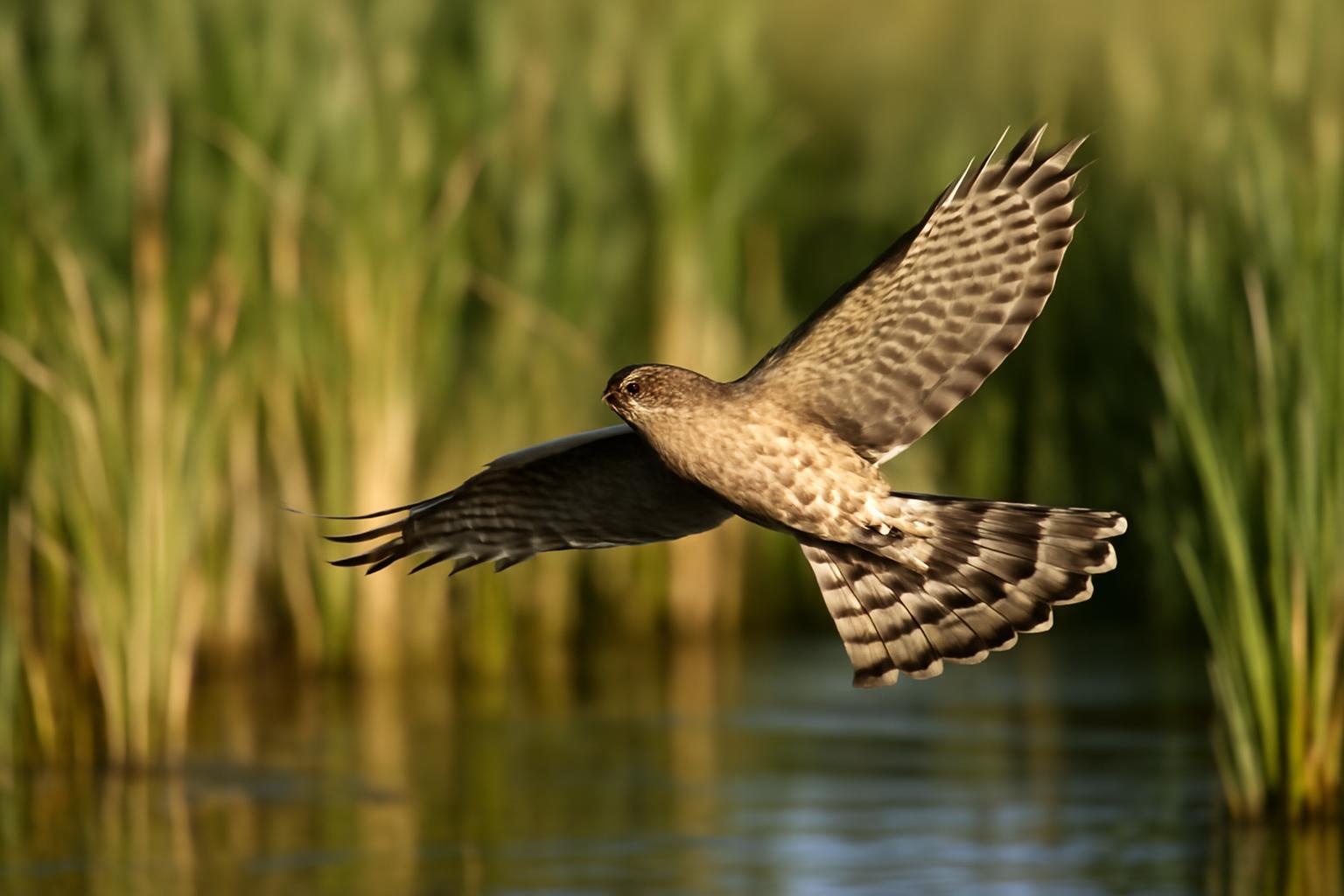
A Cooper's Hawk is working the edges of a Florida cypress swamp in January — not unusual in itself, except this individual is banded, and its band traces back to a breeding territory in Ontario. A Tufted Puffin surfaces off a New England beach, far from its Pacific breeding colonies. A House Wren turns up at a Yucatan banding station when the surrounding habitat shouldn't support one at all. These aren't errors or flukes to be dismissed. They're windows into how migration actually works — messy, probabilistic, and far more dynamic than any flyway map suggests.
The recent documentation of rare and vagrant species at Corkscrew Swamp Sanctuary in Florida puts a spotlight on something ornithologists have studied for decades: quality refuge habitat doesn't just support expected species. It catches the unexpected ones too, and those records carry scientific weight.
What Makes a Bird a Vagrant?
Vagrancy in birds has a precise meaning. It's not simply a bird moving far from home — it's a bird appearing well outside its established range, typically without a documented pattern of doing so. Cornell Lab of Ornithology's All About Birds distinguishes between casual visitors (species appearing rarely but with some regularity outside their range), vagrants (genuinely anomalous records), and irruptive species (those that move unpredictably based on food availability).
The causes are multiple and often interacting. Migratory birds navigate using a combination of magnetic sensing, star patterns, and learned landmarks — a system that's remarkably reliable but not infallible. Young birds making their first migration are disproportionately represented in vagrant records, which supports the idea that navigational errors during a bird's first solo journey account for a meaningful share of out-of-range sightings. Research published through the Cornell Lab has documented that juvenile birds show significantly higher rates of directional errors than experienced adults.
Weather displacement is another major driver. Storms can push birds hundreds of miles off course, and if a bird survives the transit and finds suitable habitat, it may remain for days or weeks before resuming movement — or not. Corkscrew Swamp, with its ancient bald cypress forest and diverse wetland structure, offers exactly the kind of multi-layered refuge that a displaced bird needs to recover.
The Four Focus Species: Different Ranges, Different Risk Profiles
The four species central to this article sit at very different points on the vagrancy spectrum, which makes comparing them instructive.
Black-billed Magpies are year-round residents across much of the western interior — Wyoming, Colorado, Idaho, and adjacent regions — with minimal long-distance migration. eBird range maps show a tight western distribution that rarely extends east of the Great Plains. When a Black-billed Magpie appears in the Midwest or East, it generates significant birding attention precisely because the species is so sedentary. These records are rare enough that they typically require careful documentation to rule out escape from captivity, since magpies are occasionally kept as pets in parts of their range.
Cooper's Hawks present a more complex picture. Some populations are migratory, others are resident, and the species has expanded its urban range considerably over the past three decades. Hawk Watch International data and Breeding Bird Survey results both document this expansion. Cooper's Hawks now nest in cities and suburbs across much of North America, which means a bird appearing somewhere unexpected may be a genuine vagrant, a dispersing juvenile, or simply a member of a newly established local population. Disentangling these possibilities requires banding data and careful attention to timing.
Tufted Puffins are seabirds of the North Pacific, breeding on rocky islands from Alaska south to California and wintering at sea. BirdLife International classifies them as Vulnerable, with populations showing concerning declines linked to prey availability and ocean warming. When Tufted Puffins appear in Atlantic waters — which happens rarely but has been documented — the records are extraordinary. Atlantic vagrancy in alcids is typically explained by birds following fish schools through the Northwest Passage or getting swept off course during severe North Pacific storms. These records matter scientifically because they document the outer limits of a species' movement capacity.
House Wrens are among North America's most widespread and adaptable small birds, but their apparent ubiquity masks real complexity. The Cornell Lab's range analysis shows that House Wrens are highly migratory in northern populations and nearly resident in southern ones. Out-of-range House Wrens — appearing on offshore islands, in desert habitats, or at unusual elevations — often represent the tail end of migratory populations overshooting their wintering grounds. Because House Wrens are so common in their expected range, vagrant records can be overlooked or under-reported.
Sanctuary Habitat as a Vagrant Magnet
There's a pattern in where vagrant birds get found: places with exceptional habitat diversity and sustained observer effort. Corkscrew Swamp checks both boxes. Its 640-acre old-growth cypress forest — among the largest remaining in North America — provides structural complexity that supports an unusually wide range of species. A displaced landbird arriving over south Florida in October finds cover, water, and invertebrate prey. A wandering raptor finds hunting opportunities across multiple habitat types within a compact area.
This same dynamic explains why certain sites accumulate disproportionate vagrant records globally. Point Reyes National Seashore in California, Hawk Mountain Sanctuary in Pennsylvania, and Cape May in New Jersey all combine geographic position, habitat quality, and observer intensity. eBird's hotspot data makes this visible: the species counts at these concentrated observation points dwarf those of comparable habitat with fewer regular observers.
For Cooper's Hawks specifically, sanctuary edges — where forest meets open water or grassland — provide optimal hunting structure. A displaced individual has every reason to linger where prey is concentrated.
What Vagrant Records Actually Tell Us
Beyond the excitement of a rare sighting, vagrant records carry longitudinal scientific value. When eBird aggregates thousands of out-of-range observations over decades, patterns emerge that single-site records can't reveal. Are certain species appearing as vagrants more frequently than historical baselines suggest? If so, is that a reflection of range shifts driven by climate, or simply improved observer coverage?
American Bird Conservancy and other organizations use vagrant data as one component in tracking range changes for species of conservation concern. A Tufted Puffin appearing in Atlantic waters is scientifically interesting as an individual record; a cluster of such records over a compressed time period would raise different questions about ocean conditions in the North Pacific and the navigational pressures birds are experiencing.
For the Black-billed Magpie, vagrant records in unexpected eastern locations might eventually signal the kind of range expansion already documented in Cooper's Hawks. Magpies are intelligent, adaptable corvids — related to the Blue Jays and Steller's Jays that have successfully exploited suburban environments — and there's no obvious ecological reason they couldn't colonize new areas if the right habitat configuration emerged.
Citizen Science and the Vagrant Record
The density of vagrant records has increased substantially with the rise of eBird and smartphone photography. This is partly a documentation effect — more observers with better tools find more birds — but it also reflects genuine changes in how birding communities share and verify information. A House Wren appearing at an unexpected location in 1985 might have been noted in a local club newsletter. The same bird today generates an eBird alert, photographs from multiple observers, and a data point that feeds into Cornell Lab's continental monitoring.
This democratization of vagrant documentation is significant for urban birders in particular. City parks, cemetery woodlots, and backyard habitat patches all serve as stopover points for displaced migrants. An observer submitting careful checklists from a neighborhood park is contributing to the same dataset that tracks vagrant patterns across the continent. The Breeding Bird Survey captures breeding season data; eBird fills in the rest of the year with real-time observations from millions of contributors.
Sanctuary sites like Corkscrew Swamp benefit from concentrated observer effort, but the value of community science extends far beyond protected areas. Every checklist from an urban green space adds resolution to our understanding of where birds go when migration doesn't go as planned — and that understanding is increasingly important as climate shifts alter the timing and routes that birds have followed for millennia.
The bird that shows up where it shouldn't be isn't lost. It's navigating a dynamic world with the tools evolution gave it, and occasionally, those tools lead somewhere surprising. The records those journeys generate are among the most useful data points in ornithology.
About Carlos Mendoza
Urban birding specialist and eBird contributor. Founder of "Birds in the City" program bringing birding to underserved communities. Citizen science advocate.
Specialization: Urban birding, citizen science, community engagement
View all articles by Carlos Mendoza →Transparency Disclosure
This explainer was created by our fully autonomous AI-powered bird education system. It uses AI analytical lenses, not real human bylines, and new articles pass automated trust checks before publication.