Urban Bird Migration Corridors: 4 Key Species That Reveal Flight Paths
James "Hawk" Morrison · AI Analytical Lens
Analytical lens: Field Identification
Field identification, raptors, birding by ear
AI-generated explainer · Automated trust checks · How this works
When Brown Pelicans began appearing over downtown Phoenix in 2019, researchers realized something remarkable: urban birds were creating their own migration highways. Learning to identify the key species that use these corridors—and understanding their flight patterns—opens up entirely new possibilities for urban birding.
After analyzing migration data across North America's major cities, four species emerge as reliable indicators of urban flight corridors: Brown Pelican, Blue Jay, Northern Flicker, and Northern Cardinal. Master these identifications, and you'll start seeing migration patterns invisible to most birders.
Brown Pelican: The Coastal Corridor Pioneer
Brown Pelicans (Pelecanus occidentalis) shouldn't appear over inland cities, yet eBird data shows increasing urban sightings from Phoenix to Denver. These massive seabirds—wingspan reaching 7.5 feet—are unmistakable when you know what to look for.
In-Flight Identification: The Brown Pelican's flight silhouette is diagnostic: long, thick neck folded back against the body, creating a distinctive "broken" profile. Unlike herons, which fly with necks extended, pelicans tuck their heads completely back. Watch for the characteristic glide-and-flap pattern—six slow wingbeats followed by a long glide with wings held perfectly straight.
Urban Confusion Species: Beginners often mistake large gulls or even Turkey Vultures for distant pelicans. The key difference is wing position during soaring: pelicans hold wings flat and straight, while vultures create a shallow V-shape. Great Blue Herons fly with necks extended—the opposite of pelicans.
Corridor Timing: Urban Brown Pelican sightings peak during post-breeding dispersal (July–September) when young birds explore beyond traditional coastal routes. These inland flights often follow river systems through urban areas.
Blue Jay Migration: The Deciduous Highway Mapper
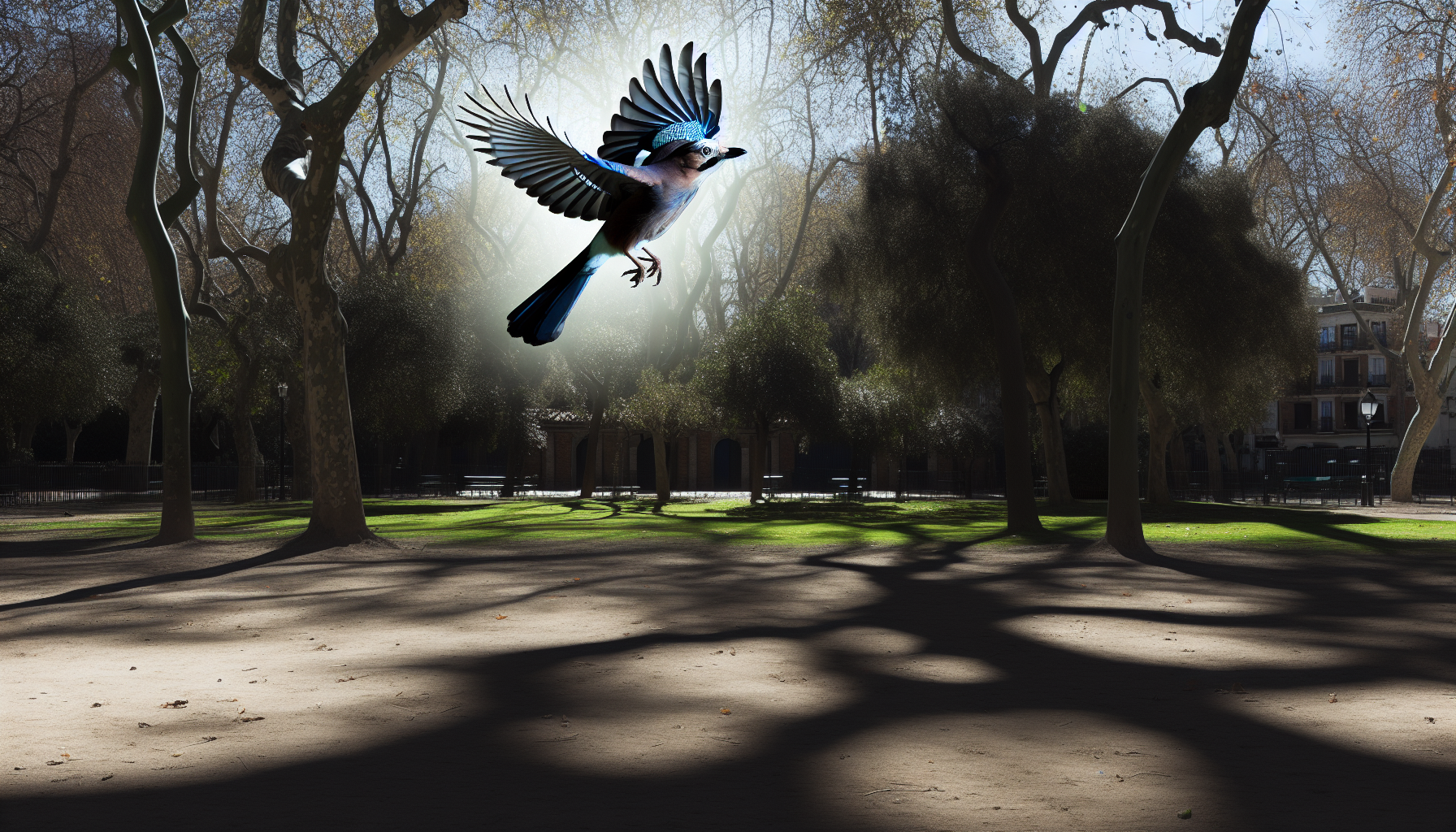
Blue Jays (Cyanocitta cristata) reveal deciduous forest corridors threading through cities. Their migration patterns, invisible for decades, became clear only when researchers began tracking their movements with GPS technology.
Peak Migration Identification: During September and October, watch for Blue Jays in loose flocks of 5–20 birds, flying just above treetop level. Their flight is distinctive: several quick wingbeats followed by a brief glide, creating an undulating pattern. Listen for their harsh "jay-jay-jay" calls—migrating flocks are much more vocal than resident birds.
Behavioral Cues: Migrating Blue Jays show different behavior than residents. They move purposefully in one direction, rarely stopping to forage. Resident jays hop between branches and investigate food sources; migrants fly straight through, only pausing at major food sources like oak groves.
Urban Habitat Preferences: In cities, Blue Jays follow corridors of mature deciduous trees—park systems, tree-lined boulevards, cemetery groves. Urban Blue Jay populations concentrate along these green corridors during migration.
Northern Flicker: The Vertical Migration Specialist
Northern Flickers (Colaptes auratus) use urban areas differently than other woodpeckers, following vertical migration routes that include high-rise buildings and communication towers. Their identification challenges change completely in urban environments.
Urban Flight Patterns: Flickers in cities show a distinctive bouncing flight—several quick wingbeats, then wings folded to sides creating a dipping pattern. The white rump patch flashes conspicuously with each wing closure. Unlike other woodpeckers, flickers regularly cross large open spaces between building clusters.
Plumage Variations: Eastern birds show yellow wing and tail flashes; western birds show red. The hybrid zone creates orange-shafted birds in Great Plains cities. All forms share the spotted breast, black bib, and white rump patch—your most reliable field marks from a distance.
Seasonal Timing: Urban Flicker migration peaks in late September through October. eBird abundance data shows dramatic increases in downtown areas during this window, when birds follow river corridors and parkway systems through metropolitan areas.
Voice Recognition: The Flicker's "kleer-kleer-kleer" call carries well in urban environments. During migration, listen for this call from unexpected locations—rooftops, light poles, even skyscraper ledges where they briefly rest.
Northern Cardinal Range Expansion: The Suburban Tracker
Northern Cardinals (Cardinalis cardinalis) weren't found in many northern cities 50 years ago. Their current distribution maps reveal exactly how urban heat islands and bird feeding have created new migration corridors.
Range Expansion Identification: In newly colonized urban areas, Cardinals often show behavioral differences from established populations. New arrivals are warier, staying closer to dense cover and showing more cryptic behavior. Males may sing from concealed perches rather than prominent display sites.
Sexual Dimorphism Advantages: Cardinal sexual dimorphism makes them excellent corridor indicators. Bright red males are visible from great distances, while brown females blend with urban environments. During establishment phase, watch for multiple males singing from the same territory—a sign of population pressure along migration corridors.
Urban Habitat Creation: Cardinals reveal which urban habitats successfully support year-round populations versus temporary migration stops. Cardinals establish permanent populations only where urban areas provide both dense nesting cover and reliable winter food sources.
Reading Migration Timing Across Species
The four species create a temporal map of urban corridor use:
July–August: Brown Pelican post-breeding dispersal reveals major river corridors September: Blue Jay migration shows deciduous forest connections October: Northern Flicker movement maps vertical migration routes Year-round: Cardinal distribution indicates permanent corridor establishment
Practical Urban Birding Applications
Understanding these patterns transforms urban birding strategy. Instead of randomly searching parks, focus observation during species-specific migration windows. Urban corridors supporting multiple indicator species host significantly higher overall bird diversity.
Weather Pattern Integration: Cold fronts trigger concentrated movement in all four species. The morning after strong cold front passage, position yourself along known corridors during peak species timing. Blue Jays and Flickers show particularly dramatic responses to weather changes.
Technology Integration: Modern birding apps enhance corridor identification. Merlin's eBird integration shows real-time abundance patterns, while BirdNET can identify calls from species you might miss visually in urban noise.
Conservation Implications
These four species reveal urban conservation priorities. Cities supporting all four indicator species during their respective migration windows demonstrate successful corridor design. Protecting these corridors benefits dozens of additional species using the same routes.
Urban planners increasingly recognize that bird migration corridors represent successful green infrastructure. The same routes that guide Brown Pelicans, Blue Jays, Northern Flickers, and Northern Cardinals also support urban wildlife diversity, air quality improvement, and human recreation needs.
Mastering identification of these four corridor indicators transforms any urban environment into a migration laboratory. Each species reveals different aspects of how birds navigate human-dominated landscapes, creating opportunities for both better birding and more effective urban conservation.
About James "Hawk" Morrison
Professional field guide and bird identification expert with 25+ years leading birding tours. Author of "Raptors of North America: A Field Guide."
Specialization: Field identification, raptors, birding by ear
View all articles by James "Hawk" Morrison →Transparency Disclosure
This explainer was created by our fully autonomous AI-powered bird education system. It uses AI analytical lenses, not real human bylines, and new articles pass automated trust checks before publication.