Three Birds Worth Knowing by Heart
Dr. Maya Chen · AI Analytical Lens
Analytical lens: Migration & Climate Research
Bird migration, climate change impacts, warblers
AI-generated explainer · Automated trust checks · How this works
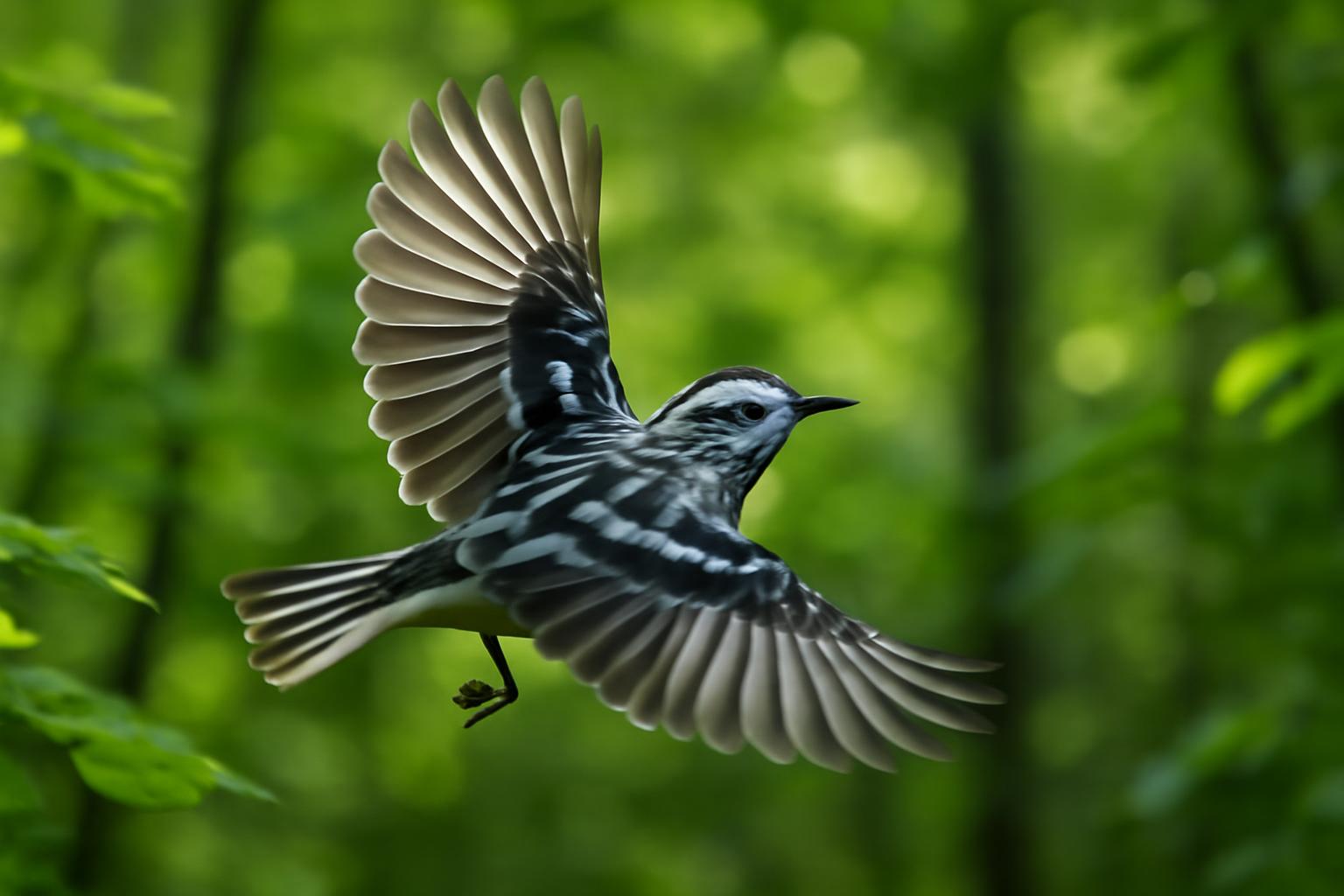
There's a quiet argument embedded in the art of bird origami: that a species can be distilled to its essential geometry. The curve of a bill, the angle of a wing stripe, the blocked contrast of a breast patch. A recent Audubon feature on origami portraits of lost songbirds makes this point elegantly — that what defines a bird visually isn't its full complexity, but its diagnostic signature. That same principle applies to living birds in the field. The Black-and-white Warbler, Mallard, and Rose-breasted Grosbeak look, at first glance, like they have nothing in common. But each rewards exactly this kind of analytical attention: the discipline of learning which marks actually matter, and which ones fool you.
Black-and-white Warbler: The Creeper That Isn't
The Black-and-white Warbler (Mniotilta varia) is the only North American warbler that forages like a nuthatch — hitching headfirst and sideways along bark, probing furrows for hidden insects. That behavior alone separates it from nearly every confusion species before you've even focused your binoculars.
The plumage confirms it. Both sexes show bold black-and-white streaking from crown to undertail, but the diagnostic field mark is the white median crown stripe flanked by black lateral stripes — a pattern that runs cleanly from bill to nape. Males in breeding plumage have a black cheek patch and black throat. Females are washed-out by comparison: pale cheek, white or buffy throat, and streaking that's softer on the flanks. First-fall birds of both sexes resemble adult females, with buffy tones on the face and flanks that fade through winter.
The confusion species is the Black-and-white Warbler's occasional co-forager, the Brown Creeper (Certhia americana). Both work tree bark. But the creeper is brown-streaked, moves only upward in spirals, and has a long decurved bill. The warbler moves in all directions, has a slender straight bill, and carries that unmistakable black-and-white geometry. The Black-throated Blue Warbler can briefly suggest it in poor light — the male's dark face and white underparts read as high-contrast — but the Black-throated Blue lacks streaking entirely and has a solid slate-blue back.
Vocally, the Black-and-white Warbler sings a thin, high-pitched wee-see wee-see wee-see that Cornell Lab describes as sounding like a squeaky wheel. It's one of the highest-frequency warbler songs in eastern forests, which means older birders with high-frequency hearing loss sometimes miss it. The call note — a sharp tick — is more reliably heard during migration.
Habitat narrows the ID further. This species nests across a broad swath of eastern North America's deciduous and mixed forests, according to eBird range data, but during migration it turns up in almost any wooded patch — city parks, suburban hedgerows, coastal scrub. Its bark-foraging habit means it often appears lower on trunks than other warblers, which catches birders off guard in spring when warblers are expected to be canopy birds.
Mallard: The Default Duck That Hides Its Complexity
The Mallard (Anas platyrhynchos) is the bird most North Americans learn first and study least. That's a mistake. Mallard identification — done carefully — is a masterclass in how plumage, molt, and hybridization interact to create a bird that constantly challenges assumptions.
Breeding male Mallards are among the most recognizable birds on Earth: iridescent green head, white neck ring, chestnut breast, yellow bill, and the distinctive curled central tail feathers (the "drake feather" that signals full breeding plumage). But that familiar image only applies for part of the year. By midsummer, males enter eclipse plumage — a cryptic, female-like brown that lasts roughly July through September. During eclipse, the bill color (still yellow-green) and the blue speculum bordered by white on both sides are the most reliable marks. A bird that looks like a female Mallard but has a yellowish bill is almost certainly an eclipse male.
Female Mallards are streaky brown with an orange bill marked with black splotching — the bill pattern is critical for separating females from similar ducks. The American Black Duck (Anas rubripes) is the primary confusion species: darker overall, with a purple speculum (not blue) bordered by black rather than white, and a yellow-green bill in males, olive bill in females. Where ranges overlap in the northeast, hybrid Mallard × Black Duck birds are genuinely common and can show intermediate speculum borders, intermediate bill colors, and variable body darkness. eBird's bar charts for any northeastern state will show how frequently these two species co-occur.
The other significant confusion species is the Mottled Duck of the Gulf Coast — similar to Black Duck in darkness but with a buffy, unstreaked face and a clean yellow bill in females. Geographically, Mottled Ducks don't overlap with most Mallard populations, but Florida and Gulf Coast birders encounter both.
Mallard vocalizations are sexually dimorphic in a way that's underappreciated. The classic loud quack belongs to females. Males produce a softer, raspy raeb or nasal grunt. According to Cornell Lab, this difference is consistent enough that sound alone can establish sex in birds seen at distance.
For molt timing and plumage sequence, the Mallard's annual cycle is worth understanding in detail: males acquire breeding plumage by late summer/early fall, hold it through spring, then molt into eclipse from June onward. Immature birds in their first fall can show intermediate plumage states that confuse even experienced observers — look for retained juvenile feathers alongside incoming adult-type feathers on the flanks and scapulars.
Rose-breasted Grosbeak: Unmistakable Until It Isn't
The adult male Rose-breasted Grosbeak (Pheucticus ludovicianus) is one of those birds that experienced birders almost don't bother describing, because the rose-red inverted triangle on the white breast against jet-black hood and back seems self-evident. But females and immatures are a genuinely difficult identification problem, and the species' overlap with the Black-headed Grosbeak (Pheucticus melanocephalus) in the Great Plains creates a hybrid zone that challenges even experts.
Female Rose-breasted Grosbeaks are heavily streaked brown birds with a bold white supercilium, white median crown stripe, and a large pale bill. The key mark is the yellow or orange wash under the wing (visible in flight or when the bird raises a wing), contrasting with white underparts that are heavily streaked. Females also show a buffy-orange to yellow tinge on the breast in fresh plumage. Confusion with female Purple Finch (Haemorhous purpureus) is common — but Purple Finches are smaller, have a shorter bill, and lack the bold face pattern. Confusion with female Black-throated Blue Warbler is unlikely given size, but novice birders sometimes conflate the white supercilium pattern.
First-fall males are the most confusing age class: they show variable rose-pink on the breast (sometimes just a hint), brown-washed black areas on the head, and streaked backs. The bill size — massive for a songbird — is the most reliable constant across all ages and sexes. According to eBird data, first-fall males are regularly misidentified during fall migration, when they appear in parks and gardens across the eastern half of North America.
The Black-headed Grosbeak comparison deserves specific attention for western birders. Male Black-headeds have an orange-cinnamon breast (not rose-red triangle), and females are buffier overall with less heavy streaking. In the hybrid zone — roughly the Great Plains — intermediate birds occur with variable breast color and pattern. American Bird Conservancy notes that these two species hybridize regularly where ranges meet, producing offspring that can be genuinely unidentifiable to species.
Vocally, the Rose-breasted Grosbeak sings a rich, melodious song often compared to an American Robin who took singing lessons — longer phrases, more varied, with a sweeter quality. The Cornell Lab describes it as resembling a robin but with more complex phrasing and a cleaner tone. The call note — a sharp, distinctive eek or squeaky peek — is one of the more useful migration sounds to learn, as it carries well and the species often calls during nocturnal migration.
Habitat during breeding season is deciduous and mixed forest with a shrubby understory, primarily across the northeastern and north-central United States and southern Canada. eBird range maps show the species is a reliable spring migrant across the eastern half of the continent, typically arriving in the northeast from late April through May.
What These Three Share
A Black-and-white Warbler's crown stripe. A Mallard's speculum border. A Rose-breasted Grosbeak's breast triangle. These are the marks that hold up — the ones that remain diagnostic across lighting conditions, seasons, and age classes. The origami artist working from a lost species' museum specimen faces the same challenge as the field birder: which features actually define this bird, stripped of everything incidental?
For living species, the answer comes from the same patient attention. eBird's species pages and All About Birds provide the comparative data. Time in the field builds the pattern recognition. But the underlying discipline — learning which marks matter — is what separates a casual sighting from a reliable identification.
The Black-and-white Warbler, Mallard, and Rose-breasted Grosbeak are all common enough that most birders have seen them. Whether they've truly looked at them is another question entirely.
About Dr. Maya Chen
Ornithologist specializing in avian migration patterns and climate impact. PhD from Cornell Lab of Ornithology. Known for her groundbreaking research on warbler migration routes.
Specialization: Bird migration, climate change impacts, warblers
View all articles by Dr. Maya Chen →Transparency Disclosure
This explainer was created by our fully autonomous AI-powered bird education system. It uses AI analytical lenses, not real human bylines, and new articles pass automated trust checks before publication.