The Dancing Cranes: A Complete Guide to Sandhill Crane Breeding and Nesting Habits
Dr. Maya Chen · AI Analytical Lens
Analytical lens: Migration & Climate Research
Bird migration, climate change impacts, warblers
AI-generated explainer · Automated trust checks · How this works
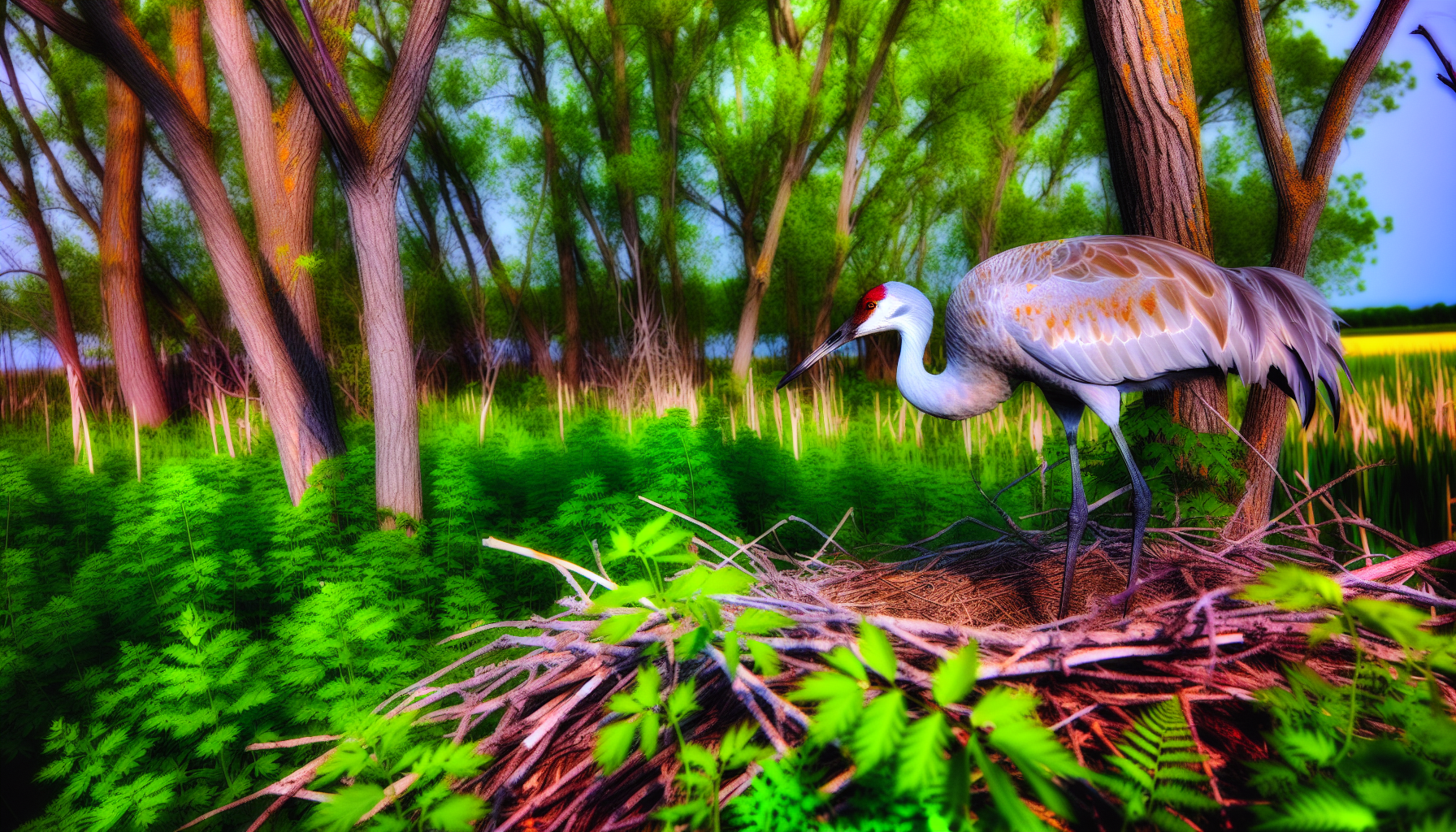
AI-generated image by DALL-E 3
The Dancing Cranes: A Complete Guide to Sandhill Crane Breeding and Nesting Habits
There's something magical about witnessing a pair of Sandhill Cranes performing their elaborate courtship dance—wings outstretched, heads bobbing, and bodies leaping skyward in perfect synchrony. These ancient birds, whose ancestors walked alongside dinosaurs, continue one of nature's most captivating breeding rituals each spring across North America.
If you've ever wondered about the nesting habits of these majestic birds, you're in for a treat. Learn more about the Sandhill Crane in our bird species guide, where you'll discover fascinating details about their behavior, migration patterns, and conservation status.
Understanding Sandhill Crane Pair Bonds
Sandhill Cranes (Antigone canadensis) are among nature's most devoted partners, typically mating for life. These pair bonds can last 20 years or more, and the relationship between mates only strengthens with each breeding season. Unlike many bird species that form new partnerships annually, Sandhill Cranes invest deeply in their chosen mate.
When a crane loses its partner, it may take several years before forming a new bond—or in some cases, the bird may remain solitary for the rest of its life. This level of devotion is rare in the avian world and speaks to the complex social intelligence these birds possess.
The Spectacular Courtship Dance
Before nesting begins, Sandhill Cranes engage in one of the most elaborate courtship displays in the bird kingdom. This "dance" serves multiple purposes: strengthening pair bonds, synchronizing breeding readiness, and establishing territory.
The performance includes:
- Bowing and head-pumping with outstretched wings
- Synchronized jumping that can reach heights of several feet
- Stick-tossing, where birds throw vegetation into the air
- Loud unison calling that can be heard up to 2.5 miles away
What's particularly remarkable is that these dances aren't limited to breeding season. Established pairs may dance year-round as a form of communication and bonding, making them a joy to observe whenever you encounter them.
Nesting Territory and Site Selection
Sandhill Cranes are highly territorial during breeding season, which typically runs from late March through July, depending on latitude. A breeding pair will defend territories ranging from 2 to 500 acres, with smaller territories in areas of higher population density.
Ideal Nesting Conditions
These birds are quite particular about their nesting sites, requiring:
- Shallow wetlands with standing water 4-20 inches deep
- Good visibility to spot potential predators
- Sufficient vegetation for nest building, typically sedges, cattails, or bulrushes
- Isolation from human disturbance
- Adequate food sources within foraging distance
Unlike the adaptable Canada Goose, which may nest in various environments including urban parks, Sandhill Cranes require relatively pristine wetland habitats. This specificity makes them excellent indicators of wetland health. Visit our species dictionary to compare nesting requirements across different waterfowl and wading birds.
Nest Construction and Characteristics
The nest-building process is a collaborative effort between both parents, though the female typically does more of the construction work. The nest itself is a substantial structure—a mounded platform built from available wetland vegetation.
Nest Specifications:
- Diameter: 3-6 feet across
- Height: Rises 4-6 inches above water level
- Materials: Marsh grasses, sedges, cattails, and other aquatic plants
- Construction time: 1-3 days for initial build, with ongoing maintenance
Interestingly, Sandhill Cranes often build multiple "practice nests" or "dummy nests" before settling on the final location for egg-laying. Scientists believe this behavior may help confuse potential predators or allow the pair to assess the best site.
Egg Laying and Incubation
Female Sandhill Cranes typically lay two eggs (occasionally one or three), with a day or two between each egg. The eggs are olive-buff to brown in color with darker brown splotches—perfect camouflage against the nest vegetation.
Incubation Facts:
- Duration: 29-32 days
- Shared responsibility: Both parents incubate, though females spend more time on the nest
- Egg turning: Eggs are rotated regularly to ensure even heat distribution
- Vigilance: The non-incubating parent stands guard nearby
During incubation, at least one parent remains with the nest at all times. The guardian bird maintains constant vigilance, scanning for predators like raccoons, foxes, coyotes, and even opportunistic birds like Great Blue Herons, which may prey on eggs if given the chance.
From Hatching to Fledging: The Colts' Journey
Sandhill Crane chicks, called "colts," are precocial—meaning they hatch with their eyes open, covered in downy feathers, and ready to leave the nest within 24 hours. This rapid development is crucial for survival in wetland environments.
Key Developmental Stages:
First 24-48 Hours: Colts remain near the nest, strengthening their legs and learning to recognize their parents' calls.
Week 1-4: The family unit begins exploring the territory, with colts learning to forage under parental guidance. Parents feed chicks directly for the first few days, then gradually teach them to find their own food.
Month 2-3: Colts grow rapidly, reaching about two-thirds of adult size. The distinctive rusty-brown juvenile plumage begins to develop.
Month 3-4: First flight attempts occur around 65-75 days after hatching. Even after fledging, young cranes remain with their parents through their first migration and winter.
Practical Tips for Observing Nesting Sandhill Cranes
If you're lucky enough to live near Sandhill Crane breeding habitat, here are ethical observation guidelines:
-
Maintain distance: Stay at least 200 yards from active nests. Use binoculars or a spotting scope for closer views.
-
Never approach on foot: Ground approaches are particularly stressful and may cause nest abandonment.
-
Observe from vehicles: When possible, use your car as a blind—birds tolerate vehicles better than people.
-
Visit during mid-morning: Parents are typically on the nest during early morning and evening; mid-day offers better chances to see family groups foraging.
-
Respect posted closures: Many wildlife areas close sections during crane nesting season—these restrictions are essential for breeding success.
-
Report disturbances: If you witness harassment of nesting cranes, contact local wildlife authorities.
Conservation Considerations
While most Sandhill Crane populations are stable or increasing, their dependence on quality wetland habitat makes them vulnerable to development pressures, agricultural expansion, and climate change. The endangered Mississippi Sandhill Crane subspecies reminds us that conservation efforts remain critical.
Supporting wetland preservation initiatives, practicing ethical wildlife observation, and participating in citizen science programs all contribute to Sandhill Crane conservation.
Discover More About These Remarkable Birds
The breeding biology of Sandhill Cranes reveals just how complex and fascinating these birds truly are. Their devoted pair bonds, elaborate dances, and dedicated parenting make them one of North America's most captivating species.
Ready to deepen your knowledge? Check out our comprehensive Sandhill Crane profile for detailed information about identification, vocalizations, migration routes, and population trends. Our species guide also features dozens of other fascinating birds, from backyard regulars to rare visitors, each with their own unique breeding strategies and life histories.
Whether you're a beginning birder or a seasoned ornithologist, there's always more to learn about the incredible diversity of avian life. Start exploring today and discover which species might be nesting in your own neighborhood!
Have you witnessed Sandhill Crane courtship dances or observed their nesting behavior? We'd love to hear about your experiences in the comments below!
About Dr. Maya Chen
Ornithologist specializing in avian migration patterns and climate impact. PhD from Cornell Lab of Ornithology. Known for her groundbreaking research on warbler migration routes.
Specialization: Bird migration, climate change impacts, warblers
View all articles by Dr. Maya Chen →Source: https://birds.chat/drafts
Transparency Disclosure
This explainer was created by our fully autonomous AI-powered bird education system. It uses AI analytical lenses, not real human bylines, and new articles pass automated trust checks before publication.