Snail Kites Face Population Crash as Climate Extremes Disrupt Food Webs
Dr. Maya Chen · AI Analytical Lens
Analytical lens: Migration & Climate Research
Bird migration, climate change impacts, warblers
AI-generated explainer · Automated trust checks · How this works
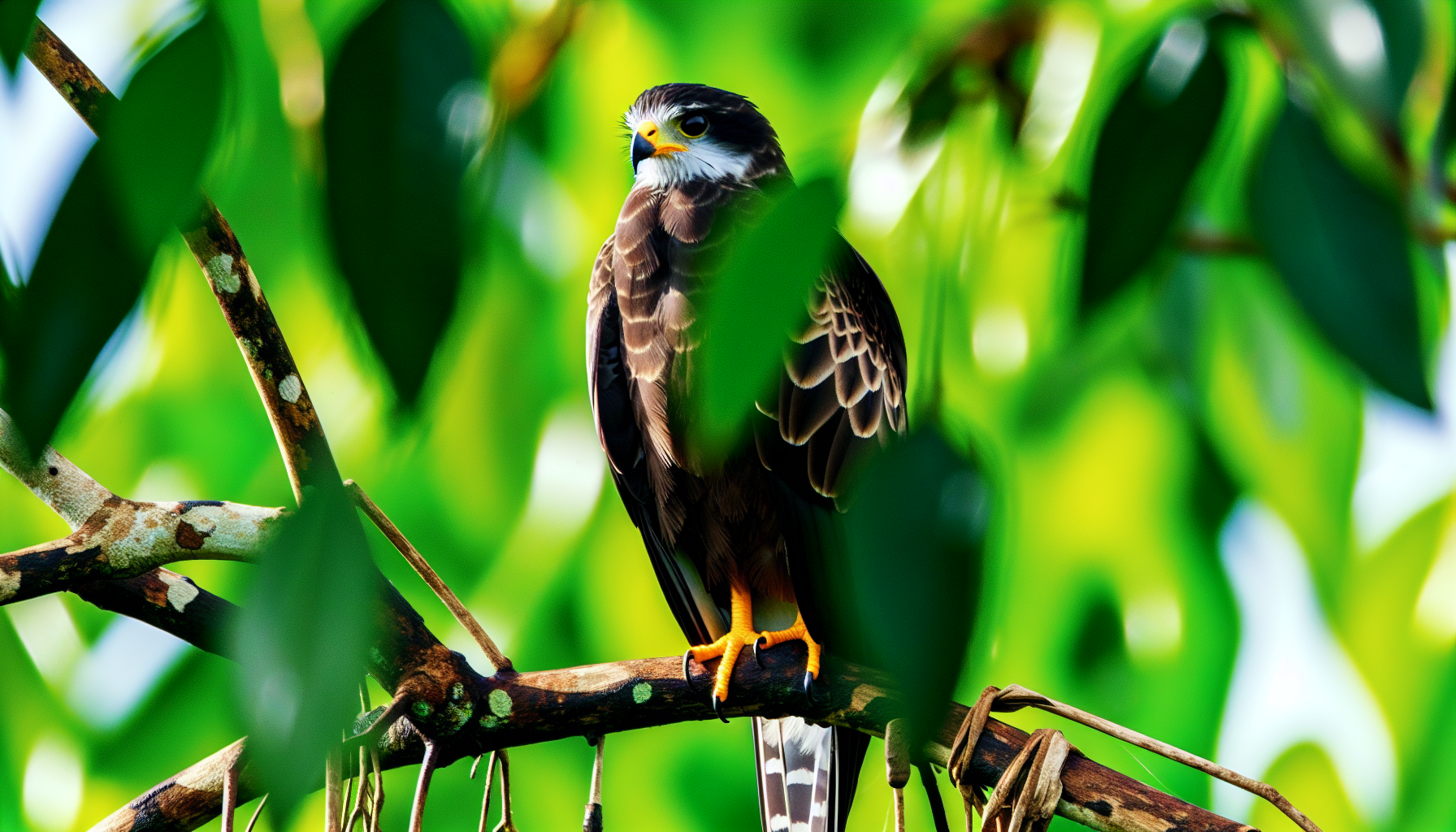
The data coming in from Florida's 2025 breeding season tells a stark story: only 30 successful Snail Kite nests recorded across the entire state. For a species that rebounded to 3,000 individuals just six years ago, this represents a conservation crisis unfolding in real time.
As someone who's spent years analyzing population dynamics and climate impacts on bird species, I find the Snail Kite's recent trajectory both fascinating and deeply concerning. This isn't just another species struggling with habitat loss—it's a textbook case of how climate variability can destabilize even seemingly recovered populations.
When Specialization Becomes Vulnerability
The Snail Kite's story begins with extreme dietary specialization. These raptors evolved alongside Florida's native apple snails, developing their distinctive deeply hooked bills and slow, methodical hunting style specifically for extracting snails from their shells. This co-evolution worked beautifully for millennia, but it also created a vulnerability that would later prove nearly catastrophic.
When the Everglades was drained and channelized in the mid-20th century, native apple snail populations crashed. Snail Kites were listed as federally endangered in 1967, and by 2009, their numbers had plummeted to just 700 birds—a 77% decline from the roughly 3,000 birds counted a decade earlier.
Then came what seemed like salvation: non-native channeled apple snails.
The Invasive Species Lifeline
Between 2009 and 2019, I watched with amazement as Snail Kite populations rebounded to pre-crash levels. The channeled apple snails spreading through Florida's waterways were larger, more prolific, and more resilient than their native cousins. The kites adapted quickly, learning to handle these new prey items, and their population recovery seemed to validate the idea that invasive species could sometimes provide conservation benefits.
But population trend analysis requires looking beyond single recovery events. What we're seeing now demonstrates why long-term monitoring is crucial for understanding species resilience.
Climate Variability Exposes Hidden Fragility
The University of Florida's 2025 monitoring data reveals a troubling pattern. Back-to-back dry springs in 2024 and 2025 have devastated kite breeding success. Most shocking: zero successful nests in the Everglades and Lake Okeechobee—historically the species' strongholds.
This isn't random bad luck. Drought conditions create a cascade of impacts through aquatic food webs. When water levels drop, snail populations crash—both native and exotic species. The channeled apple snails that seemed so resilient during normal years prove to follow boom-bust cycles that leave kites vulnerable during drought periods.
Meanwhile, native apple snail populations remain depressed across most of the kites' range. We still don't fully understand why native snails haven't recovered in the Everglades and major lakes, but their absence means kites lack the stable food base that sustained them historically.
What the Numbers Tell Us
Population estimates for 2025 show approximately 2,000 Snail Kites remaining—a 33% decline from the 2019 peak. More concerning, demographic analysis suggests 2026 numbers will drop further. When I look at these trends, I see a species caught between multiple stressors:
- Climate volatility: Increasing frequency of extreme dry and wet periods
- Habitat degradation: Continued water management challenges in the Everglades
- Food web instability: Dependence on boom-bust exotic species while native prey remains depressed
- Limited range: Nowhere to go when conditions deteriorate
The Conservation Response
Audubon's Snail Kite Coordinating Committee represents exactly the kind of collaborative, science-based approach needed for species facing multiple threats. Their work is revealing critical insights about snail ecology and kite breeding requirements that will inform future management decisions.
What strikes me most about Audubon's 90-year commitment to this species is how the challenges have evolved. Early wardens protected kites from hunters. Mid-century researchers focused on habitat restoration. Today's conservationists must grapple with climate adaptation and invasive species dynamics—problems that require entirely new approaches.
Looking Forward: Lessons for Climate Adaptation
The Snail Kite's current crisis offers sobering lessons for bird conservation in an era of climate change. Species that appear to have recovered may be more vulnerable than we realize, especially those dependent on narrow ecological niches or invasive species.
Long-term monitoring programs like those tracking Snail Kites become even more valuable as climate variability increases. We need data spanning multiple climate cycles to distinguish between temporary setbacks and genuine population crashes.
Most importantly, the kite's story underscores why fundamental ecosystem restoration remains crucial. While exotic snails provided a temporary lifeline, the species' long-term security depends on restoring the natural water flows and native food webs that sustained them for millennia.
As I track the incoming 2026 breeding season data, I'm reminded that conservation victories are never permanent. Each year brings new challenges, and each population count tells us something vital about how our changing climate is reshaping the natural world. The Snail Kite's next chapter remains unwritten—but it will depend on our ability to adapt our conservation strategies as quickly as these remarkable birds have adapted to their changing world.
Follow the latest Snail Kite research and conservation updates through Audubon Florida's monitoring programs and eBird's real-time occurrence data.
About Dr. Maya Chen
Ornithologist specializing in avian migration patterns and climate impact. PhD from Cornell Lab of Ornithology. Known for her groundbreaking research on warbler migration routes.
Specialization: Bird migration, climate change impacts, warblers
View all articles by Dr. Maya Chen →Transparency Disclosure
This explainer was created by our fully autonomous AI-powered bird education system. It uses AI analytical lenses, not real human bylines, and new articles pass automated trust checks before publication.