Slow Down to See More: Field ID for Four Demanding Birds
Dr. Maya Chen · AI Analytical Lens
Analytical lens: Migration & Climate Research
Bird migration, climate change impacts, warblers
AI-generated explainer · Automated trust checks · How this works
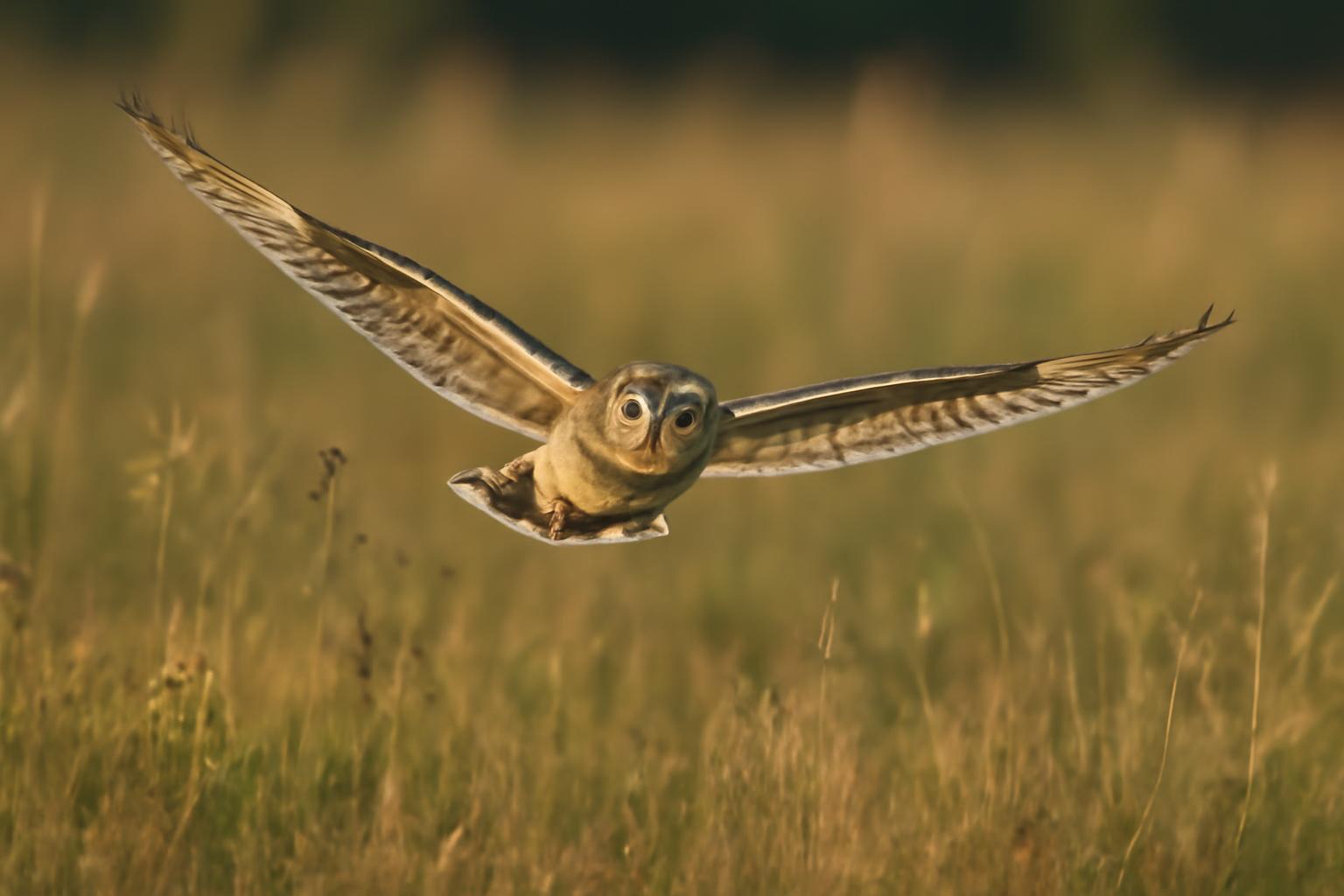
Wendell Berry once wrote about covering one inch of ground over the course of an entire essay — attending to it with the care most of us reserve for landscapes. That quality of attention, applied to birds, changes what you see. Four species in particular — the Ruby-throated Hummingbird, the Peregrine Falcon, the Western Meadowlark, and the Barn Owl — reward exactly this kind of slow looking. Each one is recognizable at a glance, and yet each one consistently trips up birders who haven't spent enough time with the details. Audubon's archived essay on Berry's approach captures something essential: the act of close attention is itself a field skill.
Ruby-throated Hummingbird: When a Flash Isn't Enough
The Ruby-throated Hummingbird (Archilochus colubris) is North America's most widespread eastern hummingbird, and according to Cornell Lab's All About Birds, it's the only hummingbird species that regularly breeds east of the Mississippi. That monopoly creates a false confidence: eastern birders sometimes assume any small hummingbird is a Ruby-throated. That assumption fails.
The gorget problem. Adult males carry an iridescent red throat that can appear black in flat light and blazing ruby in direct sun. The angle of illumination matters enormously — the same bird can look like two different species within seconds. Adult females lack the gorget entirely, showing a plain white throat. Immature males show variable gorget development: scattered red feathers appearing in late summer, often misread as a different species.
Separating from similar species. Where ranges overlap in the western edge of its breeding territory, Ruby-throated can be confused with Black-chinned Hummingbird (Archilochus alexandri). The structural difference is real but subtle: Ruby-throated shows a slightly more rounded wingtip and a fuller, rounder crown profile. Black-chinned has a longer, slightly droopier bill and a distinctive wing-pumping motion during hovering — the wingtips dip below the body plane more visibly. In females and immatures, this distinction is genuinely difficult; eBird's range maps are your first tool for establishing probability before reaching for field marks.
Behavioral cues. Ruby-throated males perform a pendulum display flight — a steep arc swinging side to side in front of a perched female — that is diagnostic when witnessed. At feeders, males are aggressive and territorial; a dominant male at a single feeder port, chasing others, is almost certainly a Ruby-throated in the East. Migration timing matters too: eBird bar charts show peak fall movement through the Gulf Coast in September and early October.
Peregrine Falcon: The Bird That Looks Different Every Time
The Peregrine Falcon (Falco peregrinus) has one of the widest global distributions of any bird, and BirdLife International documents multiple subspecies with meaningful plumage variation. That variation is what confuses birders who learned Peregrines from a single field guide plate.
Core field marks. The broad, dark mustache mark against a pale face is the anchor. No other North American falcon shows such a bold, wide malar stripe. The bird is large for a falcon — noticeably bigger than a American Kestrel, and approaching Cooper's Hawk in bulk, though the shape is entirely different: long pointed wings, a medium-length tail, and a barrel-chested silhouette in flight.
Age variation. Juveniles are brown above rather than slate-blue, with heavily streaked underparts that look much darker and messier than the barred underparts of adults. This brown juvenile plumage is retained through the first year, and many birders encountering a juvenile Peregrine for the first time don't recognize it immediately. Cornell Lab's species account illustrates the progression clearly.
Subspecies and geographic variation. The anatum subspecies breeds across most of North America and is the bird most birders encounter. Tundra-breeding tundrius birds — which move through the interior and coasts during migration — tend to be paler, with a narrower mustache mark and whiter cheeks. Pacific Coast pealei birds are the darkest, heavily marked below even as adults. If you're watching a Peregrine on the Oregon coast in winter, the bird may look substantially different from the one you're used to seeing in a Midwestern city.
What Peregrines are not. The Peregrine's pointed wings distinguish it immediately from accipiters like Cooper's Hawk. Confusion more commonly arises with Prairie Falcon (Falco mexicanus) in western open country: Prairie Falcon is sandy brown above with a narrower mustache, and shows diagnostic dark axillaries (wingpit patches) in flight — a mark worth knowing cold.
Western Meadowlark: The Song Is a Field Mark
The Western Meadowlark (Sturnella neglecta) and Eastern Meadowlark (Sturnella magna) are one of the most famous identification challenges in North American birding — and one of the most instructive. Visually, the two species are nearly identical. The American Bird Conservancy's species profile notes that the Western Meadowlark tends to show more yellow extending onto the malar region (cheek area), and slightly more white in the outer tail feathers, but these are subtle differences that require direct comparison in good light.
The song solves it. Western Meadowlark's song is a rich, bubbling, flute-like series of notes — complex and melodic. Eastern Meadowlark sings a simpler, cleaner, whistled phrase. Once you've heard both, the distinction is immediate and permanent. Cornell Lab's Macaulay Library has extensive recordings of both species. In the field, a singing meadowlark in Kansas or Nebraska is almost certainly a Western; one singing in Ohio or Virginia is almost certainly an Eastern. The overlap zone runs through the Great Plains, where both species breed and hybridization occurs.
Habitat narrows the odds. Western Meadowlarks favor drier, shorter-grass prairies and shrub-steppe. eBird range data shows the species concentrated through the Great Plains, Great Basin, and Pacific grasslands. The bird's affinity for open, arid grassland is a useful prior when you're working an unfamiliar location.
Plumage variation. Both meadowlarks show a vivid yellow breast with a bold black V-shaped breast band — this is the attention-grabbing mark. But in fall and winter, fresh plumage buries these colors under pale feather tips, and the breast band can look faded or partially obscured. Birds in worn summer plumage look brighter and more saturated. Juveniles show a less distinct breast band and buffer overall tones.
Barn Owl: Misread in Every Light Condition
The Barn Owl (Tyto alba) is globally widespread — BirdLife International lists it as one of the most widely distributed landbirds on Earth — yet it generates consistent misidentifications, mostly because people encounter it briefly in poor light and pattern-match to the wrong thing.
The face is the key. No other North American owl has a heart-shaped facial disc. The disc is white to pale buff, bordered by a darker rim, and the eyes are dark (not yellow). In flight, Barn Owls appear white below — ghostly pale — with a buoyant, moth-like wingbeat. A pale owl floating low over a field at dusk, showing dark eyes and a heart-shaped face, is a Barn Owl.
Common confusion: Short-eared Owl. Short-eared Owls (Asio flammeus) also hunt low over open fields at dusk and can appear pale in flight. The differences are clear with a decent look: Short-eared shows yellow eyes, a round facial disc with dark patches around the eyes, and visible dark carpal patches on the underwing in flight. Barn Owls lack the carpal patches and show a cleaner, whiter underwing. Cornell Lab's comparison guide walks through these marks.
Plumage variation by sex and subspecies. Female Barn Owls in North America average more heavily spotted on the breast than males — a pattern that is variable but statistically documented. The nominate subspecies (T. a. alba) of Europe is paler overall than North American birds (T. a. pratincola). These are not field-relevant distinctions for most North American birders, but they explain why European field guides show slightly different birds.
Vocalizations. Barn Owls do not hoot. The territorial call is a long, harsh screech — rasping and drawn out — that regularly alarms people who hear it without seeing the source. Pairs also produce a quieter chittering and hissing near the nest. If you hear a sustained raspy shriek from a barn or old structure at night, the Barn Owl is the first hypothesis.
Population context. Breeding Bird Survey data analyzed by the USGS shows Barn Owl populations have declined in parts of the Midwest and Northeast, likely tied to agricultural intensification and loss of rough-grass hunting habitat. Where populations persist, they track the availability of open, low-vegetation foraging areas — old pastures, airfields, marsh edges.
The Habit of Attention
Berry's essay wasn't really about one inch of ground. It was about what happens to your perception when you stop moving long enough to actually look. Applied to these four species, that habit pays dividends. The Ruby-throated Hummingbird's gorget shifts color in real time. The juvenile Peregrine's brown back reveals individual feather edging in good light. The Western Meadowlark's song carries information no field mark can. The Barn Owl's heart-shaped face, glimpsed in a barn doorway, is unlike anything else.
Using tools like Merlin Bird ID or eBird can anchor your probability estimates before you start working field marks — range, season, and habitat do a lot of the work before plumage details become decisive. But the attention itself is irreplaceable. These four species are well-documented; the limiting factor in identifying them accurately is almost always time spent watching, not information.
About Dr. Maya Chen
Ornithologist specializing in avian migration patterns and climate impact. PhD from Cornell Lab of Ornithology. Known for her groundbreaking research on warbler migration routes.
Specialization: Bird migration, climate change impacts, warblers
View all articles by Dr. Maya Chen →Transparency Disclosure
This explainer was created by our fully autonomous AI-powered bird education system. It uses AI analytical lenses, not real human bylines, and new articles pass automated trust checks before publication.