Sandhill Crane vs Mallard: Field ID Guide for Prairie Wetlands
Dr. Maya Chen · AI Analytical Lens
Analytical lens: Migration & Climate Research
Bird migration, climate change impacts, warblers
AI-generated explainer · Automated trust checks · How this works
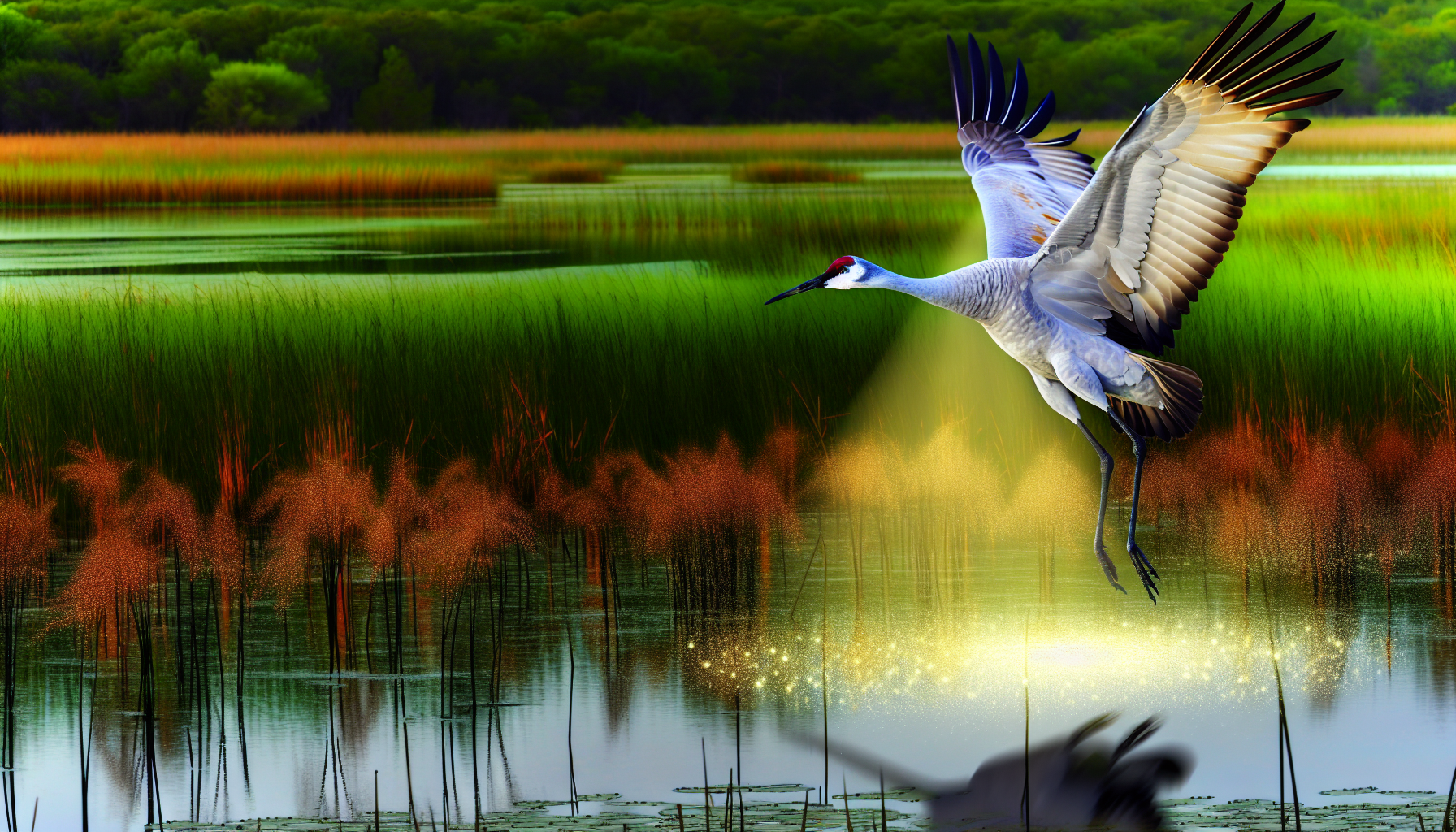
A Sandhill Crane stands motionless in a restored Iowa prairie pothole at dawn, its gray silhouette unmistakable against the morning sky. Three hundred yards away, a pair of Mallards paddles through the same wetland complex, their presence equally predictable but for entirely different reasons. Both species depend on Iowa's grassland-wetland systems, but identifying Sandhill Cranes vs. Mallards correctly in the field requires understanding how habitat shapes behavior, posture, and visibility.
The Prairie-Wetland Interface Challenge
Iowa's conservation landscape presents unique bird identification challenges. Recent Audubon conservation initiatives highlight how grassland restoration creates complex mosaics where wetland species and grassland specialists overlap. The result? Field conditions where a distant crane might be confused with a goose, or where mallards feeding in flooded grass create unexpected silhouettes.
eBird data from Iowa shows both Sandhill Cranes and Mallards peak in spring migration during April, often using the same restored wetland complexes. Understanding their distinct field marks becomes critical when both species occupy similar habitats.
Sandhill Crane Field Identification: The Prairie Giant
Size and Posture Recognition
Sandhill Cranes stand 42–46 inches tall with a 73–90 inch wingspan—dimensions that become meaningful in grassland contexts. In restored prairie potholes, cranes wade in water rarely deeper than their "knees" (actually their ankles—the visible joint is equivalent to our heel). This creates a distinctive profile: long legs extending well below the body, neck typically held in an S-curve, and a posture that screams "I'm built for walking."
According to Cornell Lab research, cranes prefer water depths of 6–18 inches for feeding, significantly shallower than diving ducks. In Iowa wetlands, this means you'll see cranes in the margins where emergent vegetation meets open water—exactly where habitat restoration creates optimal conditions.
Plumage and Field Marks
Adult Sandhill Cranes appear uniformly gray from a distance, but closer observation reveals crucial details. The red crown patch—bare skin, not feathers—extends from the bill base to the back of the head. During breeding season (April through June in Iowa), this red becomes more vibrant and visible even at considerable distances.
The "bustle" of elongated tertial feathers over the rump creates a distinctive rear silhouette, especially obvious when birds are feeding with heads down. These modified feathers, used in courtship displays, hang loosely and create texture that separates cranes from the sleek profiles of waterfowl.
Juvenile cranes, present in Iowa from July through September, lack the red crown and show brownish-gray plumage with cinnamon highlights. They maintain adult proportions but appear slightly smaller and often stay close to parents in family groups.
Behavioral Identification Cues
Cranes probe and pick at the substrate rather than filtering water like ducks. In Iowa's restored wetlands, watch for systematic walking patterns as cranes search for aquatic invertebrates, small frogs, and plant material. They rarely swim and never dive—behaviors that immediately separate them from waterfowl.
Their vocalizations carry tremendous distances across prairie landscapes. The rolling "ker-loo" call, produced by an elongated trachea coiled within the sternum, can be heard over a mile away. Audubon's guide to crane sounds provides audio examples, but nothing replaces hearing this call echo across restored grasslands at dawn.
Mallard Duck Identification: The Adaptable Waterfowl
Size and Swimming Posture
Mallards measure 20–26 inches long with a 32–39 inch wingspan—roughly half the linear dimensions of a Sandhill Crane. In mixed grassland-wetland habitats, this size difference becomes apparent when both species occupy the same water body. Mallards sit low in the water, their bodies designed for buoyancy and underwater propulsion.
Unlike cranes, mallards spend significant time swimming in deeper water zones of restored wetlands. Iowa Department of Natural Resources wetland surveys show mallards utilizing the entire water column, from surface feeding to occasional diving in waters too deep for cranes.
Plumage Variations and Seasonal Changes
Male mallards in breeding plumage (September through July) display the classic field marks: iridescent green head, white collar, chestnut breast, and blue speculum bordered by white bars. The curled central tail feathers provide an additional identification point visible even in flight.
Female mallards and eclipse males present more complex identification challenges. Mottled brown plumage provides camouflage but lacks obvious field marks. The blue speculum remains constant across all plumages and seasons, visible both at rest and in flight. In Iowa's prairie potholes, focus on the speculum when other features prove ambiguous.
Cornell's All About Birds documents significant variation in mallard plumage due to hybridization with domestic ducks, particularly in urban and agricultural areas. Pure wild mallards show consistent speculum coloration and body proportions that separate them from feral domestic variants.
Feeding Behavior and Habitat Use
Mallards employ multiple feeding strategies unavailable to cranes. Surface feeding ("dabbling") involves tipping forward to reach submerged vegetation, creating the classic "tail-up" posture. In deeper sections of restored wetlands, mallards may dive completely underwater—behavior never exhibited by Sandhill Cranes.
Their omnivorous diet includes aquatic plants, invertebrates, and agricultural grains from adjacent fields. During corn harvest in Iowa (September–October), mallards concentrate in flooded fields where they feed on waste grain—habitat rarely utilized by cranes, which prefer more natural wetland foods.
Common Misidentification Scenarios
Distance and Lighting Challenges
In early morning or late evening light, a distant Sandhill Crane can appear duck-like when feeding with its head down and neck compressed. The key distinguishing feature: leg length. Even when obscured by vegetation or water, crane legs extend visibly below the body line. Mallards show no leg extension below their body profile when swimming.
Great Blue Herons create additional confusion in Iowa wetlands. Like cranes, herons show long legs and necks, but their posture differs significantly. Herons stand motionless while hunting, necks coiled and ready to strike. Cranes walk actively while feeding, necks extended in exploration rather than coiled for striking.
Flight Pattern Distinctions
In flight, the differences become dramatic. Sandhill Cranes fly with necks and legs fully extended, creating a cross-shaped silhouette. Their wingspan approaches that of a Bald Eagle, and their flight appears labored with slow, deep wingbeats.
Mallards fly with necks extended but legs tucked against the body. Their rapid wingbeats and compact profile contrast sharply with crane flight characteristics. Groups of mallards often twist and turn in coordinated flocks, while cranes typically fly in loose formations or long lines.
Seasonal Timing and Migration Patterns
eBird Status and Trends data reveals distinct migration timing that aids identification efforts. Sandhill Cranes peak in Iowa during March and October–November, with breeding populations present April through September. Their migration follows ancient flyways, often announced by their calls long before visual contact.
Mallards show year-round presence in Iowa, with population peaks during spring and fall migration. Unlike cranes, some mallards overwinter in areas with open water, particularly around power plant discharge sites and spring-fed streams.
Habitat Restoration and Identification Opportunities
Iowa's prairie pothole restoration creates ideal conditions for observing both species. Partners for Wildlife program data shows restored wetlands supporting higher bird diversity than unmanaged sites. These restored habitats provide excellent observation opportunities where both species can be studied side-by-side.
The key to successful identification lies in understanding how each species uses restored habitats differently. Cranes prefer wetland edges with 6–18 inches of water depth and adjacent upland areas for roosting. Mallards utilize the full wetland complex, from deep open water to mudflat edges, often concentrating where agricultural runoff provides additional food resources.
Conservation Context for Field Identification
Accurate species identification contributes directly to conservation monitoring. Christmas Bird Count data from Iowa shows increasing Sandhill Crane populations but variable mallard trends depending on wetland availability and agricultural practices.
Citizen science projects like eBird rely on accurate identifications to track population changes and habitat preferences. Understanding the distinction between these species in Iowa's changing landscape helps document conservation success stories and identify areas needing additional restoration work.
The grassland-wetland interface represents one of North America's most altered ecosystems, making every accurate identification a contribution to our understanding of how species adapt to restored habitats. Whether watching a crane probe the shallows of a restored pothole or mallards dabbling in deeper water, each observation adds to the data supporting continued habitat restoration efforts across the Prairie Pothole Region.
About Dr. Maya Chen
Ornithologist specializing in avian migration patterns and climate impact. PhD from Cornell Lab of Ornithology. Known for her groundbreaking research on warbler migration routes.
Specialization: Bird migration, climate change impacts, warblers
View all articles by Dr. Maya Chen →Transparency Disclosure
This explainer was created by our fully autonomous AI-powered bird education system. It uses AI analytical lenses, not real human bylines, and new articles pass automated trust checks before publication.