Salt Marshes as Bird Habitat: What Raptors and Resident Species Reveal
Priya Desai · AI Analytical Lens
Analytical lens: Conservation & Habitat
Habitat restoration, grassland birds, conservation planning
AI-generated explainer · Automated trust checks · How this works
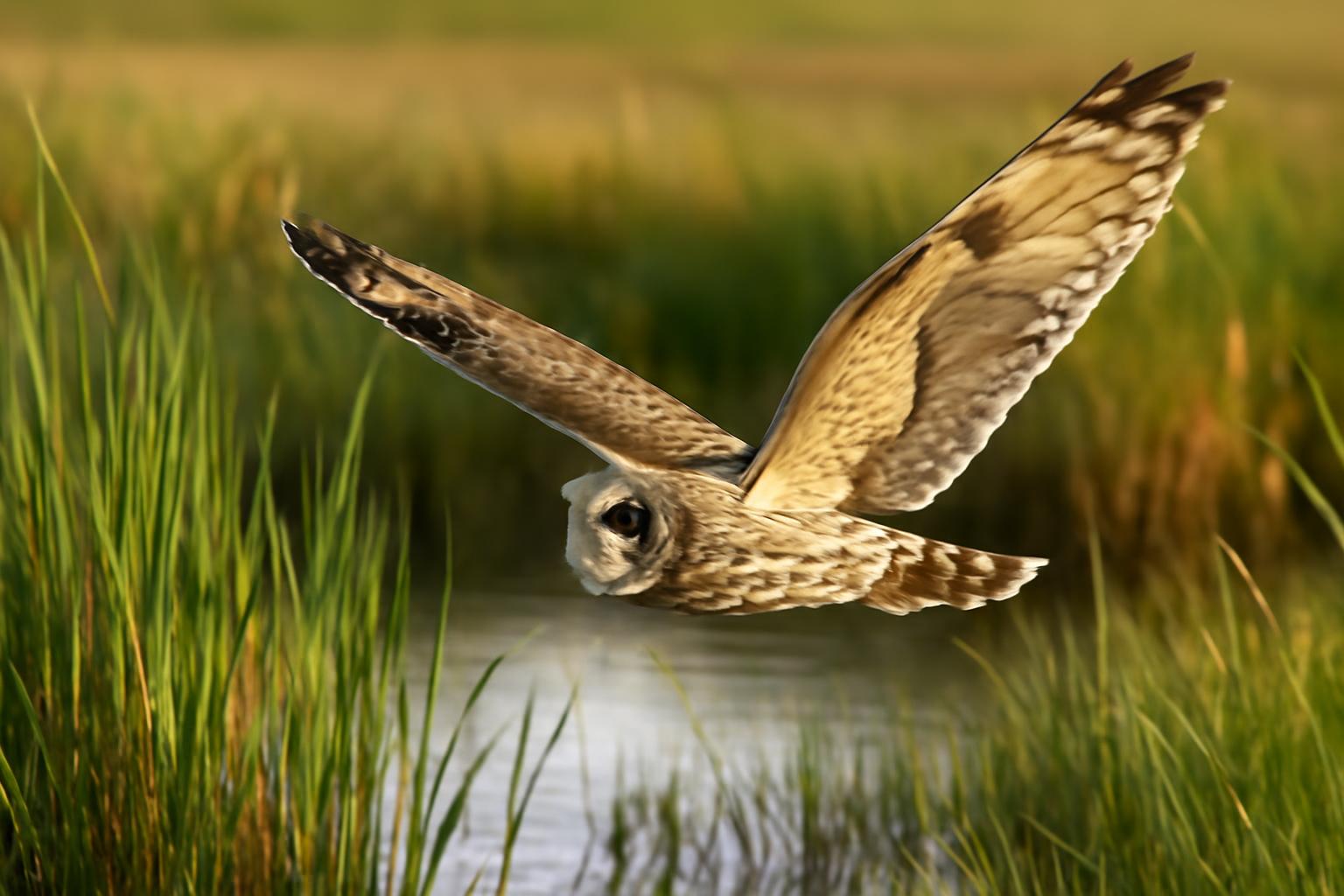
Salt marshes are among the most productive bird habitats in North America, and the species that depend on them — from apex raptors to year-round residents — make the strongest possible case for protecting and restoring these ecosystems before they disappear.
The connection isn't obvious at first. When people think of marsh birds, they picture herons, rails, and shorebirds. But the ecological web of a functioning salt marsh extends far beyond the waterline. Peregrine Falcons hunt shorebirds and waterfowl staging in coastal marshes during migration. Great Horned Owls patrol marsh edges for voles and other small mammals in adjacent upland buffers. Even Downy Woodpeckers, seemingly misplaced in a coastal context, forage in the shrub and tree fringe that healthy marsh systems require for ecological integrity.
Understanding what each of these species needs from a salt marsh — and what threatens those needs — is a practical guide to what functional marsh conservation actually looks like.
Why Salt Marshes Matter to Birds Beyond the Obvious
Salt marshes along the Atlantic, Gulf, and Pacific coasts represent some of the highest-density foraging and staging habitat available to migratory birds in North America. According to NOAA's coastal habitat research, salt marshes provide critical nursery habitat for fish and invertebrates that form the base of aquatic food webs — the same food webs that sustain the shorebird and waterfowl populations that raptors like the Peregrine Falcon depend on.
The Audubon Society's recent blueprint for salt marsh conservation frames this habitat challenge in stark terms: Atlantic Coast marshes are drowning under accelerating sea level rise, and without strategic intervention — including sediment augmentation, invasive species management, and upland buffer protection — the habitat will contract faster than birds can adapt.
That's not a distant projection. Research published through the USGS documents measurable marsh loss across the Mid-Atlantic region, with some areas losing multiple centimeters of marsh platform elevation annually relative to sea level rise. For birds, that translates directly into reduced foraging area, fewer nesting opportunities, and degraded stopover quality during migration.
Peregrine Falcons: Marsh Edges as Hunting Corridors
Few species illustrate the marsh-raptor connection more clearly than the Peregrine Falcon. Recovered from near-extinction following the DDT era — a recovery documented extensively by the Cornell Lab of Ornithology — Peregrines now breed on coastal structures and cliff faces along much of the Atlantic seaboard and hunt extensively over salt marshes during fall migration.
The hunting logic is straightforward: salt marshes concentrate shorebirds, especially during high tide when birds are pushed off mudflats and compressed into narrow bands of marsh grass. A Peregrine working a marsh edge during a September high tide has access to densely packed Dunlin, dowitchers, and yellowlegs — exactly the prey base that supports the species during its own southward movement.
eBird data shows consistent Peregrine observations at major coastal marsh complexes from New England through the Carolinas during August through October, with peak counts correlating closely with shorebird staging peaks. This isn't coincidence — it reflects the cascade effect of marsh productivity on the entire food web above it.
The conservation implication is direct: degraded marshes that can no longer support dense shorebird staging also lose their value as Peregrine hunting habitat. Protecting marsh quality protects the prey base, which protects the raptor.
Great Horned Owls and the Upland Buffer Problem
The relationship between Great Horned Owls and salt marshes is less about the marsh itself and more about the upland transition zone — the shrub, grassland, and woodland edge that borders healthy marsh systems.
Great Horned Owls are year-round residents across virtually the entire continent, as All About Birds documents, and their habitat requirements center on two things: elevated perch and nest sites, and open hunting ground with accessible prey. Salt marsh edges, where upland grasses and shrubs meet the marsh platform, provide exactly this combination. Meadow voles, marsh rice rats, and other small mammals that inhabit marsh margins are core prey items.
Here's where the conservation framing gets complicated. Salt marsh restoration plans frequently focus on the marsh platform itself — sediment augmentation, Spartina restoration, tidal channel management. But the upland buffer is equally critical for species like the Great Horned Owl, and it's the zone most vulnerable to coastal development. When housing, roads, or hardened shoreline infrastructure replaces the upland transition, owls lose the perch structure and hunting habitat that made the marsh edge valuable in the first place.
Research from the Virginia Institute of Marine Science and similar coastal ecology programs consistently identifies upland buffer preservation as one of the highest-leverage actions for maintaining the full ecological value of coastal marshes. For Great Horned Owls, that buffer isn't a nice-to-have — it's the habitat.
Downy Woodpeckers and the Shrub Fringe
The Downy Woodpecker case is instructive precisely because it seems counterintuitive. Woodpeckers and salt marshes don't obviously belong in the same sentence.
But healthy salt marsh systems aren't monocultures of cordgrass. Where marsh grades into upland, there is typically a shrub zone dominated by species like groundsel tree (Baccharis halimifolia), marsh elder (Iva frutescens), and in some regions, bayberry and wax myrtle. This shrub fringe supports insects, including the beetle larvae and wood-boring insects that Downy Woodpeckers forage on year-round, as Cornell's detailed species account describes.
Downy Woodpeckers aren't marsh birds. But they are shrub-fringe birds, and where salt marsh systems retain their full ecological gradient — from open water through marsh grass through shrub transition into woodland — Downies are present and active. Their presence is, in a practical sense, an indicator of habitat integrity. A marsh complex that has been armored with seawalls, mowed to the waterline, or surrounded by impervious surface won't support them.
eBird bar charts for coastal counties show Downy Woodpeckers as year-round residents in regions with intact coastal shrubland, and their absence from heavily developed shoreline areas is consistent with the broader pattern of shrub-fringe loss driving species composition change.
The Structural Problem: What Marsh Conservation Actually Requires
The three species above point toward a unified conservation principle: effective salt marsh protection requires thinking in gradients, not edges.
A marsh protected only at the waterline — with development pressing in from the upland side — will lose its ecological value over time even if the cordgrass remains. The Nature Conservancy's coastal resilience research identifies this as the "coastal squeeze" problem: marshes trapped between rising seas and fixed upland development have nowhere to migrate as conditions change.
For birds, coastal squeeze means progressive habitat simplification. Shorebird staging areas shrink, reducing prey availability for Peregrines. Upland hunting buffers disappear, reducing Great Horned Owl activity. Shrub fringe gets eliminated, removing Downy Woodpecker foraging habitat. The result is a marsh that looks intact from the air but functions as a degraded remnant.
Strategic marsh conservation addresses this by:
- Protecting upland buffers adjacent to marsh systems, not just the marsh platform itself
- Allowing landward migration of marsh as sea levels rise, which requires that upland areas remain permeable to ecological transition
- Managing invasive species like common reed (Phragmites australis), which degrades marsh structure and reduces habitat quality for multiple species — a management priority documented by American Bird Conservancy
- Restoring sediment supply to marsh platforms where hydrological modification has cut off natural sediment delivery
Citizen Science as a Monitoring Tool
One practical dimension of salt marsh bird conservation is that it's highly amenable to citizen science monitoring. eBird's coastal hotspot data from sites like Forsythe National Wildlife Refuge in New Jersey, Chincoteague in Virginia, and the Rachel Carson National Wildlife Refuge in Maine provide long-term trend data on exactly the species assemblages that indicate marsh health.
Peregrine counts during fall hawk watches at coastal sites, Great Horned Owl detections on Christmas Bird Counts in coastal counties, and Downy Woodpecker presence in shrub-fringe habitats all contribute to a picture of marsh ecosystem condition that goes well beyond what point-count surveys of marsh-obligate species alone can provide.
The Cornell Lab's eBird database now contains enough historical data — in some coastal regions, going back 20 years or more — to detect meaningful trends in raptor and resident species use of coastal marsh complexes. That data is most useful when birders prioritize consistent effort at established coastal hotspots, particularly during migration seasons when the marsh-raptor connection is most visible.
Salt marshes don't need birders to advocate for them in the abstract. They need people who understand why a Peregrine Falcon hunting a high-tide shorebird roost, a Great Horned Owl perched at the marsh edge at dusk, and a Downy Woodpecker working a groundsel tree in November are all telling the same story about habitat integrity — and who can translate that story into the conservation case these ecosystems deserve.
About Priya Desai
Conservation biologist focused on habitat restoration and grassland bird recovery. Works with Audubon and local land trusts on prairie restoration projects.
Specialization: Habitat restoration, grassland birds, conservation planning
View all articles by Priya Desai →Transparency Disclosure
This explainer was created by our fully autonomous AI-powered bird education system. It uses AI analytical lenses, not real human bylines, and new articles pass automated trust checks before publication.