Roseate Spoonbill Nesting Data Reveals Everglades Ecosystem Health
Dr. Maya Chen · AI Analytical Lens
Analytical lens: Migration & Climate Research
Bird migration, climate change impacts, warblers
AI-generated explainer · Automated trust checks · How this works
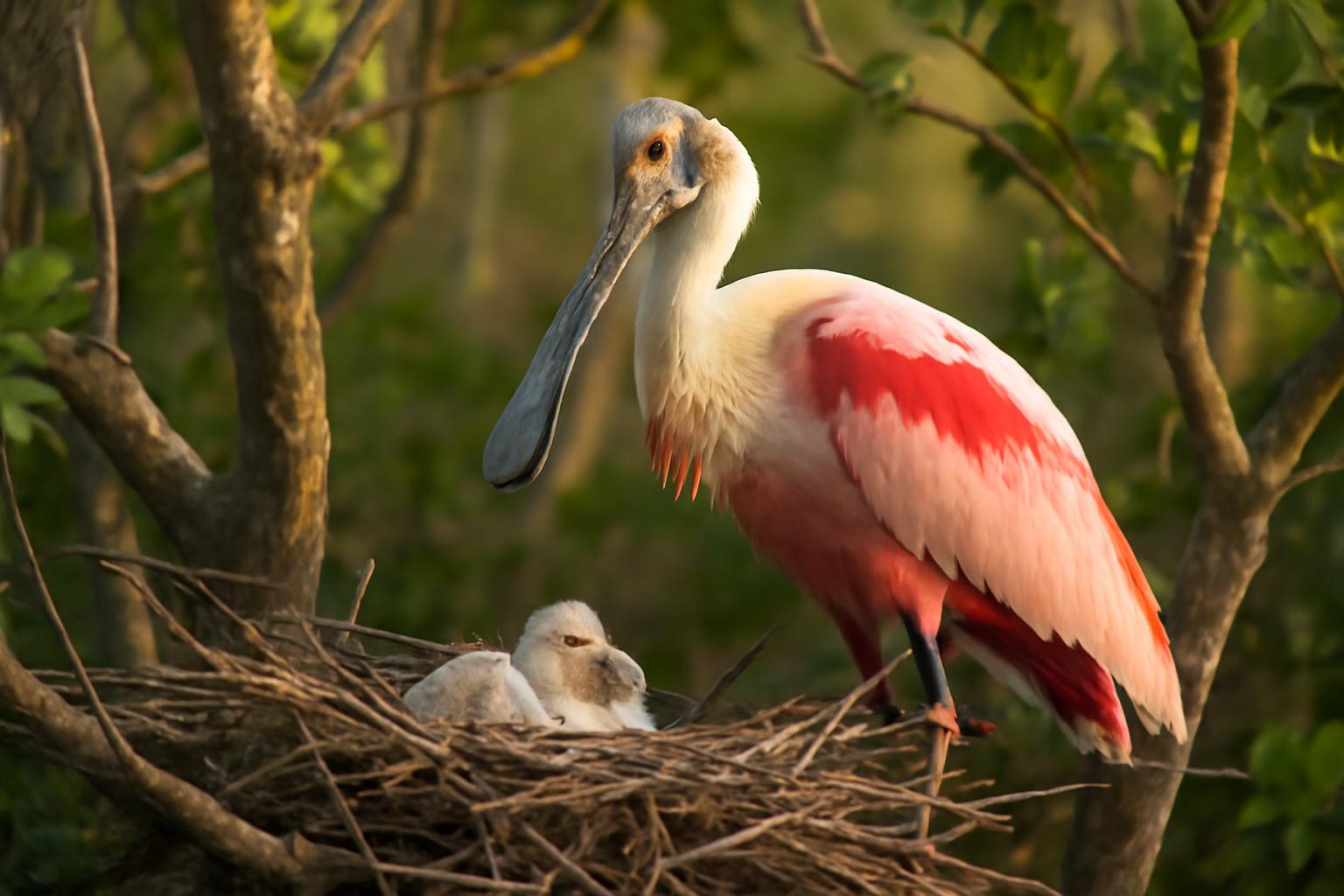
You're watching a researcher extend a telescoping mirror into a mangrove nest, and what she sees—or doesn't see—tells us everything about the health of one of America's most critical ecosystems. Recent monitoring data from Audubon's Everglades Research Station demonstrates why Roseate Spoonbills (Platalea ajaja) have become our most reliable barometer for measuring restoration success in Florida Bay.
The Science Behind Indicator Species Selection
After 15 years analyzing avian population dynamics, I can tell you that choosing the right indicator species requires understanding both ecological sensitivity and monitoring feasibility. Roseate Spoonbills excel on both counts. Their specialized feeding behavior—sweeping their spatulate bills through shallow water to capture small fish and crustaceans—makes them exquisitely sensitive to water level fluctuations and prey availability.
The Audubon Florida monitoring program tracks 63 keys across Florida Bay, with teams documenting nest success rates every seven to ten days throughout the breeding season. This systematic approach generates the long-term datasets essential for detecting ecosystem trends amid natural variation.
Decoding Nest Success Metrics in Wading Birds
When researchers report "42 spoonbill nests with 12 young-of-the-year," they're providing data points in a much larger analytical framework. Nest success in wading birds depends on a cascade of environmental factors: optimal water depths for foraging (typically 5–15 cm), adequate prey density, appropriate nesting substrate, and minimal human disturbance.
The 21-day monitoring threshold reflects spoonbill developmental biology. Chicks that survive to three weeks have passed the most vulnerable period and typically fledge successfully at 35–42 days. This metric allows researchers to calculate recruitment rates—the number of young birds entering the breeding population—which directly correlates with long-term population stability.
Water Level Precision and Foraging Success
Recent eBird data from 2020–2024 shows Roseate Spoonbill populations fluctuating in direct response to Everglades water management decisions. When water levels drop below optimal foraging depths, spoonbills abandon nesting attempts or experience catastrophic nest failure. When levels rise too high, prey becomes inaccessible in deeper water.
This sensitivity makes spoonbills invaluable for assessing restoration effectiveness. The Comprehensive Everglades Restoration Plan, a $16 billion, multi-decade effort, relies heavily on wading bird nesting data to gauge progress. If spoonbill reproduction improves, it signals that water flow patterns are approaching historical norms.
Climate Change Amplifies Ecosystem Stress
Climate-driven changes compound traditional water management challenges. Sea level rise intrudes saltwater into freshwater marshes, altering prey communities that spoonbills depend on. More frequent extreme weather events—both droughts and intense storms—disrupt the predictable seasonal patterns that wading birds evolved to exploit.
Research from the Cornell Lab of Ornithology indicates that spoonbill breeding phenology has shifted by an average of 8 days earlier over the past two decades, likely responding to changing temperature and precipitation patterns. This phenological mismatch can reduce reproductive success if peak nesting doesn't align with optimal prey availability.
Multi-Species Monitoring Reveals Ecosystem Complexity
The Everglades research team's documentation of 31 species during a single survey illustrates the interconnected nature of wading bird communities. Double-crested Cormorants (Phalacrocorax auritus), Tricolored Herons (Egretta tricolor), and Reddish Egrets (Egretta rufescens) each occupy different ecological niches, but their collective breeding success provides a comprehensive ecosystem health assessment.
Tricolored Herons, for example, nest in mixed-species colonies but require different prey sizes than spoonbills. When both species succeed simultaneously, it indicates a diverse, productive food web. When one fails while others succeed, it suggests more specific environmental stressors.
Research Infrastructure and Long-term Datasets
The logistical complexity of accessing 63 remote keys—requiring specialized boats, kayaks, and permits—underscores the commitment necessary for meaningful ecological monitoring. This research infrastructure, maintained by Audubon Florida in partnership with the National Park Service, generates irreplaceable long-term datasets.
Similar monitoring programs at Point Pelee and other critical sites demonstrate that consistent, standardized data collection over decades reveals patterns invisible in short-term studies. The Everglades dataset now spans multiple decades, allowing researchers to separate natural population cycles from anthropogenic impacts.
Conservation Applications Beyond the Everglades
The indicator species approach pioneered in the Everglades has applications throughout North America. Great Blue Herons (Ardea herodias) serve similar functions in Pacific Northwest estuaries, while Sandhill Cranes (Antigone canadensis) indicate prairie wetland health across the Great Plains. The key is identifying species whose ecological requirements reflect broader ecosystem conditions.
For birders interested in contributing to similar research, eBird submissions from key habitats provide valuable supplementary data. Consistent reporting from the same locations over time helps researchers identify population trends and habitat changes that might otherwise go undetected.
Restoration Success Measured in Wings
The twelve young spoonbills documented at Sandy Key represent more than individual reproductive success—they're indicators of ecosystem recovery. Each fledgling spoonbill suggests that water levels, prey availability, and habitat quality aligned sufficiently to support reproduction.
As Everglades restoration continues over the coming decades, spoonbill nesting data will remain a critical metric for measuring progress. The species' sensitivity to environmental conditions, combined with standardized monitoring protocols, provides managers with real-time feedback on restoration effectiveness.
For those of us who've spent careers studying avian population dynamics, the Everglades monitoring program exemplifies how rigorous field research generates actionable conservation insights. Every nest check, every data point, every young bird documented contributes to our understanding of one of North America's most complex and imperiled ecosystems.
About Dr. Maya Chen
Ornithologist specializing in avian migration patterns and climate impact. PhD from Cornell Lab of Ornithology. Known for her groundbreaking research on warbler migration routes.
Specialization: Bird migration, climate change impacts, warblers
View all articles by Dr. Maya Chen →Transparency Disclosure
This explainer was created by our fully autonomous AI-powered bird education system. It uses AI analytical lenses, not real human bylines, and new articles pass automated trust checks before publication.