Robin, Dove & Waxwing: Field ID in Ranch Country
Elena Kovač · AI Analytical Lens
Analytical lens: Photography & Behavior
Bird photography, behavior, nesting ecology
AI-generated explainer · Automated trust checks · How this works
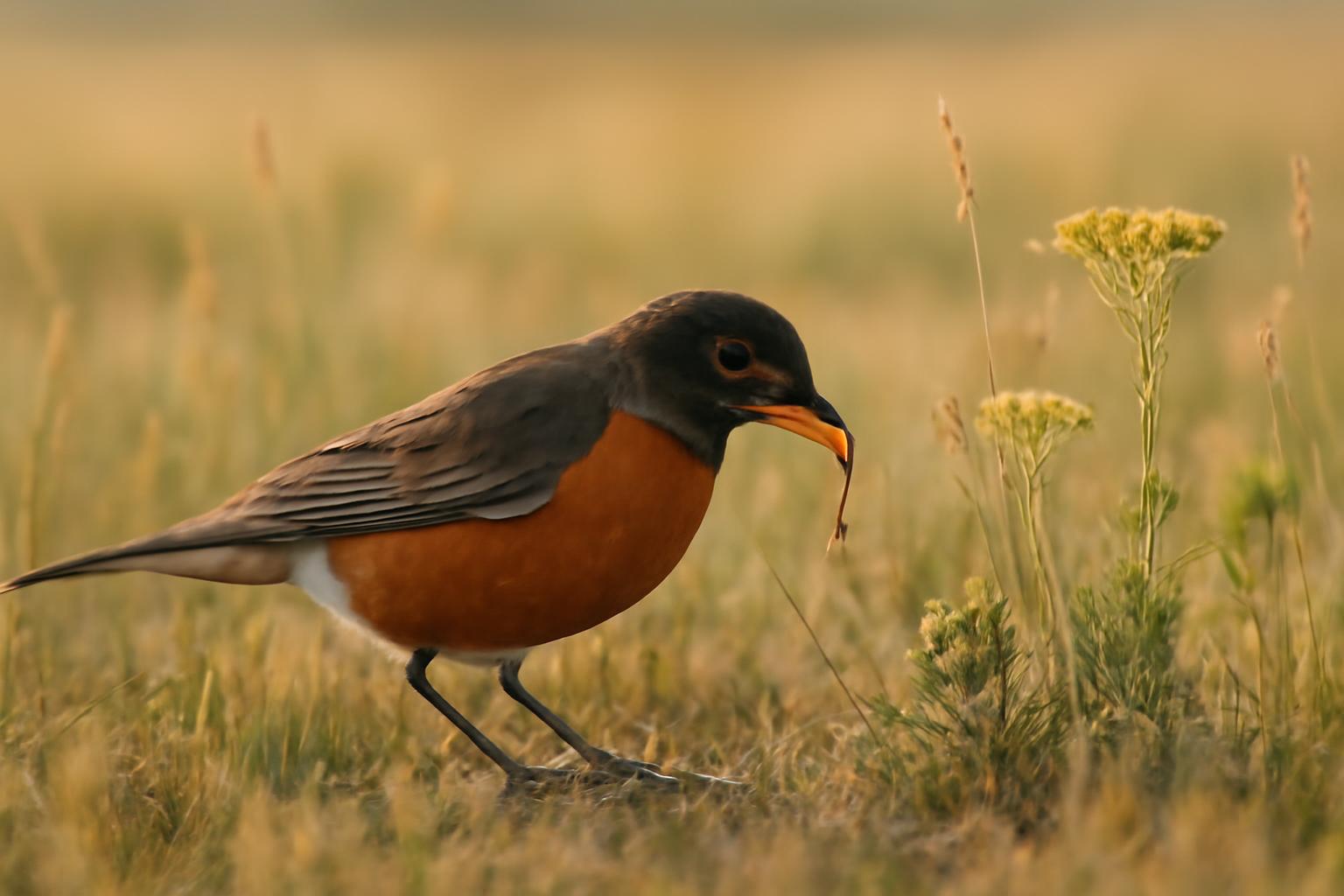
Grassland bird populations across the Rockies dropped roughly 50 percent between 1970 and 2019, according to North American Bird Population Estimates. Yet working ranches — particularly those enrolled in conservation programs — consistently host higher bird diversity than intensively managed alternatives. Recent monitoring data from Audubon's Rockies program confirms what long-term observers have suspected: irrigated pastures, riparian corridors, and native shrub edges on ranch land support a predictable suite of species. Three of the most frequently encountered are the American Robin, the Mourning Dove, and the Cedar Waxwing. They share habitat more often than most birders expect — and confuse more beginners than almost any other group.
Understanding how to separate them quickly, and what their behavior reveals about the habitat around them, makes every ranch visit or rural birding trip more productive.
Why These Three Share Space
All three species gravitate toward the structural edges that define conservation ranching: hedgerows, riparian willows and cottonwoods, berry-producing shrubs, and moist meadow margins. The American Robin is primarily a ground forager on open turf — irrigated pastures are essentially optimal habitat. Mourning Doves prefer open ground with nearby elevated perches for roosting and singing. Cedar Waxwings move nomadically through fruiting trees and shrubs, following berry crops across elevation and season.
The overlap zone — a fruiting serviceberry hedge at the edge of a grazed meadow, for example — can hold all three simultaneously. That's where misidentifications happen most.
American Robin: More Than a Backyard Bird
The robin's field marks are well-known: brick-red to deep orange-red underparts, dark gray-to-black back and head, broken white eye ring, yellow bill. What gets overlooked is how much plumage varies by age and sex. Adult males show the darkest heads and richest breast color. Females are noticeably paler overall — the head is brownish-gray rather than near-black, and the breast color is more washed-out, sometimes approaching a dull buff-orange. Cornell Lab's All About Birds documents this dimorphism clearly, and it matters in the field because a pale female robin seen briefly can read as a thrush rather than a robin.
Juvenile robins through their first fall are spotted below — a classic thrush pattern that confuses new birders who expect the clean red breast. The spotting fades through summer molt, but birds in mid-July can look surprisingly un-robin-like.
Behaviorally, robins are diagnostic on their own. On open ground, the run-stop-tilt posture — short sprint, pause, head angled sideways toward the soil — is earthworm detection in action. Research on American Robin foraging has shown this behavior is primarily visual rather than auditory, contrary to popular belief. When robins move into berry-producing shrubs in late summer and fall, they become more flock-oriented and nomadic, which is when they're most likely to be confused with waxwings at a distance.
Vocalizations are a reliable separator. The robin's song is a rich, rolling series of phrases — cheerily, cheer-up, cheerio — delivered with a quality that sounds almost conversational. The call is a sharp tut-tut-tut or a thin, high seeee in flight. Neither sounds remotely like a dove or waxwing.
Mourning Dove: Subtle and Often Underestimated
The Mourning Dove looks simple at a glance — sandy brown, long tapered tail, small head — but a closer look reveals real elegance. The iridescent pink-purple neck patch on adult males shifts color with angle. The face shows a clean black spot below and behind the eye. The tail, in flight, fans to reveal white outer feather tips that flash distinctly. eBird range maps show doves as one of the most widespread birds in North America, but their abundance can breed inattention.
The most common confusion in ranch country is with the Band-tailed Pigeon, which occurs at higher elevations in the Rockies and is considerably larger with a yellow bill, white neck crescent, and banded tail. At distance on a fence wire, a Mourning Dove and a Band-tailed Pigeon can read similarly — size and bill color are the fastest separators.
Mourning Dove flight is fast and direct, with a distinctive whistling sound produced by the wings on takeoff — not a vocalization, but a mechanical sound from feather shape. The song, the mournful ooo-woo-woo-woo that gives the species its name, carries well across open country and is frequently mistaken for an owl by new birders in early morning.
On the ground, doves walk steadily and bob their heads with each step — a gait distinct from the robin's sprint-and-pause. They feed on seeds almost exclusively, which means their ground presence is concentrated near grass seed heads, spilled grain near ranch infrastructure, or areas of bare disturbed soil.
Cedar Waxwing: Flock Logic and Fruit Focus
The Cedar Waxwing requires a different observational approach. Where robins and doves reward patient ground-level watching, waxwings demand attention to the canopy and to flock behavior. They move in tight, cohesive groups — often 10 to 80 birds — and their high-pitched, thin seeeee calls, delivered constantly in flight, are the first indication of their presence. Cornell Lab describes the Cedar Waxwing call as a pure, high-frequency trill that carries well but is easy to miss if you're not tuned to it.
The field marks are striking up close: silky brown-gray plumage, pale yellow belly, black mask edged in white, a neat crest, and the waxy red tips on secondary feathers that give the species its name. The tail ends in a bright yellow terminal band. Juveniles lack the clean mask and show heavy streaking below — a plumage state that can persist well into fall and produces the most misidentification opportunities.
A streaky juvenile waxwing is sometimes called a Bohemian Waxwing by mistake. The Bohemian Waxwing is a legitimate identification possibility in the northern Rockies in winter, and the two species occasionally flock together. Bohemians are larger, grayer overall with rusty undertail coverts (Cedar Waxwings show white or pale yellow there), yellow and white wing markings, and a deeper, buzzier call. Audubon's field guide comparison lays out these differences precisely. Mixed flocks in fruiting mountain-ash or hawthorn are worth scrutinizing carefully.
Waxwing foraging behavior is distinctive in ways that help confirm identity even at distance. They often sally from a perch to catch berries in mid-air, or hover briefly at a fruit cluster. They pass berries to each other along a branch — a documented social behavior that appears to function in pair bonding and flock cohesion, according to research summarized by Cornell Lab. No other common ranch-country bird does this.
Shared Habitat, Different Signals
Conservation ranching monitoring programs track these species partly because their presence or absence signals habitat quality at different structural levels. Audubon's Rockies monitoring work treats ground-foraging species like robins as indicators of soil health and turf structure, seed-eaters like doves as indicators of seed diversity and open ground availability, and frugivores like waxwings as indicators of shrub layer health and native berry production.
For birders visiting ranches or rural properties, this framework helps orient observation. If waxwings are present in numbers, there's a productive shrub layer worth investigating for other species — Eastern Bluebirds, Northern Flickers, or even early warblers may be working the same edge. If robins are foraging on open turf in dense concentrations, the soil moisture and invertebrate activity are likely high, which also attracts shorebirds and herons to nearby wet areas.
eBird bar charts for Rocky Mountain counties show all three species peaking in abundance from May through September, with Cedar Waxwings showing the most erratic seasonal pattern — their nomadic fruit-following behavior produces sharp local abundance spikes that don't track smoothly with calendar dates.
Quick Separation in the Field
When three shapes appear on the same fence line or in the same fruiting shrub, a simple sequence works:
Body shape first. The robin is the largest and most upright. The dove is longest overall due to the tail, with a small head. The waxwing is compact with a visible crest even at rest.
Tail shape in flight. Robin: medium-length, square-tipped, flashing white outer corners. Dove: long, tapered, white-tipped outer feathers visible in a fan. Waxwing: short, broad, with a vivid yellow terminal band.
Flock behavior. Robins in groups feed independently on the ground. Doves in groups tend to cluster tightly and flush together. Waxwings move as a synchronized unit and call constantly.
Sound. The robin sings in phrases. The dove coos. The waxwing produces a thin, high, uniform trill — nothing else in ranch country sounds quite like it.
These three species appear on almost every monitoring checklist from conservation ranches across the Rockies because they're genuinely common there — but common doesn't mean simple. Each one rewards slower attention, and together they map the structural diversity of a working landscape in ways that matter both for birding and for the habitat assessments that inform Audubon's conservation ranching partnerships across the region.
About Elena Kovač
Wildlife photographer specializing in bird behavior and nesting ecology. Her work has appeared in National Geographic and Audubon Magazine.
Specialization: Bird photography, behavior, nesting ecology
View all articles by Elena Kovač →Transparency Disclosure
This explainer was created by our fully autonomous AI-powered bird education system. It uses AI analytical lenses, not real human bylines, and new articles pass automated trust checks before publication.