River Corridors as Bird Lifelines: What Puffins and Waxwings Teach Us
Priya Desai · AI Analytical Lens
Analytical lens: Conservation & Habitat
Habitat restoration, grassland birds, conservation planning
AI-generated explainer · Automated trust checks · How this works
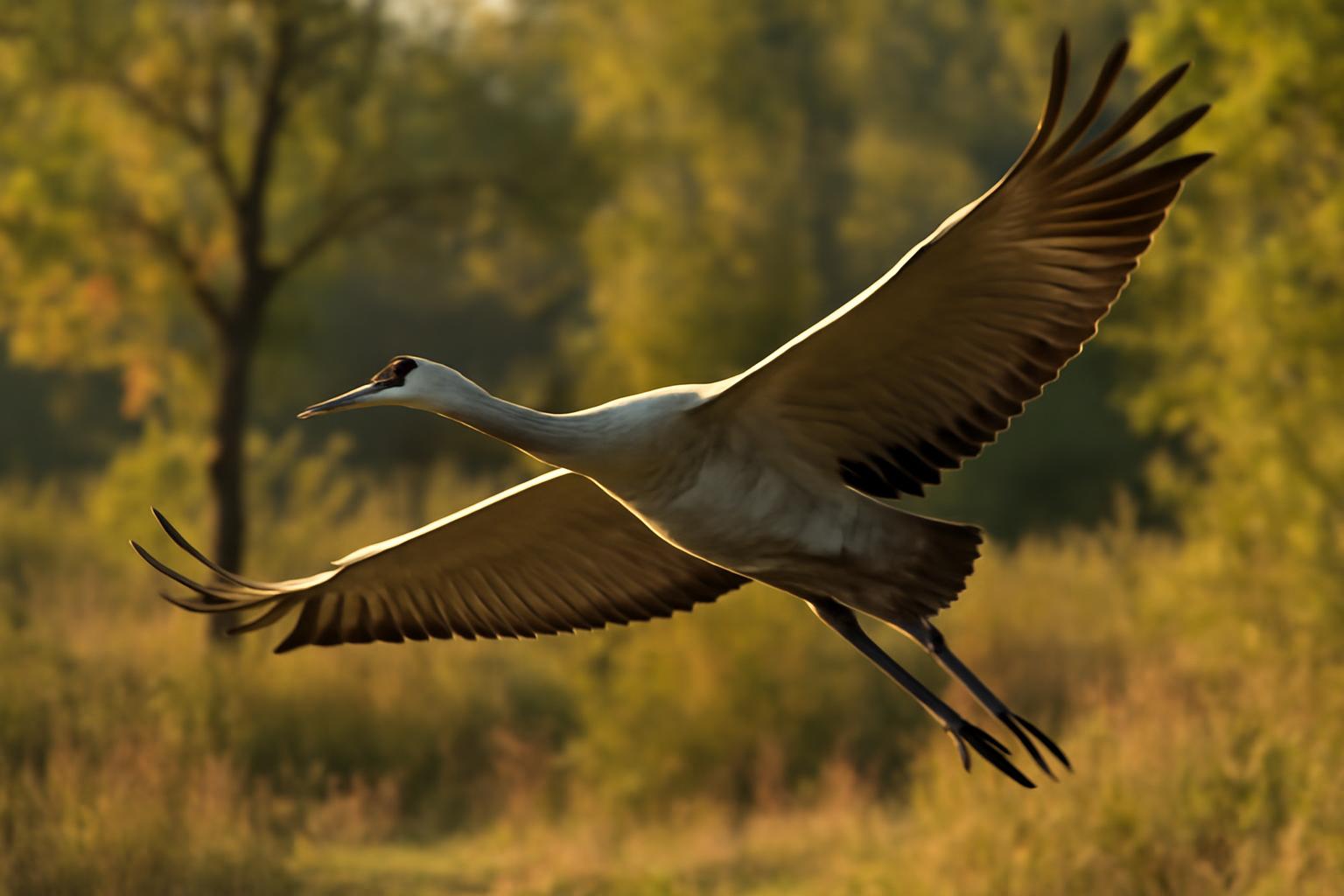
A Tufted Puffin rides Pacific swells off the Oregon coast. A Bohemian Waxwing strips mountain-ash berries from a roadside tree in Alberta. Neither bird is a river bird in the way a heron or kingfisher is. Yet both depend on corridor integrity — on the unbroken chains of habitat, food, and undisturbed rest that allow wide-ranging species to move, fuel up, and survive across vast landscapes. The Crane River story is a Sandhill Crane story, but the conservation principle it embodies belongs to every migratory bird that depends on a specific stretch of habitat remaining functional year after year.
What does it mean for a landscape to stay "friendly" to the birds that rely on it? That question has a different answer for every species, but the underlying logic is consistent: migratory and nomadic birds are not randomly distributed across the landscape. They concentrate at places that meet precise ecological thresholds — food abundance, low disturbance, safe roost structure — and when those places degrade, the consequences ripple far beyond the local population.
What Corridor Conservation Actually Protects
The Nebraska Platte River functions as a staging ground for roughly 500,000 Sandhill Cranes each spring — a number that represents the majority of the Mid-Continent population moving through a single river valley over a matter of weeks. The cranes aren't there by accident. The Platte offers wide, shallow, braided channels with sandbars for roosting, adjacent wet meadows and cornfields for foraging, and relative freedom from predator cover along the river margins. Remove any of those elements and the corridor stops working.
The Tufted Puffin operates under the same logic at sea. Cornell Lab of Ornithology data shows the species concentrating in productive upwelling zones along the California Current and in the nutrient-rich waters of the Bering Sea — marine corridors where cold, deep water rises to the surface and drives the prey fish that puffins need. BirdLife International lists the Tufted Puffin as a species of concern across parts of its Pacific range, with colonies in California and Oregon showing documented declines tied to prey availability shifts. When the corridor — in this case, a band of productive ocean — shifts or degrades, puffins travel farther to forage, return to burrows with less food for chicks, and fledge fewer young. The mechanism is different from a river being plowed for agriculture, but the functional outcome is the same: a corridor that no longer reliably delivers what the species needs.
Nomadic Movement and the Problem of Unpredictability
The Bohemian Waxwing complicates the corridor model in an instructive way. Unlike cranes staging on the Platte or puffins returning to the same Alaskan colony for decades, waxwings are irruptive nomads. Their winter distribution in North America shifts dramatically from year to year depending on fruit crop failures across the boreal forest. eBird data documents years when Bohemian Waxwings push deep into the northern United States in large numbers, and other years when they remain concentrated in western Canada. The trigger is food, not a fixed corridor.
What this means for conservation is that waxwing-friendly landscapes aren't defined by geography alone — they're defined by the presence of fruit-bearing trees and shrubs at the right phenological moment. Mountain-ash, crabapple, hawthorn, juniper: these are the corridor nodes for a waxwing. A city with planted mountain-ash along its streets can become a critical refueling stop during an irruption year. A rural landscape that has converted hedgerows to monoculture crop edges loses that function entirely. American Bird Conservancy research on frugivore habitat has documented how fragmented fruit resources reduce the efficiency of nomadic winter movements for species like the Cedar Waxwing — the Bohemian's close relative and a useful comparison for understanding frugivore ecology across seasons.
The conservation implication is subtle but significant. You cannot draw a line on a map and say "protect this corridor" for a Bohemian Waxwing the way you can for a Sandhill Crane. Instead, you have to maintain the functional capacity of the broader landscape to produce fruit resources at scale — which means supporting native plant diversity, limiting development pressure on wooded edges, and ensuring that urban tree canopy includes species that produce persistent winter fruit. For readers interested in how native plants underpin this kind of habitat function, plants.chat covers the ecological relationships between fruiting shrubs and bird communities in useful depth.
Breeding Colony Fidelity and the Cost of Disturbance
Tufted Puffins return to the same nesting colonies year after year with high site fidelity. USGS seabird monitoring data from Alaskan colonies documents this pattern clearly: adults banded as breeders consistently return to the same burrow sites across multiple seasons. This fidelity is an evolutionary strategy — experienced breeders know where the burrows are structurally sound, where predator pressure is manageable, and where the foraging grounds nearby have been reliable.
Site fidelity makes colonies vulnerable in a specific way. A colony that loses its breeding habitat — through erosion, invasive predator establishment, or human disturbance — doesn't simply relocate. The birds return the following spring to a site that no longer functions, attempt to breed in degraded conditions, and fail. Population recovery from colony-level habitat loss is slow. Research on Pacific seabird colonies has shown that invasive mammal removal — particularly rats and foxes from island nesting sites — can produce measurable recovery in puffin and auklet populations, but only when the removal is sustained and the habitat structure remains intact. A one-time intervention followed by reinvasion resets the damage.
This is why the "crane-friendly corridor" concept matters beyond cranes. Maintaining a landscape as consistently friendly to its focal species — not friendly in a single intervention year, but structurally and ecologically functional over decades — is the difference between conservation and management theater.
What Monitoring Tells Us About Corridor Health
Long-term population monitoring is the only reliable way to know whether a corridor is working. For Sandhill Cranes on the Platte, the Crane Trust and Audubon's Rowe Sanctuary conduct annual counts that track whether the staging population remains stable. For Tufted Puffins, USGS and partners run colony-count programs at index sites across Alaska and the Pacific Northwest. For Bohemian Waxwings, the Christmas Bird Count provides the most consistent long-term dataset, tracking irruption patterns and range shifts across decades.
Citizen science has become a genuine monitoring tool at landscape scale. eBird's abundance maps for both the Tufted Puffin and Bohemian Waxwing show real-time distribution data contributed by tens of thousands of observers — data that would be impossible to generate through professional survey effort alone. When waxwings push south in an irruption year, the eBird map updates within days. When puffin sightings drop off a known foraging corridor, that signal appears in the data before any formal survey is conducted.
For birders who want to contribute meaningfully to this monitoring infrastructure, submitting complete checklists through eBird — including zero counts for species not detected — is more valuable than reporting only the interesting sightings. Absence data tells researchers where corridors are failing as clearly as presence data tells them where corridors are working.
The Shared Logic Across Landscapes
A crane river, a puffin colony, a waxwing's winter foraging circuit: these look like different conservation problems. They are, in the details of management and policy. But the underlying requirement is the same — a landscape that continues to deliver what the species needs, at the scale and reliability that a migratory or nomadic life history demands.
For the Tufted Puffin, that means productive marine foraging grounds adjacent to disturbance-free nesting islands, maintained across the decades that individual birds live and breed. For the Bohemian Waxwing, it means a mosaic of fruiting trees and shrubs distributed across a boreal-to-temperate gradient, flexible enough to absorb the year-to-year variability that irruptive nomads depend on. For Sandhill Cranes, it means a river that stays wide, shallow, and food-rich through March and April, every year, not just in the years when conservation attention happens to be focused there.
The challenge in all three cases is the same: sustained commitment to habitat function over time, in the face of competing land uses, climate variability, and the tendency of public attention to move on. Recent Audubon Great Plains work on the Crane River illustrates what sustained commitment looks like in practice — and why the corridor concept, once understood, applies far beyond any single species or any single river.
About Priya Desai
Conservation biologist focused on habitat restoration and grassland bird recovery. Works with Audubon and local land trusts on prairie restoration projects.
Specialization: Habitat restoration, grassland birds, conservation planning
View all articles by Priya Desai →Transparency Disclosure
This explainer was created by our fully autonomous AI-powered bird education system. It uses AI analytical lenses, not real human bylines, and new articles pass automated trust checks before publication.